AUTHOR OF THIS BLOG

DR ANTHONY MELVIN CRASTO, WORLDDRUGTRACKER

Sustainable chemistry: how to produce better and more from less?

 Uncategorized  Comments Off on Sustainable chemistry: how to produce better and more from less?
Oct 072017


Sustainable chemistry: how to produce better and more from less?

Green Chem., 2017, Advance Article
DOI: 10.1039/C7GC02006F, Perspective
P. Marion, B. Bernela, A. Piccirilli, B. Estrine, N. Patouillard, J. Guilbot, F. Jerome
This review describes the rapid evolution of chemistry in the context of a sustainable development of our society. Written in collaboration between scientists from different horizons, either from public organizations or chemical companies, we aim here at providing recommendations to accelerate the emergence of eco-designed products on the market.

Sustainable chemistry: how to produce better and more from less?

 Author affiliations

Abstract

The International Symposium on Green Chemistry (ISGC) organized in 2013, 2015 and 2017 has gathered many senior and young talented scientists from all around the world (2200 attendees in three editions), either from academia or industry. Through outstanding conferences, communications, debates, and round tables, ISGC has been the witness of the rapid evolution of chemistry in the context of a sustainable development of our societies, not only at the scientific and industrial levels but also on education, networking and societal aspects. This critical review synthesizes the different points of view and the discussions having taken place at ISGC and gives a general picture of chemistry, including few scientific disciplines such as catalysis, processes, resource management, and environmental impact, among others, within the framework of sustainable development. This critical review, co-authored by researchers from public organizations and chemical companies (small, medium and large industrial groups) provides criteria and recommendations which, in our view, should be considered from the outset of research to accelerate the emergence of eco-designed products on the market.

str6

Conclusions

Sustainable chemistry is the only mean to generate performant  products and long lasting  solutions able  to  generate  business  and  profit  for  chemical  industry.  Performance  is  the  best  systemic answer for customer needs and our societies. Defining  sustainable  chemistry  is,  however,  far  to  be  an  easy  task  because chemistry is a highly dynamic system. The sustainability of a value chain is for instance directly depending on the access  to energy (and above all to its origin – coal, gas, biomass…) and  on the supply of raw materials. In the current economic context,  it could be not so easy to predict what will be the best source of  energy or raw materials for a desired product in the future. The  development  of  predictive  tools  is  now  essential  and  will  represent probably one of the next scientific challenges in the coming years.  During the last 20 years, utilization of renewable feedstocks in  chemical processes has become a strategy of growing interest  but  it  definitely  does  not  guarantee  the  establishment  of  a  sustainable  chemistry.  Indeed,  in  some  cases,  it  is  more  sustainable to produce a chemical from a fossil carbon source  using decarbonized energy than the reverse. It is very important  to  distinguish  the  carbon  found  in  the  final  product  from  the  carbon content corresponding to the energy which is required  the  product  production  (going  from  raw  materials  to  manufacturing,  end  of  life,  etc.).  In  this  area,  the  concept  of biorefinery can help  to secure developments and  to minimize  investments  in  production  plant  by  mutualizing  facilities  and  R&D initiatives. Cooperation with local producers can also be a valuable  way  to  implement  new  bio‐based  products  while  favouring sustainable agricultural practices.  Whatever  the  raw materials  (renewable or  fossil), a complete  and systemic life cycle analysis of the whole chain value (from resources  to  manufacturing,  use  and  end  of  life)  must  be  performed because it gives us an accurate picture of the overall  economic,  environmental  and  societal  performances  of  a  product in an application for a defined market. In general, one should never forget that sustainable chemistry should help the  society to produce more and better (products).   Emergence of sustainable innovations on the market takes a lot  of  time  because  chemists  have  to  reinvent  chemistry.  To  achieve our  transition  to a sustainable society, we must  think  differently  and  bring  together  the  worlds  of  finance,  manufacturers, researchers and public authorities. The current  method of funding of research and innovation is not satisfying  yet because  too often based on  short‐term  projects and with  high Technology Readiness Level. Governments have to realize  that  this  funding  method  slows  down,  and  sometime  also  hampers, the emergence of future sustainable innovations.   Evolution of regulations with the aim of banning toxic, eco‐toxic  or  poor  biodegradable  products  is  an  important  driver  for  sustainable innovation. It is now seen and shared as a positive sign  providing  opportunities  to  develop  systemically  better  solutions  and  allowing  chemical  companies  advocating  sustainable development and products as a must to stay in the  competition.  As  examples,  ban  of  CFC,  replacement  of  chlorinated  or  other  toxic  solvents,  substitution  of  endocrine  disruptors lead to better solutions for the global benefit of our  societies.  Improving  public  perception  and  awareness  on  sustainable  chemistry is on the way but more efforts will be needed in the  future  to  definitely  contribute  to  the  emergence  of  eco‐ designed chemicals on the market.

/////////
Below  we  provide  a  bulleted  list  to  summarize  the  main  recommendations that are, in our views, essential for designing sustainable products.  (1) Products  design  &  Manufacture:  For  the  intended  application, sustainable chemicals must imperatively bring a  global  benefit,  created  by  a  scientific  or  technological  breakthrough,  while  minimizing  risks.  They  should  also  generate profit to emerge on the market. Products should  be  produced  according  to  the  12  principles  of  green  chemistry. In addition, their end of life should be integrated  at the outset of research,  (2) Resources: They should be available for future generations  and  should  have  low  environmental  impact  (protecting  endangered species, deforestation, erosion of biodiversity,  contamination of natural resources, global warming, etc.), it  should  make  progress  the  societal  development  of  concerned area (sharing any benefits with local producer, no  child  labour,  help  developing  countries,  etc.)  and  their  utilization  should not destabilise other  supply  chains. Non  edible raw material, a return to the idea of ‘localness’ and  the need for closeness should be preferred,  (3) Process:  The  ideal  process  would  be  a  low  Capex  or  a  progressive  Capex  process and  should  be energy‐efficient,  not  use  solvents,  be  without  effluents,  should  limit  the  number of reactional and purification steps and should be  developed  rapidly  to  limit  the  associated  risks  and  costs.  Efforts  are  still  needed  for  miniaturisation  of  equipment,  intensification and development of continuous reactors,  (4)  Energy:  The  chemical  industry  is  also  energy  intensive.  Although  less  than  10%  of  fossil  carbon  is  used  for  the  manufacture of chemicals, finding decarbonized sources of  energy  is  mandatory  to  avoid  the  depletion  of  carbon  reserves  and  price  increase  and  to  ensure  that  future  generations  will  have  access  to  the  same  resource  in  the  same amount,   (5)  Life cycle assessment: it should be assessed in all cases, the  earlier the better, by preferring a ‘cradle to grave’ approach. It should give an accurate picture of the overall economic,  environmental and societal performances of a product in an  application for a defined market,  (6)  Education:  we  should  improve  public  awareness  and  perception  on  sustainable  chemistry  to  facilitate  the  acceptation of sustainable products by the consumer. More  education  programs  should  be  launched  in  the  future  not  only to reassure the consumer but also to create a pool of  students  better  armed  to  tackle  the  future  challenges  of  (sustainable)  chemistry.  The  rapid  development  of  digital  tools should be helpful to address this issue,  (7) Network: we should prefer working in an open innovation  mode  by  bringing  together  the  worlds  of  finance,  manufacturers,  researchers  and  public  authorities  to  accelerate the emergence of eco‐designed chemicals on the  market. Networks  should enable local  players  to adapt  to  changes  in  their  environment  while  optimising  their  economic and environmental efficiency,  (8)  Funding:  A  good  balance  between  funding  to  applied  research and basic research must be addressed in order to continuously  generate  scientific  innovation.  However,  public authorities must  realise  that societal challenges are  more  important  than  the  short  term  financial  challenges  faced  by  businesses.  The  current  model  of  our  economy  based  on  rapid  profitability  is  unfortunately  not  well  adapted  for  these  advances  since  long‐term  investments  will be needed for a more sustainable development of our  society,  (9)  Legislation & Regulation: it should facilitate the emergence  of sustainable chemicals by banning harmful chemicals  for  the  human  health  and  the  environment,  even  those  nowadays  generating  substantial  profits.  The  registration  process  of  improved  sustainable  chemicals  by  the  concerned agencies should be quicker than now to speed up  their integrations on the market,  (10)  Predictive  methods:  the  development  of  tools  to  accurately  predict  the  technical  and  application  performances, the economic efficiency, the environmental  and societal performance of a  targeted product should be  developed  to  limit  the  risks  and  costs  associated  with  potential  failure  and  to  reassure  the  investors.  It  is  also  urgent  to  develop  these  tools  for  chemicals  that  are  intended to be dispersed in nature.
Share

Route to Benzimidazol-2-ones via Decarbonylative Ring Contraction of Quinoxalinediones: Application to the Synthesis of Flibanserin, A Drug for Treating Hypoactive Sexual Desire Disorder in Women and Marine Natural Product Hunanamycin Analogue

 spectroscopy, SYNTHESIS, Uncategorized  Comments Off on Route to Benzimidazol-2-ones via Decarbonylative Ring Contraction of Quinoxalinediones: Application to the Synthesis of Flibanserin, A Drug for Treating Hypoactive Sexual Desire Disorder in Women and Marine Natural Product Hunanamycin Analogue
Sep 012017
 

logo

Image result for ncl pune

str0

Route to Benzimidazol-2-ones via Decarbonylative Ring Contraction of Quinoxalinediones: Application to the Synthesis of Flibanserin, A Drug for Treating Hypoactive Sexual Desire Disorder in Women and Marine Natural Product Hunanamycin Analogue

 Division of Organic Chemistry, CSIR-National Chemical Laboratory, Dr. Homi Bhabha Road, Pune 411008, India
 Academy of Scientific and Innovative Research (AcSIR), New Delhi 110 025, India
ACS Omega, 2017, 2 (8), pp 5137–5141
DOI: 10.1021/acsomega.7b00819
*E-mail: [email protected]. Phone: +91-20-2590 2445 (D.S.R.).

ACS AuthorChoice – This is an open access article published under an ACS AuthorChoice License, which permits copying and redistribution of the article or any adaptations for non-commercial purposes.

INTRODUCTION

Benzimidazol-2-ones 1 are an important class of heterocycles and a privileged scaffold in medicinal chemistry. They consist of cyclic urea fused with the aromatic backbone, which can potentially interact in a biological system by various noncovalent interactions such as hydrogen bonding and π stacking. Benzimidazolone derivatives exhibit a wide range of biological activities, and they are useful in treating various diseases including cancer, type II diabetes, central nervous system disorders, pain management, and infectious disease.1 Selected compounds embedded with a benzimidazol-2-one moiety along with their use are captured in Figure 1. It is worth mentioning that oxatomide drug with a benzimidazol-2-one core was approved for marketing a few years ago.2a Very recently, US Food and Drug Administration approved a new drug called flibanserin for the treatment of hypoactive sexual desire disorder (HSDD) in females, which contains benzimidazol-2- one motif.2b

CONCLUSIONS

We have developed a mild and new protocol for the synthesis of benzimidazol-2-ones from quinoxalinediones through decarbonylation. The present methodology can be an addition to the toolbox to prepare benzimidazolones, and it will be useful in medicinal chemistry, particularly, late-stage functionalization of natural products, drug scaffolds, or an intermediate containing quinoxaline-2,3-diones. As direct application of this method, we have successfully developed a new route for the synthesis of recently approved drug flibanserin and a urea analogue of antibiotic natural product hunanamycin A. Later application demonstrates the utility of the present method in late-stage functionalization


Synthesis of 1-(2-(4-(3-(trifluoromethyl)phenyl)piperazin-1-yl)ethyl)-1,3-dihydro-2Hbenzo[d]imidazol-2-one (Flibanserin)

Flibanserin hydrochloride as white solid.

1H NMR (400MHz ,DMSO-d6)  11.06 (s, 1 H), 10.93 (br. s., 1 H), 7.54 – 7.41 (t, J = 7.9 Hz, 1 H), 7.36 – 7.22 (m, 3 H), 7.15 (d, J = 7.6 Hz, 1 H), 7.09 – 7.01 (m, 3 H), 4.30 (t, J = 6.7 Hz, 2 H), 4.01 (d, J = 11.6 Hz, 2 H), 3.75 (d, J = 10.4 Hz, 2 H), 3.54 – 3.43 (d, J = 4.2 Hz 2 H), 3.31 – 3.10 (m, 4 H);

HRMS (ESI): m/z calculated for C20H22ON4F3[M+H]+ 391.1740 found 391.1743;

str0STR1

Figure

Scheme 4. Synthesis of Flibanserin through Ring Contraction

The same methodology was applied for the synthesis of flibanserin, also known as “female viagra”, which is the first approved medication for treating HSDD in women and is classified as a multifunctional serotonin agonist antagonist.(14, 15) Our synthesis of flibanserin commenced with 1-benzyl-1,4-dihydroquinoxaline-2,3-dione 36,(16) which was reacted with known chloride 37(17) under the basic condition in DMF to give the desired product 38 in good yield. Compound 38 was subjected for the decarbonylative cyclization under the optimized condition to afford the product 39 in 59% yield. Finally, the benzyl group was deprotected using trifluoromethanesulfonic acid in toluene under microwave irradiation,(8b, 18) which gave flibanserin in excellent yield (Scheme 4). The final product was isolated as HCl salt, and all of the spectral data are in agreement with the published data.(15c)

Image result for Rahul D. Shingare

Rahul D. Shingare completed his M.Sc  (Chemistry) from Fergusson College,  Pune  in 2008. He worked as a research associate in Ranbaxy and Lupin New drug discovery center, Gurgaon and Pune respectively until 2012 and currently pursuing his doctoral research in NCL – Pune from 2012.

Current Research Interests: Antibacterial Natural Product Hunanamycin A: Total Synthesis, SAR and Related Chemistry.

e-mail: rd.shingare@ncl.res.in


Akshay Kulkarni completed his M.Sc. from Ferguson College, Pune University in the year 2015 and joined our group as a Project Assistant in the month of October, 2015.

Current research interest: Synthesis of silicon incorporated biologically active antimalerial compounds.

e-mail : [email protected]

Image result for Rahul D. Shingare


Dr.D. Srinivasa Reddy
Organic Chemistry Division
CSIR-National Chemical Laboratory

  1. 14.

    StahlS. M. Mechanism of action of Flibanserin, A multifunctional serotonin agonist and antagonist (MSAA), in hypoactive sexual desire disorder CNS Spectrums 2015201 DOI: 10.1017/s1092852914000832

  2. 15.

    See, previous synthesis of Flibanserin:

    (a) BiettiG.BorsiniF.TurconiM.GiraldoE.BignottiM. For treatment of central nervous system disorders. U.S. Patent 5,576,318, 1996.

    (b) MohanR. D.ReddyP. K.;ReddyB. V. Process for the preparation of Flibanserin involving novel intermediates. WO2010128516 A2,2010.

    (c) YangF.WuC.LiZ.TianG.WuJ.ZhuF.ZhangJ.HeY.ShenJ. A Facile route of synthesis for making Flibanserin Org. Process Res. Dev. 2016201576 DOI: 10.1021/acs.oprd.6b00108

  3. 16.

    JarrarA. A.FataftahZ. A. Photolysis of some quinoxaline-1,4-dioxides Tetrahedron 1977332127 DOI: 10.1016/0040-4020(77)80326-8

  4. 17.

    XueongX. Preparation method of Flibanserin. CN104926734 A, 2015.

  5. 18.

    RomboutsF.FrankenD.Martínez-LamencaC.BraekenM.ZavattaroC.ChenJ.TrabancoA. A.Microwave-assisted N-debenzylation of amides with triflic acid Tetrahedron Lett. 2010514815 DOI: 10.1016/j.tetlet.2010.07.022


//////////

Share

ENHANCEMENT OF DISSOLUTION RATE AND SOLUBILITY OF LOSARTAN POTASSIUM BY USING SOLID DISPERSION METHOD β-CYCLODEXTRIN AS CARRIER

 Uncategorized  Comments Off on ENHANCEMENT OF DISSOLUTION RATE AND SOLUBILITY OF LOSARTAN POTASSIUM BY USING SOLID DISPERSION METHOD β-CYCLODEXTRIN AS CARRIER
Aug 252017
 

str4


ENHANCEMENT OF DISSOLUTION RATE AND SOLUBILITY OF LOSARTAN POTASSIUM BY USING SOLID DISPERSION METHOD β-CYCLODEXTRIN AS CARRIER

Dr. M. Sunitha Reddy*, CH.Soujanya, MD. Fazal ul Haq

[ABSTRACT]    [PDF]

ABSTRACT In the present study an attempt was made to increase the therapeutic effectiveness of losartan potassium,by increasing the solubility and dissolution rate via solid dispersion using β-cyclodextrin as carrier. Losartan potassium is an Antihypertensive agent but failed to show good therapeutic effect. Eight solid dispersion formulations of losartan potassium were prepared by using different drug:polymer ratios viz.1:2,1:2,1:3,1:4 by novel methods like Hot melt extrusion,Lyophilization.prepared solid dispersions were evaluated. The blend of all the formulations showed good flow properties such as angle of repose, bulk density, tapped density. All the solid dispersion formulations were compressed into orodispersible tablets with weight equivalent to losartan potassium of 25mg by direct compression method using 6mm punch on 8 station rotary tablet punching machine. The prepared tablets were evaluated for its hardness, disintegration, weight variation, friability and invitro dissolution studies.The Infra Red spectra revealed that there is no incompatability between the drug and excipients. The prepared tablets were shown good post compression parameters and they passed all the quality control evaluation parameters as per I.P limits. Among all the formulations F4 and F8 formulations showed maximum % drug release i.e.93.83%(Lyophilization), 97.10%(Hot melt extrusion method) within 45min.these are compared with pure drug which shows %drug release58.67%. The optimized formulations were subjected to different kinetic models.the formulations were found to follow zero order release. optimized formulations Were subjected to Accelerated stability study for 3 months according to ICH guidelines.The results found to satisfactory.
Considering all evaluation parameters and % drug release F8 formulation shown better % drug release compared with F4 formulation. hence F8 formulation considered as optimised formulation.
KEYWORDS: Losartan potassium, β-cyclodextrin, solid dispersion, Lyophilization, Hot melt extrusion. FTIR.
CONCLUSION Losartan potassium is belongs to class II drugs, that is, characterized by low solubility and low permeability therefore, the enhancement of its solubility and dissolution profile is  expected to significantly improve its bioavailability and reduce its side effects. The precompression blends of Losartan were characterized with respect to angle of repose, bulk density, tapped density, Carr’s index and Hausner’s ratio. The precompression blend of all the batches indicates well to fair flowability and compressibility. Among all the formulations F8 formulation, showed good result that is 97.10 % in 45 minutes. As the concentration of polymer increases the drug release was decreased.
Award given by Dr. M Sunitha Reddy Head of the Department, Centre for Pharmaceutical Sciences, Institute of Science &Technology, JNTU-H, Kukatpally, Hyderabad, India
Lifetime achievement award ……..WORLD HEALTH CONGRESS 2017 in Hyderabad, 22 aug 2017 at JNTUH KUKATPALLY. HYDERABAD, TELANGANA, INDIA, Award given by Dr. M Sunitha Reddy Head of the Department, Centre for Pharmaceutical Sciences, Institute of Science &Technology, JNTU-H, Kukatpally, Hyderabad, India
Share

Recent progress on fluorination in aqueous media

 Uncategorized  Comments Off on Recent progress on fluorination in aqueous media
Jul 312017
 

Recent progress on fluorination in aqueous media

Green Chem., 2017, Advance Article
DOI: 10.1039/C7GC01566F, Tutorial Review
Lian Yang, Tao Dong, Hrishikesh M. Revankar, Cheng-Pan Zhang
Advances of fluorination in aqueous media during the last few decades are summarized in this review

Recent progress on fluorination in aqueous media

*Corresponding authors

Abstract

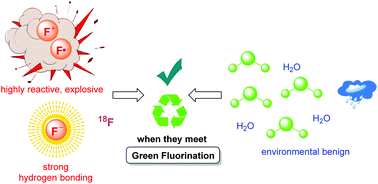
Advances in aqueous fluorination during the last few decades are summarized in this review. Fluorinated compounds have dominated a large percentage of agrochemicals and pharmaceuticals and a mass of functional materials. The incorporation of fluorine atoms into organic molecules has become one of the mainstream technologies for their functional modification. Water is very environmentally friendly and has advantageous physicochemical properties. Fluorination reactions in aqueous media are highly sought-after, and have attracted great attention in research areas ranging from medicinal chemistry to materials science. In early times and for a long time, fluorination was thought to be diametrically opposed to water or moisture. However, recent examples have conflicted with this viewpoint. The successful merger of “untamed” fluorine and “mild” water in chemical reactions has set up a new prospect for green chemistry. A considerable amount of remarkable research works have been carried out using water as a (co)solvent and/or a reactant for transformations including electrophilic, radical, or nucleophilic fluorination. We hope that this review will serve as a guide to better understand and to further broaden the field of fluorine chemistry in aqueous conditions.

Conclusion

The installation of fluorine atoms into organic and organometallic frameworks can dramatically change their physical, chemical, and biological properties. Organofluorides have entered many fields of science and technology with a tremendous impact on these domains. The development of efficient, selective, and mild methods to build C-F bonds is of great importance, which is highly desirable to keep up with the rapidly growing demand of novel fluorine-containing scaffolds. In early times, most fluorination reactions required harsh conditions and moisture-sensitive, highly toxic, and explosive atomic fluorine transfer agents like fluorine gas, xenon difluoride, hypofluorite, antimonytrifluoride, and diethylaminosulfurtrifluoride. The discovery of stable electrophilic fluorination reagents such as Selectflour and NFSI has remarkably changed the dilemma, which realized a large number of safe, mild, and easily controllable electrophilic and radical fluorination reactions in aqueous media. Although the exact mechanisms are still unclear at present, it does never hamper the green fluorination method development with these reagents. A mass of successful examples have confirmed that the aqueous reaction medias have positive impacts on electrophilic and radical fluorination reactions with using the N-F reagents and in many cases water can also be a nucleophile for the entire conversions.

In addition, water was generally thought to be an unsuitable medium for nucleophilic fluorination because the fluoride ions can be “trapped” in aqueous medias by hydrogen bonding and become unreactive. Thus, their use in organic synthesis has been quite limited to polar aprotic solvents. Although the strong hydrogen bond formed between fluoride and water diminished the nucleophilicity of fluoride ions, the recent examples of nucleophilic fluorination in aqueous media have implied that this “negative” effect does not always harm the reaction. Besides, the radioisotope 18F has been considered to be a good choice for PET imaging owing to its desirable radiochemical properties. With a half-life of 110 minutes, the introduction of [ 18F]fluorine atoms into biomolecules has to be completed in a swift manner to minimize the loss of radioactivity. Nucleophilic incorporation of [18F]F‒ in aqueous conditions could rapidly produce [18F]fluorinesubstituted biomolecules, which avoided azeotropic drying process, shortened the production time, and minimized the loss of activity. We summarized the recent aqueous fluorination reactions in three sections according to their possible mechanisms. The successful amalgamation of “ill-tempered” fluorine and “benign” water has boded well for green fluorine chemistry. Water behaves as a cosolvent to dissolve fluorination reagents and/or as a reactant for bifunctionalization. Since the aspects of green chemistry has drawn much attention from the society, the pursuit of more efficient and milder reaction conditions for greener fluorination in aqueous medias will never end. Although a large number of research works have been published in this area, it’s only the tip of the iceberg with a wide scope for improvement. We hope that this review will serve as a guide to understand and to further broaden the field of aqueous fluorine chemistry. To meet the principle of green chemistry in modern synthesis, the development of new fluorination reagents as well as valid catalytic systems is crucial for mild and selective C-F bond formation. It’s undoubted that a growing number of green fluorination methodologies in aqueous media will be witnessed in the near future.

///////////

Share

Advances in indoleamine 2,3-dioxygenase 1 medicinal chemistry

 Uncategorized  Comments Off on Advances in indoleamine 2,3-dioxygenase 1 medicinal chemistry
Jul 242017
 

Advances in indoleamine 2,3-dioxygenase 1 medicinal chemistry

Med. Chem. Commun., 2017, 8,1378-1392
DOI: 10.1039/C7MD00109F, Review Article
Open Access Open Access
Creative Commons Licence  This article is licensed under a Creative Commons Attribution 3.0 Unported Licence.
Alice Coletti, Francesco Antonio Greco, Daniela Dolciami, Emidio Camaioni, Roccaldo Sardella, Maria Teresa Pallotta, Claudia Volpi, Ciriana Orabona, Ursula Grohmann, Antonio Macchiarulo
Structure-function relationships of IDO1 and structure-activity relationships of inhibitors are discussed with an outlook on next generation IDO1 ligand.

MedChemComm

Advances in indoleamine 2,3-dioxygenase 1 medicinal chemist

 Author affiliations

Abstract

Indoleamine 2,3-dioxygenase 1 (IDO1) mediates multiple immunoregulatory processes including the induction of regulatory T cell differentiation and activation, suppression of T cell immune responses and inhibition of dendritic cell function, which impair immune recognition of cancer cells and promote tumor growth. On this basis, this enzyme is widely recognized as a valuable drug target for the development of immunotherapeutic small molecules in oncology. Although medicinal chemistry has made a substantial contribution to the discovery of numerous chemical classes of potent IDO1 inhibitors in the past 20 years, only very few compounds have progressed in clinical trials. In this review, we provide an overview of the current understanding of structure–function relationships of the enzyme, and discuss structure–activity relationships of selected classes of inhibitors that have shaped the hitherto few successes of IDO1 medicinal chemistry. An outlook opinion is also given on trends in the design of next generation inhibitors of the enzyme.

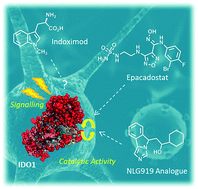
Introduction Indoleamine 2,3-dioxygenases (IDOs) are heme-containing proteins that catalyze the oxidative cleavage of the indole ring of tryptophan (L-Trp, 1) to produce N-formyl kynurenine (2) in the first rate limiting step of the kynurenine pathway (Figure 1).1,2 The family includes two related enzymatic isoforms, namely IDO1 and IDO2, sharing ∼60% of sequence similarity and featuring distinct biochemical features.3,4 A third enzyme of the family is the tryptophan-2,3-dioxygenase (TDO2) which is structurally unrelated to IDO1 and IDO2 and is endowed with a more stringent substrate specificity for L-Trp.5 Although TDO2 is expressed almost exclusively in hepatocytes where it regulates L-Trp catabolism in response to the diet, IDO1 and IDO2 are widely expressed in macrophages and dendritic cells exerting immunoregulatory functions.6 These are accomplished through two major mechanisms including depletion of tryptophan and production of bioactive metabolites along the kynurenine pathway. Specifically, the first mechanism postulates that raising levels of Interferon-γ (IFN-γ) induce IDO1 expression in macrophages and dendritic cells during pathogen infection, leading to consumption of L-Trp and growth arrest of pathogens, whose diet is sensitive to this essential nutrient.7 The second mechanism grounds on production of kynurenine metabolites that bind to the aryl hydrocarbon receptor (AhR), activating signaling pathways that enhance immune tolerance.8-10 Among the three proteins, IDO1 is the most characterized enzyme and in recent years a second signal-transducing function was revealed for this protein.11,12 In particular, this signalling function relies on the presence of two immunoreceptor tyrosine-based inhibitory motifs (ITIMs) in the non-catalytic domain of IDO1.13 The immunosuppressive cytokine transforming growth factor-β (TGF-β) stimulates phosphorylation of ITIMs by Sarcoma-family (Src-family) kinases and consequent interaction of the phosphorylated enzyme with Src Homology 2 domain Phosphatase-1 (SHP-1) and Src Homology 2 domain Phosphatase-2 (SHP-2), eventually leading to long-term expression of IDO1 and immune tolerance. Conversely, in pro-inflammatory environmental conditions, increasing levels of interleukin-6 (IL-6) trigger the interaction of

phosphorylated IDO1 with suppressor of cytokine signalling 3 (SOCS3) that tags the enzyme for proteasome degradation, shortening IDO1’s half-life and promoting inflammatory response.14 The breakthrough discovery that IDO1 plays a crucial role in the maintenance of maternal immune tolerance ushered in a great deal of interest on the enzyme, by then considered a master regulatory hub of immunosuppressive pathways in pregnancy, autoimmune diseases, chronic inflammation, and cancer.15 In this framework, elevated levels of IDO1 expression found in several tumour cells were associated to the participation of the enzyme in the tumor immuno-editing process which sets up immune tolerance to tumor antigens.16,17 On this basis, academic groups and pharmaceutical companies have been engaged in the development of IDO1 inhibitors.18 Although part of these efforts has proved successful, with a large array of potent and selective inhibitors being disclosed in literature and patent applications, only few compounds have hitherto entered clinical trials (3-7, Figure 1).2,19-22 At this regard, some studies have highlighted challenges in the development of enzyme inhibitors mostly due to redox properties of the enzyme that may account for unspecific mechanism of inhibition of many compounds discovered in preclinical studies.23,24 Starting with an overview on the architecture of IDO1 and its structure-function relationships, in this article we discuss selected classes of inhibitors that have shaped advances in the medicinal chemistry of IDO1, providing outlooks on future trends in the design of next generation compounds.

str1

Antonio Macchiarulo

Antonio Macchiarulo


Francesco Antonio Greco

Francesco Antonio Greco

//////////

Share

Synthesis, characterization and anti-inflammatory evaluation of novel substituted tetrazolodiazepine derivatives

 Uncategorized  Comments Off on Synthesis, characterization and anti-inflammatory evaluation of novel substituted tetrazolodiazepine derivatives
Jul 172017
 
Image result for helen p kavitha
SRM University
Chennai, Tamil Nadu, India

3b R = NITRO

str1

Dr. S. Sathishkumar

Dr. S. Sathishkumar
Assistant Professor in Chemistry, Kongu Engineering College, Perundurai, Erode – 638052

DR. HELEN P. KAVITHA

Dr. Helen P. Kavitha

Professor and Head of the Department
E-mail: [email protected]
Area: Chemistry
Affiliation: Department of Chemistry, Ramapuram Campus, SRM University

Education

Ph.D. Organic Synthesis Bharathidasan University, Tiruchirapalli, 2000
M.Sc. General Chemistry Bharathidasan University, Tiruchirapalli, 1994
B.Sc. General Chemistry Bharathidasan University, 1992

Other Details:

Course

  • Chemistry
  • Principles of Environmental Science

Research Interests

  • Organic Synthesis
  • Medicinal Chemistry
  • Crystal Growth
  • Molecular Docking
  • Nano Synthesis

Selected PublicationS

  • A. Santhoshkumar, Helen P. Kavitha*, R. Suresh, Hydrothermal Synthesis, Characterization and Antibacterial Activity of NiO Nanoparticles, Journal of Advanced Chemical Sciences-Article in press
  • R. Kavipriya, Helen P. Kavitha, B. Karthikeyan, and A. Nataraj,” Molecular structure, spectroscopic (FT-IR, FT-Raman), NBO analysis of N,N0-diphenyl-6-piperidin-1-yl-[1,3,5]-triazine-2,4-diamine, Spectrochimica Acta Part A: Molecular and Biomolecular Spectroscopy 150 (2015) 476–487.
  • S. Sathishkumar, Helen P. Kavitha and S. Arulmurugan, In-silico anti-inflammatory evaluation of some novel tetrazolo and triazolodiazepine derivatives against COX-2 protien,  International Journal of Advanced Chemical Science and Applications, 3(1), 2015
  • S. Arulmurugan and Helen P Kavitha, S. Sathishkumar and R. Arulmozhi.       Review on biologically active benzimidazole, Miniriveviews in organic chemistry, 12(1), 178-195, 2015.
  • S. Sathishkumar and Helen P. Kavitha, Synthesis, Characterization and Anti-inflammatory Activity of Novel Triazolodiazepine Derivatives, IOSR Journal of Applied Chemistry, 8(1),47-52, 2015.
  • A. Silambarasan, Helen P. Kavitha, S. Ponnusamy, M. Navaneethan, Y. Hayakawa, Investigation of photocatalytic behavior of l-aspartic acid stabilized Zn(1−x)MnxS solid solutions on methylene blue Applied Catalysis A: General, 476, 22,1-8, 2014.
  • S. Sathish Kumar and Helen P. Kavitha, Synthesis and Biological Applications of Triazole Derivatives-A Review      Mini-Reviews in Organic Chemistry, 10(1), 2013.
  • Helen P. Kavitha and S. Arulmurugan     Synthesis, characterization and cytotoxic activity of benzoxazole, benzimidazole, imidazole and tetrazole      Acta pharmaceutica  63(2), 253-264, 2013
  • Jasmine P. Vennila, Jhon Thiruvadigal,  Helen P Kavitha,  G. Chakkaravarthi and V. Manivannan, N-[2-(3,4-Dimeth-oxy¬phenyl)eth¬yl]-N-methyl-naphthalene-1-sulfonamide, Acta Crystallogr Sect E, 68(Pt 3): o890, 2012.
  • Jasmine P. Vennila, D. Jhon Thiruvadigal,  and Helen P. Kavitha           Antibacterial evaluation of some organic compounds as potential inhibitors for glucosamine-6-phospate synthase            Journal of Pharmacy Research, 5(4), 1963-1966, 2012.
  • Helen P. Kavitha and R. Arulmozhi , Synthesis, Characterization and Anti inflammatory Activity of Some New Tetrazoles Derived from Quinazoline-4-one , International Journal of Chemistry, 1-6, 2012.
  • S. Arulmurugan, Helen P. Kavitha and S. Sathish Kumar.          Synthesis, characterization and molecular docking studies of some new benzoxazole, benzimidazole, imidazole and tetrazole compounds as potential inhibitors for thymidylate synthase, International Journal of Science and Technology, 1, 1-11 2012.
  • Jasmine P. Vennila, Jhon Thiruvadigal, G. E. Theboral Sugi Kamala,  Helen P Kavitha, Chakkaravarthi and V. Manivannan          N-[2-(3,4-Dimeth-oxy¬phen¬yl)eth¬yl]-N-methyl¬benzene-sulfonamide” Acta Crystallogr Sect E Struct Rep Online. 68(Pt 3), o882, 2012.
  • Helen P Kavitha, A. Silambarasan, S. Ponnusamy, M. Navaneethan and Y, Hayakawa, Monodispersed synthesis of hierarchical wurtzite ZnS nanostructures and its functional properties” Materials Letters 81, 209-211, 2012.
  • Jasmine P. Vennila, Jhon Thiruvadigal, Helen P Kavitha, G. Chakkaravarthi and V. Manivannan, 2-(4-Bromophenyl)-3-(4-hydroxyphenyl)-1,3-thiazolidin-4-one”  Acta Cryst., E67, o1902, 2011.
  • Jasmine P. Vennila, D Jhon Thiruvadigal, Helen P Kavitha, G. Chakkaravarthi and V. Manivannan    2,4-Bis(morpholin-4-yl)-6-phenoxy-1,3,5-triazine”  Acta Cryst. E67, o2451, 2011.
  • Jasmine P. Vennila, Jhon Thiruvadigal, Helen P Kavitha, G. Chakkaravarthi and V. Manivannan, 2-Chloro-4,6-bis(piperidin-1-yl)-1,3,5-triazine”  Acta Cryst. E67, o312, 2011.
  • Helen P. Kavitha, Samiappan Sathish kumar and Ramachandran Balajee           Antimicrobial Activity and Molecular Docking Studies of Some Novel Tetrazolo Diazepine Derivatives, Journal of Pharmacy Research,4(9), 2946-2949, 2011
  • Helen P. Kavitha and R. Arulmozhi  Study of Antimicrobial and Analgesic Activities of Novel Tetrazoles Derived from Quinazolin-4-one, Journal of Pharmacy Research , 4(12), 4696-4698, 2011.
  • R.Thilagavathy, Helen.P.Kavitha, R.Amrutha and Bathey.R.Venkatraman       Structural parameters, charge distribution and vibrational frequency analysis using theoretical SCF methods, Elixir Comp. Chem. 40, 5514-5516, 2011.
  • S. Sathish Kumar, Helen P. Kavitha, S. Arulmurugan  and B. R. Venkatraman, Review on Synthesis of Biologically Active Diazepam Derivatives           Mini-Reviews in Organic Chemistry, 8, 1-17, 2011.
  • Jasmine P. Vennila, Jhon Thiruvadigal, Helen P Kavitha, B. Gunasekaran and V. Manivannan, (E)-4-{(4-Bromopenzylidene) amino} phenol, Acta Cryst, E66, O316, 2010.
  • Subramaniyan Arulmurugan and Helen P. Kavitha, 2-Methyl-3-{4-[-(1H-tetrazol-5-yl)ethylamino]phenyl}-3H-quinazolin-4-one”,     Molbank, M695,1-5, 2010.
  • S. Arulmurugan, Helen P. Kavitha and B. R. Venkatraman        Biological Activities of Schiff Base and its Complexes”: A Review,           Rasayan Journal of Chemistry, 3(3), 385-410, 2010.
  • R. Thilagavathy, Helen P Kavitha and B. R. venkatraman          Isolation, Characterization and Anti-Inflammatory Property of Thevetia Peruviana     E-journal of Chemistry,7(4), 1584-1590, 2010.
  • Subramaniyan  Arulmurugan, Helen P. Kavitha, B. R. Venkatraman, Synthesis, Characterization and Study of antibacterial activity of some novel tetrazole derivatives” ,  Orbital Elec. J. Chem,  2(3), 271-276, 2010.
  • With R. Thilagavathi “Synthesis of 3-{4-[4-(benzylideneamino) benzene sulfonyl]-phenyl}-2-phenylquinazoline-4(3H)-one” Molbank, M589, 2009.
  • With S.Sathish Kumar “Synthesis of 3-Methyl-1-Morpholin-4-ylmethyl-2,6-Diphenylpiperidin-4-One”, Molbank, M617, 2009.
  • With S. Sathish Kumar “6-Methyl-2,7-Diphenyl-1,4-Diazepan-5-One”, Acta Cryst., E65, (o3211), 2009.
  • With R. Thilagavathi “2-phenyl-4H-3,1-benzoxazian-4-one”, Acta., Cryst. (E), E65, (o127), 2009.
  • With Suneel Manohar Babu “4-Bromo-3-{N[2-(3,4-dimethoxy phenyl)ethyl]-N-methyl-sulfamoyl}-5-methyl benzoic acid mono hydrate”, Acta., Cryst. (E), E65, (o1568), 2009.
  • With Suneel Manohar Babu “2,4-Dichloro-N-phenethyl benzene Sulfonamide” , Acta., Cryst. (E), E65, (o921), 2009.
  • With Suneel Manohar Babu “N-(5-Bromo-2-Chlorobenzyl)-N-cyclopropylnaphthlene-2-sulfonamide”,  Acta. Cryst. (E), E65, (o1098), 2009.
  • With Jasmine P. Vennila “4-nitrophenyl napthalene-1-sulfonate”, Acta Cryst. (E), (o1848), E64, 2008.
  • With R. Arulmozhi,”1- Naphthyl-9-HCarbazole-4-Sulphonate”, Acta Cryst., E66, 010208, 2008.
  • With T. Nithya “Antibacterial activity of Solanum Trilobatum”, Journal of  Ecotoxicol.Environ. Monit., 14, (237-239), 2004.
  • “Synthesis and Antimicrobial activity of1-(9’Acridinyl)-5-substituted phenyl Tetrazoles”, Asian Journal of chemistry, 16, (1191-1192), 2004.
  • With S. V. Selva bala “Study of Hypoglysemic Activity of Solanum Xanthocarpum L. on Alloxanised Diabetic Rats”, Adv. Pharmacol Toxicol., 4, (19-24), 2003.
  • Helen P. Kavitha “Study of anajesic activity some novel 1-(9’Acridinyl)-5-substituted phenyl tetrazoles”, Indian Journal of Chemical Technology, 9, (361-362), 2002.
  • With S.Malliga, “Effect of Soaking the Wood of Emblica officinalis,on Some Water Parameters”, Journal of   Swamy Bot. 15, (89-90), 1998.

Working Papers

  • With S. Arulmurugan, “Review on Biologically Active Benzimidazole derivatives”: Mini reviews in organic Chemistry.

Academic Experiences

  • Assistant Professor(S. G), SRM University, Ramapuram from Sep 2007 to Jun 2012
  • Lecturer, SRM University, Ramapuram from Aug 2004 to Aug 2007
  • Senior Lecturer, VRS College, Villupuram from Aug 2002 to May 2004
  • Lecturer, VRS College, Villupuram, from Aug 2000 to May 2002
  • Lecturer, ADM College for Women, Nagapattinam from July 94 to April 95

Other Professional Experiences

  • 4 Scholars have been  awarded Ph.D Degree
  • Guiding 3 Ph.D candidates
  • Guided 8 M. Phil and 20 M. Sc projects
  • Principal Investigator for a pilot project funded by SRM University (completed)
  • Co-investigator for a UGC major project (completed)
  • Reviewer for  International Journals
  • Convenor for the National Conference on New Renaissance in Chemical Research, 2011 and 2015.
  • Member Board of Studies –Chemistry,SRM University.
  • Doctoral Committee member in Karunya University
  • Undertaking consultancy work in the department
  • Question paper setter for various universities
  • Convenor for many programmes conducted in the campus
  • Chief Superintendent for SRM University-Ramapuram campus
  • Member in various professional bodies such as MISTE, FICCE and CTA
  • Author of five books in chemistry
  • Executive council member in Association of Chemistry Teachers, Mumbai

Achievement and Award

  • Received Award and cash prize for Research from SRM University from the year 2006-15

Image result for helen p kavitha

///////////////

Share

Control of stereoselectivity of benzylic hydroxylation catalysed by wild-type cytochrome P450BM3 using decoy molecules

 SYNTHESIS, Uncategorized  Comments Off on Control of stereoselectivity of benzylic hydroxylation catalysed by wild-type cytochrome P450BM3 using decoy molecules
Jul 142017


Control of stereoselectivity of benzylic hydroxylation catalysed by wild-type cytochrome P450BM3 using decoy molecules

Catal. Sci. Technol., 2017, Advance Article
DOI: 10.1039/C7CY01130J, Paper
Kazuto Suzuki, Joshua Kyle Stanfield, Osami Shoji, Sota Yanagisawa, Hiroshi Sugimoto, Yoshitsugu Shiro, Yoshihito Watanabe
The benzylic hydroxylation of non-native substrates was catalysed by cytochrome P450BM3, wherein “decoy molecules” controlled the stereoselectivity of the reactions.
  • Catalysis Science & Technology

Control of stereoselectivity of benzylic hydroxylation catalysed by wild-type cytochrome P450BM3 using decoy molecules

Abstract

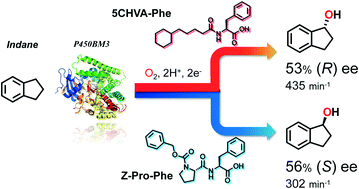
The hydroxylation of non-native substrates catalysed by wild-type P450BM3 is reported, wherein “decoy molecules”, i.e., native substrate mimics, controlled the stereoselectivity of hydroxylation reactions. We employed decoy molecules with diverse structures, resulting in either a significant improvement in enantioselectivity or clear inversion of stereoselectivity in the benzylic hydroxylation of alkylbenzenes and cycloalkylbenzenes. For example, supplementation of wild-type P450BM3 with 5-cyclohexylvaleric acid-L-phenylalanine (5CHVA-Phe) and Z-proline-L-phenylalanine yielded 53% (R) ee and 56% (S) ee for indane hydroxylation, respectively, although 16% (S) ee was still observed in the absence of any additives. Moreover, we performed a successful crystal structure analysis of 5CHVA-L-tryptophan-bound P450BM3 at 2.00 Å, which suggests that the changes in selectivity observed were caused by conformational changes in the enzyme induced by binding of the decoy molecules.

M2 Kazuto Suzuki \ suzuki.kazuto*c.mbox.nagoya-u.ac.jp

Yoshihito Watanabe yoshi*nucc.cc.nagoya-u.ac.jp

/////////////////

Share

Guest blogger, Dr Pravin Patil, Synthesis of Extended Oxazoles III: Reactions of 2-(Phenylsulfonyl)methyl-4,5-Diaryloxazoles

 Uncategorized  Comments Off on Guest blogger, Dr Pravin Patil, Synthesis of Extended Oxazoles III: Reactions of 2-(Phenylsulfonyl)methyl-4,5-Diaryloxazoles
Jun 042017
 

University of Louisville

Chemistry building and Shumaker building

Department of Chemistry, University of Louisville

Synthesis of Extended Oxazoles III: Reactions of  2-(Phenylsulfonyl)methyl-4,5-Diaryloxazoles

Pravin C. Patil and Frederick A. Luzzio*

Department of Chemistry, University of Louisville, 2320South Brook Street, Louisville, Kentucky 40292 

[email protected]

*Corresponding Author: Email: [email protected]

J Org. Chem.201681(21), pp 10521–10526.

Publication Date (Web): July 21, 2016 (Note)

DOI: 10.1021/acs.joc.6b01280

Image result for Frederick A. Luzzio

Frederick A. Luzzio

Professor, Organic Chemistry: Organic and Medicinal Chemistry

str0

STR2

str0

STR2

Typical Procedure for Aluminum/HgCl2-Mediated Desulfonylation for Synthesis of 4 (Eq. 1) and 18 (Table 2). To a solution of the alkylated 2-(sulfonylethyl)-4,5-diphenyloxazole 5 (0.12 mmol, 1.0 equiv) and crystals of mercuric chloride (0.034 mmol, 0.3 equiv), in methanol (15 mL), was added an excess of food-grade aluminum foil (2.32 mmol, 20 equiv) with vigorous stirring under a nitrogen atmosphere. The resulting heterogeneous mixture was heated at reflux until the metal disappeared. The reaction mixture was then allowed to cool to room temperature and filtered through a Celite bed followed by washing with methanol (2 x 15mL). The filtrate was concentrated to a crude residue which was submitted to gravity-column chromatography on silica gel to provide 2-methyl-4,5-diphenyloxazole 4 (96%) or 2-ethyl-4,5-diphenyloxazole 18 (97%).

General procedure for Magnesium/HgCl2-Mediated Desulfonylation of Alkylated Sulfones 5-17. To a stirred solution of an alkylated 2-(phenylsulfonyl)methyl-4,5-diphenyloxazole (0.12 mmol, 1.0 equiv. from Table 1) in methanol (5 mL) was added magnesium turnings (1.73 mmol, 15 equiv) and crystals of mercuric chloride (0.012 mmol, 0.1 equiv) at room temperature. The reaction mixture was stirred at room temperature (2 h) while monitoring the reaction progress by TLC. After the reaction was complete, the reaction mixture was filtered through a Celite bed followed by washing with methanol (2 x 10 mL). The filtrate was concentrated and the resultant crude residue was submitted to gravity-column chromatography on silica gel (hexane/ethyl acetate) to afford the pure products 1827 listed in Table 2.


Typical Procedure for Aluminum/HgCl2-Mediated Desulfonylation for Synthesis of 4 (Eq. 1) and 18 (Table 2). To a solution of the alkylated 2-(sulfonylethyl)-4,5-diphenyloxazole 5 (0.12 mmol, 1.0 equiv) and crystals of mercuric chloride (0.034 mmol, 0.3 equiv), in methanol (15 mL), was added an excess of food-grade aluminum foil (2.32 mmol, 20 equiv) with vigorous stirring under a nitrogen atmosphere. The resulting heterogeneous mixture was heated at reflux until the metal disappeared. The reaction mixture was then allowed to cool to room temperature and filtered through a Celite bed followed by washing with methanol (2 x 15mL). The filtrate was concentrated to a crude residue which was submitted to gravity-column chromatography on silica gel to provide 2-methyl-4,5-diphenyloxazole 4 (96%) or 2-ethyl-4,5-diphenyloxazole 18 (97%).


General procedure for Magnesium/HgCl2-Mediated Desulfonylation of Alkylated Sulfones 5-17. To a stirred solution of an alkylated 2-(phenylsulfonyl)methyl-4,5-diphenyloxazole (0.12 mmol, 1.0 equiv. from Table 1) in methanol (5 mL) was added magnesium turnings (1.73 mmol, 15 equiv) and crystals of mercuric chloride (0.012 mmol, 0.1 equiv) at room temperature. The reaction mixture was stirred at room temperature (2 h) while monitoring the reaction progress by TLC. After the reaction was complete, the reaction mixture was filtered through a Celite bed followed by washing with methanol (2 x 10 mL). The filtrate was concentrated and the resultant crude residue was submitted to gravity-column chromatography on silica gel (hexane/ethyl acetate) to afford the pure products 1827 listed in Table 2.

str0 STR2

Typical procedure: Synthesis of Oxaprozin

Ethyl 3-(4,5-diphenyloxazol-2-yl)-3-(phenylsulfonyl)propanoate (28). To a prechilled solution of 2-(phenylsulfonyl)methyl-4,5-diphenyloxazole 3 (100 mg, 0.27 mmol) in dry THF (15 mL) was added potassium tert-butoxide (33 mg, 0.29 mmol) under a nitrogen atmosphere. The resulting yellow solution was stirred (5°C) for 30 min. To the reaction mixture was slowly added ethyl bromoacetate (49 mg, 32.4 μL, 0.29 mmol) and stirring was continued (16 h) at room temperature. Upon completion of reaction as indicated by TLC, the reaction mixture was quenched with cold water (20 mL) and extracted with dichloromethane (2 x 20 mL). The organic layers were combined, dried over anhydrous sodium sulfate and concentrated to obtain a crude oily residue. The residue was submitted to gravity-column chromatography on silica gel (hexane/ethyl acetate, 4:1) afford pure ethyl 3-(4,5-diphenyloxazol-2-yl)-3-(phenylsulfonyl)propanoate 28 as off-white solid ( 88 mg, 72%).

Ethyl 3-(4,5-diphenyloxazol-2-yl)acrylate (29). To a cooled (5°C) solution of sulfonyloxazole ester 28 (225 mg, 0.49 mmol) in dry THF was added potassium tert-butoxide (60.2 mg, 0.54 mmol) under nitrogen and the reaction mixture was then stirred at 5-10°C (2 h) while monitoring by TLC. After completion of the reaction, the reaction mixture was extracted with dichloromethane (2 x 25 mL) followed by washing the extracts with water and brine then drying over anhydrous Na2SO4. Removal of the drying agent and concentration of the filtrate gave a crude residue which was submitted to gravity-column chromatography (hexane/ethylacetate, 4:1) to provide unsaturated oxazole ester 29 as a colorless oil (100 mg, 65%).

Ethyl 3-(4,5-diphenyloxazol-2-yl)propanoate (30).17 The unsaturated oxazole ester 30 (160 mg, 0.50 mmol) was dissolved in methanol (25 mL) then 10% Pd/C (16 mg, 10% wt/wt) was added at room temperature. The reaction mixture was purged with nitrogen while stirring followed by the addition of hydrogen gas (balloon) and then stirring was continued (16 h) under an atmosphere of hydrogen. Upon completion of reaction, the reaction mixture was filtered through a bed of Celite while washing with methanol (2 x 30 mL). The combined filtrates were concentrated and the crude residue was submitted to gravity-column chromatography (hexane/ethyl acetate, 4:1) to afford 30 as an off-white solid (129 mg, 80%).

Methyl 3-(4,5-diphenyloxazol-2-yl)propanoate (31).13  To a clear solution of sulfonyloxazole ester 28 (80 mg, 0.173 mmol) in methanol (10 mL) was added magnesium turnings (63 mg, 2.60 mmol) followed by solid mercuric chloride (4.7 mg, 0.017 mmol) at room temperature. The resulting reaction mixture was stirred (2 h) while monitoring the reaction progress by TLC. After completion of the reaction, the heterogeneous mixture was then filtered through a Celite bed followed by washing with methanol (2 x 15 mL). The methanolic filtrates were combined and concentrated to afford a crude residue. The residue was submitted to gravity-column chromatography (hexane/ethylacetate, 4:1) to provide ester 31 as an off-white solid (52 mg, 97%).

3-(4,5-Diphenyloxazol-2-yl)propanoic acid (Oxaprozin) (32).13 Ethyl ester 30 (128 mg, 0.39 mmol) or methyl ester 31 (65 mg, 0.21 mmol) and 20% aquous NaOH solution (3 mL) was stirred overnight at room temperature. Upon completion of reaction as indicated by TLC, the reaction mixture was slowly acidified to pH 3-4 using conc. HCl (3 mL) at room temperature and stirring was continued (3 h). After the neutralization was complete the reaction mixture was diluted with cold water (15 mL) and extracted with dichloromethane (2 x 15 mL). The organic extracts were combined, dried over anhydrous Na2SO4 and concentrated to give a white solid residue. The residue was submitted to gravity-column chromatography (chloroform/methanol, 9:1) to afford pure Oxaprozin 32 as white solid (80 mg, 68%, from the ethyl ester 30) or (60 mg, 97%, from the methyl ester 31).

str0

ABOUT GUEST BLOGGER

Dr. Pravin C. Patil

Dr. Pravin C. Patil

Postdoctoral Research Associate at University of Louisville

    see…….http://oneorganichemistoneday.blogspot.in/2017/04/dr-pravin-patil.html

    Dr. Pravin C Patil completed his B.Sc. (Chemistry) at ASC College Chopda (Jalgaon, Maharashtra, India) in 2001 and M.Sc. (Organic Chemistry) at SSVPS’S Science College Dhule in North Maharashtra University (Jalgaon, Maharashtra, India) in year 2003. After M.Sc. degree he was accepted for summer internship training program at Bhabha Atomic Research Center (BARC, Mumbai) in the laboratory of Prof. Subrata Chattopadhyay in Bio-organic Division. In 2003, Dr. Pravin joined to API Pharmaceutical bulk drug company, RPG Life Science (Navi Mumbai, Maharashtra, India) and worked there for two years. In 2005, he enrolled into Ph.D. (Chemistry) program at Institute of Chemical Technology (ICT), Matunga, Mumbai, aharashtra, under the supervision of Prof. K. G. Akamanchi in the department of Pharmaceutical Sciences and Technology.

    After finishing Ph.D. in 2010, he joined to Pune (Maharashtra, India) based pharmaceutical industry, Lupin Research Park (LRP) in the department of process development. After spending two years at Lupin as a Research Scientist, he got an opportunity in June 2012 to pursue Postdoctoral studies at Hope College, Holland, MI, USA under the supervision of Prof. Moses Lee. During year 2012-13 he worked on total synthesis of achiral anticancer molecules Duocarmycin and its analogs. In 2014, he joined to Prof. Frederick Luzzio at the Department for Chemistry, University of Louisville, Louisville, KY, USA to pursue postdoctoral studies on NIH sponsored project “ Structure based design and synthesis of Peptidomimetics targeting P. gingivalis.

    During his research experience, he has authored 23 international publications in peer reviewed journals and inventor for 4 patents.

    Prof K. G. Akamanchi

    ICT Mumbai

    SEE…………

    About

    The long term goals of our research are focused at the interface of chemistry and biology. We are interested in solving problems in biomedicine using the techniques and application of synthetic organic, medicinal and natural products chemistry. Toward our goals in biomedicine we concentrate our efforts in the following three areas of organic chemistry: (1) the development of new methods and strategy which are applicable to the synthesis of biologically active compounds; (2) the total synthesis of a wide range of complex molecules including natural products, pharmaceutical leads and their analogues; and (3) the isolation and discovery of biologically active compounds from natural sources. Within our objectives in item 1 (above), we have had a long-term collaboration with the Clinical Pharmacology Section of the National Cancer Institute in which we have synthesized metabolites and analogues of thalidomide, a small-molecule immunomodulator and angiogenesis inhibitor. The derivatives and analogues of thalidomide were stereospecifically synthesized in order to ascertain the mode of action and the molecular target of this small molecule. Ultimately, the synthetic studies are leading to analogues of thalidomide which are more potent, but which have less undesirable side effects than the parent compound. In the neurosciences area we have completed an enantioselective synthesis of both optical isomers of a key intermediate in preparing the histrionicotoxins, a group of compounds which are isolated for the neurotoxic Amazon “poison dart” frogs. One of our present natural products projects  (under item 3,above) entails the isolation, neurotoxicity assays and synthesis of a series of naturally-occurring compounds called acetogenins from the North American paw paw tree Asimina triloba. The isolation, purification and structural confirmation of the natural products has been conducted in collaboration with the Neurosciences Department within the University of Louisville School of Medicine. In the area of anti-infectives (under 1), we are designing and synthesizing an array of nitrogen and nitrogen/oxygen heterocyclic scaffolds bearing acetylenic and azido groups for use in the so-called “click reaction.” The multiply-connected scaffolds have proven to be effective for inhibiting micro-organisms working in tandem to produce biofilms necessary for their establishment and survival.

    Education

    1976   B.S.   Vanderbilt University
    1979   M.S.  Tufts University
    1982   Ph.D. Tufts University
    1982-1985  Postdoctoral Fellow, Harvard University

    Current Service

    Executive Committee/Treasurer, International Society of Heterocyclic Chemistry [email protected]

    Links

    Gordon Research Conferences on Natural Products 2009

    The Natural Products Gordon Conference. 1951-2011

    International Society of Heterocyclic Chemistry

    Organic Links

    str0

    ///////

    Share

    Tegafur

     Uncategorized  Comments Off on Tegafur
    Jun 012017
     

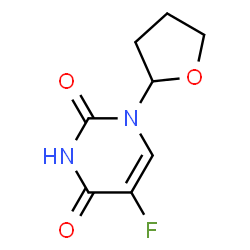
    Skeletal formula of tegafur

    Tegafur

    CAS 17902-23-7

    2,​4(1H,​3H)​-​Pyrimidinedione, 5-​fluoro-​1-​(tetrahydro-​2-​furanyl)​-
    Molecular Weight,200.17, MF C8 H9 F N2 O3
    172-173 °C

    Miyashita, Osamu; Chemical & Pharmaceutical Bulletin 1981, 29(11), PG 3181-90

    Uracil, 5-fluoro-1-(tetrahydro-2-furyl)-
    Utefos
    Venoterpine
    WY1559000
    YR0450000
    5-fluoro-1-tetrahydrofuran-2-ylpyrimidine-2,4(1H,3H)-dione
    Carzonal
    N1-(2′-Furanidyl)-5-fluorouracil
    • Synonyms:Ftorafur
    • ATC:L01BC03
    • EINECS:241-846-2
    • LD50:800 mg/kg (M, i.v.); 775 mg/kg (M, p.o.);
      685 mg/kg (R, i.v.); 930 mg/kg (R, p.o.);
      34 mg/kg (dog, p.o.)

    Derivatives, monosodium salt

    • Formula:C8H8FN2NaO3
    • MW:222.15 g/mol
    • CAS-RN:28721-46-2

    Tegafur (INN, BAN, USAN) is a chemotherapeutic prodrug of 5-flourouracil (5-FU) used in the treatment of cancers. It is a component of the combination drug tegafur/uracil. When metabolised, it becomes 5-FU.[1]

    Medical uses

    As a prodrug to 5-FU it is used in the treatment of the following cancers:[2]

    It is often given in combination with drugs that alter its bioavailability and toxicity such as gimeracil, oteracil or uracil.[2] These agents achieve this by inhibiting the enzyme dihydropyrimidine dehydrogenase (uracil/gimeracil) or orotate phosphoribosyltransferase (oteracil).[2]

    Image result for tegafur

    Adverse effects

    The major side effects of tegafur are similar to fluorouracil and include myelosuppression, central neurotoxicity and gastrointestinal toxicity (especially diarrhoea).[2] Gastrointestinal toxicity is the dose-limiting side effect of tegafur.[2] Central neurotoxicity is more common with tegafur than with fluorouracil.[2]

    Image result for tegafur

    Pharmacogenetics

    The dihydropyrimidine dehydrogenase (DPD) enzyme is responsible for the detoxifying metabolism of fluoropyrimidines, a class of drugs that includes 5-fluorouracil, capecitabine, and tegafur.[4] Genetic variations within the DPD gene (DPYD) can lead to reduced or absent DPD activity, and individuals who are heterozygous or homozygous for these variations may have partial or complete DPD deficiency; an estimated 0.2% of individuals have complete DPD deficiency.[4][5] Those with partial or complete DPD deficiency have a significantly increased risk of severe or even fatal drug toxicities when treated with fluoropyrimidines; examples of toxicities include myelosuppression, neurotoxicity and hand-foot syndrome.[4][5]

    Mechanism of action

    It is a prodrug to 5-FU, which is a thymidylate synthase inhibitor.[2]

    Pharmacokinetics

    It is metabolised to 5-FU by CYP2A6.[6][7]

    Interactive pathway map

    Click on genes, proteins and metabolites below to link to respective articles.[§ 1]

    FluoropyrimidineActivity_WP1601

    go to article go to article go to article go to pathway article go to pathway article go to article go to article go to article go to article go to article go to article go to article go to article go to article go to PubChem Compound go to article go to article go to article go to article go to article go to article go to article go to article go to article go to article go to article go to article go to article go to article go to article go to article go to article go to article go to pathway article go to pathway article go to article go to article go to article go to article go to article go to WikiPathways go to article go to article go to article go to article go to article go to article go to article go to article go to article

    The interactive pathway map can be edited at WikiPathways: “FluoropyrimidineActivity_WP1601”.

    Image result for tegafur

    Image result for tegafur SYNTHESIS


    Image result for tegafur SYNTHESIS


    MASS SPECTRUM

    STR2

    1H NMR

    str3 str4

    IR


    str5


    13C NMR

    STR2 str3

    RAMAN


    str4


    STR2 str3

    Synthesis

    Image result for tegafur SYNTHESIS

    Substances Referenced in Synthesis Path

    CAS-RN Formula Chemical Name CAS Index Name
    58138-78-6 C10H19FN2O2Si2 1,3-bis(trimethylsilyl)fluorouracil 2,4(1H,3H)-Pyrimidinedione, 5-fluoro-1,3-bis(trimethylsilyl)-
    13369-70-5 C4H7ClO 2-chlorotetrahydrofuran Furan, 2-chlorotetrahydro-
    1191-99-7 C4H6O 2,3-dihydrofuran Furan, 2,3-dihydro-
    51-21-8 C4H3FN2O2 5-fluorouracil 2,4(1H,3H)-Pyrimidinedione, 5-fluoro-

    Image result for tegafur SYNTHESIS

    Image result for tegafur

    ChemSpider 2D Image | Tegafur | C8H9FN2O3


    SYN1

    STR1

    CN 106397416

    SYN 2

    STR2


    Advanced Synthesis & Catalysis, 356(16), 3325-3330; 2014

    PATENTS

    CN 106397416

    CN 104513230

    CN 103159746

    PATENT

    CN 102285972

    tegafur is a derivative of 5-fluorouracil, and in 1967, Hiller of the former Soviet Union synthesized tegafur (SA Hiller, RA Zhuk, M. Yu. Lidak, et al. Substituted Uracil [ P, British Patent, 1168391 (1969)). In 1974, it was listed in Japan. China was successfully developed by Shandong Jinan Pharmaceutical Factory in 1979. Its present origin is Shanghai and Shandong provinces and cities. The anti-cancer effect of tegafur is similar to that of 5-fluorouracil and is activated in vivo by 5-fluorouracil through liver activation. Unlike 5-fluorouracil, tegafur is fat-soluble, has good oral absorption, maintains high concentrations in the blood for a long time and easily passes through the blood-brain barrier. Clinical and animal experiments show that tegafur on gastrointestinal cancer, breast cancer is better, the role of rectal cancer than 5-fluorouracil good, less toxic than 5-fluorouracil. Teflon has a chemotherapy index of 2-fold for 5-fluorouracil and only 1 / 4-1 / 7 of toxicity. So the addition of fluoride is widely used in cancer patients with chemotherapy.

    [0003] The first synthesis of tegafur is Hiller ([SA Hiller, RA Zhuk, Μ. Yu. Lidak, et al. Substituted Uracil [P], British Patent, 1168391 (1969)]. 5-fluorouracil or 2,4-bis (trimethylsilyl) -5-fluorouracil (Me3Si-Fu, 1) and 2-chlorotetrahydrofuran (Thf-Cl), and it is reported that this synthesis must be carried out at low temperature (- 20 to -40 ° C), because Thf-Cl is unstable, and excess Thf-Cl results in a decomposition reaction, thereby reducing the yield of Thf-Fu.

    [0004] Earl and Townsend also prepared 1_ (tetrahydro-2-furyl) uracil using Thf-Cl and 2,4-bis (trimethylsilyl) uracil, and then using trifluoromethyl fluorite to product Fluorination. Mitsugi Yasurnoto reacts with the Friedel-Crafts catalyst in the presence of 2,4-bis (trimethylsilyl) -5-fluorouracil (Me3Si-U, 1) 2-acetoxytetrahydrofuran (Thf-OAc, 2) (Kazu Kigasawa et al., 2-tert-Butoxy), & lt; RTI ID = 0.0 & gt;, & lt; / RTI & gt; (K. Kigasawa, M. Hiiragi, K. ffakisaka, et al. J. Heterocyclic Chem. 1977, 14: 473-475) was reacted with 5-Fu at 155-160 ° C. Reported in the literature for the fluoride production route there are the following questions: 1, high energy consumption. In the traditional synthesis method, in order to obtain the product, the second step of the reaction needs to continue heating at 160 ° C for 5-6 hours, high energy consumption; 2, difficult to produce, low yield: 5-fluorouracil as a solid powder The reaction needs to be carried out at a high temperature (160 ° C), which requires the use of a high boiling solvent N, N-dimethylformamide (DMF). But it is difficult to completely remove the fluoride from the addition of fluoride, because DMF can form hydrogen bonds with the fluoride molecules, difficult to separate from each other; 3, in order to unreacted 5-fluorouracil and tegafur separation and recycling , The use of carcinogenic solvent chloroform as a extractant in the conventional method to separate 5-fluorouracil and tegafur. However, the main role of chloroform on the central nervous system, with anesthesia, the heart, liver, kidney damage; the environment is also harmful to the water can cause pollution. Therefore, the use of volatile solvent chloroform, even if the necessary measures to reduce its volatilization, will still cause harm to human health and the environment; 4, low yield. Since both NI and N-3 in the 5-fluorouracil molecule react with 2-tert-butoxytetrahydrofuran, the addition of tegafur is also the addition of 1,3-bis (tetrahydro-2-furyl) -5 – Fluorouracil. Therefore, the improvement of the traditional production process of tegafur is a significant and imminent task.

    Example 1 (for example, the best reaction conditions):

    Weigh 3.5 g (50 mmol) of 2,3-dihydrofuran, 1.9 g (50 mmol) of ethanol was added to a one-necked flask. To this was added 15 ml of tetrahydrofuran (THF). And then weighed 10. 0 mg CuCl2, microwave irradiation 250W at 25 ° C reaction 0. 6h. Cool to room temperature, add 1.95 g (15 mmol) of 5-fluorouracil (5-Fu), and microwave irradiation at 400 ° C for 100 ° C. After distilling off the low boiling solvent, the oil was obtained. Rinsed with ether to give a white solid which was recrystallized from anhydrous ethanol to give 1.34349 g of product. Melting point: 160-165 ° C. The yield was 75%.

    [0011] Example 2

    Weigh 3,5 g (50 mmol) of 2,3-dihydrofuran and 3.8 g (100 mmol) of ethanol were added to a single-necked flask. To this was added 15 ml of tetrahydrofuran (THF). And then weighed 5mg CuCl2, microwave irradiation 250W at 25 ° C for 0.6h. Cool to room temperature, add 1.95 g (15 mmol) of 5-fluorouracil (5-Fu), microwave irradiation 400W, reaction temperature 60 ° C under the reaction pool. The low boiling solvent was distilled off to give an oil. Rinsed with ether to give a white solid which was recrystallized from absolute ethanol to give the product 0. 46 g. Melting point: 160-165 ° C. The yield was 15%.

    [0012] Example 3

    Weigh 3.5 g (50 mmol) of 2,3-dihydrofuran, 1.9 g (50 mmol) of ethanol was added to a one-necked flask. To this was added 15 ml of tetrahydrofuran (THF). And then weighed 20mg CuCl2, microwave irradiation 250W at 25 ° C for 0.6h. Cooled to room temperature, add 1.95 g (15 to 01) 5-fluorouracil (5 call 11), microwave irradiation 2001, reaction temperature 1301: reaction lh. The low boiling solvent was distilled off to give an oil. Rinsed with ether to give a white solid which was recrystallized from anhydrous ethanol to give the product 1.81 g. Melting point: 160-165 ° C. The yield was 61%.

    [0013] Example 4

    Weigh 3.5 g (50 mmol) of 2,3-dihydrofuran and 19 g (500 mmol) of ethanol were added to a single-necked flask. To this was added 20 ml of tetrahydrofuran (THF). And then weighed IOmg CuCl2, microwave irradiation 250W at 25 ° C for 0.6h. Cooled to room temperature, add 1.95 g (15 to 01) 5-fluorouracil (5 call 11), microwave irradiation 2001, reaction temperature 1101: reaction lh. The low boiling solvent was distilled off to give an oil. Rinsed with ether to give a white solid which was recrystallized from absolute ethanol to give product U6g. Melting point: 160-165 ° C. The yield was 43%.

    [0014] Example 5

    Weigh 3,5 g (50 mmol) of 2,3-dihydrofuran and 9.5 g (250 mmol) of ethanol were added to a single-necked flask. To this was added 30 ml of tetrahydrofuran (THF). And then weighed IOmg CuCl2, microwave irradiation 250W at 25 ° C for 0.6h. Cooled to room temperature, add 1.95 g (15 to 01) 5-fluorouracil (5 call 11), microwave irradiation 6001, reaction temperature 1001: reaction lh. The low boiling solvent was distilled off to give an oil. Rinsed with ether to give a white solid which was recrystallized from absolute ethanol to give 1.15 g of product. Melting point: 160-165 ° C. The yield was 38%.

    [0015] Example 6

    Weigh 3.5 g (50 mmol) of 2,3-dihydrofuran, 1.9 g (50 mmol) of ethanol was added to a one-necked flask. To this was added 25 ml of tetrahydrofuran (THF). And then weighed 15mg CuCl2, microwave irradiation 250W at 25 ° C for 0.6h. Cooled to room temperature, add 1.95 g (15 to 01) 5-fluorouracil (5 call 11), microwave irradiation 5001, reaction temperature 1101: reaction lh. The low boiling solvent was distilled off to give an oil. Rinsed with ether to give a white solid which was recrystallized from anhydrous ethanol to give product 2.10 g. Melting point: 160-165 ° C. The yield was 70%.


    Paper

    A novel protocol for preparation of tegafur (a prodrug of 5-fluorouracil) is reported. The process involves the 1,8-diazabicycloundec-7-ene-mediated alkylation of 5-fluorouracil with 2-acetoxytetrahydrofuran at 90 °C, followed by treatment of the prepurified mixture of the alkylation products with aqueous ethanol at 70 °C. The yield of the two-step process is 72%.

    Synthesis of Tegafur by the Alkylation of 5-Fluorouracil under the Lewis Acid and Metal Salt-Free Conditions

    Aleksandra Zasada, Ewa Mironiuk-Puchalska, and Mariola Koszytkowska-Stawińska* 

    Faculty of Chemistry, Warsaw University of Technology, ul. Noakowskiego 3, 00-664 Warszawa, Poland

    Org. Process Res. Dev., Article ASAP

    DOI: 10.1021/acs.oprd.7b00103

    *E-mail: [email protected].

    http://pubs.acs.org/doi/abs/10.1021/acs.oprd.7b00103

    Click to access op7b00103_si_001.pdf

    Tegafur, a prodrug of 5-fluorouracil (5-FUra), was discovered in 1967. The compound features high lipophilicity and water solubility compared to 5-FUra. Tegafur is used as a racemate since no significant difference in antitumor activity of enantiomers was observed.

    The prodrug is gradually converted to 5-FUra by metabolism in the liver. Hence, a rapid breakdown of the released 5-FUra in the gastrointestinal tract is avoided.(6) In injectable form, tegafur provoked serious side effects, such as nausea, vomiting, or central nervous system disturbances.

    The first generation of oral formulation of tegafur , UFT) is a combination of tegafur and uracil in a fixed molar ratio of 1:4, respectively. The uracil slows the metabolism of 5-FUra and reduces production of 2-fluoro-α-alanine as the toxic metabolite. UFT was approved in 50 countries worldwide excluding the USA.

    S-1 is the next generation of oral formulation of tegafur.(7) It is a combination of tegafur, gimeracil, and oteracil in a fixed molar ratio of 1:0.4:1, respectively.

    Gimeracil inhibits the enzyme responsible for the degradation of 5-FUra. Oteracil prevents the activation of 5-FUra in the gastrointestinal tract, thus minimizing the gastrointestinal toxicity of 5-FUra. S-1 is well-tolerated, but its safety can be influenced by schedule and dose, similar to any other cytotoxic agent. Since common side effects of S-1 can be managed with antidiarrheal and antiemetic medications, the drug can be administered in outpatient settings. S-1 was approved in Japan, China, Taiwan, Korea, and Singapore for the treatment of patients with gastric cancer.

    In 2010, the Committee for Medicinal Products for Human Use (CHMP), a division of the European Medicines Agency (EMA), recommended the use of S-1 for the treatment of adults with advanced gastric cancer when given in a combination with cisplatin. Currently, S-1 has not been approved by the FDA in the United States.

    There is a great interest in further examination of S-1 as an anticancer chemotherapeutic. Currently, 23 clinical trials with S-1 has been registered in National Institutes of Health (NIH). Combinations of S-1 and other anticancer agents have been employed in a majority of these trials.

    5-Fluoro-1-(tetrahydrofuran-2-yl)pyrimidine-2,4(1H,3H)-dione (Tegafur)

    δH 1.89–2.10 (m, 3H), 2.38–2.45 (m, 1H), 3.97–4.01 (q-like m, 1H), 4.20–4.24 (dq-like m), 5.97–5.98 (m, 1H), 7.41 (d, 3JHF 6.1), 9.21 (bs, 1H, NH).

    δC 23.82, 32.90, 70.26, 87.58, 123.63 (d, 2JCF 33.89), 140.33 (d, 1JCF 237.20) 148.66, 156.9 (d, 2JCF 26.81).

    HRMS m/z calcd for C8H10N2O3F [M – H]+ 201.0670, found 201.0669.

    Elemental analysis. Found C%, 46.42; H%, 4.45; N%, 13.35. Calcd for 3(C8H9N2O3F)·H2O: C%, 46.61; H%, 4.73; N%, 13.59.

    PATENT CITATIONS
    Cited Patent Filing date Publication date Applicant Title
    CN85108855A * Nov 6, 1985 Sep 24, 1986 Central Chemical Research Institute Preparation of 1- (2-tetrahydrofuryl) -5-fluorouracil
    GB1168391A * Title not available
    JPS5452085A * Title not available
    JPS5455581A * Title not available
    JPS5459288A * Title not available
    JPS52118479A * Title not available
    JPS54103880A * Title not available
    US4256885 * Dec 10, 1976 Mar 17, 1981 Mitsui Toatsu Kagaku Kabushiki Kaisha Process for the preparation of 1- (2-tetrahydrofuryl) -5-fluorouracil
    US5075446 * Oct 12, 1990 Dec 24, 1991 Korea Advanced Institute Of Science & Technology Synthesis of tetrahydro-2-furylated pyrimidine derivatives
    NON-PATENT CITATIONS
    Reference
    1 * KAZUO KIGASAWA, et al .: ” Studies on the Synthesis of Chemotherapeutics. Synthetic of 1- (2-Tetrahydrofuryl) -5-fluorouracil [Ftorafur] (Studies on the Syntheses of Heterocyclic Compound. Part 703) “, “J. HETEROCCLIC CHEM ., Vol. 14, 31 May 1977 (1977-05-31), pages 473 – 475

    References

    1

    Matt P, van Zwieten-Boot B, Calvo Rojas G, Ter Hofstede H, Garcia-Carbonero R, Camarero J, Abadie E, Pignatti F (October 2011). “The European Medicines Agency review of Tegafur/Gimeracil/Oteracil (Teysuno™) for the treatment of advanced gastric cancer when given in combination with cisplatin: summary of the Scientific Assessment of the Committee for medicinal products for human use (CHMP).” (PDF). The Oncologist. 16 (10): 1451–1457. doi:10.1634/theoncologist.2011-0224. PMC 3228070Freely accessible. PMID 21963999.

    1. (1) Hirose, Takashi; Oncology Reports 2010, V24(2), P529-536 
    2. (2) Fujita, Ken-ichi; Cancer Science 2008, V99(5), P1049-1054 
    3. (3) Tahara, Makoto; Cancer Science 2011, V102(2), P419-424 
    4. (4) Chu, Quincy Siu-Chung; Clinical Cancer Research 2004, V10(15), P4913-4921 
    5. (5) Tominaga, Kazunari; Oncology 2004, V66(5), P358-364 
    6. (6) Peters, Godefridus J.; Clinical Cancer Research 2004, V10(12, Pt. 1), P4072-4076 
    7. (7) Kim, Woo Young; Cancer Science 2007, V98(10), P1604-1608 
    8.  Hillers, Solomon; Puti Sinteza i Izyskaniya Protivoopukholevykh Preparatov 1970, VNo. 3, P109-12 
    9.  Grishko, V. A.; Trudy Kazakhskogo Nauchno-Issledovatel’skogo Instituta Onkologii i Radiologii 1977, V12, P110-14 
    10. Ootsu, Koichiro; Takeda Kenkyushoho 1978, V37(3-4), P267-77 
    11.  “Drugs – Synonyms and Properties” data were obtained from Ashgate Publishing Co. (US) 
    12. Yabuuchi, Youichi; Oyo Yakuri 1971, V5(4), P569-84 
    13.  Germane, S.; Eksperimental’naya i Klinicheskaya Farmakoterapiya 1970, (1), P85-92 
    14.  JP 56046814 A 1981

    MORE

    1. AIST: Integrated Spectral Database System of Organic Compounds. (Data were obtained from the National Institute of Advanced Industrial Science and Technology (Japan))
    2.  ACD-A: Sigma-Aldrich (Spectral data were obtained from Advanced Chemistry Development, Inc.)
    3. Nomura, Hiroaki; Chemical & Pharmaceutical Bulletin 1979, V27(4), P899-906 
    4. Sakurai, Kuniyoshi; Chemical & Pharmaceutical Bulletin 1978, V26(11), P3565-6 
    5. Miyashita, Osamu; Chemical & Pharmaceutical Bulletin 1981, V29(11), P3181-90
    6. Lukevics, E.; Zhurnal Obshchei Khimii 1981, V51(4), P827-34 
    7.  Needham, F.; Powder Diffraction 2006, V21(3), P245-247 
      1. Nomura, Hiroaki; Chemical & Pharmaceutical Bulletin 1979, V27(4), P899-906 
      2. Sakurai, Kuniyoshi; Chemical & Pharmaceutical Bulletin 1978, V26(11), P3565-6 
      3.  “Drugs – Synonyms and Properties” data were obtained from Ashgate Publishing Co. (US) 
      4.  Miyashita, Osamu; Chemical & Pharmaceutical Bulletin 1981, V29(11), P3181-90 
      5.  “PhysProp” data were obtained from Syracuse Research Corporation of Syracuse, New York (US)
      6.  Lukevics, E.; Zhurnal Obshchei Khimii 1981, V51(4), P827-34 
      7.  Lukevics, E.; Latvijas PSR Zinatnu Akademijas Vestis, Kimijas Serija 1982, (3), P317-20 
      8. Kruse, C. G.; Recueil des Travaux Chimiques des Pays-Bas 1979, V98(6), P371-80 
      9. Lukevics, E.; Latvijas PSR Zinatnu Akademijas Vestis, Kimijas Serija 1981, (4), P492-3
      10.  Kametani, Tetsuji; Heterocycles 1977, V6(5), P529-33
      11.  Kametani, Tetsuji; Journal of Heterocyclic Chemistry 1977, V14(3), P473-5 
      12. Hillers, S.; GB 1168391 1969 


    Tegafur
    Skeletal formula of tegafur
    Ball-and-stick model of the tegafur molecule
    Clinical data
    AHFS/Drugs.com International Drug Names
    Pregnancy
    category
    • AU: D
    Routes of
    administration
    Oral
    ATC code
    Legal status
    Legal status
    • AU: S4 (Prescription only)
    • UK: POM (Prescription only)
    Pharmacokinetic data
    Biological half-life 3.9-11 hours
    Identifiers
    Synonyms 5-fluoro-1-(oxolan-2-yl)pyrimidine-2,4-dione
    CAS Number
    PubChem CID
    ChemSpider
    UNII
    KEGG
    ChEMBL
    ECHA InfoCard 100.038.027
    Chemical and physical data
    Formula C8H9FN2O3
    Molar mass 200.16 g/mol
    3D model (Jmol)

    ///////////TEGAFUR

    FC1=CN(C2CCCO2)C(=O)NC1=O

    Share
    Follow

    Get every new post on this blog delivered to your Inbox.

    Join other followers: