AUTHOR OF THIS BLOG

DR ANTHONY MELVIN CRASTO, WORLDDRUGTRACKER

DR ANTHONY MELVIN CRASTO Ph.D

DR ANTHONY MELVIN CRASTO, Worlddrugtracker, Born in Mumbai in 1964 and graduated from Mumbai University, Completed his PhD from ICT ,1991, Mumbai, India, in Organic chemistry, The thesis topic was Synthesis of Novel Pyrethroid Analogues, Currently he is working with AFRICURE PHARMA as ADVISOR earlier GLENMARK LS Research centre as consultant,Principal Scientist, Process Research (bulk actives) at Mahape, Navi Mumbai, India. Prior to joining Glenmark, he worked with major multinationals like Hoechst Marion Roussel, now sSanofi, Searle India ltd, now Rpg lifesciences, etc. he is now helping millions, has million hits on google on all organic chemistry websites. His New Drug Approvals, Green Chemistry International, Eurekamoments in organic chemistry are some most read blogs He has hands on experience in initiation and developing novel routes for drug molecules and implementation them on commercial scale over a 32 year tenure, good knowledge of IPM, GMP, Regulatory aspects, he has several international drug patents published worldwide . He gas good proficiency in Technology transfer, Spectroscopy, Stereochemistry, Synthesis, polymorphism etc He suffered a paralytic stroke in dec 2007 and is bound to a wheelchair, this seems to have injected feul in him to help chemists around the world, he is more active than before and is pushing boundaries, he has one lakh connections on all networking sites, He makes himself available to all, contact him on +91 9323115463, [email protected]

EU GMP Annex 1 Revision 2016 – what does the pharmaceutical industry expect?

 regulatory  Comments Off on EU GMP Annex 1 Revision 2016 – what does the pharmaceutical industry expect?
May 262016
 

Dr Friedrich Haefele, Vice President Fill & Finish Biopharma at Boehringer Ingelheim

Dr Friedrich Haefele, Vice President Fill & Finish Biopharma at Boehringer Ingelheim talked in his keynote speech at the Pharma Congress 2016 about the revision of Annex 1 of the EU GMP Guide. Read here what the pharmaceutical industry expects form the new Annex 1.

http://www.gmp-compliance.org/enews_05326_EU-GMP-Annex-1-Revision-2016—what-does-the-pharmaceutical-industry-expect_15160,15266,15265,15432,Z-PEM_n.html

Europe’s biggest Pharma Congress of its kind took place in Düsseldorf on 12 and 13 April. With more than 1000 participants, 90 exhibitors and 10 GMP conferences this Congress 2016 has been the biggest since the first one 18 years ago. 50 lectures, almost exclusively case studies from pharmacuetical companies such as Pfizer, Novartis, Boehringer Ingelheim and many more were discussed. Special attention was paid to the keynotes at the beginning of each congress day.

Dr Friedrich Haefele, Vice President Fill & Finish Biopharma at Boehringer Ingelheim talked in his keynote speech about the revision of Annex 1 of the EU Guidelines to Good Manufacturing Practice. The first version dates already back to the year 1972. Dr Haefele stated that there had already been five revisions since this time but no fundamental review. This means the time has come to revise this fundamental document on the regulation of sterile manufacture in Europe.

Dr Haefele demonstrated the need for action on one hand by a comparison with the FDA Aseptic Guide and on the other hand by means of his own commenting. Friedrich Haefele said that priority should be given to harmonisation. He basically believes that Annex 1 should remain reserved for sterile parenteral products and that other sterile products or active pharmaceutical ingredients should be regulated in other documents or in specific annexes. He also wants a separation between aseptically manufactured and terminally sterilised products in the new Annex 1.

He considers DIN ISO 14644-1 to be a central document that is used for the classification of clean rooms in the European Guideline but also in the US Guide. Dr Haefele is not bothered by the fact that the limit for 5 µm particles has been deleted from the grade ISO 5 (ISO 4.8). According to him it should also be deleted from the European requirements. Deviations in the case of 0.5 and 5 µm particles occur essentially in parallel so that it should be possible to renounce to the limit for 5 µm particles.

Dr Haefele also proposed a simplification for the microbiological environmental monitoring. Settle plates as well as microbial air sampling are required in Europe at the moment. According to Dr Haefele only the microbial air sampling should be compulsory whereas the use of settle plates should be optional or additional. The use of average values in the microbiological monitoring in the clean room should be dismissed. With the use of isolators with validated decontamination cycles the microbiological monitoring could be reduced to the essential pursuant to ICH Q9 Quality Risk Management.

In contrast to the FDA Aseptic Guide the European Annex 1 contains requirements concerning the crimping process as well as a differentiation between aseptic and clean processes. For the latter Dr Haefele wants a clear definition of “Grade A Air Supply” that should be used for protection during the process according to Annex 1. Dr Haefele stated that the industry has its opinion concerning this but that it should also be recorded in the relevant official document. By this he meant the use of air filtered according to the requirements of grade A without considering the microbiological requirements.

There are important differences between Annex 1 and the Aseptic Guide in the area of sterilisation. The US document contains no indications for a terminal product sterilisation. It is contained in the EU document. Dr Haefele proposes to limit the requirement for a sterilisation with pure steam primariliy to the terminal product sterilisation and to also allow other methods e.g. sterilisation with ethylene oxide for example for so-called ready-to-use materials.

He sees further potential for improvement concerning the topic sterile filtration. He considers that the integrity testing after sterilisation immediately before filling can be omitted since the data of the filter validation and the integrity testing after filling give adequate security. To renounce to the obligatory integrity testing after sterilisation and before use, reduces the complexity of the aseptic set-up and when constructing facilities.

A further difference concerns the quality oversight. In Europe there is no requirement that the quality assurance (physically) must take place on-site during aseptic processes. But the Aseptic Guide requires a QC oversight and here, especially the media fill is mentioned. Dr Haefele invoked a harmonisation of the requirements, in order to strengthen the European philosophy, however. Quality assurance is a system and not an organisation. Mr. Haefele proposed a further change concerning the media fill in isolators. Here, interventions are carried out from the outside when carrying gloves. This means that they are “person-neutral”. The requirement that the qualification of interventions during the media fill has to be done person-specific should therefore be omitted for media fills in isolators.

As concerns the topic disinfection Mr. Haefele would prefer the admission of hydrogen peroxide for the decontamination of surfaces in isolators and material locks as well as the dispensation with the mandatory rotation when using disinfectants.
A further topic in Annex 1 is the monitoring of the integrity of containers containing sterile medicinal products. At the moment, the Annex requires a 100% integrity testing only for containers closed by fusion (glass ampoules and BFS containers). Dr Haefele would prefer more openness up to suitable controls for all packaging systems or pharmaceutical dosage forms.

Finally, he reaffirmed the use of modern barrier techniques for the aseptic manufacture as state-of-the-art and repeated his wish for a harmonisation of the requirements for sterile and aseptically produced medicinal products. MRA, mutual recognition agreements, could reduce the number of regulatory inspections at the companies.

Currently, the publication of the draft of the new EU GMP Annex 1 is planned for autumn 2016.

Source: Pharma Kongress 2016 (companies who wish to book a booth in 2017 can register here)
/////Dr Friedrich Haefele, Vice President, Fill & Finish Biopharma,  Boehringer Ingelheim, EU GMP Annex 1 Revision 2016,  pharmaceutical industry,

Share

WHO issues revised Guideline on HVAC Systems

 regulatory  Comments Off on WHO issues revised Guideline on HVAC Systems
May 262016


The World Health Organization (WHO) recently issued a guideline for commenting which describes the requirements for HVAC systems for the manufacture of non-sterile forms. As most guidelines on this topic address the requirements for sterile dosage forms, the previous version was gladly accepted by industry. Learn more about the revised guideline on HVAC systems.

http://www.gmp-compliance.org/enews_05358_WHO-issues-revised-Guideline-on-HVAC-Systems_15160,15221,15661,15612,Z-PEM_n.html

The World Health Organization (WHO) recently issued a guideline for commenting which describes the requirements for HVAC systems used for the manufacture of non-sterile dosage forms. As most guidelines on this topic address the requirements for sterile forms, the previous version (TRS 961, Annex 1) from 2011 was gladly accepted by industry. Mentioned are non-sterile dosage forms as tablets, capsules, liquids or ointments, but also for the final steps in the manufacture of APIs. The WHO guideline means to provide guidance specifically for the areas design, installation, qualification and maintenance of ventilation systems. For the manufacture of highly potent materials the WHO refers to their Guideline TRS 961, Annex 3.

The biggest changes comprise:

  • The chapter “Premises” was moved to the front to emphasize its importance. The chapter now further comprises some sample layouts
  • The section “Commissioning, Qualification and Validation” was revised to match it with the  WHO Guideline TRS 937, Annex 4 (Supplementary guidelines on good manufacturing practices: validation)
  • The part “Maintenance” was removed from the part “Commissioning, Qualification and Validation” and is now a separte chapter
  • In addition a number of comments were added, graphs revised, and the overall readability was improved

Due to the many references and the numerous and improved illustrations the document is a good source for the (exemplary) requirements in the manufacture of solid and non-sterile dosage forms.

To find out more please visit the WHO website where you will find the draft document SUPPLEMENTARY GUIDELINES ON GOOD MANUFACTURING PRACTICES FOR HEATING, VENTILATION AND AIR-CONDITIONING SYSTEMS FOR NON-STERILE PHARMACEUTICAL DOSAGE FORMS. The deadline for comments is the 12 July 2016. The results are expected to be discussed during the 51st WHO expert committee meeting in October.

///////////WHO,  revised Guideline,  HVAC Systems


Share

CFI-402257

 Uncategorized  Comments Off on CFI-402257
May 252016
 

 STR1

 STR1


CFI-402257

N-cyclopropyl-4-(7-((((1s,3s)-3-hydroxy-3-methylcyclobutyl)methyl)amino)-5-(pyridin-2-yloxy)pyrazolo[1,5-a]pyridin-3-yl)-2-methylbenzamide

N-cyclopropyl-4-(7-( (((Is, 3s)-3-hydroxy-3-methylcyclobutyl)methyl)amino)-5- (pyridin-3-yloxy)pyrazolol 1 , 5-a ]pyrimidin-3-yl)-2-methylbenzamide

CAS 1610759-22-2 (free base); 1610677-37-6 (HCl)
MF: C29H31N5O3
MW: 497.2427

University Health Network

CFI-402257 is a highly potent and selective TTK (threonine tyrosine kinase) Inhibitor ((TTK Ki = 0.1 nM) with potential anticancer activity. TTK is an essential chromosomal regulator and is overexpressed in aneuploid tumors. High TTK levels correlate with a high tumor grade11 and poor patient outcomes. TTK inhibition are associated with a disabled mitotic checkpoint, resulting in chromosome segregation errors, aneuploidy, and cell death.

Synthesis

STR1


SYN OF INTERMEDIATE

STR2

STR1

SYNTHESIS COLOUR INDICATED

STR1


SYN OF INTERMEDIATES

STR2

IF YOU HAVE ENJOYED IT ………EMAIL ME [email protected], +919323115463, India

INDIA FLAG

DR ANTHONY CRASTO , WORLDDRUGTRACKER, HELPING MILLIONS, MAKING INDIA AND INDIANS PROUD


Protein kinases have been the subject of extensive study in the search for new therapeutic agents in various diseases, for example, cancer. Protein kinases are known to mediate intracellular signal transduction by effecting a phosphoryl transfer from a nucleoside triphosphate to a protein acceptor that is involved in a signaling pathway. There are a number of kinases and pathways through which extracellular and other stimuli cause a variety of cellular responses to occur inside the cell.

Human TTK protein kinase (TTK), also known as tyrosine threonine kinase, dual specificity protein kinase TTK, Monopolar Spindle 1 (Mpsl) and Phosphotyrosine -Picked Threonine Kinase (PYT), is a conserved multispecific kinase that is capable of phosphorylating serine, threonine and tyrosine residues when expressed in E. coli (Mills et al., J. Biol. Chem. 22(5): 16000-16006 (1992)). TTK mRNA is not expressed in the majority of physiologically normal tissues in human (Id). TTK mRNA is expressed in some rapidly proliferating tissues, such as testis and thymus, as well as in some tumors (for example, TTK mRNA was not expressed in renal cell carcinoma, was expressed in 50% of breast cancer samples, was expressed in testicular tumors and ovarian cancer samples) (Id). TTK is expressed in some cancer cell lines and tumors relative to normal counterparts (Id.; see also WO 02/068444 Al).

Therefore, agents which inhibit a protein kinase, in particular TTK, have the potential to treat cancer. There is a need for additional agents which can act as protein kinase inhibitors, in particular TTK inhibitors.

In addition, cancer recurrence, drug resistance or metastasis is one of the major challenges in cancer therapies. Cancer patients who responded favorably to the initial anticancer therapy often develop drug resistance and secondary tumors that lead to the relapse of the disease. Recent research evidences suggest that the capability of a tumor to grow and propagate is dependent on a small subset of cells within the tumor. These cells are termed tumor-initiating cells (TICs) or cancer stem cells. It is thought that the TICs are responsible for drug resistance, cancer relapse and metastasis. Compounds that can inhibit the growth and survival of these tumor-initiating cells can be used to treat cancer, metastasis or prevent recurrence of cancer. Therefore, a need exists for new compounds that can inhibit the growth and survival of tumor- imitating cells.

PATENT

WO 2015070349

https://patentscope.wipo.int/search/en/detail.jsf?docId=WO2015070349&recNum=1&maxRec=&office=&prevFilter=&sortOption=&queryString=&tab=PCTDescription

A4: N-cyclopropyl-4-(7-( (((Is, 3s)-3-hydroxy-3-methylcyclobutyl)methyl)amino)-5- (pyridin-3-yloxy)pyrazolol 1 , 5-a ]pyrimidin-3-yl)-2-methylbenzamide hydrochloride and its free base

A). Through Boc deprotection: A mixture of tert-butyl (3- bromo-5-(pyridin-3-yloxy)pyrazolo[l,5-a]pyrimidin-7- yl)(((ls,3s)-3-((tert-butoxycarbonyl)oxy)-3- methylcyclobutyl)methyl)carbamate (0.23 g, 0.38 mmol), N- cyclopropyl-2-methyl-4-(4,4,5,5-tetramethyl-l,3,2-

dioxaborolan-2-yl)benzamide (0.15 g, 0.49 mmol), PdC dppfDCM (0.15 g, 0.49 mmol), and 2M K3P04 (0.57 mL, 1.14 mmol) in THF (4 mL) was charged with Ar and heated in the microwave at 130 °C for 3 h. Water and EtOAc were added to separate the phases and the aqueous phase was extracted with EtOAc. The combined organic extracts were dried over NaSC>4, filtered and concentrated. The crude product was purified by flash chromatography (gradient: EtOAc/hex 20-60%) to give a yellow oil.

The above intermediate was dissolved in DCM (10 mL) and treated with TFA (3 mL) at rt for 3 h. After reaction completion, solvent was removed in vacuo and the crude product was dissolved in MeOH (5 mL). The mixture was filtered and purified by prep-HPLC. The compound was passed through a PoraPak cartridge and triturated with Et20 to give the title compound as a free base (white solid). The free base was dissolved in MeOH (5 mL), and HC1 (1 M Et20, 2 equiv) was then added slowly. Solvent was removed in vacuo to give the title compound as a beige solid in HC1 salt (96 mg, 47% over 2 steps). ¾ NMR (400 MHz, CD3OD) δ ppm 9.14 (br. s, 1H), 8.89-8.82 (m, 1H), 8.79-8.71 (m, 1H), 8.40 (s, 1H), 8.31-8.21 (m, 1H), 7.68 (s, 1H), 7.59 (d, J = 9.5 Hz, 1H), 7.23 (d, J= 8.0 Hz, 1H), 6.06 (s, 1H), 3.56 (d, J= 6.5 Hz, 2H), 2.88-2.79 (m, 1H),

2.40-2.31 (m, 1H), 2.29 (s, 3H), 2.26-2.18 (m, 2H), 1.99-1.89 (m, 2H), 1.37 (s, 3H),

0.85-0.76 (m, 2H), 0.63-0.53 (m, 2H); MS ESI [M + H]+ 499.3, calcd for [C^HsoNeOs +

H]+ 499.2. HPLC purity: 99.5% at 254 nm.

B). Through PMB deprotection: A mixture of N- cyclopropyl-4-(7-((((ls,3s)-3-hydroxy-3- methylcyclobutyl)methyl)(4-methoxybenzyl)amino)-5- (pyridin-3-yloxy)pyrazolo[l,5-a]pyrimidin-3-yl)-2- methylbenzamide (9.6 g, 15.5 mmol), TFA (50 mL) in DCE

(70 mL) was heated in an oil bath at 50 °C for 4 h. After reaction completion, solvent was removed in vacuo and the crude product was dissolved in a mixture of MeOH/DCM (100 mL/25 mL). 2M Na2CC (150 mL) was then added and the resulting mixture was stirred at rt for 30 min. The reaction mixture was diluted with DCM and the phases were separated. The aqueous phase was extracted with DCM and the combined organic extracts were washed with water, dried over MgSC , filtered and concentrated. The crude product was triturated and sonicated in a mixture of DCM/Et20 (10 mL/70 mL) to give the title compound as a off white solid in free base (5.9 g, 77%). Ti NMR (400 MHz, CD3OD) δ ppm 8.58-8.53 (m, 1H), 8.50-8.46 (m, 1H), 8.36 (s, 1H), 7.86-7.80 (m, 1H), 7.76-7.72 (m, 1H), 7.61-7.55 (m, 2H), 7.18 (d, J = 8.0 Hz, 1H), 5.92 (s, 1H), 3.52 (d, J = 6.8 Hz, 2H), 2.86-2.77 (m, 1H), 2.38-2.28 (m, 1H), 2.25 (s, 3H), 2.24-2.18 (m, 2H), 1.99-1.88 (m, 2H), 1.37 (s, 3H), 0.84-0.75 (m, 2H), 0.64-0.54 (m, 2H); MS ESI [M + H]+ 499.2, calcd for [CzsHsoNgOs + H]+ 499.2. HPLC purity: 96.1% at 235 nm.


PATENT

WO 2014075168


PAPER


http://pubs.acs.org/doi/abs/10.1021/acsmedchemlett.5b00485

Abstract Image

This work describes a scaffold hopping exercise that begins with known imidazo[1,2-a]pyrazines, briefly explores pyrazolo[1,5-a][1,3,5]triazines, and ultimately yields pyrazolo[1,5-a]pyrimidines as a novel class of potent TTK inhibitors. An X-ray structure of a representative compound is consistent with 11/2 type inhibition and provides structural insight to aid subsequent optimization of in vitro activity and physicochemical and pharmacokinetic properties. Incorporation of polar moieties in the hydrophobic and solvent accessible regions modulates physicochemical properties while maintaining potency. Compounds with enhanced oral exposure were identified for xenograft studies. The work culminates in the identification of a potent (TTK Ki = 0.1 nM), highly selective, orally bioavailable anticancer agent (CFI-402257) for IND enabling studies.

Discovery of Pyrazolo[1,5-a]pyrimidine TTK Inhibitors: CFI-402257 is a Potent, Selective, Bioavailable Anticancer Agent

Campbell Family Institute for Breast Cancer Research, University Health Network, TMDT East Tower, MaRS Centre, 101 College Street, Toronto, Ontario M5G 1L7, Canada
Campbell Family Cancer Research Institute, University Health Network, Princess Margaret Cancer Center, 610 University Avenue, Toronto, Ontario M5G 2C4, Canada
ACS Med. Chem. Lett., Article ASAP
DOI: 10.1021/acsmedchemlett.5b00485
*E-mail: [email protected]. Phone: 905-337-3446.

REFERENCES

Discovery of Pyrazolo[1,5-a]pyrimidine TTK Inhibitors: CFI-402257 is a Potent, Selective, Bioavailable Anticancer Agent
Yong Liu, Radoslaw Laufer, Narendra Kumar Patel, Grace Ng, Peter B. Sampson, Sze-Wan Li, Yunhui Lang, Miklos Feher, Richard Brokx, Irina Beletskaya, Richard Hodgson, Olga Plotnikova, Donald E. Awrey, Wei Qiu, Nickolay Y. Chirgadze, Jacqueline M. Mason, Xin Wei, Dan Chi-Chia Lin, Yi Che, Reza Kiarash, Graham C. Fletcher, Tak W. Mak, Mark R. Bray, and Henry W. Pauls
Publication Date (Web): May 6, 2016 (Letter)
DOI: 10.1021/acsmedchemlett.5b00485

////TTK inhibitors,  CFI-402257,  pyrazolo[1,5-a]pyrimidines11/2 type inhibitors, 1610759-22-2, 1610677-37-6

C[C@]1(O)C[C@H](C1)CNc2cc(nc3c(cnn23)c5ccc(C(=O)NC4CC4)c(C)c5)Oc6cccnc6

Share

Antimycobacterial Agents

 PRECLINICAL, Uncategorized  Comments Off on Antimycobacterial Agents
May 252016
 

str1

Styryl Hydrazine Thiazole Hybrids

Will be updated………kindly email [email protected]

DATA

str1

ABOUT Dehydrozingerone

Dehydrozingerone; Feruloylmethane; 1080-12-2; 4-(4-Hydroxy-3-methoxyphenyl)-3-buten-2-one; 4-(4-hydroxy-3-methoxyphenyl)but-3-en-2-one; Vanillalacetone;

http://pubs.acs.org/doi/abs/10.1021/np300465f

J. Nat. Prod., 2012, 75 (12), pp 2088–2093
DOI: 10.1021/np300465f
Abstract Image

Dehydrozingerone (1) is a pungent constituent present in the rhizomes of ginger (Zingiber officinale) and belongs structurally to the vanillyl ketone class. It is a representative of half the chemical structure of curcumin (2), which is an antioxidative yellow pigment obtained from the rhizomes of turmeric (Curcuma longa). Numerous studies have suggested that 2 is a promising phytochemical for the inhibition of malignant tumors, including colon cancer. On the other hand, there have been few studies on the potential antineoplastic properties of 1, and its mode of action based on a molecular mechanism is little known. Therefore, the antiproliferative effects of1 were evaluated against HT-29 human colon cancer cells, and it was found that 1 dose-dependently inhibited growth at the G2/M phase with up-regulation of p21. Dehydrozingerone additionally led to the accumulation of intracellular ROS, although most radical scavengers could not clearly repress the cell-cycle arrest at the G2/M phase. Furthermore, two synthetic isomers of1 (iso-dehydrozingerone, 3, and ortho-dehydrozingerone, 4) were also examined. On comparing of their activities, accumulation of intracellular ROS was found to be interrelated with growth-inhibitory effects. These results suggest that analogues of 1 may be potential chemotherapeutic agents for colon cancer


PAPER


Abstract Image

Series of styryl hydrazine thiazole hybrids inspired from dehydrozingerone (DZG) scaffold were designed and synthesized by molecular hybridization approach. In vitro antimycobacterial activity of synthesized compounds was evaluated against Mycobacterium tuberculosis H37Rv strain. Among the series, compound 6o exhibited significant activity (MIC = 1.5 μM; IC50 = 0.48 μM) along with bactericidal (MBC = 12 μM) and intracellular antimycobacterial activities (IC50 = <0.098 μM). Furthermore, 6o displayed prominent antimycobacterial activity under hypoxic (MIC = 46 μM) and normal oxygen (MIC = 0.28 μM) conditions along with antimycobacterial efficiency against isoniazid (MIC = 3.2 μM for INH-R1; 1.5 μM for INH-R2) and rifampicin (MIC = 2.2 μM for RIF-R1; 6.3 μM for RIF-R2) resistant strains of Mtb. Presence of electron donating groups on the phenyl ring of thiazole moiety had positive correlation for biological activity, suggesting the importance of molecular hybridization approach for the development of newer DZG clubbed hydrazine thiazole hybrids as potential antimycobacterial agents.

Dehydrozingerone Inspired Styryl Hydrazine Thiazole Hybrids as Promising Class of Antimycobacterial Agents

Department of Pharmaceutical Chemistry, Discipline of Pharmaceutical Sciences, College of Health Sciences, University of KwaZulu-Natal, Westville Campus, Durban 4000, South Africa
§ Department of Pharmaceutical Chemistry, K.L.E. University College of Pharmacy, Vidyanagar, Hubballi 580031, Karnataka, India
ACS Med. Chem. Lett., Article ASAP
DOI: 10.1021/acsmedchemlett.6b00088

http://pubs.acs.org/doi/abs/10.1021/acsmedchemlett.6b00088

*Phone: +27 31 260 7179. Fax: +27 (0) 31 260 7792. E-mail: [email protected].


///////Antimycobacterial activity,  bactericidal,  dehydrozingerone,  NIAID,  thiazole, PRECLINCAL

c1(ccc(c(c1)OC)OC)/C=C/C(C)=N/Nc2nc(cs2)c3ccc(cc3)N

Share

FDA approved a switchover from batch to the new technology for production of HIV drug Prezista, Darunavir on a line at its plant in Gurabo, Puerto Rico

 Uncategorized  Comments Off on FDA approved a switchover from batch to the new technology for production of HIV drug Prezista, Darunavir on a line at its plant in Gurabo, Puerto Rico
May 232016
 

Above is an Illustration example,


FDA urges companies to get on board with continuous manufacturing

The FDA gave Johnson & Johnson’s ($JNJ) Janssen drug unit the thumbs up last week for the continuous manufacturing process that it has been working on for 5 years. The agency approved a switchover from batch to the new technology for production of HIV drug Prezista on a line at its plant in Gurabo, Puerto Rico……http://www.fiercepharma.com/manufacturing/fda-urges-companies-to-get-on-board-continuous-manufacturing

Darunavir
Darunavir structure.svg
Darunavir ball-and-stick animation.gif

SEE……http://www.en-cphi.cn/news/show-29367.html

Just after opening a refurbished manufacturing facility in Cape Town, South Africa earlier this year, pharma giant Johnson & Johnson ($JNJ) recently opened the doors to its Global Public Health Africa Operations office there.

The company has invested $21 million (300 million rand) in the facilities. The global public health facility will focus on HIV, tuberculosis and maternal, newborn and child health, South Africa – The Good News reported.

“This (investment) tells us that South Africa has the capability to provide a facility for world-class manufacturing,” Rob Davies, minister of the Department of Trade and Industry told the publication.

Johnson & Johnson, which has operated in South Africa for more than 86 years, planned to close the Cape Town manufacturing plant by the end of 2008 but was persuaded to keep the facility open for local manufacturing to serve sub-Saharan business. By 2015, the plant was cited by J&J as the most-improved in cost competitiveness from 30 company plants worldwide.

Earlier this month, the FDA gave J&J’s Janssen drug unit the go-ahead to proceed with the continuous manufacturing process it’s been working on for 5 years. The agency approved a switchover from batch to the new technology for production of HIV drug Prezista, Darunavir on a line at its plant in Gurabo, Puerto Rico.


AN EXAMPLE NOT RELATED TO DARUNAVIR

References

May 20-21, 2014    (Link to 2016 Meeting Website)

Continuous Bioprocessing

https://iscmp.mit.edu/white-papers/white-paper-4


READ

Achieving Continuous Manufacturing: Technologies and Approaches for Synthesis, Work-Up and Isolation of Drug Substance

https://iscmp.mit.edu/white-papers/white-paper-1


//////

Share

Higenamine Hydrochloride

 Uncategorized  Comments Off on Higenamine Hydrochloride
May 232016
 

Higenamine.svg

Higenamine Hydrochloride

  • 6,7-Isoquinolinediol, 1,2,3,4-tetrahydro-1-[(4-hydroxyphenyl)methyl]-, hydrochloride (9CI)
  • 6,7-Isoquinolinediol, 1,2,3,4-tetrahydro-1-[(4-hydroxyphenyl)methyl]-, hydrochloride, (±)-
  • (±)-Demethylcoclaurine hydrochloride

NDA Filed in china

A β-adrenoceptor partial agonist potentially for the treatment of coronary heart disease.


CAS No.11041-94-4 (Higenamine hydrochloride)

CAS 5843-65-2(free)

Higenamine (norcoclaurine) is a chemical compound found in a variety of plants including Nandina domestica (fruit), Aconitum carmichaelii (root), Asarum heterotropioides, Galium divaricatum (stem and vine), Annona squamosa, and Nelumbo nucifera (lotus seeds).

Legality

Higenamine, also known as norcoclaurine HCl, is legal to use within food supplements in the UK, EU, the USA and Canada. but banned use in The NCAA. Its main is within food supplements developed for weight management, also known as ‘fat burners’. However, products containing (or claiming to contain) pharmacological relevant quantities still require registration as a medicine. The regulatory boundaries for higenamine are unclear as modern formulations have not been clinically evaluated. Traditional formulations with higenamine have been used for thousands of years within Chinese medicine and come from a variety of sources including fruit and orchids. There are no studies comparing the safety of modern formulations (based on synthetic higenamine) with traditional formulations. Nevertheless, it will not be added to the EU ‘novel foods’ catalogue, which details all food supplements that require a safety assessment certificate before use.[1]


Pharmacology

Since higenamine is present in plants which have a history of use in traditional medicine, the pharmacology of this compound has attracted scientific interest. A variety of effects have been observed in in vitro studies and in animal models, but its effects in humans are unknown.

The results of a 2009 study exposed the compound as a β2 adrenergic receptor agonist.[2]

In animal models, higenamine has been demonstrated to be a β2 adrenoreceptor agonist.[2][3][4][5][6] Adrenergic receptors, or adrenoceptors, belong to the class of G protein–coupled receptors, and are the most prominent receptors in the adipose membrane, besides also being expressed in skeletal muscle tissue. These adipose membrane receptors are classified as either α or β adrenoceptors. Although these adrenoceptors share the same messenger, cyclic adenosine monophosphate (cAMP), the specific transduction pathway depends on the receptor type (α or β). Higenamine partly exerts its actions by the activation of an enzyme,adenylate cyclase, responsible for boosting the cellular concentrations of the adrenergic second messenger, cAMP.[7]

In a rodent model, it was found that higenamine produced cardiotonic, vascular relaxation, and bronchodilator effects.[8][9] In particular, higenamine, via a beta-adrenoceptor mechanism, induced relaxation in rat corpus cavernosum, leading to improved vasodilation and erectile function.

Related to improved vasodilatory signals, higenamine has been shown in animal models to possess antiplatelet and antithrombotic activity via a cAMP-dependent pathway, suggesting higenamine may contribute to enhanced vasodilation and arterial integrity.[2][7][9][10]

Toxicity

Regarding toxicity, researchers have suggested that the levels of higenamine reported in food consumption (estimated 47.5 mg in a 9-ounce serving of Lotus) would be comparable to the amount used in food supplements.[citation needed] Higenamine is a beta-adrenergic agonist which has effects on the function of trachea and heart muscles.[11][12]During a study of acute toxicity, mice were orally administered the compound at a dose of 2 g per kg of bodyweight. No mice died during the study.[13] higenamine is one of the main chemicals in a plant called aconite. Aconite has been shown to cause serious heart-related side effects including arrhythmias and even death. in some sources of HIGENAMINE from certain plants that have Aconite

PAPER

Chemical & Pharmaceutical Bulletin (1978), 26(7), 2284-5

https://www.jstage.jst.go.jp/article/cpb1958/26/7/26_7_2284/_pdf

PATENT

CN 103554022

http://google.com/patents/CN103554022B?cl=en

Example 1:

[0024] to the S-necked flask 200mL of anhydrous ammonia clever four furans, lOg instrument crumbs, olive mix was added 0. 5g ship, continue to embrace the mix was added 10 minutes after which 2 drops of 1,2-B burning desert, Continue mixing until the reaction mixture embrace color disappeared, the reaction was cooled to square ° C, and slowly mixed solution thereto 31. 6g4- methoxy Desert Festival and 50mL tetraammine clever furans dropped, about 60min addition was complete, the reaction fluid continues to cool to -65 ° C, to which was slowly dropping 20 percent, 7-dimethoxy-3,4-diamine different wow beep and a mixed solution of ammonia lOOmL four clever furans, the addition was complete continue to maintain – 65 ° C for 2 hours after the embrace slowly warmed 0 ° C, maintaining the internal temperature of 100 ° C 〇 blood slowly added to the reaction mixture, the addition was completed adding 200 blood continues to embrace mixed with ethyl acetate after 0.5 hours, allowed to stand liquid separation, organic phase was separated, dried over anhydrous sulfate steel, concentrated to afford 6, 7-dimethoxy -l- (4- methoxy section yl) -1,2, 3, 4-isopropyl tetraammine wow toot 24. 9g, a yield of 76.1%.

[00 Qiao] to the reaction flask prepared above 6, 7-dimethoxy -l- (4- methoxybenzyl) -1,2, 3, 4 tetraammine different wow beep 24. 9g , 47% aqueous ammonia desert 200 blood acid heated to 130 ° C reflux of cooled to room temperature, precipitation of large amount of solid, filtered higenamine ammonia salt desert, the solid was added 1. of water and continue to add 50 Blood mixed with ammonia football ground, filtered higenamine to higenamine was added lL4mol / L aqueous hydrochloric acid, 80 ° C heat to embrace mixed, cooled to 25 ° C filtration and drying to obtain a final product hydrochloric acid higenamine 11. 7g, a yield of 73.3%.


STR1

References

  1.  http://ec.europa.eu/food/food/biotechnology/novelfood/novel_food_catalogue_en.htm
  2.  Tsukiyama, M; Ueki, T; Yasuda, Y; Kikuchi, H; Akaishi, T; Okumura, H; Abe, K (2009). “Beta2-adrenoceptor-mediated tracheal relaxation induced by higenamine from Nandina domestica Thunberg”. Planta Medica 75 (13): 1393–9. doi:10.1055/s-0029-1185743. PMID 19468973.
  3.  Kashiwada, Y; Aoshima, A; Ikeshiro, Y; Chen, YP; Furukawa, H; Itoigawa, M; Fujioka, T; Mihashi, K; et al. (2005). “Anti-HIV benzylisoquinoline alkaloids and flavonoids from the leaves of Nelumbo nucifera, and structure-activity correlations with related alkaloids”.Bioorganic & Medicinal Chemistry 13 (2): 443–8. doi:10.1016/j.bmc.2004.10.020.PMID 15598565.
  4.  Kimura, I; Chui, LH; Fujitani, K; Kikuchi, T; Kimura, M (1989). “Inotropic effects of (+/-)-higenamine and its chemically related components, (+)-R-coclaurine and (+)-S-reticuline, contained in the traditional sino-Japanese medicines “bushi” and “shin-i” in isolated guinea pig papillary muscle”. Japanese journal of pharmacology 50 (1): 75–8.doi:10.1254/jjp.50.75. PMID 2724702.
  5.  Kang, YJ; Lee, YS; Lee, GW; Lee, DH; Ryu, JC; Yun-Choi, HS; Chang, KC (1999). “Inhibition of activation of nuclear factor kappaB is responsible for inhibition of inducible nitric oxide synthase expression by higenamine, an active component of aconite root”. The Journal of Pharmacology and Experimental Therapeutics 291 (1): 314–20.PMID 10490919.
  6.  Yun-Choi, HS; Pyo, MK; Park, KM; Chang, KC; Lee, DH (2001). “Anti-thrombotic effects of higenamine”. Planta Medica 67 (7): 619–22. doi:10.1055/s-2001-17361.PMID 11582538.
  7.  Kam, SC; Do, JM; Choi, JH; Jeon, BT; Roh, GS; Chang, KC; Hyun, JS (2012). “The relaxation effect and mechanism of action of higenamine in the rat corpus cavernosum”.International Journal of Impotence Research 24 (2): 77–83. doi:10.1038/ijir.2011.48.PMID 21956762.
  8.  Bai, G; Yang, Y; Shi, Q; Liu, Z; Zhang, Q; Zhu, YY (2008). “Identification of higenamine in Radix Aconiti Lateralis Preparata as a beta2-adrenergic receptor agonist1”. Acta pharmacologica Sinica 29 (10): 1187–94. doi:10.1111/j.1745-7254.2008.00859.x.PMID 18817623.
  9.  Pyo, MK; Lee, DH; Kim, DH; Lee, JH; Moon, JC; Chang, KC; Yun-Choi, HS (2008). “Enantioselective synthesis of (R)-(+)- and (S)-(-)-higenamine and their analogues with effects on platelet aggregation and experimental animal model of disseminated intravascular coagulation”. Bioorganic & Medicinal Chemistry Letters 18 (14): 4110–4.doi:10.1016/j.bmcl.2008.05.094. PMID 18556200.
  10.  Liu, W; Sato, Y; Hosoda, Y; Hirasawa, K; Hanai, H (2000). “Effects of higenamine on regulation of ion transport in guinea pig distal colon”. Japanese journal of pharmacology 84(3): 244–51. doi:10.1254/jjp.84.244. PMID 11138724.
  11.  Wong, KK; Lo, CF; Chen, CM (1997). “Endothelium-dependent higenamine-induced aortic relaxation in isolated rat aorta”. Planta Medica 63 (2): 130–2. doi:10.1055/s-2006-957628. PMID 9140225.
  12.  Ueki, T; Akaishi, T; Okumura, H; Morioka, T; Abe, K (2011). “Biphasic tracheal relaxation induced by higenamine and nantenine from Nandina domestica Thunberg”. Journal of pharmacological sciences 115 (2): 254–7. doi:10.1254/jphs.10251sc. PMID 21282929.
  13. Lo, CF; Chen, CM (1997). “Acute toxicity of higenamine in mice”. Planta Medica 63 (1): 95–6. doi:10.1055/s-2006-957619. PMID 9063102.

banned in ncaa https://www.ncaa.org/sites/default/files/2015-16%20NCAA%20Banned%20Drugs.pdf

CN1539823A * Oct 27, 2003 Oct 27, 2004 中国医学科学院药物研究所 Method for preparing new demethyl conclaurine and medinal salt
CN1764647A * Mar 23, 2004 Apr 26, 2006 埃科特莱茵药品有限公司 Tetrahydroisoquinolyl acetamide derivatives for use as orexin receptor antagonists
CN103351338A * Jun 17, 2013 Oct 16, 2013 张家港威胜生物医药有限公司 Simple preparation process of higenamine hydrochloride
US20060030586 * Sep 27, 2004 Feb 9, 2006 Education Center Of Traditional Chinese Medicine Co. Method and health food for preventing and/or alleviating psychiatric disorder, and/or for effectuating sedation
WO2011038169A2 * Sep 24, 2010 Mar 31, 2011 Mallinckrodt Inc. One-pot preparation of hexahydroisoquinolines from amides
Higenamine
Higenamine.svg
Names
IUPAC name

1-[(4-Hydroxyphenyl)methyl]-1,2,3,4-tetrahydroisoquinoline-6,7-diol
Other names

norcoclaurine, demethylcoclaurine
Identifiers
5843-65-2 Yes
106032-53-5 (R) 
22672-77-1 (S) 
ChEBI CHEBI:18418 Yes
ChEMBL ChEMBL19344 Yes
ChemSpider 102800 Yes
Jmol 3D model Interactive image
KEGG C06346 Yes
MeSH higenamine
PubChem 114840
Properties
C16H17NO3
Molar mass 271.32 g·mol−1

/////

Share

Chelation-Controlled Bergman Cyclization: Synthesis and Reactivity of Enediynyl Ligands

 SYNTHESIS, Uncategorized  Comments Off on Chelation-Controlled Bergman Cyclization: Synthesis and Reactivity of Enediynyl Ligands
May 232016
 

Chelation-Controlled Bergman Cyclization: Synthesis and Reactivity of Enediynyl Ligands

Basak, Amit; Mandal, Subrata; Bag, Subhendu Sekhar

Chemical Reviews2003103(10),  4077-4094.

      Abstract: A review with 150 references.

see

http://pubs.acs.org/doi/abs/10.1021/cr020069k

Dr. SUBHENDU SEKHAR BAG

Associate Professor

Bioorganic Chemistry Laboratory

Room No. CHF-208 (O); CH-103 (Lab.); Core-2

Department of Chemistry

Indian Institute of Technology Guwhati,

Guwahati-781 039, Assam, INDIA.

Ph      : +91-361-258-2324 (O);

             +91-361-258-4324 (R)

Mobile: 0361-258-4324

Fax: +91-361-258-2349

Email: [email protected]//[email protected]


////////////Bergman Cyclization,  Enediynyl Ligands

Share

DSM 265 a promising Antimalarial

 phase 2, Uncategorized  Comments Off on DSM 265 a promising Antimalarial
May 232016


DSM265

DSM-265; PfSPZ

2-(1,1-difluoroethyl)-5-methyl-N-(4-(pentafluoro-l6-sulfanyl)phenyl)-[1,2,4]triazolo[1,5-a]pyrimidin-7-amine

2-(l,l-difluoroethyl)-5-methyl-N-[4-(pentafluoro- 6– sulfanyl)phenyl] [ 1 ,2,4]triazolo[ 1 ,5-a]pyrimidin-7-amine.

(OC-6-21)-[4-[[2-(1,1-Difluoroethyl)-5-methyl[1,2,4]triazolo[1,5-a]pyrimidin-7-yl]amino]phenyl]pentafluorosulfur

1282041-94-4
Chemical Formula: C14H12F7N5S
Exact Mass: 415.0702

Board Of Regents, University Of Texas System, Monash University, Medicines For Malaria Venture

DSM265 is a long-duration, potent and selective dihydroorotate dehydrogenase (DHODH)) inhibitor. DSM265 is potential useful for the prevention and treatment of malaria. DSM265 is the first DHODH inhibitor to reach clinical development for treatment of malaria. DSM265 is highly selective toward DHODH of the malaria parasite Plasmodium, efficacious against both blood and liver stages of P. falciparum, and active against drug-resistant parasite isolates. DSM265 has advantages over current treatment options that are dosed daily or are inactive against the parasite liver stage.

  • OriginatorMonash University; University of Texas Southwestern Medical Center; University of Washington
  • Developer Center for Infectious Disease Research; Fred Hutchinson Cancer Research Center; Medicines for Malaria Venture; Takeda; United States Department of Defense
  • Class Antimalarials; Pyrimidines; Small molecules; Triazoles
  • Mechanism of Action Dihydroorotate dehydrogenase inhibitors
  • Phase II Malaria
  • Phase I Malaria

Most Recent Events

  • 25 Apr 2016 Medicines for Malaria Venture and AbbVie plan a phase I bioavailability trial in Healthy volunteers in USA (PO, Granule) (NCT02750384)
  • 01 Mar 2016 Phase-I clinical trials in Malaria prevention (In volunteers) in USA (PO) (NCT02562872)
  • 01 Jan 2016 Phase-II clinical trials in Malaria in Peru (PO) (NCT02123290)

Malaria is one of the most significant causes of childhood mortality, but disease control efforts are threatened by resistance of the Plasmodium parasite to current therapies. Continued progress in combating malaria requires development of new, easy to administer drug combinations with broad-ranging activity against all manifestations of the disease. DSM265, a triazolopyrimidine-based inhibitor of the pyrimidine biosynthetic enzyme dihydroorotate dehydrogenase (DHODH), is the first DHODH inhibitor to reach clinical development for treatment of malaria. We describe studies profiling the biological activity, pharmacological and pharmacokinetic properties, and safety of DSM265, which supported its advancement to human trials. DSM265 is highly selective toward DHODH of the malaria parasite Plasmodium, efficacious against both blood and liver stages of P. falciparum, and active against drug-resistant parasite isolates. Favorable pharmacokinetic properties of DSM265 are predicted to provide therapeutic concentrations for more than 8 days after a single oral dose in the range of 200 to 400 mg. DSM265 was well tolerated in repeat-dose and cardiovascular safety studies in mice and dogs, was not mutagenic, and was inactive against panels of human enzymes/receptors. The excellent safety profile, blood- and liver-stage activity, and predicted long half-life in humans position DSM265 as a new potential drug combination partner for either single-dose treatment or once-weekly chemoprevention. DSM265 has advantages over current treatment options that are dosed daily or are inactive against the parasite liver stage.


A new single-dose malaria drug is offering promise as both a cure to malaria and also a way to prevent the disease according to researchers at UT Southwestern Medical Center. The new drug, which is known as DSM265, kills the drug-resistant malaria parasites in the blood and liver by targeting the ability of the parasites to replicate.


malaria

Malaria is a very infectious disease that is transmitted by mosquitoes, and it kills about 600,000 people worldwide every year. Most of the people who are killed by malaria are under 5-years-old, and it’s more common in sub-Saharan Africa. Almost 200 million cases of malaria are reported every year, with about 3 billion people in 97 countries at risk for the disease. Lead author Dr. Margaret Phillips, who is a professor of Pharmacology at UT Southwestern said that this could be the first single-dose cure for malaria, and would be used in partnership with another drug. This drug could also be developed into a once-a-week preventive vaccination as well, and the results of the study were just published in Science Translational Medicine. Not only was UT Southwestern involved in the research study, but Monash Institute of Pharmaceutical Sciences in Australia, the University of Washington, and the not-for-profit Medicines for Malaria Venture was also involved.


Malaria is one of the most deadly infectious diseases in human history with 3.2 billion people in 97 countries at risk. An estimated 444,000 deaths from malaria were reported by the WHO in 2015 and ∼90% of these occurred in sub-Saharan Africa, mostly among children under the age of five. Human malaria, which is transmitted by the female Anopheles mosquito, can be caused by five species of Plasmodia; however, Plasmodium falciparum and Plasmodium vivax are the most signficant.P. falciparum is dominant in Africa and accounts for most of the deaths, while P. vivax has a larger global distribution.
To simplify treatment options it is desirable that new drugs be efficacious against all human infective species. Malaria is a treatable disease and malarial control programs depend on drug therapy for treatment and chemoprevention, and on insecticides (including insecticide impregnated bed nets) to prevent transmission.
A large collection of drugs has been used for the treatment of malaria, but many of the most important compounds have been lost to drug resistance (e.g., chloroquine and pyrimethamine).Artemisinin combination therapies (ACT) replaced older treatments, becoming highly effective, crucial tools in global efforts that have led to the decline in malaria deaths over the past decade. However, resistance to the artemisinin components (associated with Kelch13 propeller protein mutations has been found in Southeast Asia putting at risk malaria treatment programs. To combat drug resistance a significant effort is underway to identify new compounds that can be used for the treatment of malaria, with several new entities currently in clinical development.
The triazolopyrimidine DSM265  developed by the group is the first antimalarial agent that targets dihydroorotate dehydrogenase (DHODH) to reach clinical development, validating this target for the treatment of malaria. DHODH is a mitochondrial enzyme that is required for the fourth step of de novo pyrimidine biosynthesis, catalyzing the flavin-dependent oxidation of dihydroorotate to orotic acid with mitochondrially derived coenzyme Q (CoQ) serving as a second substrate. Pyrimidines are essential for both RNA and DNA biosynthesis, and because Plasmodia do not encode pyrimidine salvage enzymes, which are found in humans and other organisms, the de novo pyrimidine pathway and DHODH are essential to the parasite.
They identified the triazolopyrimidine DHODH inhibitor series by a target-based high throughput screen, and the initial lead DSM1 (2)  was shown to selectively inhibit P. falciparumDHODH and to kill parasites in vitro, but it was ineffective in vivo due to poor metabolic properties. The series was subsequently optimized to improve its in vivo properties resulting in the identification of DSM74 (3), which while metabolically stable lacked potencyX-ray structures of 2 and 3 bound to PfDHODH were then used to guide the medicinal chemistry program in the search for more potent analogues, resulting in the identification of 1.
 

SYNTHESIS

STR1
PAPER
Journal of Medicinal Chemistry (2012), 55(17)
Abstract Image

Plasmodium falciparum causes approximately 1 million deaths annually. However, increasing resistance imposes a continuous threat to existing drug therapies. We previously reported a number of potent and selective triazolopyrimidine-based inhibitors of P. falciparum dihydroorotate dehydrogenase that inhibit parasite in vitro growth with similar activity. Lead optimization of this series led to the recent identification of a preclinical candidate, showing good activity against P. falciparum in mice. As part of a backup program around this scaffold, we explored heteroatom rearrangement and substitution in the triazolopyrimidine ring and have identified several other ring configurations that are active as PfDHODH inhibitors. The imidazo[1,2-a]pyrimidines were shown to bind somewhat more potently than the triazolopyrimidines depending on the nature of the amino aniline substitution. DSM151, the best candidate in this series, binds with 4-fold better affinity (PfDHODH IC50 = 0.077 μM) than the equivalent triazolopyrimidine and suppresses parasites in vivo in the Plasmodium berghei model.

Scheme 3

Figure imgf000058_0001

Example 44: Synthesis of 2-(l,l-difluoroethyl)-5-methyl-N-[4-(pentafluoro- 6– sulfanyl)phenyl] [ 1 ,2,4]triazolo[ 1 ,5-a]pyrimidin-7-amine.

A suspension of Intermediate 3 (5.84 g, 25.09 mmol) and 4-aminophenylsulfur pentafluoride (MANCHESTER, 5.5 g, 25.09 mmol) in ethanol (150 mL) was heated at 50 °C for 1 h. Heating resulted in the precipitation of a solid. The reaction mixture was concentrated under vacuum, redissolved in DCM (300 mL) and washed with aq. Na2C03 (2 x 350 mL). The organic layer was dried over Na2S04 and filtered. Then 8 g of silica gel were added and the mixture was concentrated under vacuum to dryness. The residue was purified (silica gel column, eluting with Hexane/EtOAc mixtures from 100:0 to 50:50%) to afford the title compound as a white solid.

Figure imgf000058_0002

1H NMR (400 MHz, DMSO-d6) δ ppm: 10.60 (bs, 1H), 7.97 (d, 2H), 7.67 (d, 2H), 6.79 (s, 1H), 2.47 (s, 3H), 2.13 (t, 3H); [ES+ MS] m/z 416 (MH)+.

PAPER

Journal of Medicinal Chemistry (2011), 54(15), 5540-5561

http://pubs.acs.org/doi/abs/10.1021/jm200592f

Abstract Image

Drug therapy is the mainstay of antimalarial therapy, yet current drugs are threatened by the development of resistance. In an effort to identify new potential antimalarials, we have undertaken a lead optimization program around our previously identified triazolopyrimidine-based series of Plasmodium falciparum dihydroorotate dehydrogenase (PfDHODH) inhibitors. The X-ray structure of PfDHODH was used to inform the medicinal chemistry program allowing the identification of a potent and selective inhibitor (DSM265) that acts through DHODH inhibition to kill both sensitive and drug resistant strains of the parasite. This compound has similar potency to chloroquine in the humanized SCID mouse P. falciparum model, can be synthesized by a simple route, and rodent pharmacokinetic studies demonstrated it has excellent oral bioavailability, a long half-life and low clearance. These studies have identified the first candidate in the triazolopyrimidine series to meet previously established progression criteria for efficacy and ADME properties, justifying further development of this compound toward clinical candidate statu


PAPER


Abstract Image

Malaria persists as one of the most devastating global infectious diseases. The pyrimidine biosynthetic enzyme dihydroorotate dehydrogenase (DHODH) has been identified as a new malaria drug target, and a triazolopyrimidine-based DHODH inhibitor 1 (DSM265) is in clinical development. We sought to identify compounds with higher potency against PlasmodiumDHODH while showing greater selectivity toward animal DHODHs. Herein we describe a series of novel triazolopyrimidines wherein the p-SF5-aniline was replaced with substituted 1,2,3,4-tetrahydro-2-naphthyl or 2-indanyl amines. These compounds showed strong species selectivity, and several highly potent tetrahydro-2-naphthyl derivatives were identified. Compounds with halogen substitutions displayed sustained plasma levels after oral dosing in rodents leading to efficacy in the P. falciparum SCID mouse malaria model. These data suggest that tetrahydro-2-naphthyl derivatives have the potential to be efficacious for the treatment of malaria, but due to higher metabolic clearance than 1, they most likely would need to be part of a multidose regimen

Tetrahydro-2-naphthyl and 2-Indanyl Triazolopyrimidines TargetingPlasmodium falciparum Dihydroorotate Dehydrogenase Display Potent and Selective Antimalarial Activity

Departments of Chemistry and Global Health, University of Washington, Seattle, Washington 98195, United States
Departments of Pharmacology and Biophysics, University of Texas Southwestern Medical Center at Dallas, 6001 Forest Park Blvd, Dallas, Texas 75390-9041, United States
§ Centre for Drug Candidate Optimisation, Monash Institute of Pharmaceutical Sciences, Monash University, Parkville, VIC 3052, Australia
GSK, Tres Cantos Medicines Development Campus, Severo Ochoa, Madrid 28760 Spain
# Syngene International Ltd., Bangalore 560 099, India
Medicines for Malaria Venture, 1215 Geneva, Switzerland
J. Med. Chem., Article ASAP
DOI: 10.1021/acs.jmedchem.6b00275
*Phone: 214-645-6164. E-mail: [email protected]., *Phone: 206-221-6069. E-mail:[email protected].

REFERENCES

1: Phillips MA, Lotharius J, Marsh K, White J, Dayan A, White KL, Njoroge JW, El
Mazouni F, Lao Y, Kokkonda S, Tomchick DR, Deng X, Laird T, Bhatia SN, March S,
Ng CL, Fidock DA, Wittlin S, Lafuente-Monasterio M, Benito FJ, Alonso LM,
Martinez MS, Jimenez-Diaz MB, Bazaga SF, Angulo-Barturen I, Haselden JN, Louttit
J, Cui Y, Sridhar A, Zeeman AM, Kocken C, Sauerwein R, Dechering K, Avery VM,
Duffy S, Delves M, Sinden R, Ruecker A, Wickham KS, Rochford R, Gahagen J, Iyer
L, Riccio E, Mirsalis J, Bathhurst I, Rueckle T, Ding X, Campo B, Leroy D, Rogers
MJ, Rathod PK, Burrows JN, Charman SA. A long-duration dihydroorotate
dehydrogenase inhibitor (DSM265) for prevention and treatment of malaria. Sci
Transl Med. 2015 Jul 15;7(296):296ra111. doi: 10.1126/scitranslmed.aaa6645.
PubMed PMID: 26180101; PubMed Central PMCID: PMC4539048.

2: Held J, Jeyaraj S, Kreidenweiss A. Antimalarial compounds in Phase II clinical
development. Expert Opin Investig Drugs. 2015 Mar;24(3):363-82. doi:
10.1517/13543784.2015.1000483. Epub 2015 Jan 7. Review. PubMed PMID: 25563531.

3: Gamo FJ. Antimalarial drug resistance: new treatments options for Plasmodium.
Drug Discov Today Technol. 2014 Mar;11:81-88. doi: 10.1016/j.ddtec.2014.03.002.
Review. PubMed PMID: 24847657.

4: Coteron JM, Marco M, Esquivias J, Deng X, White KL, White J, Koltun M, El
Mazouni F, Kokkonda S, Katneni K, Bhamidipati R, Shackleford DM, Angulo-Barturen
I, Ferrer SB, Jiménez-Díaz MB, Gamo FJ, Goldsmith EJ, Charman WN, Bathurst I,
Floyd D, Matthews D, Burrows JN, Rathod PK, Charman SA, Phillips MA.
Structure-guided lead optimization of triazolopyrimidine-ring substituents
identifies potent Plasmodium falciparum dihydroorotate dehydrogenase inhibitors
with clinical candidate potential. J Med Chem. 2011 Aug 11;54(15):5540-61. doi:
10.1021/jm200592f. Epub 2011 Jul 14. PubMed PMID: 21696174; PubMed Central PMCID:
PMC3156099.

/////DSM-265,  PfSPZ, DSM-265,  DSM 265,  1282041-94-4, (OC-​6-​21)​-

FS(F)(F)(F)(C1=CC=C(NC2=CC(C)=NC3=NC(C(F)(F)C)=NN23)C=C1)F

Share

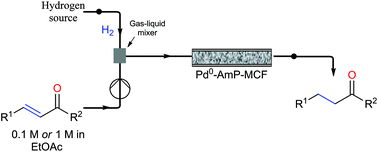
Nanopalladium-catalyzed conjugate reduction of Michael acceptors – application in flow

 SYNTHESIS  Comments Off on Nanopalladium-catalyzed conjugate reduction of Michael acceptors – application in flow
May 212016
 

Green Chem., 2016, 18,2632-2637
DOI: 10.1039/C5GC02920A, Communication
Anuja Nagendiran, Henrik Sorensen, Magnus J. Johansson, Cheuk-Wai Tai, Jan-E. Backvall
A continuous-flow approach towards the selective nanopalladium-catalyzed hydrogenation of the olefinic bond in various Michael acceptors, which could lead to a greener and more sustainable process, has been developed.

Nanopalladium-catalyzed conjugate reduction of Michael acceptors – application in flow

Communication

Nanopalladium-catalyzed conjugate reduction of Michael acceptors – application in flow


*Corresponding authors
aDepartment of Organic Chemistry, Arrhenius Laboratory, Stockholm University, SE-106 91 Stockholm, Sweden
E-mail: [email protected]
b
Berzelii Centre EXSELENT on Porous Materials, Arrhenius Laboratory, Stockholm University, SE-106 91 Stockholm, Sweden
c
AstraZeneca R&D, Innovative Medicines, Cardiovascular and Metabolic Disorders, Medicinal Chemistry, Pepparedsleden 1, SE-431 83 Mölndal, Sweden
d
Department of Materials and Environmental Chemistry, Arrhenius Laboratory, Stockholm University, SE-106 91, Stockholm, Sweden
Green Chem., 2016,18, 2632-2637

DOI: 10.1039/C5GC02920A

http://pubs.rsc.org/en/Content/ArticleLanding/2016/GC/C5GC02920A?utm_source=feedburner&utm_medium=feed&utm_campaign=Feed%3A+rss%2FGC+%28RSC+-+Green+Chem.+latest+articles%29#!divAbstract

A continuous-flow approach towards the selective nanopalladium-catalyzed hydrogenation of the olefinic bond in various Michael acceptors, which could lead to a greener and more sustainable process, has been developed. The nanopalladium is supported on aminofunctionalized mesocellular foam. Both aromatic and aliphatic substrates, covering a variation of functional groups such as acids, aldehydes, esters, ketones, and nitriles were selectively hydrogenated in high to excellent yields using two different flow-devices (H-Cube® and Vapourtec). The catalyst was able to hydrogenate cinnamaldehyde continuously for 24 h (in total hydrogenating 19 g cinnanmaldehyde using 70 mg of catalyst in the H-cube®) without showing any significant decrease in activity or selectivity. Furthermore, the metal leaching of the catalyst was found to be very low (ppb amounts) in the two flow devices.

str1

str1


str1


////////Nanopalladium-catalyzed,  conjugate reduction,  Michael acceptors, application,  flow  chemistry

Share

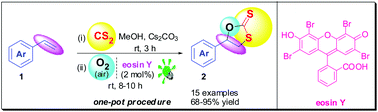
Eosin Y catalyzed difunctionalization of styrenes using O2 and CS2: a direct access to 1,3-oxathiolane-2-thiones

 spectroscopy, SYNTHESIS  Comments Off on Eosin Y catalyzed difunctionalization of styrenes using O2 and CS2: a direct access to 1,3-oxathiolane-2-thiones
May 212016
 

Green Chem., 2016, Advance Article
DOI: 10.1039/C6GC00924G, Paper
Arvind K. Yadav, Lal Dhar S. Yadav
An efficient, one-pot, highly regioselective synthesis of 1,3-oxathiolane-2-thiones from styrenes, CS2, atmospheric O2 and visible light is reported.

Eosin Y catalyzed difunctionalization of styrenes using O2 and CS2: a direct access to 1,3-oxathiolane-2-thiones

http://pubs.rsc.org/en/Content/ArticleLanding/2016/GC/C6GC00924G?utm_source=feedburner&utm_medium=feed&utm_campaign=Feed%3A+rss%2FGC+%28RSC+-+Green+Chem.+latest+articles%29#!divAbstract

Paper

Eosin Y catalyzed difunctionalization of styrenes using O2 and CS2: a direct access to 1,3-oxathiolane-2-thiones

*Corresponding authors
aGreen Synthesis Lab, Department of Chemistry, University of Allahabad, Allahabad-211002, India
E-mail: [email protected]
Fax: +91 5322460533
Tel: +91 5322500652
Green Chem., 2016, Advance Article

DOI: 10.1039/C6GC00924G

Visible light promoted straightforward highly regioselective synthesis of 1,3-oxathiolane-2-thiones (cyclic dithiocarbonates) starting directly from styrenes, CS2 and air (O2) is reported. The protocol utilizes eosin Y as an organophotoredox catalyst and clean resources like visible light and air (O2) as sustainable reagents at room temperature in a one-pot procedure. Additionally, the approach is advantageous in terms of step economy as it skips the prefunctionalization of styrenes to oxiranes, which has been inevitable in commonly used syntheses of 1,3-oxathiolane-2-thiones.


str1

//////////Eosin Y,  catalyzed,  difunctionalization, styrenes,  O2,  CS2, 1,3-oxathiolane-2-thiones

Share
Follow

Get every new post on this blog delivered to your Inbox.

Join other followers: