AUTHOR OF THIS BLOG

DR ANTHONY MELVIN CRASTO, WORLDDRUGTRACKER

Compassionate use is a treatment option….allows the use of an unauthorised medicine.

 EMA, EU  Comments Off on Compassionate use is a treatment option….allows the use of an unauthorised medicine.
Aug 202014


Compassionate use is a treatment option that allows the use of an unauthorised medicine. Compassionate-use programmes are for patients in the European Union (EU) who have a disease with no satisfactory authorised therapies or cannot enter aclinical trial. They are intended to facilitate the availability to patients of new treatment options under development.


Compassionate-use programmes are often governed by legislation in individual EU Member States, to make medicines available on a named-patient basis or to cohorts of patients.

In addition to this, EU legislation provides an option for Member States to ask the European Medicines Agency’s Committee for Medicinal Products for Human Use (CHMP) to provide an opinion to all EU Member States on how to administer, distribute and use certain medicines for compassionate use. The CHMP also identifies which patients may benefit from compassionate-use programmes. This is described in Article 83 of Regulation (EC) No 726/2004External link icon and is complementary to national legislation.


The objectives of Article 83 are to:

  • facilitate and improve access to compassionate-use programmes by patients in the EU;
  • favour a common approach regarding the conditions of use, the conditions for distribution and the patients targeted for the compassionate use of unauthorised new medicines;
  • increase transparency between Member States in terms of treatment availability.

More information is available in:


Compassionate-use opinions from the CHMP

Name of medicine Ledipasvir/Sofosbuvir
Active substance ledipasvir, sofosbuvir
Dosage 90mg / 400 mg
Pharmaceutical form Film coated tablet
Member State notifying the Agency Ireland
CHMP opinion documents Conditions of use, conditions for distribution and patients targeted and conditions for safety monitoringSummary on compassionate use
Date of opinion 20/02/2014
Company contact information Gilead Sciences Limited
Granta Park
Abington
Cambridgeshire
CB21 6GT
United Kingdom
Tel. +44 (0)208 5872206
Fax +44 (0)1223 897233
E-mail: [email protected]
Status Ongoing
Related documents  –


Name of medicine Daclatasvir
Active substance daclatasvir
Dosage 30 and 60 mg
Pharmaceutical form Film coated tablet
Member State notifying the Agency Sweden
CHMP opinion documents Conditions of use, conditions for distribution and patients targeted and conditions for safety monitoringSummary on compassionate use
Date of opinion 21/11/2013
Company contact information Bristol-Myers Squibb Pharma EEIG
Uxbridge Business Park
Sanderson Road
Uxbridge UB8 1DH
United Kingdom
Tel. +44 (0)1895 523 740
Fax +44 (0)1895 523 677
E-mail: [email protected]
Status Ongoing
Related documents  –


Name of medicine Sofosbuvir Gilead
Active substance Sofosbuvir
Dosage 400 mg
Pharmaceutical form Film-coated tablet
Member State notifying the Agency Sweden
CHMP opinion documents Conditions of use, conditions for distribution and patients targeted and conditions for safety monitoring
Summary on compassionate use
Date of opinion 24/10/2013
Company contact information Gilead Sciences International Ltd
Granta Park, Abington
Cambridgeshire CB21 6GT
United Kingdom
Tel. +44 (0)1223 897496
Fax +44 (0)1223 897233
E-mail: [email protected]
Status Ongoing
Related documents  –


Name of medicine IV Zanamivir
Active substance Zanamivir
Dosage 10 mg/ml
Pharmaceutical form Solution for infusion
Member State notifying the Agency Sweden
CHMP opinion documents Conditions of use, conditions for distribution and patients targeted and conditions for safety monitoring
Summary on compassionate use
Date of opinion 18/02/2010
Company contact information GlaxoSmithKline Research & Development Limited
980 Great West Road, Brentford
Middlesex TW8 9GS
United Kingdom
Tel. +44 (0)20 8047 5000 or +44 (0)20 8990 3885
E-mail: [email protected]
Status Ongoing
Related documents  –


Name of product Tamiflu IV
Active substance Oseltamivir phosphate
Dosage 100 mg
Pharmaceutical form Powder for solution for infusion
Member State notifying the Agency Finland
CHMP opinion documents Conditions of use, conditions for distribution and patients targeted and conditions for safety monitoring
Summary on compassionate use
Date of opinion 20/01/2010
Company contact information F. Hoffmann-La Roche Ltd.
Pharmaceuticals Division
PBMV Bldg 74/3O 104
CH-4070, Basel
Switzerland
Tel. +41 61 688 5522
Fax +41 61 687 2239
E-mail: [email protected]
Status Closed
Related documents Public statement on Tamiflu IV: Closure of compassionate-use programme in the EU
Tamiflu IV compassionate-use programme EMEA/H/K/002287 – Closure of programme


Expanded access (also known as compassionate use) refers to the use of an investigational drug outside of a clinical trial by patients with serious or life-threatening conditions who do not meet the enrollment criteria for the clinical trial in progress. Outside the US, such access is allowed through Named patient programs. In the US this type of access may be available, in accordance with United States Food and Drug Administration (FDA) regulations, when it is clear that patients may benefit from the treatment, the therapy can be given safely outside the clinical trial setting, no other alternative therapy is available, and the drug developer agrees to provide access to the drug. The FDA refers to such a program as an expanded access program (EAP).[1] EAPs can be leveraged in a wide range of therapeutic areas including HIV/AIDS and other infectious diseases, cancer, rare diseases, and cardiovascular diseases, to name a few.

There are several types of EAPs allowed in the United States. Treatment protocols and treatment INDs provide large numbers of patients access to investigational drugs. A single-patient IND is a request from a physician to the FDA that an individual patient be allowed access to an investigational drug on an emergency or compassionate use basis.[2] When the FDA receives a significant number of requests (~10 to 100) for individual patient expanded access to an investigational drug for the same use, they may ask the trial sponsor to consolidate these requests, creating an intermediate-size group.[3] “Compassionate use” is a more colloquial term that is not generally used by the FDA.

FDA regulations

Since 1987, the FDA has had rules in place that have enabled patients, under specific circumstances, to access drugs or biologics that are still in development for treatment purposes. These expanded access program rules were amended in 2009 by the FDA to ensure “broad and equitable access to investigational drugs for treatment.”[4]

The regulations include the following:[4]

  • Criteria that must be met in order to authorize the expanded access use
  • Requirements for expanded access submissions
  • Safeguards to protect patients and the clinical trial process

The regulations also include general criteria for granting expanded access:[3]

  • The patient must have a serious condition or disease for which there is no comparable alternative therapy available
  • The patient must be unable to participate in a clinical trial
  • The potential benefit must outweigh the potential risk of using the treatment
  • There should be no impact on the completion of the clinical trial or the drug’s approval

Despite the updated regulations, debate remains over key elements of expanded access:

  • Deciding at what point in the clinical trial process access should be given. Some stakeholders support expanded access programs after phase I testing in clinical trials. The FDA has stated that most drugs should not be eligible until some point during phase III when efficacy data have been obtained, unless compelling phase II data on safety and efficacy are available.[3][5]
  • Weighing risks to the patient against the potential benefits. The FDA requires that a physician and an institutional review board (IRB) determine that a treatment will not pose undue risk to the patient, relative to the condition he or she is suffering from.[6] However, the FDA maintains the right to overrule the physician and IRB.[3]
  • Determining who should get access. The FDA states that expanded access should only be considered for patients with a serious disease or condition, but the FDA’s rules do not provide a definition of “serious”; instead it provides examples of diseases and conditions that fall into this category.[3] In the case of a cancer drug, the sponsor of an expanded access program must define exactly which patients will get access. Most often, access is limited to those patients with the same type of cancer the drug is being tested for.[7]

A number of challenges can exist when patients seek access to investigational drugs:

  • Obtaining an IRB review. Finding time on an IRB’s schedule can be difficult, particularly for doctors who are not based at research centers where IRBs are readily available. The fee for the review may pose a problem as well. It may be unclear who is responsible for the cost of the IRB review, which can be as much as $2,000. Many IRBs conduct reviews pro bono but others that charge will often only waive their fees for research done in their hospital.[6][8]
  • Protecting physicians against liability risk. Currently, physicians may be concerned that they could face a liability risk for investigational drugs that they recommend to patients or help them gain access to, potentially discouraging them from doing so. The FDA does not have jurisdiction over this issue but there is a bill in Congress, the Compassionate Access Act of 2010 (H.R. 4732), that would address the situation.[6][8][9]
  • Paying for the drug. While the FDA allows drug companies to recover the costs of providing a treatment through an EAP, many companies may hesitate to do so because it requires disclosing the cost of their drug, which is often a closely guarded secret. In addition, many insurance companies won’t cover the costs of experimental treatment so access could be limited to patients with the means to pay for it.[6][8]
  • Assessing the potential impact of adverse events on drug development. Adverse events (AEs) that result from expanded access programs must be reported to the FDA in the same way AEs are reported in the case of a clinical trial. The FDA states that, to their knowledge, no drug candidate has been turned down for approval because of an adverse event that appeared in an expanded access program.[3][6]

Outside the United States

Outside the U.S., programs that enable access to drugs in the pre-approval and pre-launch phase are referred to by a variety of names including “named patient programs,” “named patient supply” and “temporary authorization for use.”[10] In the EU, named patient programs also allow patients to access drugs in the time period between centralized European Medicines Agency (EMEA) approval and launch in their home countries which can range from one year to eighteen months.[11]

References

  1. Jump up^ US National Cancer Institute – Access to Investigational Drugs accessed April 22, 2007
  2. Jump up^ FDA Final Rules for Expanded Access to Investigational Drugs for Treatment Use and Charging for Investigational Drugs
  3. Jump up to:a b c d e f Final FDA Rules on Expanded Access to Investigational Drugs for Treatment Use
  4. Jump up to:a b FDA website
  5. Jump up^ Expanded Access to Investigational Drugs Genetic Engineering & Biotechnology News, January 15, 2010.
  6. Jump up to:a b c d e Access to Investigational Drugs Remains Challenge Despite New FDA Rules ‘’The Pink Sheet’’
  7. Jump up^ Managing Access to Drugs Prior to Approval and Launch ‘’Life Science Leader’’[dead link]
  8. Jump up to:a b c FDA webinar accessed May 5, 2010
  9. Jump up^ FDA Law Blog accessed May 5, 2010
  10. Jump up^ Helene S (2010). “EU Compassionate Use Programmes (CUPs): Regulatory Framework and Points to Consider before CUP Implementation”Pharm Med 24 (4): 223–229.
  11. Jump up^ [Ericson, M., Harrison, K., Laure, N. & De Crémiers, F., Compassionate Use Requirements in the Enlarged European Union. RAJ Pharma, May 2005: 83.

External links


Share

Sanofi and PATH launch large-scale malaria drug production

 Uncategorized  Comments Off on Sanofi and PATH launch large-scale malaria drug production
Aug 202014
 
Sanofi image

Sanofi and global health charity PATH have come together to launch a large-scale production line of malaria jab semisynthetic artemisinin at Sanofi’s Garessio site in Italy.

Global demand for artemisinin, the key ingredient of artemisinin-based combination therapies (ACTs) for malaria, has increased since the World Health Organization identified ACTs as the most effective malaria treatment available.

Because the existing botanical supply of artemisinin – derived from the sweet wormwood plant – is inconsistent, having multiple sources of high-quality product will strengthen its supply chain, contribute to a more stable price, and ultimately ensure greater availability of treatment to people suffering from malaria, according to Sanofi.

read at

http://www.pharmafile.com/news/192711/sanofi-and-path-launch-large-scale-malaria-drug-production

Share

Antimicrobial resistance

 Uncategorized  Comments Off on Antimicrobial resistance
Aug 182014


Antimicrobials are medicines that kill or inactivate microbes, small disease-causing organisms. They include antibiotics, which are used against bacteria. After being exposed to an antimicrobial repeatedly, microbes can undergo changes that stop them being killed or inactivated by the treatments. This is known as antimicrobial resistance.

The European Medicines Agency is concerned about the development of antimicrobial resistance, particularly resistance to antibiotics. A well-known example of a bacterium that is resistant to a number of antibiotics is meticillin-resistant Staphylococcus aureus(MRSA), which has caused infections that are difficult to treat across the European Union (EU).


This problem is being made worse by the fact that few new antimicrobials have been authorised over the past few years. This may lead to infections becoming more difficult to treat in the future.

Antimicrobial resistance is a growing problem in humans and in animals. Resistance can also spread from animals to humans through the food chain or direct contact.

The role of the Agency

The Agency works in collaboration with its EU and international partners in a number of initiatives aiming to limit the development of resistance. It is also monitoring and evaluating the risks to human and animal health.

A major such initiative is the Transatlantic Task Force on Antimicrobial ResistanceExternal link icon(TATFAR), which was established following the EU-United States summit in November 2009. The Task Force aims to increase levels of communication, coordination and co-operation between the EU and the United States on human and veterinary antimicrobials.


Human health

In human medicine, the availability of medicines to treat infections with resistant organisms has become a major problem in recent years.

In September 2009, the Agency published a joint report together with the European Centre for Disease Prevention and ControlExternal link icon (ECDC) and the international network ReAct – Action on Antibiotic ResistanceExternal link icon. This report highlights the gap between infections due to resistant bacteria and the development of new antibiotics.

The report states that at least 25,000 patients in the EU die each year from infections due to bacteria that are resistant to many medicines, and that infections due to these bacteria in the EU result in extra healthcare costs and productivity losses of at least €1.5 billion each year. Although it identified 15 antibiotics under development, most of these were early in development and were targeted against bacteria for which treatment options were already available.


Authorisation of new antibiotics

The Agency plays a key role in the authorisation of new antibiotics, because medicines with a significant therapeutic innovation or that are in the interest of public or animal health are authorised centrally in the EU, on the recommendation of the Agency.

In January 2012, the Agency updated its guidance to companies developing antibiotics, covering how they should carry out studies to test these medicines’ benefits and risks:

This is accompanied by an addendum giving information on how to study medicines for specific indications. The final addendum was published in November 2013 following a public consultation:


Animal health

The Agency is focused on promoting the prudent use of antimicrobials in animals, to limit the development of resistance. This goal is addressed in this document:

In line with this strategy, the Agency published a revised version of its guideline onefficacy for public consultation in May 2013. This draft guideline provides detailed recommendations for the design and conduct of pre-clinical and clinical studies to support clinical efficacy for antimicrobial veterinary products:

Since early 2010, the Agency has been leading a project collecting information on the sale of veterinary antimicrobials across the EU:

The CVMP has also published a large number of documents on microbial resistance in animals and its risks for humans.

Reports published by the Agency together with other European bodies, including ECDC, EFSA and the European Commission’s Scientific Committee on Emerging and Newly Identified Health RisksExternal link icon (SCENIHR) have emphasised the need for the prudent use of antibiotics in animals and the role of basic hygiene, and called for strengthened surveillance of resistance, the development of new antimicrobials and new strategies to combat the spread of resistance:

In 2013 and 2014, the Agency carried out a large body of work to provide advice to the European Commission on the use of antibiotics in animals and the impact on public health and animal health.

Share

Turkish man pleads guilty to importing illegal cancer drugs

 cancer, Uncategorized  Comments Off on Turkish man pleads guilty to importing illegal cancer drugs
Aug 182014


August 15, 2014

Release

Sabahaddin Akman, owner of the Istanbul, Turkey, firm Ozay Pharmaceuticals, has pleaded guilty to charges of smuggling misbranded and adulterated cancer treatment drugs into the United States.

Akman pleaded guilty in the U.S. District Court for the Eastern District of Missouri, in St. Louis, Missouri, where he initially shipped his illegal drugs. The drugs did not meet the FDA’s standards and had not been approved for distribution in the United States.

The FDA’s Office of Criminal Investigations coordinated a complex, multi-layered international investigation that led to Akman’s arrest in Puerto Rico in January 2014. The investigation identified Akman and his company as a source of Altuzan, the Turkish version of the cancer treatment drug Avastin.

“These criminals exploited our most vulnerable patients when they arranged for their illicit drugs to be brought into the United States and used to treat cancer patients. We will continue to investigate and bring to justice those who prey on our ill, susceptible patients,” said Philip J. Walsky, acting director of the FDA’s Office of Criminal Investigations. “We commend our colleagues – international, national, state, and local – whose contributions helped bring this case to a successful conclusion.”

Akman, along with his employee, Ozkan Semizoglu, obtained the illicit drugs and then used shipping labels to conceal the illegal nature of the shipments, including customs declarations falsely describing the contents as gifts. They also broke large drug shipments into several smaller packages to reduce the likelihood of seizures by U.S. Customs and Border Protection authorities.

Along with the FDA and Europol, the international operation involved several German government offices: the Bonn prosecutor; the Federal Criminal Police, the Dusseldorf police, and the German State Criminal Police.  Special agents of the U.S. Department of State’s Diplomatic Security Service assigned to the U.S. Embassy’s Regional Security Office in Ankara, Turkey, and the U.S. Consulate General’s Overseas Criminal Investigations Branch in Istanbul, Turkey also played key roles in the successful resolution of this case.

Share

Road map to 2015, The European Medicines Agency’s contribution to science, medicines and health

 EU, regulatory, Uncategorized  Comments Off on Road map to 2015, The European Medicines Agency’s contribution to science, medicines and health
Aug 182014


One of the European Medicines Agency’s long-term strategic goals is to foster researchand the uptake of innovative methods in the development of medicines.

READ………….Road map to 2015

The European Medicines Agency’s
contribution to science, medicines and health……………..http://www.ema.europa.eu/docs/en_GB/document_library/Report/2011/01/WC500101373.pdf

This helps the Agency to meet its objective of making safe and effective medicines available to patients in a timely manner, following evaluation using state-of-the-art methods.

The Agency also supports the development of new therapies and technologies by working with interested parties in the European Union (EU).

Activities at the Agency

In 2004, the Agency set up the European Medicines Agency/Committee for Medicinal Products for Human Use (CHMP) Think-Tank Group on Innovative Drug Development.

This group included Agency staff and members of the CHMP and its working parties. Its work focused on identifying scientific bottlenecks and emerging science in the development of medicines, both in industry research and development and in academia, and on generating recommendations for future activities at the Agency:

In 2008 the EMA and its Scientific Committees integrated the recommendations made by the Think Tank in its strategy for supporting innovative medicines developments. Key areas of action included the strengthening of the EU scientific network model, emphasis on communication during the lifecycle of medicinal products development and international activities. Overview of measures implemented in the period 2008-2010.

The recently published Road Map to 2015 further expands on the role the Agency plays to promote innovation in pharmaceuticals.

The Agency also contributes to the Innovative Medicines InitiativeExternal link icon (IMI). This is a public-private initiative that aims to speed up the development of better and safer medicines for patients:

Support for business

The Agency provides support for business on issues related to innovative medicines:

Share

Lupin launches insulin glargine in India

 diabetes, Uncategorized  Comments Off on Lupin launches insulin glargine in India
Aug 182014
 

lupin ltd biosimilarnews Lupin launches insulin glargine in India

Lupin launches insulin glargine in India:

Indian pharma company, Lupin Limited announced a strategic distribution agreement with LG Life Sciences of South Korea to launch Insulin Glargine, a novel insulin analogue under the brand name Basugine™.

According to the agreement, Lupin would be responsible for marketing and sales of Basugine™ in India.

READ MORE

http://www.biosimilarnews.com/lupin-launches-insulin-glargine-in-india?utm_source=Biosimilar%20News%20%7C%20Newsletter&utm_campaign=0b76af10ab-15_08_2014_Biosimilar_News&utm_medium=email&utm_term=0_9887459b7e-0b76af10ab-335885197

Share

Celltrion files Remsima in the United States

 Uncategorized  Comments Off on Celltrion files Remsima in the United States
Aug 182014


Celltrion files Remsima in the United States:

Celltrion announced that the company, on August 8, 2014, completed the filing procedure to obtain US FDA approval for its infliximab biosimilar. This marks the first 351(k) biosimilar mAb application to be filed in the U.S.A. and the second application for a biosimilar to be filed through the US BPCIA.

READ MORE

http://www.biosimilarnews.com/celltrion-files-remsima-in-the-us?utm_source=Biosimilar%20News%20%7C%20Newsletter&utm_campaign=0b76af10ab-15_08_2014_Biosimilar_News&utm_medium=email&utm_term=0_9887459b7e-0b76af10ab-335885197

Share

Zopolrestat

 Uncategorized  Comments Off on Zopolrestat
Aug 182014


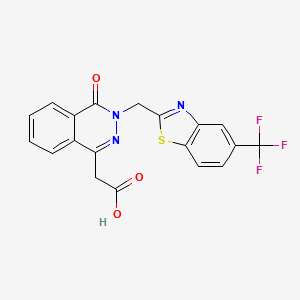
Chemical structure for zopolrestat


Zopolrestat

Zopolrestat
CAS : 110703-94-1
110765-49-6 (Na salt)
3,4-Dihydro-4-oxo-3-[[5-(trifluoromethyl)-2-benzothiazolyl]methyl]-1-phthalazineacetic acid
2- [4-Oxo-3- [5- (trifluoromethyl) benzothiazol-2-ylmethyl] -3,4-dihydrophthalazin-1-yl] acetic acid
3-(5-trifluoromethylbenzothiazol-2-ylmethyl)-4-oxo-3H-phthalazin-1-ylacetate
Pfizer Inc. INNOVATOR
2-[4-oxo-3-[5-(trifluoromethyl)benzothiazol-2-ylmethyl]-3,4-dihydrophthalazin-1-yl]acetic acid
Manufacturers’ Codes: CP-73850
MF: C19H12F3N3O3S
MW: 419.38
C 54.41%, H 2.88%, F 13.59%, N 10.02%, O 11.45%, S 7.65%
 Crystals, mp 197-198°. pKa (dioxane/water): 5.46 (1:1); 6.38 (2:1). Log P (n-octanol/water): 3.43.
 mp 197-198°
pKa: pKa (dioxane/water): 5.46 (1:1); 6.38 (2:1)
Log P: Log P (n-octanol/water): 3.43
Therap-Cat: Treatment of diabetic complications.
Keywords: Aldose Reductase Inhibitor.
…………………………..
synthesis
2-(8-oxo-7-((5-trifluromethyl)-1H-benzo[d]imidazol-2-yl)methyl)7,8-dihydropyrazin[2,3-d]pyridazin-5-yl)acetic acid and [4-oxo-(5-trifluoromethyl-benzothaiazol-2-ylmethyl)-3,4-dihydro-phthalazin-1-yl]-acetic acid (also known as zopolrestat), pharmaceutical compositions thereof and methods of treating diabetic complications in mammals comprising administering to mammals these salt and compositions. 2-(8-oxo-7-((5-trifluromethyl)-1H-benzo[d]imidazol-2-yl)methyl)8-dihydropyrazin[2,3-d]pyridazin-5-yl) acetic acid (formula II), is disclosed in WO 2012/009553 A1. Zopolrestat (formula III) is disclosed in U.S. Pat. No. 4,939,140.
Each of the patents, applications, and other references referred to herein are incorporated by reference. The diabetic complications include neuropathy, nephropathy, retinopathy, cataracts and cardiovascular complications, including myocardial infarction and cardiomyopathy. This invention is also directed to combinations of these salts and antihypertensive agents. These combinations are also useful in treating diabetic complications in mammals.
2-(8-oxo-7-((5-trifluoromethyl)-1H-benzo[d]imidazol-2-yl)methyl)8-dihydropyrazin[2,3-d]pyridazin-5-yl)acetic acid is prepared as disclosed in WO 2012/009553 A1, which is incorporated herein by reference. Zopolrestat is prepared as disclosed in U.S. Pat. No. 4,939,140.
…………………………
Zopolrestat can be obtained by several different ways: 1) The reaction of 2- (4-oxo-3,4-dihydrophthalazin-1-yl) acetic acid ethyl ester (I) with 2-chloroacetonitrile by means of potassium tert-butoxide in DMF gives 2- [3- (cyanomethyl) -4-oxo-3,4-dihydrophthalazin-1-yl] acetic acid ethyl ester (II), which is cyclized with 2-amino-4- (trifluoromethyl) thiophenol (III) in refluxing ethanol yielding zopolrestat ethyl ester (IV). Finally, this compound is hydrolyzed with KOH in methanol / water / THF. 2) Compound (IV) can also be obtained by cyclization of (II) with 4-chloro-3-nitrobenzotrifluoride . (V) in hot DMF saturated with H2S 3) Compound (II) can also be obtained as follows: The reaction of phthalazine (I) with aqueous formaldehyde gives 2- [3- (hydroxymethyl) -4-oxo-3,4 -dihydrophthalazin-1-yl] acetic acid ethyl ester (VI), which is treated with PBr3 in ethyl ether yielding the bromomethyl derivative (VII). Finally, this compound is treated with potassium cyanide and KI in acetone / water.
……………………….
5=CF3 IS SUBS
EXAMPLE 7

  • [0051]
    In accordance with Example 6, the following compounds are prepared:

    Figure imgb0011
    Figure imgb0012
    Figure imgb0013
……………………..
EXAMPLE 18 Sodium 3-(5-trifluoromethylbenzothiazol-2-ylmethyl)-4-oxo-3H-phthalazin-1-ylacetateSodium methoxide (54 mg) was added to 3-(5-trifluoromethylbenzothiazol-2-ylmethyl)-4-oxo-phthalazin-1-ylacetic acid (0.4 g) in methanol 10 ml) at room temperature. After the addition was complete, a clear solution was obtained which was stirred for 15 minutes at room temperature. The excess methanol was evaporated. The residue was triturated with ether (20 ml) and filtered to obtain the product (0.43 g; m.p. 300° C.).EXAMPLE 19 3-(5-Trifluoromethylbenzothiazol-2-ylmethyl)-4-oxo-3H-phthalazin-1-ylacetate, dicyclohexylamine saltTo a mixture of 3-(5-trifluromethylbenzothiazol-2ylmethyl)-4-oxo-phthalazin-1-ylacetic acid (0.42 g) in methanol (10 ml) was added dicyclohexylamine (0.2 g) in methanol (5 ml). The resulting clear solution was stirred at room temperature for 15 minutes and then evaporated to dryness. Trituration of the residue with ether (30 ml) gave a white solid (0.38 g; m.p. 207° C.).EXAMPLE 20 3-(5-Trifluoromethylbenzothiazol-2ylmethyl)-4-oxo-3H-phthalazin-1-ylacetic acid, meglumine saltA solution of 3-(5-trifluoromethylbenzothiazol-2-ylmethyl)-4-oxo-phthalazin-1-ylacetic acid (419 mg) and meglumine (196 mg) in methanol (50 ml) was stirred at room temperature for an hour and then evaporated to dryness. The residue was triturated with ether (25 ml), filtered and the collected solid was air dried (610 mg; m.p. 157° C.)……………………………

J. Med. Chem., 1991, 34 (1), pp 108–122
DOI: 10.1021/jm00105a018

http://pubs.acs.org/doi/abs/10.1021/jm00105a018

……………………………………

Mylari, Banavara L.; Zembrowski, William J.; Beyer, Thomas A.; Aldinger, Charles E.; Siegel, Todd W.
Journal of Medicinal Chemistry, 1992 ,  vol. 35,   12  p. 2155 – 2162

………………………………..

Mylari; Beyer; Scott; Aldinger; Dee; Siegel; Zembrowski
Journal of Medicinal Chemistry, 1992 ,  vol. 35,   3  p. 457 – 465

…………………………….

Literature References:
Aldose reductase inhibitor. Prepn: B. L. Mylari et al., EP 222576; E. R. Larson, B. L. Mylari, US 4939140(1987, 1990 both to Pfizer);
B. L. Mylari et al. J. Med. Chem. 34, 108 (1991).
Pharmacology: B. Tesfamariam et al., J. Cardiovasc.Pharmacol. 21, 205 (1993); B. Tesfamariam et al., Am. J. Physiol. 265, H1189 (1993).
Clinical pharmacokinetics: P. B. Inskeep et al., J. Clin. Pharmacol. 34, 760 (1994).
Zopolrestat < Rec INN; BAN; USAN >
Drugs Fut 1995, 20(1): 33
Synthesis of aldose reductase inhibitor, 3, 4-dihydro-4-oxo-3-[[5-(trifluoromethyl)-2 14C benzothiazolyl]methyl]-1-phthalazineacetic acid
J Label Compd Radiopharm 1991, 29(2): 143
3-19-1992
HETEROCYCLIC OXOPHTHALAZINYL ACETIC ACIDS
3-6-1992
3-(5-TRIFLUOROMETHYLBENZOTHIAZOL-2-YLMETHYL)-4-OXO-3H-PHYTHALAZIN-1-YLACETIC ACID MONOHYDRATE
7-4-1990
Heterocyclic oxophthalazinyl acetic acids
3-24-2006
Medical devices to treat or inhibit restenosis
12-30-2004
N-[(SUBSTITUTED FIVE-MEMBERED DI- OR TRIAZA DIUNSATURATED RING)CARBONYL]GUANIDINE DERIVATIVES FOR THE TREATMENT OF ISCHEMIA
10-7-2004
COMBINATION OF AN ALDOSE REDUCTASE INHIBITOR AND A GLYCOGEN PHOSPHORYLASE INHIBITOR COMBINATION OF AN ALDOSE REDUCTASE INHIBITOR AND A GLYCOGEN PHOSPHORYLASE INHIBITOR
9-30-2004
Aldose reductase inhibition in preventing or reversing diabetic cardiomyopathy
5-27-2004
SUBSTITUTED FUSED HETEROCYCLIC COMPOUNDS
4-15-2004
Compounds for treating and preventing diabetic complications
3-32-2004
IMPROVED MUTANTS OF (2,5-DKG) REDUCTASE A
12-18-2003
Pharmaceutical composition for use in treatment of diabetes
11-14-2003
Salts of zopolrestat
4-18-2002
Use of an aldose reductase inhibitor for reducing non-cardiac tissue damage
Share

REFLECTION PAPER ON NANOTECHNOLOGY-BASED MEDICINAL PRODUCTS FOR HUMAN USE

 nanotechnology, Uncategorized  Comments Off on REFLECTION PAPER ON NANOTECHNOLOGY-BASED MEDICINAL PRODUCTS FOR HUMAN USE
Aug 182014
 

Nanotechnology

Nanotechnology is the use of tiny structures – less than 1,000 nanometres across – that are designed to have specific properties. Nanotechnology is an emerging field in science that is used in a wide range of applications, from consumer goods to health products.


In medicine, nanotechnology has only partially been exploited. It is being investigated as a way to improve the properties of medicines, such as their solubility or stability, and to develop medicines that may provide new ways to:

  • deliver medicines to the body;
  • target medicines in the body more accurately;
  • diagnose and treat diseases;
  • support the regeneration of cells and tissues.

Activities at the European Medicines Agency 

The European Medicines Agency follows the latest developments in nanotechnology that are relevant to the development of medicines. Recommendations from the Agency’sCommittee for Medicinal Products for Human Use (CHMP) have already led to the approval of a number of medicines based on nanotechnology. These include medicines containing:


  • liposomes (microscopic fatty structures containing the active substance), such asCaelyx (doxorubicin), Mepact (mifamurtide) and Myocet (doxorubicin);
  • nano-scale particles of the active substance, such as Abraxane (paclitaxel), Emend(aprepitant) and Rapamune (sirolimus).

The development of medicines using newer, innovative nanotechnology techniques may raise new challenges for the Agency in the future. These include discussions on whether the current regulatory framework is appropriate for these medicines and whether existing guidelines and requirements on the way the medicines are assessed and monitored are adequate.

The Agency also needs to consider the acceptability of new testing methods and the availability of experts to guide the Agency’s opinion-making.


An overview of the initiatives taken by European Union (EU) regulators in relation to the development and evaluation of nanomedicines and nanosimilars was published in the scientific journal Nanomedicines. The article describes the regulatory challenges and perspectives in this field:

Ad hoc expert group on nanomedicines

In 2009, the CHMP established an ad hoc expert group on nanomedicines.

This group includes selected experts from academia and the European regulatory network, who support the Agency’s activities by providing specialist input on new scientific knowledge and who help with the review of guidelines on nanomedicines. The group also helps the Agency’s discussions with international partners on issues concerning nanomedicines.

The group held the first ad hoc expert group meeting on nanomedicines on 29 April 2009.


Reflection papers on nanomedicines

In 2011, the CHMP began to develop in 2011 a series of four reflection papers on nanomedicines to provide guidance to sponsors developing nanomedicines.

These documents cover the development both of new nanomedicines and of nanosimilars (nanomedicines that are claimed to be similar to a reference nanomedicine), since the first generation of nanomedicines, including liposomal formulations, iron-based preparations and nanocrystal-based medicines, have started to come off patent:

The fourth document, a draft reflection paper on the data requirements for intravenous iron-based nanocolloidal products developed with reference to an innovator medicine, will be released for a six-month public consultation in 2013.

International workshops on nanomedicines

The Agency organises workshops on nanomedicines to explore the scientific aspects of nanomedicines and enable the sharing of experience at an international level, in order to assist future developments in the field:

REFLECTION PAPER ON NANOTECHNOLOGY-BASED MEDICINAL PRODUCTS FOR
HUMAN USE

http://www.ema.europa.eu/docs/en_GB/document_library/Regulatory_and_procedural_guideline/2010/01/WC500069728.pdf

Related information


Share

Кальцитонин, Calcitonin

 Uncategorized  Comments Off on Кальцитонин, Calcitonin
Aug 162014


Molecular formula of calcitonin is C145H241N43O49S2
• Molecular weight is 3434.8 g/mol

Calcitonin-related polypeptide alpha
Calcitonin.png
NMR solution structure of salmon calcitonin in SDS micelles.[1]
Calcitonin
CAS Registry Number: 9007-12-9
Additional Names: Thyrocalcitonin; TCA; TCT
Therap-Cat: Calcium regulator.


The structural formula


Calcitonin (also known as thyrocalcitonin) is a 32-amino acid linear polypeptide hormone that is produced in humansprimarily by the parafollicular cells (also known as C-cells) of the thyroid, and in many other animals in the ultimobranchial body.[2] It acts to reduce blood calcium (Ca2+), opposing the effects of parathyroid hormone (PTH).[3]

Calcitonin has been found in fishreptilesbirds, and mammals. Its importance in humans has not been as well established as its importance in other animals, as its function is usually not significant in the regulation of normal calcium homeostasis.[4] It belongs to the calcitonin-like protein family.

UV – range

Conditions : Concentration – 53 mg / 100 ml
Solvent designation schedule
Methanol
Water
0.1М HCl
0.1M NaOH
The absorption maximum 278 nm 275 nm
4.9 4.4
with 1670 1500


IR – spectrum

Wavelength (μm)
Wavenumber (cm -1 )


Links

  • UV and IR Spectra. H.-W. Dibbern, R.M. Muller, E. Wirbitzki, 2002 ECV
  • NIST/EPA/NIH Mass Spectral Library 2008
  • Handbook of Organic Compounds. NIR, IR, Raman, and UV-Vis Spectra Featuring Polymers and Surfactants, Jr., Jerry Workman. Academic Press, 2000.
  • Handbook of ultraviolet and visible absorption spectra of organic compounds, K. Hirayama. Plenum Press Data Division, 1967.
Calcitonin-related polypeptide alpha
Calcitonin.png
NMR solution structure of salmon calcitonin in SDS micelles.[1]
Available structures
PDB Ortholog search: PDBeRCSB
[show]List of PDB id codes
Identifiers
Symbols CALCA ; CALC1; CGRP; CGRP-I; CGRP1; CT; KC
External IDs OMIM114130 MGI2151253HomoloGene88401 ChEMBL5293GeneCardsCALCA Gene
[show]Gene ontology
RNA expression pattern
PBB GE CALCA 210728 s at tn.png
PBB GE CALCA 210727 at tn.png
PBB GE CALCA 217495 x at tn.png
More reference expression data
Orthologs
Species Human Mouse
Entrez 796 12310
Ensembl ENSG00000110680 ENSMUSG00000030669
UniProt P01258 P70160
RefSeq (mRNA) NM_001033952 NM_001033954
RefSeq (protein) NP_001029124 NP_001029126
Location (UCSC) Chr 11:
14.99 – 14.99 Mb
Chr 7:
114.63 – 114.64 Mb
PubMedsearch [1] [2]

Biosynthesis and regulation

Calcitonin is formed by the proteolytic cleavage of a larger prepropeptide, which is the product of the CALC1 gene (CALCA). The CALC1 gene belongs to a superfamily of related protein hormone precursors including islet amyloid precursor proteincalcitonin gene-related peptide, and the precursor of adrenomedullin.

Secretion of calcitonin is stimulated by:

Effects

The hormone participates in calcium (Ca2+) and phosphorus metabolism. In many ways, calcitonin counteracts parathyroid hormone (PTH).

More specifically, calcitonin lowers blood Ca2+ levels in three ways:

However, effects of calcitonin that mirror those of PTH include the following:

  • Inhibits phosphate reabsorption by the kidney tubules[11]

In its skeleton-preserving actions, calcitonin protects against calcium loss from skeleton during periods of calcium mobilization, such as pregnancy and, especially, lactation.

Other effects are in preventing postprandial hypercalcemia resulting from absorption of Ca2+. Also, calcitonin inhibits food intake in rats and monkeys, and may have CNS action involving the regulation of feeding and appetite.

Receptor

The calcitonin receptor, found on osteoclasts,[12] and in kidney and regions of the brain, is a G protein-coupled receptor, which is coupled by Gs to adenylate cyclase and thereby to the generation of cAMP in target cells. It may also affect the ovaries in women and the testes in men.

Discovery

Calcitonin was purified in 1962 by Copp and Cheney.[13] While it was initially considered a secretion of the parathyroid glands, it was later identified as the secretion of the C-cellsof the thyroid gland.[14]

Pharmacology

Salmon calcitonin is used for the treatment of:

It has been investigated as a possible non-operative treatment for spinal stenosis.[16]

The following information is from the UK Electronic Medicines Compendium[17]

General characteristics of the active substance

Salmon calcitonin is rapidly absorbed and eliminated. Peak plasma concentrations are attained within the first hour of administration.

Animal studies have shown that calcitonin is primarily metabolised via proteolysis in the kidney following parenteral administration. The metabolites lack the specific biological activity of calcitonin. Bioavailability following subcutaneous and intramuscular injection in humans is high and similar for the two routes of administration (71% and 66%, respectively).

Calcitonin has short absorption and elimination half-lives of 10–15 minutes and 50–80 minutes, respectively. Salmon calcitonin is primarily and almost exclusively degraded in the kidneys, forming pharmacologically inactive fragments of the molecule. Therefore, the metabolic clearance is much lower in patients with end-stage renal failure than in healthy subjects. However, the clinical relevance of this finding is not known. Plasma protein binding is 30% to 40%.

Characteristics in patients

There is a relationship between the subcutaneous dose of calcitonin and peak plasma concentrations. Following parenteral administration of 100 IU calcitonin, peak plasma concentration lies between about 200 and 400 pg/ml. Higher blood levels may be associated with increased incidence of nausea, vomiting, and secretory diarrhea.

Preclinical safety data

Conventional long-term toxicity, reproduction, mutagenicity, and carcinogenicity studies have been performed in laboratory animals. Salmon calcitonin is devoid of embryotoxic, teratogenic, and mutagenic potential.

An increased incidence of pituitary adenomas has been reported in rats given synthetic salmon calcitonin for 1 year. This is considered a species-specific effect and of no clinical relevance. Salmon calcitonin does not cross the placental barrier.

In lactating animals given calcitonin, suppression of milk production has been observed. Calcitonin is secreted into the milk.

Pharmaceutical manufacture

Calcitonin was extracted from the ultimobranchial glands (thyroid-like glands) of fish, particularly salmon. Salmon calcitonin resembles human calcitonin, but is more active. At present, it is produced either by recombinant DNA technology or by chemical peptide synthesis. The pharmacological properties of the synthetic and recombinant peptides have been demonstrated to be qualitatively and quantitatively equivalent.[17]

Uses of calcitonin

Treatments

Calcitonin can be used therapeutically for the treatment of hypercalcemia or osteoporosis.

Oral calcitonin may have a chondroprotective role in osteoarthritis (OA), according to data in rats presented in December, 2005, at the 10th World Congress of the Osteoarthritis Research Society International (OARSI) in Boston, Massachusetts. Although calcitonin is a known antiresorptive agent, its disease-modifying effects on chondrocytes and cartilage metabolisms have not been well established until now.

This new study, however, may help to explain how calcitonin affects osteoarthritis. “Calcitonin acts both directly on osteoclasts, resulting in inhibition of bone resorption and following attenuation of subchondral bone turnover, and directly on chondrocytes, attenuating cartilage degradation and stimulating cartilage formation,” says researcher Morten Karsdal, MSC, PhD, of the department of pharmacology at Nordic Bioscience in Herlev, Denmark. “Therefore, calcitonin may be a future efficacious drug for OA.”[18]

Subcutaneous injections of calcitonin in patients suffering from mania resulted in significant decreases in irritability, euphoria and hyperactivity and hence calcitonin holds promise for treating bipolar disorder.[19] However no further work on this potential application of calcitonin has been reported.

Diagnostics

It may be used diagnostically as a tumor marker for medullary thyroid cancer, in which high calcitonin levels may be present and elevated levels after surgery may indicate recurrence. It may even be used on biopsy samples from suspicious lesions (e.g., lymph nodes that are swollen) to establish whether they are metastasis of the original cancer.

Cutoffs for calcitonin to distinguish cases with medullary thyroid cancer have been suggested to be as follows, with a higher value increasing the suspicion of medullary thyroid cancer:[20]

  • females: 5 ng/L or pg/mL
  • males: 12 ng/L or pg/mL
  • children under 6 months of age: 40 ng/L or pg/mL
  • children between 6 months and 3 years of age: 15 ng/L or pg/mL

When over 3 years of age, adult cutoffs may be used

Increased levels of calcitonin have also been reported for various other conditions. They include: C-cell hyperplasia, Nonthyroidal oat cell carcinoma, Nonthyroidal small cell carcinoma and other nonthyroidal malignancies, acute and chronic renal failure, hypercalcemia, hypergastrinemia and other gastrointestinal disorders, and pulmonary disease.[21]

Structure

Calcitonin is a polypeptide hormone of 32 amino acids, with a molecular weight of 3454.93 daltons. Its structure comprises a single alpha helix.[1] Alternative splicing of the gene coding for calcitonin produces a distantly related peptide of 37 amino acids, called calcitonin gene-related peptide (CGRP), beta type.[22]

The following are the amino acid sequences of salmon and human calcitonin:[23]

  • salmon:
      Cys-Ser-Asn-Leu-Ser-Thr-Cys-Val-Leu-Gly-Lys-Leu-Ser-Gln-Glu-Leu-His-Lys-Leu-Gln-Thr-Tyr-Pro-Arg-Thr-Asn-Thr-Gly-Ser-Gly-Thr-Pro
  • human:
      Cys-Gly-Asn-Leu-Ser-Thr-Cys-Met-Leu-Gly-Thr-Tyr-Thr-Gln-Asp-Phe-Asn-Lys-Phe-His-Thr-Phe-Pro-Gln-Thr-Ala-Ile-Gly-Val-Gly-Ala-Pro

Compared to salmon calcitonin, human calcitonin differs at 16 residues.

Description: Cellular and molecular coordination of tissues which secrete chemical compounds to regulate growth, reproduction, metabolism, and ion homeostasis.


References

  1. Jump up to:a b PDB 2glhAndreotti G, Méndez BL, Amodeo P, Morelli MA, Nakamuta H, Motta A (August 2006). “Structural determinants of salmon calcitonin bioactivity: the role of the Leu-based amphipathic alpha-helix”. J. Biol. Chem. 281 (34): 24193–203.doi:10.1074/jbc.M603528200PMID 16766525.
  2. Jump up^ Costoff A. “Sect. 5, Ch. 6: Anatomy, Structure, and Synthesis of Calcitonin (CT)”.Endocrinology: hormonal control of calcium and phosphate. Medical College of Georgia. Retrieved 2008-08-07.
  3.  Boron WF, Boulpaep EL (2004). “Endocrine system chapter”. Medical Physiology: A Cellular And Molecular Approach. Elsevier/Saunders. ISBN 1-4160-2328-3.
  4. Jump up^ Costoff A. “Sect. 5, Ch. 6: Biological Actions of CT”. Medical College of Georgia. Retrieved 2008-08-07.
  5. Costanzo, Linda S. (2007). BRS Physiology. Lippincott, Williams, & Wilkins. p. 263.ISBN 978-0-7817-7311-9.
  6. Jump up^ Erdogan MF, Gursoy A, Kulaksizoglu M (October 2006). “Long-term effects of elevated gastrin levels on calcitonin secretion”J Endocrinol Invest. 29 (9): 771–775.PMID 17114906.
  7.  Costoff A. “Sect. 5, Ch. 6: Effects of CT on the Small Intestine”. Medical College of Georgia. Retrieved 2008-08-07.
  8.  Costoff A. “Sect. 5, Ch. 6: Effects of CT on Bone”. Medical College of Georgia. Retrieved 2008-08-07.
  9. Jump up^ Potts, John; Jüppner, Harald (2008). “Chapter 353. Disorders of the Parathyroid Gland and Calcium Homeostasis”. In Dan L. Longo, Dennis L. Kasper, J. Larry Jameson, Anthony S. Fauci, Stephen L. Hauser, and Joseph Loscalzo. Harrison’s Principles of Internal Medicine (18 ed.). McGraw-Hill.
  10.  Rhoades, Rodney (2009). Medical Physiology: Principles for Clinical Medicine. Philadelphia: Lippincott Williams & Wilkins. ISBN 978-0-7817-6852-8.
  11. Jump up^ Carney SL (1997). “Calcitonin and human renal calcium and electrolyte transport”.Miner Electrolyte Metab 23 (1): 43–7. PMID 9058369.
  12. Jump up^ Nicholson GC, Moseley JM, Sexton PM, et al (1986). “Abundant calcitonin receptors in isolated rat osteoclasts. Biochemical and autoradiographic characterization”J Clin Invest 78 (2): 355–60. doi:10.1172/JCI112584PMC 423551PMID 3016026.
  13. Jump up^ Copp DH, Cheney B (January 1962). “Calcitonin-a hormone from the parathyroid which lowers the calcium-level of the blood”. Nature 193 (4813): 381–2.doi:10.1038/193381a0PMID 13881213.
  14. Jump up^ Hirsch PF, Gauthier GF, Munson PL (August 1963). “Thyroid hypocalcemic principle and recurrent laryngeal nerve injury as factors affecting the response to parathyroidectomy in rats”. Endocrinology 73 (2): 244–252. doi:10.1210/endo-73-2-244.PMID 14076205.
  15. Jump up^ Wall GC, Heyneman CA (April 1999). “Calcitonin in phantom limb pain”. Ann Pharmacother 33 (4): 499–501. doi:10.1345/aph.18204PMID 10332543.
  16. Jump up^ Tran de QH, Duong S, Finlayson RJ (July 2010). “Lumbar spinal stenosis: a brief review of the nonsurgical management”. Can J Anaesth 57 (7): 694–703. doi:10.1007/s12630-010-9315-3PMID 20428988.
  17. Jump up to:a b “Electronic Medicines Compendium”. Retrieved 2008-08-07.
  18. Jump up^ Kleinman DM (2006-01-04). “Oral Calcitonin May Delay Onset of Joint Disease and Relieve Pain of OA”Musculoskeletal Report. Musculoskeletal Report, LLC. Retrieved 2008-08-07.
  19. Jump up^ Vik A, Yatham LN (March 1998). “Calcitonin and bipolar disorder: a hypothesis revisited”J Psychiatry Neurosci 23 (2): 109–17. PMC 1188909PMID 9549251.
  20. Jump up^ Basuyau, J. -P.; Mallet, E.; Leroy, M.; Brunelle, P. (2004). “Reference Intervals for Serum Calcitonin in Men, Women, and Children”. Clinical Chemistry 50 (10): 1828–1830.doi:10.1373/clinchem.2003.026963PMID 15388660edit
  21. Jump up^ Burtis CA, Ashwood ER, Bruns DE. Tietz Textbook of Clinical Chemistry and Molecular Diagnostics, 5th edition. Elsevier Saunders. p. 1774. ISBN 978-1-4160-6164-9.
  22. Jump up^ “calcitonin domain annotation”SMART (a Simple Modular Architecture Research Tool). embl-heidelberg.de. Retrieved 2009-02-22.
  23. Jump up^ http://www.newworldencyclopedia.org/entry/Calcitonin

Further reading

External links

Literature References: 
Calcium regulating hormone secreted from the mammalian thyroid gland and in non-mammalian species from the ultimobranchial gland. Postulation of a plasma-calcium lowering substance: Copp et al., Endocrinology 70, 638 (1962).
Recognition as a hormone: Hirsch et al., ibid. 73, 244 (1963); of thyroid origin: Foster et al., Nature 202, 1303 (1964).
Over-all action is to oppose the bone and renal effects of parathyroid hormone, q.v.; inhibits bone resorption of Ca2+, with accompanying hypocalcemia and hypophosphatemia and decreased urinary Ca2+ concentrations. Also abolishes the osteolytic effect of toxic doses of vitamins A and D. Calcitonin is highly active biologically, e.g. 50 mg/min infused into a 100 g rat leads to a significant (1 mg/100 ml) decrease in the concn of the plasma calcium within 60 min (together with a corresponding fall in plasma phosphate). Activity is destroyed by trypsin, chymotrypsin, pepsin, polyphenol oxidase; also by hydrogen peroxide oxidation, photooxidation, and treatment with N-bromosuccinimide. Calcitonin structures are single polypeptide chains containing 32 amino acid residues. Structure of porcine: Neher et al., Helv. Chim. Acta 51, 917 (1968); Potts et al., Proc. Natl. Acad. Sci. USA 59, 1321 (1968); Bellet al., J. Am. Chem. Soc. 90, 2704 (1968); eidem, Biochemistry 9, 1665 (1970).
Synthesis of porcine: Rittel et al., Helv. Chim. Acta 51, 924 (1968); Guttmann et al., ibid. 1155.
Isoln of human calcitonin from non-pathological thyroid glands: Haymovits, Rosen, Endocrinology 81, 993 (1967); from medullary carcinoma of the thyroid: Neher et al., Nature 220, 984 (1968); Helv. Chim. Acta 51, 1738 (1968); Neher, Riniker, DE 1929957 (1970 to Ciba), C.A. 73, 28902b (1970).
Structure of human: Neher et al., Helv. Chim. Acta 51, 1900 (1968). Synthesis of human: Sieber et al., ibid. 2057; J. Hirt et al., Rec. Trav. Chim. 98, 143 (1979).
Biosynthetic studies: J. W. Jacobs et al., J. Biol. Chem. 254, 10600 (1979); S. G. Amara et al., ibid. 255, 2645 (1980).
Amino acid sequence differs among mammalian species, salmon calcitonin showing a marked difference from that of the higher vertebrae as well as a more potent biological activity. Mechanism of action: E. M. Brown, G. D. Aurbach, Vitam. Horm. 38, 236 (1980). Anorectic activity in rats: W. J. Freed et al., Science 206, 850 (1979).
Growth inhibition of human breast cancer cells in vitro: Y. Iwasaki et al., Biochem. Biophys. Res. Commun. 110, 235 (1983).
Review of early literature: Munson, Hirsch, Clin. Orthop. 49, 209 (1966).
Review of isoln, structure, synthesis: Behrens, Grinnan, Annu. Rev. Biochem. 38, 83 (1969); Potts et al., Vitam. Horm. 29,41 (1971).
Comprehensive review: Calcitonin, Proc. Symp. on Thyrocalcitonin and the C Cells, S. Taylor, Ed. (Springer-Verlag, New York, 1968); Foster et al., “Calcitonin” in Clinics in Endocrinology and Metabolism, I. MacIntyre, Ed. (W. B. Saunders, Philadelphia, 1972) pp 93-124.
Review of pharmacology and therapeutic use: J. C. Stevenson, I. M. A. Evans, Drugs 21, 257-272 (1981).
Derivative Type: Calcitonin, porcine
CAS Registry Number: 12321-44-7
Trademarks: Calcitar(e) (RPR); Staporos (Cassenne)
Derivative Type: Calcitonin, human synthetic
CAS Registry Number: 21215-62-3
Trademarks: Cibacalcin (Novartis)
Derivative Type: Calcitonin, salmon synthetic
CAS Registry Number: 47931-85-1
Additional Names: Salcatonin
Trademarks: Calciben (Firma); Calcimar (RPR); Calsyn (RPR); Calsynar (RPR); Catonin (Magis); Karil (Novartis); Miacalcic (Novartis); Miacalcin (Novartis); Miadenil (Francia); Osteocalcin (Tosi); Prontocalcin (Domp?; Rulicalcin (HMR); Salmotonin (Yamanouchi); Stalcin (Locatelli); Tonocalcin (Searle)
Literature References: Clinical trial in postmenopausal osteoporosis: C. H. Chesnut et al., Am. J. Med. 109, 267 (2000). LC determn in biological fluids: M. Aguiar et al.J. Chromatogr. B 818, 301 (2005).
Properties: See also Elcatonin.
eel
cas   57014-02-5
Share
Follow

Get every new post on this blog delivered to your Inbox.

Join other followers: