AUTHOR OF THIS BLOG

DR ANTHONY MELVIN CRASTO, WORLDDRUGTRACKER

PATENT, US 8344136, PHF S.A., Brinzolamide

 PATENTS  Comments Off on PATENT, US 8344136, PHF S.A., Brinzolamide
Sep 022016


Image result for Brinzolamide

US 8344136

http://www.google.co.in/patents/US8344136


PHF S.A., Lugano, Switzerland
Image result for PHF S.A.,
Process for the Preparation of Brinzolamide

Brinzolamide is a carbonic anhydrase II inhibitor, used to lower intraocular pressure and glaucoma. It is sold by Alcon under the name of Azopt, as 1% ophthalmic suspension.

EP 527801 claims Brinzolamide and describes a process to prepare it in 14 steps starting from 3-acetylthiophene (scheme 1). It is a synthesis typical of medicinal chemistry not applicable at industrial level, for which no specific preparations are described, because Brinzolamide is not among the preferred compounds of the invention.

Figure US08344136-20130101-C00001
Figure US08344136-20130101-C00002

This synthesis is not very efficient because requires the change of the oxidation status of the functional group in position 4 for three times; indeed this is first reduced with Sodium borohydride (step (5)) to α-bromoalcohol and then oxidized with Sodium dichromate (step (11)), a very toxic reagent. This sequence is necessary to obtain the cyclization (6), which brings only to degradation products on the ketone, and which requires a complex and not much efficient procedure as far as the quality and yield of the isolated product is concerned. The second reduction (12) occurs in the presence of (+)-β-chlorodiisopinocamphenylborane, an expensive enantioselective reducing agent, with a stoichiometric excess of 5:1, which requires reaction conditions not easily achievable at industrial scale (3 days of reaction at −22° C., difficult work up and chromatography) to isolate the product.

It can be inferred from the patent that there is the possibility to fix the stereogenic centre through selective crystallization of the salt of a chiral acid as di-p-toluoyl-D-tartaric acid, expensive resolution agent, with consequent loss of at least half of the substrate.

EP 617038 describes a process for the preparation of Brinzolamide and its analogues starting from 3-acetyl-2,5-dichlorothiophene (scheme 2).

Figure US08344136-20130101-C00003
Figure US08344136-20130101-C00004

The reduction (6) with (+)-β-chlorodiisopinocamphenylborane and the cyclization (7) bring to the optically active alcohol 2H-thieno[3,2-e]-1,2-thiazin-4-ol, 6-chloro-3,4-dihydro-, 1,1-dioxide, (4S)-. The formation of a product enriched with one of the enantiomer is too early in the synthesis, with a consequent risk of racemisation during the following steps, while the reduction would be more efficient if performed on a more advanced intermediate. The disadvantages of the use of the enantioselective reducing agent (6) and of the cyclization of the alcohol (7) are the same of the method described in Scheme 1. Another disadvantage is the alkylation (8) with 1-bromo-3-methoxypropane, that, in order to avoid the reaction of the oxydrilic group, is performed portionwise, with low temperatures and long reaction times.

The sulfonamide is introduced in position 6 through metallation with n-butyl lithium, an expensive raw material, and then with a reaction with sulphurous anhydride and hydroxylamino-O-sulphonic acid. The base should be used in substantial excess (2,3 eq.), because the oxydrilic group reacts with the first equivalent. In this case the protection of the oxydrilic group as described in Scheme 1 is not possible without running the risk of racemization of the substrate.

Lastly, the conversion of the secondary alcohol to the amine is difficult and requires the protection (10) of the primary sulfonamide with trimethyl orthoacetate, the activation (11) of the oxydrilic group with tosyl chloride and finally the substitution (12) of the tosyl group with ethylamine and at the same time the aminolysis of the protection of sulfonamide with the excess of ethylamine.

This synthesis is described in Org. Process Res. Dev. 3, 1999, 114, written by the R&D laboratories of Alcon. So it is reasonable to believe that this synthesis is used by Alcon at industrial level. Anyway, due to the low purity of the product obtained (97%), several crystallizations are needed to have a product of acceptable pharmaceutical grade.

U.S. Pat. No. 5,470,973 describes a variant of the synthesis in scheme 1, which involves an alternative preparation of the syntone 2H-thieno[3,2-e]-1,2-thiazin-4-ol, 6-chloro-3,4-dihydro-2-(3-methoxypropyl)-, 1,1-dioxide, (4S)- and the other analogues lacking chlorine in position 6 or the 3-methoxypropylic chain (scheme 3).

Figure US08344136-20130101-C00005

To introduce the chiral centre, firstly the oxidation (8) with dichromate is performed, and then the stereoselective reduction (9) with (S)-tetrahydro-1-methyl-3,3-diphenyl-1H,3H-pyrrol[1,2-c][1,3,2]oxazaborole are performed. The need of oxidizing first and then reducing was already commented in the description of the first synthetic path; the low enantiomeric excess (92%) is another disadvantage.

So it is evident the need of an alternative process for the preparation of Brinzolamide which can resolve the above mentioned technical problems.

OVERVIEW
Brinzolamide, 56, is used to treat glaucoma and can be synthesised by a 14-step route from acetylthiophene. This route is described as inefficient because of several changes of the oxidation state of one of the functional groups. Other routes have fewer steps but are still not very efficient. This patent describes a method for making compounds that are intermediates in the synthesis of56. The route is outlined in Schemes 20 and 21 and starts from the thiophene 49a or its chloro-derivative 49b (X = Cl). The first step is protection of the carbonyl group in 49a by reaction with 50to form 51a that is isolated in 87% yield. In the next step 51a is treated with K2CO3 to effect intermolecular cyclisation and formation of 52a. This can be obtained in 90% yield, or the reaction mixture can be treated with 53 without isolation of 52a to form 54a that is isolated 90% yield.

Figure

Scheme 20. a

aReagents and conditions: (a) (i) TsOH, PhMe, reflux, 12 h; (ii) cool to rt, add Et3N, separate; (iii) H2O wash, evaporate. (b) (i) K2CO3, DMSO, 60 °C, 1 h; (ii) add H2O/EtOAc, acidify to pH 7; (iii) separate, H2O wash, evaporate. (c) (i) 60 °C, 8 h; (i) add H2O/PhMe, separate; (iii)H2O wash, evaporate.

The next stage is the introduction of the second sulphonamide group as shown in Scheme 21. This begins with treatment of 54a with BunLi followed by addition of liquid SO2. The intermediate reaction product is isolated as a solid and then treated with H2NOSO3H to form 54c that is recovered in 76% yield. The protective diol group is then removed by acid hydrolysis to give 55a in 97% yield. The conversion of 55a to 56 is not described in the patent, and reference to alternative syntheses of 56 indicate that this proceeds via asymmetric reduction of 56 to a hydroxy group that is then converted to the amine.

Figure

Scheme 21. a

aReagents and conditions: (a) BunLi, THF, −40 °C, 1 h; (ii) SO2, −40 °C; (iii) warm to rt, evaporate; (iv) add H2O, wash in DCM; (v) H2NOSO3H, NaOAc, H2O, rt, 8 h; (vi) extract in EtOAc, wash in aq NaHCO3, H2O wash; (vii) evaporate. (b) (i) Aq HCl, PhMe, 80 °C, 16 h; (ii) separate, evaporate. (c) No details.

Compound 55a can be prepared by the same sequence of reactions shown in Schemes 20 and21 when starting from 49b. The yields of the corresponding intermediates are similar to or better than those reported for the method starting from 49a. The patent does not indicate the scale of the reactions, and the examples merely state the amounts of reactants used in terms of equivalents. The purity of the intermediates is not given, although 1H NMR data are provided. The patent does not disclose how to obtain either of the starting materials, 49a or 49b, that are unlikely to be commercially available, and their synthesis will presumably add more steps to the synthesis of 56.

Advantages

The process provides an alternative route to the desired compound, but whether it is commercially viable and more efficient is not known.

Example 7 2′-(3-methoxypropyl)-2′,3′-dihydrospiro[1,3-dioxolan-2,4′-thieno[3,2-e][1,2]thiazin]-6′-sulphonamide, 1′,1′-dioxide 9 (X=sulphonamide)

Figure US08344136-20130101-C00024

The desired compound is prepared according to general procedure 4 starting from 2′-(3-methoxypropyl)-2′,3′-dihydrospiro[1,3-dioxolan-2,4′-thieno[3,2-e][1,2]thiazin], 1′,1′-dioxide of example 5 with a yield of 76%.

1H-NMR (300 MHz, DMSO-d6): 8.05 (s, 2H), 7.59 (s, 1H), 4.16 (m, 2H), 4.07 (m, 2H), 3.87 (s, 2H), 3.4-3.3 (m, 4H), 3.21 (s, 3H), 1.81 (m, 2H).

LC-MS: [M+H]+=399.

Example 8 2′-(3-methoxypropyl)-2′,3′-dihydrospiro[1,3-dioxolan-2,4′-thieno[3,2-e][1,2]thiazin]-6′-sulphonamide, 1′,1′-dioxide 9 (X=sulphonamide)

Figure US08344136-20130101-C00025

The desired compound is prepared according to general procedure 4 starting from 6′-chloro-2′-(3-methoxypropyl)-2′,3′-dihydrospiro[1,3-dioxolan-2,4′-thieno[3,2-e][1,2]thiazin], 1′,1′-dioxide of example 6 with a yield of 89%.

General Procedure 5 Hydrolisis of the Protective GroupThe compound of formula 5 is dissolved in toluene (10-20 volumes) and an aqueous solution of hydrochloric acid 2-12 N is added. The mixture is stirred at a temperature which can vary between 20° C. and 80° C. for a time between 2 and 16 ore, until complete hydrolysis. The phases are separated and the product 1 is isolated through distillation of the organic solvent under vacuum, obtaining a solid with a HPLC assay of 85-95% and a yield of 65-99%.

Example 9 4H-thieno[3,2-e]-1,2-thiazin-4-one, 2,3-dihydro-, 1,1-dioxide 1 (X and R=hydrogen)

Figure US08344136-20130101-C00026

The desired compound is prepared according to the general procedure 5 starting from 2′,3′-dihydrospiro[1,3-dioxolan-2,4′-thieno[3,2-e][1,2]thiazin], 1′,1′-dioxide of example 3 with a yield of 66%.

1H-NMR (300 MHz, DMSO-d6): 8.90 (bt, 1H), 7.98 (d, 1H), 7.46 (d, 1H), 4.23 (d, 2H).

LC-MS: [M+H]+=204.

Example 10 4H-thieno[3,2-e]-1,2-thiazin-4-one, 6-chloro 2,3-dihydro-, 1,1-dioxide 1 (X=chlorine and R=hydrogen)

Figure US08344136-20130101-C00027

The desired compound is prepared according to general procedure 5 starting from 6′-chloro-2′,3′-dihydrospiro[1,3-dioxolan-2,4′-thieno[3,2-e][1,2]thiazin], 1′,1′-dioxide of example 4 with a yield of 95%.

1H-NMR (300 MHz, DMSO-d6): 9.08 (bs, 1H), 7.56 (s, 1H), 4.26 (d, 2H).

GC-MS: [M]+•=237.

Example 11 4H-thieno[3,2-e]-1,2-thiazin-4-one, 2,3-dihydro-2-(3-methoxypropyl)-, 1,1-dioxide 5 (X=hydrogen)

Figure US08344136-20130101-C00028

The desired compound is prepared according to the general procedure 5 starting from 2′-(3-methoxypropyl)-2′,3′-dihydrospiro[1,3-dioxolan-2,4′-thieno[3,2-e][1,2]thiazin], 1′,1′-dioxide of example 5 with a yield of 97%.

1H-NMR (300 MHz, DMSO-d6): 8.05 (d, 1H), 7.49 (m, 1H), 4.58 (s, 2H), 3.3-3.1 (m, 7H), 1.73 (m, 2H).

LC-MS: [M+H]+=276.

Example 12 4H-thieno[3,2-e]-1,2-thiazin-4-one, 6-chloro 2,3-dihydro-2-(3-methoxypropyl)-, 1,1-dioxide 5 (X=chlorine)

Figure US08344136-20130101-C00029

The desired compound is prepared according to the general procedure 5 starting from 6′-chloro-2′-(3-methoxypropyl)-2′,3′-dihydrospiro[1,3-dioxolan-2,4′-thieno[3,2-e][1,2]thiazin], 1′,1′-dioxide of example 6 with a yield of 99%.

1H-NMR (300 MHz, DMSO-d6): 7.59 (s, 1H), 4.50 (s, 2H), 3.3-3.2 (m, 4H), 3.18 (s, 3H), 1.74 (m, 2H).

LC-MS: [M+H]+=310.

Example 13 2H-thieno[3,2-e]-1,2-thiazin-6-sulphonamide, 3,4-dihydro-2-(3-methoxypropyl)-4-oxo-, 1,1-dioxide 5 (X=Sulphonamide)

Figure US08344136-20130101-C00030

The desired compound is prepared according to the general procedure 5 starting from 2′-(3-methoxypropyl)-2′,3′-dihydrospiro[1,3-dioxolan-2,4′-thieno[3,2-e][1,2]thiazin]-6′-sulphonamide, 1′,1′-dioxide of examples 7 or 8 with a quantitative yield.

1H-NMR (300 MHz, DMSO-d6): 8.20 (s, 2H), 7.77 (s, 1H), 4.54 (s, 2H), 3.4-3.1 (m, 7H), 1.78 (m, 2H).

LC-MS: [M+H]+=355.

///////////PATENT, US 8344136,   PHF S.A., Brinzolamide
Share

ECA Task Force will publish Draft Data Integrity Guideline at Conference in October

 Uncategorized  Comments Off on ECA Task Force will publish Draft Data Integrity Guideline at Conference in October
Sep 022016
 

Image result for Data Integrity

Data Integrity has become one of the most frequently observed GMP deviations at FDA and EU Inspections. For that reason the ECA Foundation decided to set up a Task Force on Data Integrity in December 2015 – with the goal to provide Guidance for the implementation in practice. Read more about the ECA Guidance on Data Integrity.

http://www.gmp-compliance.org/eca_mitt_05545_15488_n.html

Data Integrity has become one of the most frequently observed GMP deviations at FDA and EU Inspections. This is why the topic is currently in the centre of attention of both regulators and industry. And for that reason the ECA Foundation decided to set up a Task Force on Data Integrity in December 2015 – with the goal to provide Guidance for the implementation in practice.

The ECA Task Force will be comprised of members from both the IT Compliance Group and the Analytical QC Group. Current Members are:

– Dr. Wolfgang Schumacher, Hoffmann-La Roche, Switzerland
– Dr. Chris Burgess, Qualified Person and Consultant, UK
– Dr. Bob McDowall, Consultant, UK
– Ms. Margarita Sabater, ALK-Abelló A/S, Denmark

The Task Force decided to develop a Guidance entitled: “Data Governance and Data Integrity for GMP Regulated Facilities“. The ECA Guidance Document will cover – among others – the Roles and Responsibilities of Corporate and Senior Management in Data Governance as well as the necessary Policies, Procedures and Processes. Further information is provided on establishing criteria for Data Integrity and security of records based on ALCOA+Principles and on Auditing for Data Integrity and security of records.

The Guide will contain a Glossary as well as some illustrative appendices for further information.

Margarita Sabater, Member of the ECA Task Force, will present the Draft Version of the ECA Data Integrity Guidance Document during the Lab Data Integrity Conference on 20-21 October 2016 in Vienna, Austria. Every participant will receive a copy of the Draft Document – and is also invited to provide feedback to the Guidance Document.


//////ECA Task Force, Draft Data Integrity Guideline,  Conference

Share

New aspects of developing a dry powder inhalation formulation applying the quality-by-design approach

 Formulation, regulatory  Comments Off on New aspects of developing a dry powder inhalation formulation applying the quality-by-design approach
Sep 022016
 

Image for unlabelled figure

The current work outlines the application of an up-to-date and regulatory-based pharmaceutical quality management method, applied as a new development concept in the process of formulating dry powder inhalation systems (DPIs). According to the Quality by Design (QbD) methodology and Risk Assessment (RA) thinking, a mannitol based co-spray dried formula was produced as a model dosage form with meloxicam as the model active agent.

The concept and the elements of the QbD approach (regarding its systemic, scientific, risk-based, holistic, and proactive nature with defined steps for pharmaceutical development), as well as the experimental drug formulation (including the technological parameters assessed and the methods and processes applied) are described in the current paper.

Findings of the QbD based theoretical prediction and the results of the experimental development are compared and presented. Characteristics of the developed end-product were in correlation with the predictions, and all data were confirmed by the relevant results of the in vitro investigations. These results support the importance of using the QbD approach in new drug formulation, and prove its good usability in the early development process of DPIs. This innovative formulation technology and product appear to have a great potential in pulmonary drug delivery.

Fig. 1

Fig. 1.

Steps and elements of the QbD methodology completed by the authors and applied in the early stage of pharmaceutical development.

“By identifying the critical process parameters, the practical development was more effective, with reduced development time and efforts.”

Edina Pallagi, our QbD evangelist from Hungary shares her team’s experience applying QbD to Dry Powder Inhalation Formulation.

The paper covers:

  • QbD methodology the researchers applied
  • Formulation of dry powder inhalation – API and excipients
  • QTPP, CQA and CPPs  identified for pulmonary use along with target, justification and explanation
  • Characterization test methods
  • Knowledge Space development
  • QbD software used

New aspects of developing a dry powder inhalation formulation applying the quality-by-design approach

  • a Institute of Drug Regulatory Affairs, University of Szeged, Faculty of Pharmacy, Szeged, Hungary
  • b Department of Pharmaceutical Technology, University of Szeged, Faculty of Pharmacy, Szeged, Hungary

///////

Share

Continuous Flow Doebner–Miller Reaction and Isolation Using Continuous Stirred Tank Reactors

 PROCESS, Uncategorized  Comments Off on Continuous Flow Doebner–Miller Reaction and Isolation Using Continuous Stirred Tank Reactors
Aug 312016
 

Abstract Image


Continuous flow Doebner–Miller synthesis of different quinaldines from respective anilines is demonstrated using sulfuric acid as a homogeneous catalyst. The extent of reaction was monitored for various parameters, namely, temperature, residence time, mole ratio of sulfuric acid to substrate, mole ratio of crotonaldehyde to substrate, and so forth. Continuous stirred reactors in series were used as a preferred configuration for this rection that generates byproduct in the form of sticky solid material. The approach has been extended for six different anilines, and the results are compared with batch reactions. Continuous stirred reactors in series with distributed dosing of crotonaldehyde facilitated a continuous flow reaction with lower byproduct formation, increased yields, and continuous workup and is a scalable approach.


Continuous Flow Doebner–Miller Reaction and Isolation Using Continuous Stirred Tank Reactors

Chem. Eng. & Process Dev. Division, CSIR-National Chemical Laboratory, Dr. Homi Bhabha Road, Pashan, Pune 411 008, India
Organic Chemistry Division, CSIR-National Chemical Laboratory, Dr. Homi Bhabha Road, Pashan, Pune 411 008, India
Org. Process Res. Dev., Article ASAP
DOI: 10.1021/acs.oprd.6b00179
Publication Date (Web): August 22, 2016
Copyright © 2016 American Chemical Society
*E-mail: [email protected]. Fax: +91-20-25902621.
Image result for Maruti B. Yadav ncl
Mr. Maruti Yadav
Project Assistant
M.Sc. Organic Chemistry, Pune University, 2013
Process Development of API production in continuous flow
logo
STR1str2

Image result for amol kulkarni ncl
Dr. Amol A. Kulkarni

logo

Dr. Amol A. Kulkarni is a Scientist in the Chemical Engineering Division at the National Chemical Laboratory. He did his B. Chem. Eng. (1998), M. Chem. Eng (2000) and Ph.D. in chemical engineering (2003) all from the University Dept. of Chem. Technology (UDCT, Mumbai). In 2004 he worked at the Max Planck Institute-Magdeburg (Germany) as a Alexander von Humboldt Research Fellow. At NCL he is driving a research program on the design of microreactors and exploring their applications for continuous syntheses including of nanoparticles. He has been awarded with the Max-Planck-Visiting Fellowship from the Max-Planck-Society, Munich for 2008-2011. His research areas include: (i) design and applications of microreactors, (ii) design of multiphase reactors, (iii) experimental and computational fluid dynamics, and (iv) nonlinear dynamics of coupled systems. He is an active member of Initiative for Research and Innovation in Science (IRIS) supported by Intel’s Education Initiative to organize National Science Fair and popularize science in India.

Research areas

  • Multiphase reactors and Microreactors
  • Process Development and Scale-up
  • Process Intensification & MAGIC Processes
  • Industrial Flow Processes

Contact

  • Dr. Amol A. Kulkarni
    Scientist
    Office: 529, PP-1 Building, CEPD
    National Chemical Laboratory
    Dr. Homi Bhabha Road
    Pune 411008, India
    Phone  +91 20 2590 2153
    Fax +91 20 2590 2621
    E-mail [email protected]

///////////Continuous Flow,  Doebner–Miller Reaction, Isolation, Continuous Stirred Tank Reactors, chemical engeineering, process, Amol A. Kulkarni, ncl, pune

Share

Multicomponent-Multicatalyst Reactions (MC)2R: Efficient Dibenzazepine Synthesis

 spectroscopy, SYNTHESIS  Comments Off on Multicomponent-Multicatalyst Reactions (MC)2R: Efficient Dibenzazepine Synthesis
Aug 302016
 

Multicomponent-Multicatalyst Reactions (MC)2R: Efficient Dibenzazepine Synthesis
Jennifer Tsoung, Jane Panteleev, Matthias Tesch, and Mark Lautens

Org. Lett. 2014, 16, 110-113. DOI:10.1021/ol4030925 .

http://pubs.acs.org/doi/abs/10.1021/ol4030925

A RhI/Pd0 catalyst system was applied to the multicomponent synthesis of aza-dibenzazepines from vinylpyridines, arylboronic acids, and amines in a domino process with no intermediate isolation or purification.

5-(p-tolyl)-3-(trifluoromethyl)-10,11-dihydro-5H-benzo[b]pyrido[2,3-f]azepine (4a)

STR1

1H NMR
(400 MHz, CDCl3) δ 8.66 (d, J = 1.1 Hz, 1H), 7.97 (d, J = 1.8 Hz, 1H), 7.43 – 7.38 (m, 1H), 7.38 – 7.29
(m, 3H), 6.98 (d, J = 8.4 Hz, 2H), 6.57 – 6.51 (m, 2H), 3.33 – 3.21 (m, 2H), 3.09 – 2.99 (m, 2H), 2.26 (s,
3H);

13C NMR (101 MHz, CDCl3) δ 161.7 (q, J = 1.3 Hz), 145.8, 143.6, 143.4 (q, J = 4.0 Hz), 139.7,
139.5, 134.9 (q, J = 3.5 Hz), 130.3, 130.0, 129.9, 128.9, 128.2, 127.7, 125.3 (q, J = 33.1 Hz), 123.4 (q, J =
272.5 Hz), 114.0 (2), 35.9, 29.0, 20.4;

19F NMR (377 MHz, CDCl3) δ -62.0;

IR (NaCl, neat): 3063, 3028,
2926, 2862, 1616, 1506, 1489, 1456, 1435, 1429, 1410, 1339, 1319, 1296, 1267, 1240, 1207, 1165, 1128,
1086, 1036, 978, 947, 930, 910, 895, 808, 772, 756, 737, 721, 704, 687, 664, 646, 627 cm-1;

HRMS (ESI):
calcd for C21H18F3N2 (M+H)+: 355.1422; found. 355.1419.

STR1

Jennifer Tsoung

Jennifer Tsoung

Jennifer Tsoung

PhD graduate, organic chemistry

Department of Chemistry, University of Toronto

Experience

PhD

University of Toronto

(5 years 2 months)

Research Intern

Kyoto University

(3 months)Kyoto, Japan

Methodology project in asymmetric phase-transfer catalyzed alkylations.

Co-op student

Angiotech

(4 months)Vancouver, Canada Area

Formulation chemistry

Co-op student

Boehringer Ingelheim

(8 months)Montreal, Canada Area

On two hit-to-lead teams working to synthesize analogues of hit compounds for HIV research.

Publications

Diastereoselective Friedel−Crafts Alkylation of Hydronaphthalenes(Link)

The Journal of Organic Chemistry

September 27, 2011

An efficient and versatile synthesis of chiral tetralins has been developed using both inter- and intramolecular Friedel-Crafts alkylation as a key step. The readily available hydronaphthalene substrates were prepared via a highly enantioselective metal-catalyzed ring opening of meso-oxabicyclic alkenes followed by hydrogenation. A wide variety of complex tetracyclic compounds have been isolated…more

One-Pot Synthesis of Chiral Dihydrobenzofuran Framework via Rh/Pd Catlaysis

Organic Letters

October 12, 2012

A one-pot synthesis of the chiral dihydrobenzofuran framework is described. The method utilizes Rh-catalyzed asymmetric ring opening (ARO) and Pd-catalyzed C-O coupling to furnish the product in excellent enantioselectivity without isolation of intermediates. Systematic metal-ligand studies were carried out to investigate the compatibility of each catalytic system using product enantiopurity as an…more

Rh/Pd Catalysis with Chiral and Achiral Ligands: Domino Synthesis of Aza-Dihydrodibenzoxepines(Link)

Angew. Chem. Int. Ed

July 19, 2013

A game of dominoes: A synthetic route to aza-dihydrodibenzoxepines is described, through the combination of a Rh-catalyzed arylation and a Pd-catalyzed C-O coupling in a single pot. For the first time, the ability to incorporate a chiral and an achiral ligand in a two-component, two-metal transformation is achieved, giving the products in moderate to good yields, with excellent enantioselectivities.

Multicomponent-multicatalyst reactions (MC)(2)R: efficient dibenzazepine synthesis.

Organic Letters

January 13, 2014

A Rh(I)/Pd(0) catalyst system was applied to the multicomponent synthesis of aza-dibenzazepines from vinylpyridines, arylboronic acids, and amines in a domino process with no intermediate isolation or purification.

Formation of substituted oxa- and azarhodacyclobutanes.

Chemistry – A European Journal

December 6, 2013

The preparation of substituted oxa- and azarhodacyclobutanes is reported. After exchange of ethylene with a variety of unsymmetrically and symmetrically substituted alkenes, the corresponding rhodium-olefin complexes were oxidized with H2O2 and PhINTs (Ts=p-toluenesulfonyl) to yield the substituted oxa- and azarhodacyclobutanes, respectively. Oxarhodacyclobutanes could be prepared with excellent…more

Women in Chemistry group, 2015

Lautens Research Group :: Group Pictures


Mark Lautens , O.C.

University Professor
J. Bryan Jones Distinguished Professor
AstraZeneca Professor of Organic Chemistry
NSERC/Merck-Frosst Industrial Research Chair


Department of Chemistry
Davenport Chemical Laboratories
80 St. George St.
University of Toronto
Toronto, Ontario
M5S 3H6

Tel: (416) 978-6083
Fax: (416) 946-8185
E-Mail: [email protected]

Curriculum Vitae

Personal

Place and Date of Birth Hamilton, Ontario, Canada July 9, 1959

Education

Harvard University NSERC PDF with D. A. Evans 1985 – 1987
University of Wisconsin-Madison Ph.D. with B. M. Trost 1985
University of Guelph B.Sc. – Distinction 1981

Academic Positions

J. Bryan Jones Distinguished Professor University of Toronto 2013 – 2018
University Professor University of Toronto 2012 – present
NSERC/Merck Frosst Industrial Research Chair NSERC/Merck Frosst 2003 – 2013
AstraZeneca Professor of Organic Synthesis University of Toronto 1998 – present
Professor University of Toronto 1995 – 1998
Associate Professor University of Toronto 1992 – 1995
Assistant Professor University of Toronto 1987 – 1992

Awards & Honors

University of Toronto Alumni Faculty Award University of Toronto 2016
CIC Catalysis Award CSC 2016
Officer of the Order of Canada Governor General 2014
Killam Research Fellowship Canada Council for the Arts 2013-2015
CIC Medal Chemical Institute of Canada 2013
Fellow of the Royal Society of UK Royal Society of Chemistry 2011
Pedler Award Royal Society of Chemistry 2011
Senior Scientist Award Alexander von Humboldt Foundation
Berlin, Aachen and Gottingen
2009-2014
Visiting Professor University of Berlin 2009
Visiting Professor Université de Marseilles 2008
ICIQ Summer School ICIQ Tarragona, Spain 2008
Attilio Corbella Summer School Professor Italian Chemical Society 2007
Arthur C. Cope Scholar Award American Chemical Society 2006
Alfred Bader Award Canadian Society for Chemistry 2006
R. U. Lemieux Award Canadian Society for Chemistry 2004
Solvias Prize Solvias AG 2002
Fellow of the Royal Society of Canada Royal Society of Canada 2001

Areas of Research Interest and Expertise

  • new synthetic methods
  • metal catalyzed cycloaddition and annulation reactions
  • asymmetric catalysis with focus on rhodium, nickel and palladium catalysts
  • cyclopropane synthesis and reactions
  • hydrometallation reactions
  • reactions of organosilicon and organotin compounds
  • fragmentation reactions
  • new routes to medicinally/biologically interesting compounds
  • heterocycle synthesis using metal catalysts


///////Multicomponent, Multicatalyst Reactions,  (MC)2R,  Dibenzazepine Synthesis, Mark Lautens, University of Toronto ,
Toronto, Ontario, Jennifer Tsoung

Share

Continuous Processing and Efficient in Situ Reaction Monitoring of a Hypervalent Iodine(III) Mediated Cyclopropanation Using Benchtop NMR Spectroscopy

 spectroscopy, SYNTHESIS  Comments Off on Continuous Processing and Efficient in Situ Reaction Monitoring of a Hypervalent Iodine(III) Mediated Cyclopropanation Using Benchtop NMR Spectroscopy
Aug 292016


Abstract Image

Real-time NMR spectroscopy has proven to be a rapid and an effective monitoring tool to study the hypervalent iodine(III) mediated cyclopropanation. With the ever increasing number of new synthetic methods for carbon–carbon bond formation, the NMR in situ monitoring of reactions is becoming a highly desirable enabling method. In this study, we have demonstrated the versatility of benchtop NMR using inline and online real-time monitoring methods to access mutually complementary information for process understanding, and we developed new approaches for real-time monitoring addressing challenges associated with better integration into continuous processes.

Continuous Processing and Efficient in Situ Reaction Monitoring of a Hypervalent Iodine(III) Mediated Cyclopropanation Using Benchtop NMR Spectroscopy

Department of Chemistry, University of Cambridge, Lensfield Road, Cambridge CB2 1EW, U.K.
Magritek GmbH, Gebäude VO (Building VO), Triwo Technopark Aachen, Philipsstrasse 8, 52068 Aachen, Germany
Org. Process Res. Dev., Article ASAP
DOI: 10.1021/acs.oprd.6b00177
Steven V. Ley received his PhD from Loughborough University in 1972, after which he carried out post-doctoral research with Professor Leo Paquette at Ohio State University, followed by Professor Derek Barton at Imperial College London. In 1975, he joined that Department as a lecturer and became Head of Department in 1989. In 1992, he moved to the 1702 BP Chair of Organic Chemistry at the University of Cambridge and became a Fellow of Trinity College. He was elected to the Royal Society in 1990 and was President of the Royal Society of Chemistry (RSC) 2000-02. Steve has been the recipient of many prizes and awards including the Yamada-Koga Prize, Nagoya Gold Medal, ACS Award for Creative Work in Synthetic Organic Chemistry and the Paul Karrer Medal.
 

STR1 str2 STR3

Ethyl 2-(4-tert-butylphenyl)-1-nitrocyclopropanecarboxylate (5):

[E]-isomer: 1H NMR (600 MHz, CDCl3): δ 0.80-0.85 (t, J = 7.1 Hz, 3H), 1.29 (s, 9H), 2.16-2.21 (dd, J = 10.7, 6.6 Hz, 1H), 2.41-2.46 (dd, J = 9.1, 6.6 Hz, 1H), 3.72-3.77 (m, 1H), 3.88-4.04 (m, 2H), 7.12-7.15 (d, J = 8.3 Hz, 2H), 7.30-7.37 (d, J = 8.4 Hz, 2H).

13C NMR (150 MHz, CDCl3) δ 161.96, 151.38, 128.96, 128.15, 125.37, 71.71, 62.37, 34.54, 33.91, 31.21, 20.73, 13.35.

HRMS (ESI) Calcd. for C16H21NO4 ([M+H]+): 292.15, Found 292.15:


[Z]-isomer: 1H NMR (600 MHz, CDCl3): δ 1.30 (s, 9H), 1.34-1.37 (t, J = 7.1 Hz, 3H), 2.00-2.04 (dd, J = 9.9, 6.9 Hz, 1H), 2.64-2.68 (dd, J = 9.2, 6.9 Hz, 1H), 3.43-3.48 (t, J = 9.6 Hz, 1H), 4.31-4.41 (m, 2H), 7.14-7.17 (d, J = 8.3 Hz, 2H), 7.32-7.36 (d, J = 8.4 Hz, 2H).

13C NMR (150 MHz, CDCl3) δ 165.40, 151.56, 128.33, 127.99, 125.63, 72.63, 63.14, 34.55, 33.48, 31.22, 20.08, 13.98.

Zhu, S.; Perman, J. A.; Zhang, X. P. Angew. Chem. Int. Ed. 2008, 47, 8460-8463.

ORGANIC CHEMISTRY RESEARCH GROUP

Steve Ley

/////////

Share

Training Course – IN SILICO DRUG DISCOVERY & DESIGNING: INSIGHTS OF PROTEIN-LIGAND INTERACTIONS. Oct 01, 2016 at Le Méridien Bangalore Hotel in Bengaluru, India.

 CONFERENCE  Comments Off on Training Course – IN SILICO DRUG DISCOVERY & DESIGNING: INSIGHTS OF PROTEIN-LIGAND INTERACTIONS. Oct 01, 2016 at Le Méridien Bangalore Hotel in Bengaluru, India.
Aug 222016


Training Course – IN SILICO DRUG DISCOVERY & DESIGNING: INSIGHTS OF PROTEIN-LIGAND INTERACTIONS. Oct 01, 2016  at Le Méridien Bangalore Hotel in Bengaluru, India.

https://selectbiosciences.com/trainingCoursesID.aspx?tc=DDD16&pid=4820&conf=DDI16&se=india

http://selectbiosciences.com/conferences/index.aspx?conf=DDI16&se=india

http://selectbiosciences.com/conferences/venue.aspx?pid=4817&conf=DDI16&se=india

Dear Colleague,

SELECTBIO would like to remind you about its Training Course – IN SILICO DRUG DISCOVERY & DESIGNING: INSIGHTS OF PROTEIN-LIGAND INTERACTIONS. This is scheduled to be held on October 01, 2016 from 9:00am to 5:00pm at Le Méridien Bangalore Hotel in Bengaluru, India. This course will be held in conjunction with our 4th International Conference “Drug Discovery India 2016“. Attend the Training Course and the Conference andSave 10% against the regular registration charges.

PROFILE OF ATTENDEES
With basic knowledge in Life Science and Drug Design that would like to receive a comprehensive overview or refresher on the Drug Discovery Technology the target audience comprises:
• Student & Faculty: Bachelor, Masters, PhD, students as well as Faculty and Professors from Microbiology, Biochemistry, Biotechnology, Immunology, Pharmacy, Pharmaceutical Chemistry, Biomedical Technology, Genetics, Bioinformatics, Plant Science and Life Sciences.
• Professionals: Biotechnology, Bioinformatics and Pharmaceutical scientists from industry, academia and regulatory agencies.
Hands-on exercises will be performed individually using Software tools (no prior experience required).

COURSE CONTENTS

• Introduction of Drug Designing
• Science involved in Disease Target Identification
• Virtual Screening
Practical application will be done on 5 molecules and the software on which DEMONSTRATION & TRAINING will be given
• In-Silico Generation of Ligands by ChemSketch
• Conversion of mol files to pdf files by Open Babel
• Protein Optimization & Energy Minimization by SPDBV
• Molecular Docking by MGL Tools | Creation of Grid Parameter & Dock Parameter Files by AutoDock Software
• Running the Algorithm by Cygwin
• Selection of Potent Inhibitors on the basis of Binding Energies and Lipinski’s Rule of 5
• Structure Analysis – Protein & Ligand complex H-bond interaction by UCSF Chimera
• Prediction of Molecular Properties- Molinspiration
• Prediction of Bioactivity- Molinspiration & ACD iLabs
• Drug Likeness – Mol Soft
• Bioavailability & ADME- ACD iLabs
• Toxicity- OSIRIS Property Explorer & ACD iLabs

For more information, or to discuss registration options, please contact me on the details given below.

Thanks and Best Regards

Sakshi Modgil
Customer Services Manager
SELECTBIO INDIA
O: +91 172 5025050
M: +91 7696125050
[email protected]

Copyright © 2016 SELECTBIO, All rights reserved.


///////////////Training Course,  IN SILICO DRUG DISCOVERY & DESIGNING, INSIGHTS OF PROTEIN-LIGAND INTERACTIONSOct 01, 2016  at Le Méridien Bangalore Hotel,  Bengaluru, India, selectbio


Share

Flow Chemistry Symposium + Workshop on 27-28th Aug’ 2016 at IISER – PUNE, Pune, India

 SYNTHESIS  Comments Off on Flow Chemistry Symposium + Workshop on 27-28th Aug’ 2016 at IISER – PUNE, Pune, India
Aug 192016
 

FC 1

Flow Chemistry Society – India Chapter is assisting the proliferation of Process Intensification and Flow Chemistry across the country

After  an  enthusiastic  response  at the  2nd FCS-India Symposium & Workshop held at IICT-Hyderabad  in June’16  with  27companies and 115 delegates attending,  we are happy to announce :

The 3rd   2-day FLOW CHEMISTRY Symposium + DEMO Workshop is organized on 27th – 28th August 2016 at  IISER – PUNE  by Flow Chemistry Society – India Chapter (in collaboration with IISER-Pune,  NCL  & IIT-B) ,  with speakers & demonstrators from India, UK, Netherlands and Hungary.

Prof. Ashwini Kumar Nangia,  Director – CSIR-NCL has kindly consented to be the Hon. Chief Guest and inaugurate the Symposium & Workshop.

Both days have intensive interactive sessions on the theory and industrial applications of Flow Chemistry followed by  livedemonstrations  using              5 to 6 different Flow Reactor platforms –each day  from microliters to 10,000 L/day  industrial scale.

The Fees are Rs. 7,000 for Industry Delegates and Rs. 3,000 for Academic Delegates

The registration form  is BELOW

CLICK FOR REGISTRATION FORM 1-REGISTRATION FORM

contact : vk@pi-inc.co   or   msingh@cipla.com   or    [email protected] 

Accomodation (optional)  : for Bookings please contact IISER-Pune Guest House directly

Mr. Charu Gurav; Mgr Guest Hse, managergh@iiserpune.ac.in   020-25908130    OR

Mr. Sreejit, Mgr-Catering, etc.    sreejit@iiserpune.ac.in    020-25908247

Tariff  per room night :  Rs. 1,500 (single occupancy) //  Rs. 2,000 (Double Occupancy)

best regards

 Vijay

                             Flow Chemistry Society – India Chapter

Vijay Kirpalani                                                                                      Manjinder Singh
President                                                                                Vice-President
email : [email protected]                                                                         email : [email protected]

Tel: +91-9321342022                                                          Tel: +91-9321342022

CLICK FOR REGISTRATION FORM 1-REGISTRATION FORM

/////////

Day 16 of the 2016 Doodle Fruit Games! Find out more at g.co/fruit

P V SINDHU OF INDIA WINS SILVER AT RIO 2016 OLYMPICS IN BADMINTON

Share

Innogen summit India 2016, 18-19 Aug, Mumbai, India

 CONFERENCE  Comments Off on Innogen summit India 2016, 18-19 Aug, Mumbai, India
Aug 192016


i1Innogen summit India 2016, 18-19 Aug, Mumbai, India, HOTEL HOLIDAY INN, Mumbai International Airport,Organised by Inventicon Business Intelligence Pvt. Ltd………topic is Supergenerics, Innovation in Generics, commercialization, regulatory, other insights,


A0 a1

Dr. Ashok Kumar, President – Centre for Research & Development, Ipca Laboratories Ltd, at Innogen summit India 2016, 18-19 Aug, Mumbai, India,, HOTEL HOLIDAY INN, Mumbai International Airport,Organised by Inventicon Business Intelligence Pvt. Ltd — with DR ASHOK KUMAR OF IPCA at Holiday Inn-Mumbai Intl Airport.


A2

PANEL DISCUSSION, Dr. Ashok Kumar, President – Centre for Research & Development, Ipca Laboratories Ltd , Dr. Nilima A. Kshirsagar, National Chair Clinical Pharmacology, ICMR Government of India, Yugal Sikri, Chairman – Pharmaceutical Management, School of Business Management, SVKM’s Narsee Monjee Institute of Management Studies — with Yugal Sikri,, Nilima A. Kshirsagarand ASHOK KUMAR OF IPCA at Holiday Inn-Mumbai Intl Airport.

ashit

Ashit sikka, Koji nakamura, Uttam kumar, allfdron TERUMO, AT Innogen summit India 2016, 18-19 Aug, Mumbai, India,, HOTEL HOLIDAY INN, Mumbai International Airport,Organised by Inventicon Business Intelligence Pvt. Ltd — with Koji nakamura of terumo, Ashit Sikka and UTTAM KUMAR OF TERUMO at Holiday Inn-Mumbai Intl Airport.


INNO1 INNO3

ROHAN, RIDDHI AND PALLAVI OF INVENTICON

INNO4 S2

DR NIDHI SAPKAL OF ZIMLABS

S3

ALKA LUTHRA OF LUBRIZOL


SEEMA1


DR SEEMA SINGH, VP AND HEAD,-LEGAL AND IPM, MACLOEDS PHARMA, Innogen summit India 2016, 18-19 Aug, Mumbai, India,, HOTEL HOLIDAY INN, Mumbai International Airport,Organised by Inventicon Business Intelligence Pvt. Ltd — withSeema Singh.


lupin cadila

standing Mr Rajeev patil, Sr VP reg affairs Lupin and Mr Sushrut kulkarni Sr VP Zydus cadila, Head, Pharma tech cemtre — with sushrut kulkarni andrajeev patil.

Thanks to

STR1

Rohan Jagtap

Program Manager – Pharma & Lifesciences

 https://ci4.googleusercontent.com/proxy/XM6zLJNVF-KyjTdLe4_K-jsjBvWCfPVibLEfkfFi-qr6U362NxG0XVUkvsdpOUKmwJgUMkzmSETrv9F_bY4Pv0rEVxiUozAcfOcwUjawrQs2stF7iWDvdLcVkMJYElp6G8kNSGlsGwZJsFOoqQTnShF3BCHD=s0-d-e1-ft#https://docs.google.com/a/inventiconasia.com/uc?id=0BxGiCo9okSEbVlRmN0xxM1dpc1E&export=download

Inventicon Business Intelligence Pvt. Ltd.

Phone: +91 22 6511 3334 I Mob: +91 9011052025 Email: rohan.jagtap@inventiconasia.com

Times Square, Unit 1, Level 2, B Wing, Andheri Kurla Road, Andheri (E), Mumbai – 400059, MS – India.

http://inventiconasia.com/About-Us.aspxgards,

AGGENDA

////////

Share

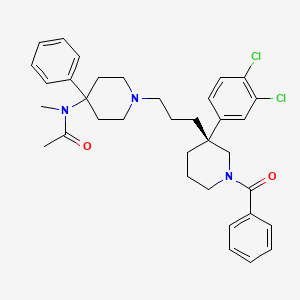
Osanetant

 Uncategorized  Comments Off on Osanetant
Aug 172016
 

Osanetant.png

Osanetant (SR-142,801)

160492-56-8 CAS

: MW 605.257582985
Chemical Formula C35H41Cl2N3O2

(R)-(+)-N-[[3-[1-benzoyl-3-(3,4-dichlorophenyl)piperidin-3-yl]prop-1-yl]-4-phenylpiperidin-4-yl]-N-methylacetamide

Osanetant (SR-142,801) was a neurokinin 3 receptor antagonist developed by Sanofi-Synthélabo, which was being researched for the treatment of schizophrenia, but was discontinued.[1][2] It was the first non-peptide NK3 antagonist developed in the mid-1990s,[3][4] Other potential applications for osanetant is in the treatment of drug addiction, as it has been found to block the effects ofcocaine in animal models.[5][6]

Developed by Sanofi-Aventis (formerly Sanofi-Synthelabo), osanetant (SR-142801) is an NK3 receptor antagonist which was under development for the treatment of schizophrenia and other Central Nervous System (CNS) disorders. In a review of its R&D portfolio, the company announced in August 2005 that it would cease any further development ofosanetant. This follows an earlier decision to discontinue development of eplivanserin for schizophrenia

(R)-(+)-N-[[3-[1-benzoyl-3-(3,4-dichlorophenyl)piperidin-3-yl]prop-1-yl]-4-phenylpiperidin-4-yl]-N-methylacetamide and to a process for their preparation. (R)-(+)-N-[[3-[1-Benzoyl-3-(3,4-dichlorophenyl)piperidin-3-yl]prop-1-yl]-4-phenylpiperidin-4-yl]-N-methylacetamide, hereinafter denoted by its International Non-proprietary Name “osanetant”, is the first antagonist of the NK-3 receptor described in the literature, the preparation of which, in particular in the hydrochloride form, is illustrated in EP-A-673 928.
Osanetant.png
According to this document, osanetant is prepared by reacting N-methyl-N-(4-phenylpiperidin-4-yl)acetamide with 1-benzoyl-3-(3,4-dichlorophenyl)-3-(methanesulfonyloxyprop-1-yl)piperidine and by converting the osanetant thus obtained to its hydrochloride. It has been found that osanetant hydrochloride is isolated in the form of an amorphous solid which is difficult to purify. This product comprises impurities originating from the preceding synthetic stages.
Preparative chromatography starting from osanetant base can be used to obtain osenetant in the pure form.
Osanetant is a neurokinin (NK3) receptor antagonist under development by Sanofi-Synthélabo (formerly Sanofi) as a potential treatment for schizophrenia . Sanofi was originally investigating its potential use as a treatment for psychosis and anxiety . Following phase IIa clinical trials , osanetant entered phase IIb development in February 2001 . Osanetant was the first potent and selective non-peptide antagonist described for the NK3 tachykinin receptor . It has a higher affinity for human and guinea pig NK3 receptors than for rat NK3 receptors . In October 1999, Lehman Brothers predicted that the probability of the product reaching the market was 10%, with a possible launch in 2003 and potential peak sales of US $200 million in 2011 .
 
Sanofi-Aventis CEO, Chris Vihebacher,
PATENT
EP 0673928; FR 2717477; FR 2717478; FR 2719311; JP 1996048669; US 5741910; US 5942523; US 6124316
N-Benzyl-4-hydroxy-4-phenylpiperidine (II) was prepared by addition of phenyllithium to N-benzyl-4-piperidone (I). Carbinol (II) was then converted to acetamide (III) by acid-catalyzed Ritter reaction with acetonitrile. Replacement of the acetamido for an N-Boc group in (III) was effected by acidic hydrolysis of amide (III) to give (IV), followed by treatment with di-tert-butyl dicarbonate. The resultant 1-benzyl-4-(Boc-amino)-4-phenylpiperidine (V) was subjected to catalytic hydrogenolysis in the presence of Pd/C, and the N-debenzylated piperidine (VI) was reprotected as the N-trityl derivative (VII) by treatment with triphenylmethyl chloride and triethylamine. Reduction of the N-Boc group of (VII) by LiAlH4, yielded the N-methyl amine (VIII). After acylation of (VIII) with acetyl chloride to acetamide (IX), its N-trityl group was cleaved by treatment with hot aqueous formic acid to produce the intermediate piperidine (X).
Michael addition of methyl acrylate (XII) to (3,4-dichlorophenyl)acetonitrile (XI) produced the cyano diester adduct (XIII). Catalytic hydrogenation of the cyano group of (XIII) over Raney nickel with concomitant intramolecular cyclization gave rise to the piperidinone (XIV). After basic hydrolysis of the methyl ester function of (XIV), the resultant piperidone propionic acid (XV) was reduced to piperidino alcohol (XVI) by means of borane in THF. Resolution of the racemic piperidine (XVI) employing (+)-camphorsulfonic acid provided the dextro enantiomer (XVII). After N-protection of (XVII) as the Boc derivative (XVIII), its primary alcohol was activated as the corresponding mesylate (XIX) with methanesulfonyl chloride and Et3N. Condensation between mesylate (XIX) and intermediate piperidine (X) in acetonitrile at 60 C, produced (XX). The title benzamido derivative was then obtained by acid-promoted Boc group cleavage in (XX), followed by acylation with benzoyl chloride.
WO 9805640
Bioorg Med Chem Lett 1996,6(19),2307
In a related synthesis, (3,4-dichlorophenyl)acetonitrile (XI) was alkylated with bromide (XXII) –prepared by protection of 3-bromopropanol (XXI) with dihydropyran– to afford (XXIII). Subsequent Michael addition of methyl acrylate (XII) to (XXIII) in the presence of Triton B?gave the cyanoacid (XXIV). This was cyclized to the glutarimide (XXV) by refluxing in HOAc in the presence of H2SO4. Reduction of (XXV) using borane-dimethylsulfide complex produced the already reported racemic piperidinoalcohol (XVI). After acylation of the amine group of (XVI) with benzoyl chloride to yield (XXVI), its hydroxyl group was converted into the target mesylate precursor (XXVII) with methanesulfonyl chloride and Et3N.
An alternative preparation of the precursor 4-(N-methyl-N-acetyl)amino-4-phenylpiperidine (XXXIX) has been reported. The N-benzyl protecting group of piperidine (III) was replaced with an N-Boc group by catalytic hydrogenolysis to (XXXVI), followed by treatment with Boc2O to yield (XXXVII). Amide (XXXVII) alkylation with iodomethane under phase-transfer conditions gave the N-methyl derivative (XXXVIII). Subsequent N-Boc group cleavage in (XXXVIII) was accomplished by using zinc chloride in CH2Cl2 to afford the piperidine-ZnCl2 complex (XXXIX). This was then alkylated with mesylate (XXVII), and the title compound was finally isolated from the racemic mixture by means of preparative chiral HPLC.
In a further method, aminopiperidine (IV) was converted to the formamide (XL) by heating in ethyl formate. Formyl group reduction in (XL) with LiAlH4 provided the N-metyl amine (XLI). The N-benzyl group of (XLI) was then removed by catalytic hydrogenation over Pd/C. Alkylation of the resultant piperidine (XLII) with mesylate (XXVII) gave adduct (XLIII). After acetylation of (XLIII) in neat Ac2O, the racemic mixture was separated by chiral HPLC.
In a further procedure, nitrile (XXIII) was alkylated with ethyl 3-bromopropionate (XXVIII) to give cyano ester (XXIX). Catalytic hydrogenation of the cyano group of (XXIX) gave rise to the piperidinone (XXX), which was further reduced to piperidine (XXXI) with LiAlH4 in THF. Acid deprotection of the tetrahydropyranyl group of (XXXI), followed by resolution with (+)-camphorsulfonic acid, furnished the desired (S)-piperidinoalcohol camphorsulfonate salt (XXXII). Treatment of piperidine (XXXII) with benzoyl chloride in the presence of DIEA yielded benzamide (XXXIII). Conversion of the primary alcohol of (XXXIII) into the desired alkyl iodide (XXXV) was achieved via formation of the mesylate ester (XXXIV), followed by displacement of the mesylate group with KI in refluxing acetone.
Bioorg Med Chem Lett 1997,7(5),555
A new method has been reported. Formamide (XL) was prepared form carbinol (II) by a modified Ritter reaction with cyanotrimethylsilane. Subsequent reduction of (XL) with LiAlH4 gave the N-methyl amine (XLI), which was converted to acetamide (XLIV) by treatment with acetyl chloride. Benzyl group hydrogenolysis in (XLIV) afforded the piperidine (X). Finally, alkylation of piperidine (X) with the chiral alkyl iodide (XXXV) provided the title compound.
Cited Patent Filing date Publication date Applicant Title
US5741910 * Feb 29, 1996 Apr 21, 1998 Sanofi Compounds which are selective antagonists of the human NK3 receptor and their use as medicinal products and diagnostic tools
US5942523 * Feb 29, 1996 Aug 24, 1999 Sanofi Compounds which are selective antagonists of the human NK3 receptor and their use as medicinal products and diagnostic tools
US6040316 * Sep 2, 1997 Mar 21, 2000 Warner-Lambert Company 3-alkyl-3-phenyl-piperidines
US6124316 * May 7, 1999 Sep 26, 2000 Sanofi Compounds which are specific antagonists of the human NK3 receptor and their use as medicinal products and diagnostic tools
Citing Patent Filing date Publication date Applicant Title
US7648992 Jul 4, 2005 Jan 19, 2010 Astrazeneca Ab Hydantoin derivatives for the treatment of obstructive airway diseases
US7655664 Dec 14, 2005 Feb 2, 2010 Astrazeneca Ab Hydantoin derivatives as metalloproteinase inhibitors
US7662845 Aug 7, 2006 Feb 16, 2010 Astrazeneca Ab 2,5-Dioxoimidazolidin-4-yl acetamides and analogues as inhibitors of metalloproteinase MMP12
US7666892 May 5, 2008 Feb 23, 2010 Astrazeneca Ab Metalloproteinase inhibitors
US7700604 Dec 14, 2005 Apr 20, 2010 Astrazeneca Ab Hydantoin derivatives as metalloproteinase inhibitors
US7754750 Jul 13, 2010 Astrazeneca Ab Metalloproteinase inhibitors
US7989620 Aug 2, 2011 Astrazeneca Ab Hydantoin derivatives for the treatment of obstructive airway diseases
US8153673 Jan 26, 2010 Apr 10, 2012 Astrazeneca Ab Metalloproteinase inhibitors
US8183251 Nov 28, 2007 May 22, 2012 Astrazeneca Ab Hydantoin compounds and pharmaceutical compositions thereof
US20080032997 * Dec 14, 2005 Feb 7, 2008 Astrazeneca Ab Novel Hydantoin Derivatives as Metalloproteinase Inhibitors
US20080064710 * Jul 4, 2005 Mar 13, 2008 Astrazeneca Ab Novel Hydantoin Derivatives for the Treatment of Obstructive Airway Diseases
US20080221139 * Nov 28, 2007 Sep 11, 2008 David Chapman Novel Compounds
US20080262045 * May 5, 2008 Oct 23, 2008 Anders Eriksson Metalloproteinase Inhibitors
US20080293743 * Dec 14, 2005 Nov 27, 2008 Astrazeneca Ab Novel Hydantoin Derivatives as Metalloproteinase Inhibitors
US20080306065 * May 6, 2008 Dec 11, 2008 Anders Eriksson Metalloproteinase Inhibitors
US20100144771 * Dec 2, 2009 Jun 10, 2010 Balint Gabos Novel Hydantoin Derivatives for the Treatment of Obstructive Airway Diseases
WO2007106022A2 * Mar 15, 2007 Sep 20, 2007 Astrazeneca Ab A new crystalline form g of (5s) -5- [4- (5-chloro-pyridin-2- yloxy) -piperidine-1-sulfonylmethyl] – 5 -methyl -imidazolidine – 2,4-dione (i) and intermediates thereof.
WO2007106022A3 * Mar 15, 2007 Nov 1, 2007 Astrazeneca Ab A new crystalline form g of (5s) -5- [4- (5-chloro-pyridin-2- yloxy) -piperidine-1-sulfonylmethyl] – 5 -methyl -imidazolidine – 2,4-dione (i) and intermediates thereof.


References

  1.  “osanetant Sanofi-Aventis discontinued, France.”. Highbeam.
  2. Kamali, F (July 2001). “Osanetant Sanofi-Synthélabo”. Current opinion in investigational drugs (London, England : 2000). 2 (7): 950–6.PMID 11757797.
  3.  Emonds-Alt, X; Bichon, D; Ducoux, JP; Heaulme, M; Miloux, B; Poncelet, M; Proietto, V; Van Broeck, D; et al. (1995). “SR 142801, the first potent non-peptide antagonist of the tachykinin NK3 receptor”. Life Sciences. 56 (1): PL27–32. doi:10.1016/0024-3205(94)00413-M.PMID 7830490.
  4.  Quartara L, Altamura M (August 2006). “Tachykinin receptors antagonists: from research to clinic”. Current Drug Targets. 7 (8): 975–92.doi:10.2174/138945006778019381. PMID 16918326. Retrieved 2011-04-14.
  5.  Desouzasilva, M; Mellojr, E; Muller, C; Jocham, G; Maior, R; Huston, J; Tomaz, C; Barros, M (May 2006). “The tachykinin NK3 receptor antagonist SR142801 blocks the behavioral effects of cocaine in marmoset monkeys”. European Journal of Pharmacology. 536 (3): 269–78.doi:10.1016/j.ejphar.2006.03.010. PMID 16603151.
  6.  Jocham, Gerhard; Lezoch, Katharina; Müller, Christian P.; Kart-Teke, Emriye; Huston, Joseph P.; De Souza Silva, M. AngéLica (September 2006). “Neurokinin receptor antagonism attenuates cocaine’s behavioural activating effects yet potentiates its dopamine-enhancing action in the nucleus accumbens core”. European Journal of Neuroscience. 24 (6): 1721–32. doi:10.1111/j.1460-9568.2006.05041.x.PMID 17004936.
X Emonds-Alt et al. SR 142801, the first potent non-peptide antagonist of the tachykinin NK3 receptor. Life Sci. 1995, 56(1), PL27-32.
F Kamali. Osanetant Sanofi-Synthélabo. Curr. Opin. Invest. Drugs. 2001, 2(7), 950-956.
L Quartara and M Altamura. Tachykinin receptors antagonists: from research to clinic. Curr. Drug Targets. 2006, 7(8), 975-992.
MA De Souza Silva et al. The tachykinin NK3 receptor antagonist SR142801 blocks the behavioral effects of cocaine in marmoset monkeys. Eur. J. Pharmacol. 2006, 536(3), 269-278.
G Jocham et al. Neurokinin receptor antagonism attenuates cocaine’s behavioural activating effects yet potentiates its dopamine-enhancing action in the nucleus accumbens core. Eur. J. Neurosci. 2006, 24(6), 1721-1732.
Osanetant
Osanetant.png
Systematic (IUPAC) name
N-(1-{3-[(3R)-1-benzoyl-3-(3,4-dichlorophenyl)piperidin-3-yl]propyl}-4-phenylpiperidin-4-yl]-N-methylacetamide
Identifiers
CAS Number 160492-56-8 Yes
ATC code none
PubChem CID 219077
IUPHAR/BPS 2110
ChemSpider 189901 
UNII K7G81N94DT Yes
ChEMBL CHEMBL346178 
Chemical data
Formula C35H41Cl2N3O2
Molar mass 606.625 g/mol

///////Osanetant , SR-142,801, 

CC(=O)N(C)C1(CCN(CC1)CCC[C@@]2(CCCN(C2)C(=O)C3=CC=CC=C3)C4=CC(=C(C=C4)Cl)Cl)C5=CC=CC=C5

Share
Follow

Get every new post on this blog delivered to your Inbox.

Join other followers: