AUTHOR OF THIS BLOG

DR ANTHONY MELVIN CRASTO, WORLDDRUGTRACKER

CASOPITANT

 Uncategorized  Comments Off on CASOPITANT
Jan 072014
 

CASOPITANT

Tachykinin NK1 Antagonists

(2S,4S)-4-(4-Acetyl-1-piperazinyl)-N-[(1R)-1-[3,5-bis(trifluoromethyl)phenyl]ethyl]-2-(4-fluoro-2-methylphenyl)-N-methyl-1-piperidinecarboxamide

4-(S)-(4-Acetyl-piperazin-1-yl)-2- (R)-(4-fluoro-2-methyl-phenyl)-piperidine-1-carboxylic acid, [1-(R)-(3,5-bis-trifluoromethyl- phenyl)-ethyl]-methylamide

414910-30-8  MESYLATE
414910-27-3 (free base)

679769
GW-679769
GW-679769B

MF C30H35F7N4O2.CH4O3S MESYLATE
 Molecular Weight 712.719


Casopitant (trade names Rezonic (US), Zunrisa (EU)) is an neurokinin 1 (NK1receptor antagonist undergoing research for the treatment of chemotherapy-induced nausea and vomiting (CINV).[1] It is currently under development by GlaxoSmithKline (GSK).

In July 2008, the company filed a marketing authorisation application with the European Medicines Agency. The application was withdrawn in September 2009 because GSK decided that further safety assessment was necessary.[2]    Casopitant mesylate, a tachykinin NK1 receptor antagonist, had been filed for approval in the U.S. and the E.U. by GlaxoSmithKline for the prophylaxis of chemotherapy-induced nausea/vomiting.

In 2009 the company discontinued the development of the drug candidate for this indication. An MAA had also been filed for the treatment of postoperative nausea and vomiting, and in 2009 the application was withdrawn by the company.

Additional phase II clinical trials were ongoing at GlaxoSmithKline for the treatment of depression, anxiety, sleep disorders, fibromyalgia and overactive bladder, however, no recent developments have been reported for these indications.

  1.  Lohr L (2008). “Chemotherapy-induced nausea and vomiting”. Cancer J 14 (2): 85–93.doi:10.1097/PPO.0b013e31816a0f07PMID 18391612.
  2.  “GlaxoSmithKline withdraws its marketing authorisation application for Zunrisa”. London: EMEA. 13 October 2009. Retrieved 21 December 2009
  3. Casopitant mesilate
    Drugs Fut 2008, 33(9): 737
  4. WO 2002032867
  5. WO 2008046882
  6. Development of a control strategy for a defluorinated analogue in the manufacturing process of casopitant mesylate
    Org Process Res Dev 2010, 14(4): 832 NMR FREE BASE, MESYLATE
  7. WO 2006061233
  8. WO 2004091616
  9. US20040014770 ENTRY 1B MP MESYLATE 243
  10. Tetrahedron, 2010 ,  vol. 66,  26  p. 4769 – 4774 NMR FREE BASE
  11. Journal of Medicinal Chemistry, 2011 ,  vol. 54,   4  p. 1071 – 1079 NMR MESYLATE
WO2006061233A1 * Dec 7, 2005 Jun 15, 2006 Glaxo Group Ltd The use of medicament 4-(s)-(4-acetyl-piperazin-1-yl)-2-(r)-(4-fluoro-2-methyl-phenyl)-piperidine-1-carboxylic acid, [1-(r)-(3,5-bis-trifluoromethyl-phenyl)-ethyl]-methylamide


WO2001044200A2 * Dec 14, 2000 Jun 21, 2001 David J Blythin Selective neurokinin antagonists
WO2002010141A1 * Jul 25, 2001 Feb 7, 2002 Michael Kirk Ahlijanian Imidazole derivatives
WO2002032867A1 * Oct 12, 2001 Apr 25, 2002 Giuseppe Alvaro Chemical compounds
US20020123491 * Dec 14, 2000 Sep 5, 2002 Neng-Yang Shih Selective neurokinin antagonists
US20030064980 * Jun 6, 2002 Apr 3, 2003 Neng-Yang Shih Selective neurokinin antagonists
US20030144270 * Nov 12, 2002 Jul 31, 2003 Schering Corporation NK1 antagonists


Casopitant (Rezonic, Zunrisa, casopitant mesylate, GW-679769, 679769, CAS #414910-27-3), 4-(4-Acetyl-piperazin-1-yl)-2-(4-fluoro-2-methyl-phenyl)-piperidine-1-carboxylic acid [1-(3,5-bis-trifluoromethyl-phenyl)-ethyl]-methyl-amide, is a NK-1 receptor antagonist.

Casopitant is under investigation for the treatment of emesis, nausea, drug-induced nausea, chemotherapy-induced nausea and vomiting, post-operative nausea and vomiting, sleep disorders, anxiety disorders, depressive disorders, overactive bladder, and myalgia (Drug Report for Casopitant, Thomson Investigational Drug Database (Sep. 15, 2008); Reddy et al., Supportive Cancer Therapy 2006, 3(3), 140-142; and WO 2006/061233).

Casopitant has also shown promise in treating disorders of the central nervous system, tinitis, and sexual dysfunction (WO 2006/061233).

compound may be of value in the treatment of Sexual dysfunctions including Sexual Desire Disorders such as Hypoactive Sexual Desire Disorder and Sexual Aversion Disorder sexual arousal disorders such as Female Sexual Arousal Disorder and Male Erectile Disorder orgasmic disorders such as Female Orgasmic Disorder, Male Orgasmic Disorder and Premature Ejaculation sexual pain disorder such as Dyspareunia and Vaginismus, Sexual Dysfunction Not Otherwise Specified; paraphilias such as Exhibitionism, Fetishism, Frotteurism, Pedophilia, Sexual Masochism, Sexual Sadism Transvestic Fetishism, Voyeurism and Paraphilia Not Otherwise Specified gender identity disorders such as Gender Identity Disorder in Children and Gender Identity Disorder in Adolescents or Adults and Sexual Disorder Not Otherwise Specified.


Figure US20100137332A1-20100603-C00002


Casopitant is subject to CYP3A4-mediated oxidative metabolism at the 3-carbon of the piperazine ring to form a hydroxylated metabolite which may be further oxidized to the corresponding 3-oxo metabolite (Minthorn et al, Drug Metab. Disp., 2008, 36(9), 1846-1852). Adverse effects associated with casopitantadministration include: neutropenia, nausea, hiccups, headache, constipation, dizziness, pruritis, alopecia, and fatigue.

Overactive bladder is a term for a syndrome that encompasses urinary frequency, with or without urge incontinence, generally but not necessarily combined with pollacisuria and nocturia. Overactive bladder is also characterised by involuntary detrusor contractions which are either triggered by provocation or occur spontaneously. If the detrusor hyperactivity observed is based on neurological causes (e. g. Parkinson’s disease, apoplexy, some forms of multiple sclerosis, spinal cord injury or the cross section of the bone marrow) it is known as neurogenic detrusor hyperactivity. If no clear cause can be detected this is known as idiopathic detrusor hyperactivity. In addition, detrusor hyperactivity may be associated with anatomical changes in the lower urinary tract, for example, in patients with bladder outlet obstruction (an enlargement of the prostate gland in males)

International patent application WO 02/32867 describes novel piperidine derivatives. A 0 particular preferred compound described therein is 4-(S)-(4-Acetyl-piperazin-1-yl)-2-(R)- (4-fluoro-2-methyl-phenyl)-piperidine-1-carboxylic acid


…………………………………………………………………

CASOPITANT MESYLATE

http://chem.sis.nlm.nih.gov/chemidplus/RenderImage?maxscale=30&width=300&height=300&superlistid=0414910308

US20040014770

EXAMPLE 4

[0330] 4-(S)-(4-Acetyl-piperazin-1-yl)-2-(R)-(4-fluoro-2-methyl-phenyl)-piperidine-1-Carboxylic Acid, [1-(R)-(3,5-bis-trifluoromethyl-phenyl)-ethyl]-methylamide Methanesulphonate

[0331] A solution of intermediate 4a (7.7 g) in acetonitrile (177 mL) was added to a solution of 1-acetyl-piperazine (3.9 g) in acetonitrile (17.7 mL) followed by sodium triacetoxyborohydride (6.4 g) under a nitrogen atmosphere. The reaction mixture was stirred at room temperature for 24 hours and then quenched with a saturated sodium hydrogen carbonate (23.1 mL) and water (61.6 mL). The resulting solution was concentrated in vacuo, then AcOEt (208 mL) was added; the layers were separated and the aqueous layer was back-extracted with further AcOEt (2×77 mL). The collected organic phases were washed with brine (2×118 mL), dried and concentrated in vacuo to give the crude mixture of syn and anti diastereomers (nearly 1:1) as a white foam (9.5 g).

[0332] A solution of this intermediate in THF (85.4 mL) was added to a solution of methansulfonic acid (0.890 mL) in THF (6.1 mL) at r.t. After seeding, the desired syn diastereomer started to precipitate. The resulting suspension was stirred for 3 hours at 0° C. and then filtered under a nitrogen atmosphere. The resulting cake was washed with cold THF (15.4 mL) and dried in vacuo at +20° C. for 48 hours to give the title compound as a white solid (4.44 g).

[0333] NMR (d6-DMSO): δ (ppm) 9.52 (bs, 1H); 7.99 (bs, 1H); 7.68 (bs, 2H); 7.23 (m, 1H); 6.95 (dd, 1H); 6.82 (m, 1H); 5.31 (q, 1H); 4.45 (bd, 1H); 4.20 (dd, 1H); 3.99 (bd, 1H); 3.65-3.25 (bm, 5H); 3.17 (m, 1H); 2.96 (m, 1H); 2.88-2.79 (m+m, 2H); 2.73 (s, 3H); 2.36 (s, 3H); 2.30 (s, 3H); 2.13-2.09 (bd+bd, 2H); 2.01 (s, 3H); 1.89-1.73 (m+m, 2H); 1.46 (d, 3H).

[0334] m.p 243.0° C.

[0335] The compound is isolated in a crystalline form.


intermediate 4a is needed  for above syn, ignore 4b

[0168] Intermediate 4

[0169] 2-(R)-(4-Fluoro-2-methyl-phenyl)-4-oxo-piperidine-1-Carboxylic Acid, [1-(R)-3,5-bis-trifluoromethyl-phenyl)ethyl]-Methylamide (4a) and 2-(S)-(4-Fluoro-2-methyl-phenyl)-4-oxo-piperidine-1-Carboxylic Acid, [1-(R)-3,5-bis-trifluoromethyl-phenyl)-ethyl]-Methylamide (4b) Method A

[0170] A solution of triphosgene (147 mg) dissolved in dry DCM (5 mL) was added drop-wise to a solution of intermediate 2 (250 mg) and DIPEA (860 μL) in dry DCM (15 mL) previously cooled to 0° C. under a nitrogen atmosphere. After 2 hours, [1-(R)-3,5-bis-trifluoromethyl-phenyl)-ethyl]-methylamine hydrochloride (503 mg) and DIPEA (320 μL) in dry acetonitrile (20 mL) were added and the mixture was heated to 70° C. for 16 hours. Further [1-(R)-(3,5-bis-trifluoromethyl-phenyl)-ethyl]-methylamine hydrochloride (170 mg) and DIPEA (100 μL) were added and the mixture was stirred at 70° C. for further 4 hours. Next, the mixture was allowed to cool to r.t., taken up with AcOEt (30 mL), washed with a 1N hydrochloric acid cold solution (3×15 mL) and brine (2×10 mL). The organic layer was dried and concentrated in vacuo to a residue, which was purified by flash chromatography (CH/AcOEt 8:2) to give:

[0171] 1. intermediate 4a (230 mg) as a white foam,

[0172] 2. intermediate 4b (231 mg) as a white foam. …………….ignore

[0173] Intermediate 4a

[0174] NMR (d6-DMSO): δ (ppm) 7.98 (bs, 1H); 7.77 (bs, 2H); 7.24 (dd, 1H); 6.97 (dd, 1H); 6.89 (m, 1H); 5.24 (t, 1H); 5.14 (q, 1H); 3.61 (m, 1H); 3.55 (m, 1H); 2.71 (m, 2H); 2.56 (s, 3H); 2.50 (m, 2H); 2.26 (s, 3H); 1.57 (d, 3H).

[0175] Intermediate 4b

[0176] NMR (d6-DMSO): δ (ppm) 7.96 (bs, 1H); 7.75 (bs, 2H); 7.24 (dd, 1H); 6.98 (dd, 1H); 6.93 (dt, 1H); 5.29 (q, 1H); 5.24 (t, 1H); 3.56 (m, 1H); 3.48 (m, 1H); 2.70 (s, 3H); 2.50 (m, 4H); 2.26 (s, 3H); 1.54 (d, 3H). …….. ignore

[0177] Intermediate 4a

[0178] Method B

[0179] A saturated sodium hydrogen carbonate solution (324 mL) was added to a solution of intermediate 9 (21.6 g) in AcOEt (324 mL) and the resulting mixture was vigorously stirred for 15 minutes. The aqueous layer was back-extracted with further AcOEt (216 mL) and the combined organic extracts were dried and concentrated in vacuo to give intermediate 8 as a yellow oil, which was treated with TEA (19 mL) and AcOEt (114 mL). The solution obtained was added drop-wise over 40 minutes to a solution of triphosgene (8 g) in AcOEt (64 mL) previously cooled to 0° C. under a nitrogen atmosphere, maintaining the temperature between 0° C. and 8° C.

[0180] After stirring for 1 hours at 0° C. and for 3 hours at 20° C., [1-(R)-(3,5-bis-trifluoromethyl-phenyl)-ethyl]-methylamine hydrochloride (29.7 g), AcOEt (190 mL) and TEA (38 mL) were added to the reaction mixture which was then heated to reflux for 16 hours.

[0181] The solution was washed with 10% sodium hydroxide solution (180 mL), 1% hydrochloric acid solution (4×150 mL), water (3×180 mL) and brine (180 mL). The organic layer was dried and concentrated in vacuo to a residue, which was purified through a silica pad (CH/AcOEt 9:1) to give the title compound (21.5 g) as a brown thick oil.

[0182] NMR (d6-DMSO): 6 (ppm) 7.97-7.77 (bs+bs, 3H); 7.24 (dd, 1H); 6.97 (dd, 1H); 6.88 (td, 1H); 5.24 (m, 1H); 5.14 (q, 1H); 3.58 (m, 2H); 2.7 (m, 2H); 2.56 (s, 3H); 2.49 (m, 2H); 2.26 (s, 3H); 1.57 (d, 3H).

intermediate 2

[0152] Intermediate 2

[0153] 2-(4-Fluoro-2-methyl-phenyl)-piperidine-4-one

[0154] Method A

[0155] 2-Methyl-4-fluoro-benzaldehyde (4 g) was added to a solution of 4-aminobutan-2-one ethylene acetal (3.8 g) in dry benzene (50 mL) and the solution was stirred at r.t. under a nitrogen atmosphere. After 1 hour the mixture was heated at reflux for 16 hours and then allowed to cool to r.t. This solution was slowly added to a refluxing solution of p-toluensulphonic acid (10.6 g) in dry benzene (50 mL) previously refluxed for 1 hour with a Dean-Stark apparatus. After 3.5 hours the crude solution was cooled and made basic with a saturated potassium carbonate solution and taken up with AcOEt (50 mL). The aqueous phase was extracted with AcOEt (3×50 mL) and Et2O (2×50 mL). The organic layer was dried and concentrated in vacuo to a yellow thick oil as residue (7.23 g). A portion of the crude mixture (3 g) was dissolved in a 6N hydrochloric acid solution (20 mL) and stirred at 60° C. for 16 hours. The solution was basified with solid potassium carbonate and extracted with DCM (5×50 mL). The combined organic phases were washed with brine (50 mL), dried and concentrated in vacuo to give the title compound (2.5 g) as a thick yellow oil.

[0156] Method B

[0157] L-selectride (1M solution in dry THF, 210 mL) was added drop-wise, over 80 minutes, to a solution of intermediate 1 (50 g) in dry THF (1065 mL) previously cooled to −72° C. under a nitrogen atmosphere. After 45 minutes, 2% sodium hydrogen carbonate solution (994 mL) was added drop-wise and the solution was extracted with AcOEt (3×994 mL). The combined organic phases were washed with water (284 mL) and brine (568 mL). The organic phase was dried and concentrated in vacuo to get 1-benzyloxycarbonyl-2-(4-fluoro-2-methyl-phenyl)-piperidine-4-one as a pale yellow thick oil (94 g) which was used as a crude.

[0158] This material (94 g) was dissolved in AcOEt (710 mL), then 10% Pd/C (30.5 g) was added under a nitrogen atmosphere. The slurry was hydrogenated at 1 atmosphere for 30 minutes. The mixture was filtered through Celite and the organic phase was concentrated in vacuo to give the crude 2-(4-fluoro-2-methyl-phenyl)-piperidine-4-one as a yellow oil. This material was dissolved in AcOEt (518 mL) at r.t. and racemic camphorsulphonic acid (48.3 g) was added. The mixture was stirred at r.t for 18 hours, then the solid was filtered off, washed with AcOEt (2×50 mL) and dried in vacuo for 18 hours to give 2-(4-fluoro-2-methyl-phenyl)-piperidine-4-one, 10-camphorsulfonic acid salt as a pale yellow solid (68.5 g). (M.p.: 167-169° C.-NMR (d6-DMSO): 6 (ppm) 9.43 (bs, 1H); 9.23 (bs, 1H); 7.66 (dd, 1H); 7.19 (m, 2H); 4.97 (bd, 1H); 3.6 (m, 2H); 2.87 (m, 3H); 2.66 (m, 1H); 2.53 (m, 2H); 2.37 (s+d, 4H); 2.22 (m, 1H); 1.93 (t, 1H); 1.8 (m, 2H); 1.26 (m, 2H); 1.03 (s, 3H); 0.73 (s, 3H).

[0159] This material (68.5 g) was suspended in AcOEt (480 mL) and stirred with a saturated sodium hydrogen carbonate (274 mL). The organic layer was separated and washed with further water (274 mL). The organic phase was dried and concentrated in vacuo to give the title compound (31 g) as a yellow-orange oil.

[0160] NMR (d6-DMSO): 6 (ppm) 7.49 (dd, 1H); 7.00 (m, 2H); 3.97 (dd, 1H); 3.27 (m, 1H); 2.82 (dt, 1H); 2.72 (bm, 1H); 2.47 (m, 1H); 2.40 (m, 1H); 2.29 (s, 3H); 2.25 (dt, 1H); 2.18 (m, 1H).

[0161] MS (ES/+): m/z=208 [MH]+.


intermediate 9

[0220] Intermediate 9

[0221] 2-(R)-(4-Fluoro-2-methyl-phenyl)-piperidin-4-one Mandelic Acid.

[0222] A solution of L-(+)-mandelic acid (22.6 g) in AcOEt (308 mL) was added to a solution of intermediate 2 (31 g) in AcOEt (308 mL). Then isopropanol (616 mL) was added and the solution was concentrated in vacuo to 274 mL. The solution was then cooled to 0° C. and further cold isopropanol (96 mL) was added. The thick precipitate was stirred under nitrogen for 5 hours at 0° C., then filtered and washed with cold Et2O (250 mL) to give the title compound as a pale yellow solid (20.3 g).

[0223] M.p.: 82-85° C.

[0224] NMR (d6-DMSO): δ (ppm) 7.51 (dd, 1H); 7.40 (m, 2H); 7.32 (m, 2H); 7.26 (m, 1H); 7.0 (m, 2H); 4.95 (s, 1H); 4.04 (dd, 1H); 3.31 (m, 1H); 2.88 (m, 1H); 2.49-2.2 (m, 4H); 2.29 (s, 3H).

[0225] Chiral HPLC: HP 1100 HPLC system; column Chiralcel OD-H, 25 cm×4.6 mm; mobile phase: n-hexane/isopropanol 95:5+1% diethylamine; flow: 1.3 ml/min; detection: 240/215 nm; retention time 12.07 minutes.


………………….

NMR

mesylate

Org. Process Res. Dev., 2010, 14 (6), pp 1337–1346
DOI: 10.1021/op100150b

http://pubs.acs.org/doi/abs/10.1021/op100150b

Abstract Image

1H NMR (600 MHz, DMSO-d6): 9.57 (br s, 1H), 7.99 (br s, 1H), 7.68 (br s, 2H), 7.23 (m, 1H), 6.95 (dd, 1H), 6.82 (m, 1H), 5.31 (q, 1H), 4.45 (m, 1H), 4.20 (dd, 1H), 3.99 (m, 1H), 3.56 (m, 1H), 3.47 (m, 3H), 3.37 (m, 1H), 3.15 (m, 1H), 2.96 (m, 1H), 2.87 (m, 1H), 2.80 (t, 1H), 2.74 (s, 3H), 2.36 (s, 3H), 2.30 (s, 3H), 2.13 (m, 1H), 2.08 (m, 1H), 2.10 (s, 3H), 1.87 (m, 1H), 1.73 (m, 1H), 1.46 (d, 3H), MS: m/z 617 [MH]+, as free base.


……………

http://pubs.acs.org/doi/full/10.1021/op100209c

Org. Process Res. Dev., 2010, 14 (6), pp 1407–1419
DOI: 10.1021/op100209c

(2R,4S)-4-(4-Acetyl-1-piperazinyl)-N-{(1R)-1-[3,5-bis(trifluoromethyl)phenyl]ethyl}-2-(4-fluoro-2-methylphenyl)-N-methyl-1-piperidinecarboxamide Methanesulfonate Salt (Casopitant Mesylate 1)

A solution of casopitant 2 (0.86 wt) was diluted with EtOAc (overall solution of 2 in EtOAc was 4 L) and acetone (4.5 L) and was heated to the required temperature (from 39 °C). Thereafter, neat methanesulfonic acid (0.12 L, 1.64 mol) was charged, followed by a slurry of 2 (0.005 kg) in EtOAc (0.05 L) as seed. The obtained suspension was stirred for 1 h followed by the addition of 3 L of isooctane in the required time (1 h). The slurry was cooled to 20 °C in 2 h and aged 3 h. The suspension was filtered and the solid washed with EtOAc (3 × 4 L). The white solid was dried overnight under vacuum at 40 °C to give the desired casopitant mesylate 1 (0.94 kg).
1H NMR (600 MHz, DMSO-d6) δ 9.57 (br s, 1H), 7.99 (br s, 1H), 7.68 (br s, 2H), 7.23 (m, 1H), 6.95 (dd, 1H), 6.82 (m, 1H), 5.31 (q, 1H), 4.45 (m, 1H), 4.20 (dd, 1H), 3.99 (m, 1H), 3.56 (m, 1H), 3.47 (m, 3H), 3.37 (m, 1H), 3.15 (m, 1H), 2.96 (m, 1H), 2.87 (m, 1H), 2.80 (t, 1H), 2.74 (s, 3H), 2.36 (s, 3H), 2.30 (s, 3H), 2.13 (m, 1H), 2.08 (m, 1H), 2.10 (s, 3H), 1.87 (m, 1H), 1.73 (m, 1H), 1.46 (d, 3H). MS: m/z 617 [MH]+, as free base.
………….
Org. Process Res. Dev., 2010, 14 (4), pp 805–814
DOI: 10.1021/op1000622
NMR CASOPITANT FREE BASE
(2R,4S)-4-(4-Acetyl-1-piperazinyl)-N-{(1R)-1-[3,5-bis(trifluoromethyl)phenyl]ethyl}-2-(4-fluoro-2-methylphenyl)-N-methyl-1-piperidinecarboxamide (Casopitant 2)

HCOOH (0.49 L, 13 mol) was added to a cooled suspension of NaBH(OAc)3 (0.82 kg, 3.87 mol) in CH3CN (4 L), keeping the internal temperature between 10−15 °C; then the lines were washed with more CH3CN (1 L), and the mixture was stirred for 40 min.
1-Acetylpiperazine (0.7 kg, 5.46 mol) was added neat over the solution of piperidone-urea 3, and the mixture was diluted with CH3CN (3 L). The resulting mixture was added over the previous suspension; fresh CH3CN (4 L) was used to wash the line. The reaction mixture was stirred at 15 °C for 12 h. The solvent was evaporated under reduced pressure to 4 L.
The resulting suspension was diluted with fresh EtOAc (4 L), and then washed with ammonia [21% w/w solution (4 L, 11.25 M in NH3)], Na2CO3 [15% w/w solution (4 L)]. More EtOAc (4 L) was added, and the organic layer was washed with water (4 L). The organic phase was then concentrated to 2.5 L; again fresh EtOAc (4 L) was added, and the solution was concentrated to 2.5 L to give a solution of casopitant 2.
1H NMR (600 MHz, DMSO-d6): δ 7.99 (s, 1H), 7.68 (s, 2H), 7.18 (dd, 1H), 6.90 (dd, 1H), 6.76 (td, 1H), 5.33 (q, 1H), 4.14 (dd, 1H), 3.38 (m, 5H), 2.71 (s, 3H), 2.72 (m, 1H), 2.54 (m, 1H), 2.47 (m, 2H), 2.41 (m, 2H), 2.34 (s, 3H), 1.95 (s, 3H), 1.85 (m, 1H), 1.77 (m, 1H), 1.62 (dq, 1H), 1.47 (d, 3H), 1.40 (q, 1H).
Abstract Image

 picture    animation


……………………………….

J. Med. Chem., 2011, 54 (4), pp 1071–1079
DOI: 10.1021/jm1013264

http://pubs.acs.org/doi/full/10.1021/jm1013264?prevSearch=casopitant&searchHistoryKey=

(2R,4S)-1′-acetyl-N-{(1R)-1-[3,5-bis(trifluoromethyl)phenyl]ethyl}-2-(4-fluoro-2-methylphenyl)-N-methyl-4,4′-bipiperidine-1-carboxamide methanesulfonate salt 16a (casopitant)

nmr mesylate

1H NMR (600 MHz, DMSO-d6): 9.57 (bs, 1H), 7.99 (bs, 1H), 7.68 (bs, 2H), 7.23 (m, 1H), 6.95 (dd, 1H), 6.82 (m, 1H), 5.31 (q, 1H), 4.45 (m, 1H), 4.20 (dd, 1H), 3.99 (m, 1H), 3.56 (m, 1H), 3.47 (m, 3H), 3.37 (m, 1H), 3.15 (m, 1H), 2.96 (m, 1H), 2.87 (m, 1H), 2.80 (t, 1H), 2.74 (s, 3H), 2.36 (s, 3H), 2.30 (s, 3H), 2.13 (m, 1H), 2.08 (m, 1H), 2.10 (s, 3H), 1.87 (m, 1H), 1.73 (m, 1H), 1.46 (d, 3H). MS: m/z 617 [MH]+, as free base.

syn of intermediates

Figure

a(a) (i) 2-Bromo-5-fluorotoluene, Mg, THF, 60−70 °C; (ii) 4-methoxypyridine, benzyl chloroformate, THF, −20 °C, then Grignard’s reagent, −20 °C, 1 h; (b) (i) tris(triphenylphosphine)rhodium(I) chloride, 2-propanol, H2 (p = 5 atm), 60 °C, 5 h; (ii) Pd/C 5%, H2 (p = 4 atm), 20 °C, 5 h; (iii) (R,S)-10-camphorsulfonic acid, toluene; (c) CH2Cl2, H2O, 8% NaHCO3 (aq); l-(+)-mandelic acid, 2-propanol, heptanes; (d) MeNH2, EtOH, NaBH4, 25 °C, 1.5 h; (e) (i) ethyl acetate, NaHCO3 (aq. sat. soln), 5; (ii) triphosgene, triethylamine, ethyl acetate, then 5, 20 °C, 2 h; (f) R′RNH, CH3CN, NaBH(OAc)3, room temp, 24 h.


ANTHONY MELVIN CRASTO

THANKS AND REGARD’S
DR ANTHONY MELVIN CRASTO Ph.D

GLENMARK SCIENTIST , NAVIMUMBAI, INDIA

did you feel happy, a head to toe paralysed man’s soul in action for you round the clock

need help, email or call me

MOBILE-+91 9323115463
web link

I was  paralysed in dec2007, Posts dedicated to my family, my organisation Glenmark, Your readership keeps me going and brings smiles to my family


Share

SOVAPREVIR in phase II clinical trials at Achillion for the oral treatment of naive patients with chronic hepatitis C virus genotype 1

 phase 2, Uncategorized  Comments Off on SOVAPREVIR in phase II clinical trials at Achillion for the oral treatment of naive patients with chronic hepatitis C virus genotype 1
Jan 062014
 

SOVAPREVIR

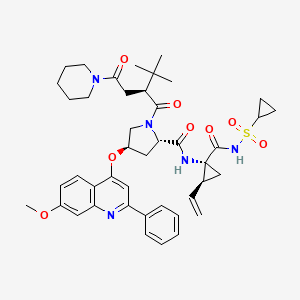
(2S, 4R) -1 – [(2S)-2-tert-butyl-4-oxo-4-(piperidin-1-yl) butanoyl]-N-{(1R, 2S) -1 – [(cyclopropanesulfonyl) carbamoyl]-2-ethenylcyclopropyl} -4 – [(7-methoxy-2-phenylquinolin-4-yl) oxy] pyrrolidine-2-carboxamide

http://www.ama-assn.org/resources/doc/usan/sovaprevir.pdf

PATENT

US 2009048297 ENTRY 60

WO 2008008502

CN 103420991


THERAPEUTIC CLAIM ….Treatment of hepatitis C

CHEMICAL NAMES

1. 2-Pyrrolidinecarboxamide, N-[(1R,2S)-1-[[(cyclopropylsulfonyl)amino]carbonyl]-2-
ethenylcyclopropyl]-1-[(2S)-3,3-dimethyl-1-oxo-2-[2-oxo-2-(1-piperidinyl)ethyl]butyl]-4-
[(7-methoxy-2-phenyl-4-quinolinyl)oxy]-, (2S,4R)-

2. (2S,4R)-N-{(1R,2S)-1-[(cyclopropylsulfonyl)carbamoyl]-2-ethenylcyclopropyl}-1-{(2S)-
3,3-dimethyl-2-[2-oxo-2-(piperidin-1-yl)ethyl]butanoyl}-4-[(7-methoxy-2-phenylquinolin-
4-yl)oxy]pyrrolidine-2-carboxamide

MOLECULAR FORMULA C43H53N5O8S

MOLECULAR WEIGHT 800.0

SPONSOR Achillion Pharmaceuticals, Inc.

CODE DESIGNATION ACH-0141625

CAS REGISTRY NUMBER 1001667-23-7

  • ACH-0141625
  • Sovaprevir
  • UNII-2ND9V3MN6O

Sovaprevir (formerly ACH-0141625), an HCV NS3 protease inhibitor, is in phase II clinical trials at Achillion for the oral treatment of naive patients with chronic hepatitis C virus genotype 1.

In 2012, fast track designation was assigned by the FDA for the treatment of hepatitis C (HCV). In 2013, a clinical hold was placed for the treatment of hepatitis C (HCV) in combination with atazanavir after elevations in liver enzymes associated with the combination of both compounds.

Sovaprevir, previously referred to as ACH-1625, is an investigational, next-generation NS3/4A protease inhibitor discovered by Achillion that is currently on clinical hold. In 2012, Fast Track status was granted by the U.S. Food and Drug Administration (FDA) to sovaprevir for the treatment of chronic hepatitis C viral infection (HCV).

Achillion has initiated a Phase 2 clinical trial (007 Study) to evaluate the all-oral, interferon-free combination of sovaprevir and its second-generation NS5A inhibitor, ACH-3102, with ribavirin (RBV), for a 12 week treatment duration, in treatment naïve, genotype 1 (GT1) HCV patients. In July 2013, sovaprevir was placed on clinical hold after elevated liver enzymes were observed in a Phase 1 healthy subject drug-drug interaction study evaluating the effects of concomitant administration of sovaprevir with ritonavir-boosted atazanavir.

In accordance with the clinical hold, the FDA provided that no new clinical trials that included dosing with sovaprevir could be initiated, however, the FDA allowed continued enrollment and treatment of patients in the Phase 2 -007 clinical trial evaluating 12-weeks of sovaprevir in combination with ACH-3102 and RBV for patients with treatment-naive genotype 1 HCV. In September 2013, after reviewing Achillion’s response, the FDA stated that although all issues identified in the June 2013 letter had been addressed, it had concluded that the removal of the clinical hold was not warranted at this time.

The FDA requested, among other things, additional analysis to more fully characterize sovaprevir pharmacokinetics and the intrinsic and extrinsic factors that may lead to higher than anticipated exposures of sovaprevir or other potential toxicities in addition to the observed liver enzyme elevations.

The FDA also requested Achillion’s proposed plan for future clinical trials in combination with other directly-acting antivirals. At the request of the FDA, Achillion plans to submit a proposed plan for analyzing the additional clinical, non-clinical and pharmacokinetic data requested before the end of 2013, and if that analysis plan is approved by the FDA, submit a complete response during the first half of 2014. Achillion retains worldwide commercial rights to sovaprevir.


Sovaprevir has demonstrated activity against all HCV genotypes (GT), including equipotent activity against both GT 1a and 1b (IC50 ~ 1nM) in vitro.


With its rapid and extensive partitioning to the liver, as well as high liver/plasma ratios, sovaprevir has been clinically demonstrated to allow for once-daily, non-boosted dosing.

The current safety database for sovaprevir includes more than 560 subjects dosed to date and demonstrates that sovaprevir is well tolerated in these subjects.

Sovaprevir has demonstrated high rates of clinical cures in combination with pegylated-interferon and RBV in a challenging, real world, patient population of genotype 1 treatment-naive patients.

100% of GT1b subjects achieved a rapid virologic response (RVR) in the 007 Study evaluating the interferon-free combination of sovaprevir + ACH-3102 + RBV for 12 weeks. The Phase 2 study is ongoing.


Sovaprevir in vitro retains activity against mutations that confer resistance to 1st-generation protease inhibitors.

In clinical studies to date, sovaprevir has demonstrated a high pharmacologic barrier to resistance with no on-treatment viral breakthrough reported to date in GT1b patients.


Sovaprevir is believed to be synergistic when combined with other classes of DAAs, including the second-generation NS5A inhibitor, ACH-3102.

For more information about the next-generation NS3/4A protease inhibitor, sovaprevir, please see the Related Links on this page or visit Resources.

Sovaprevir is an investigational compound. Its safety and efficacy have not been established. (Updated December 2013)

SOVAPREVIR


An estimated 3% of the world’s population is infected with the hepatitis C virus. Of those exposed to HCV, 80% become chronically infected, at least 30% develop cirrhosis of the liver and 1-4% develop hepatocellular carcinoma. Hepatitis C Virus (HCV) is one of the most prevalent causes of chronic liver disease in the United States, reportedly accounting for about 15 percent of acute viral hepatitis, 60 to 70 percent of chronic hepatitis, and up to 50 percent of cirrhosis, end-stage liver disease, and liver cancer. Chronic HCV infection is the most common cause of liver transplantation in the U.S., Australia, and most of Europe. Hepatitis C causes an estimated 10,000 to 12,000 deaths annually in the United States. While the acute phase of HCV infection is usually associated with mild symptoms, some evidence suggests that only about 15% to 20% of infected people will clear HCV.

HCV is an enveloped, single-stranded RNA virus that contains a positive-stranded genome of about 9.6 kb. HCV is classified as a member of the Hepacivirus genus of the family Flaviviridae. At least 4 strains of HCV, GT-1-GT-4, have been characterized.

The HCV lifecycle includes entry into host cells; translation of the HCV genome, polyprotein processing, and replicase complex assembly; RNA replication, and virion assembly and release. Translation of the HCV RNA genome yields a more than 3000 amino acid long polyprotein that is processed by at least two cellular and two viral proteases. The HCV polyprotein is:

NH2-C-E1-E2-p7-NS2-NS3-NS4A-NS4B-NS5A-NS5B-COOH.

The cellular signal peptidase and signal peptide peptidase have been reported to be responsible for cleavage of the N-terminal third of the polyprotein (C-E1-E2-p7) from the nonstructural proteins (NS2-NS3-NS4A-NS4B-NS5A-NS5B). The NS2-NS3 protease mediates a first cis cleavage at the NS2-NS3 site. The NS3-NS4A protease then mediates a second cis-cleavage at the NS3-NS4A junction. The NS3-NS4A complex then cleaves at three downstream sites to separate the remaining nonstructural proteins. Accurate processing of the polyprotein is asserted to be essential for forming an active HCV replicase complex.

Once the polyprotein has been cleaved, the replicase complex comprising at least the NS3-NS5B nonstructural proteins assembles. The replicase complex is cytoplasmic and membrane-associated. Major enzymatic activities in the replicase complex include serine protease activity and NTPase helicase activity in NS3, and RNA-dependent RNA polymerase activity of NS5B. In the RNA replication process, a complementary negative strand copy of the genomic RNA is produced. The negative strand copy is used as a template to synthesize additional positive strand genomic RNAs that may participate in translation, replication, packaging, or any combination thereof to produce progeny virus. Assembly of a functional replicase complex has been described as a component of the HCV replication mechanism. Provisional application 60/669,872 “Pharmaceutical Compositions and Methods of Inhibiting HCV Replication” filed Apr. 11, 2005, is hereby incorporated by reference in its entirety for its disclosure related to assembly of the replicase complex.

Current treatment of hepatitis C infection typically includes administration of an interferon, such as pegylated interferon (IFN), in combination with ribavirin. The success of current therapies as measured by sustained virologic response (SVR) depends on the strain of HCV with which the patient is infected and the patient’s adherence to the treatment regimen. Only 50% of patients infected with HCV strain GT-1 exhibit a sustained virological response. Direct acting antiviral agents such as ACH-806, VX-950 and NM 283 (prodrug of NM 107) are in clinical development for treatment of chronic HCV. Due to lack of effective therapies for treatment for certain HCV strains and the high mutation rate of HCV, new therapies are needed.


…………………………………………

https://www.google.co.in/patents/US20090048297

(2S,4R)-1-((S)-2-tert-butyl-4-oxo-4-(piperidin-1-yl)butanoyl)-N-((1R,2S)-1-(cyclopropylsulfonylcarbamoyl)-2-vinylcyclopropyl)-4-(7-methoxy-2-phenylquinolin-4-yloxy)pyrrolidine-2-carboxamide


Figure US20090048297A1-20090219-C00105


SOVAPREVIR IS DESCRIBED AS 60 IN CLAIM


SYNTHESIS OF INTERMEDIATE 13 BELOW AND ALSO  COMPD 8 IE SOVAPREVIR IN STEP 4


Example 1

SYNTHESIS OF 1-((2S,4R)-1-((S)-2-TERT-BUTYL-4-OXO-4-(PIPERIDIN-1-YL)BUTANOYL)-4-(7-METHOXY-2-PHENYLQUINOLIN-4-YLOXY)PYRROLIDINE-2-CARBOXAMIDO)-2-VINYLCYCLOPROPANECARBOXYLIC ACID

Step 1. Preparation of N-(cyclopropylsulfonyl)-1-(BOC-amino)-2-vinylcyclopropanecarboxamide


Figure US20090048297A1-20090219-C00047


CDI (2.98 g, 18.4 mm, 1.1 eq) is dissolved in ethyl acetate. N-Boc-cyclopropylvinyl acid (3.8 g, 16.7 mm, 1.0 eq), prepared via the procedure given by Beaulieu, P. L. et al. (J. Org. Chem. 70: 5869-79 (2005)) is added to the CDI/ethyl acetate mixture and stirred at RT until the starting material is consumed. Cyclopropyl sulfonamine (2.2 g, 18.4 mm, 1.1 eq) is added to this mixture followed by DBU (2.1 ml, 20.5 mm, 1.23 eq) and the mixture is stirred at RT for 2 h. Workup and purification by silica gel chromatography provides 2g of compound 2.

Step 2. Preparation of (2S,4R)-tert-butyl 2-(1-(cyclopropylsulfonylcarbamoyl)-2-vinylcyclopropylcarbamoyl)-4-(7-methoxy-2-phenylquinolin-4-yloxy)pyrrolidine-1-carboxylate and (2S,4R)—N-(1-(cyclopropylsulfonylcarbamoyl)-2-vinylcyclopropyl)-4-(7-methoxy-2-phenylquinolin-4-yloxy)pyrrolidine-2-carboxamide


Figure US20090048297A1-20090219-C00048


Compound 1 (4.3 g, 9.3 mmol, 1.1 eq), prepared according to the method given ins WO 02/060926, in DMF is stirred with O-(Benzotriazol-lyl)-N,N,N′,N′-Tetramethyluronium hexafluorophosphate (4.1 g, 10.5 mmol, 1.3 eq) for 30 minutes, followed by addition of cyclopropylamine 2 (1.92 g, 8.3 mmol, 1.0 eq) and N-methylmorpholine (2.52 g, 25.0 mmol, 3.0 eq). The mixture is stirred over night and the solvent removed under reduced pressure. The resulting residue is diluted with ethyl acetate and washed with saturated aqueous NaHCO3. The organic solvent is dried over MgSOand concentrated under reduced pressure to afford crude 3, which is used for next step without further purification.

Compound 3 in 10 ml dry CH2Clis treated with 5 mL TFA and stirred over night. The solvent is removed and the residue recrystallized from ethyl acetate to afford 4.12 g Compound 4 (61% yield two steps).

Step 3. Preparation of (3S)-3-((2S,4R)-2-(1-(cyclopropylsulfonylcarbamoyl)-2-vinylcyclopropylcarbamoyl)-4-(7-methoxy-2-phenylquinolin-4-yloxy)pyrrolidine-1-carbonyl)-4,4-dimethylpentanoic acid


Figure US20090048297A1-20090219-C00049


The Acid 5 (58 mg, 0.25 mmol, 1.2 eq), prepared via the procedure given by Evans, D. A., et al. (J. Org. Chem. 64: 6411-6417 (1999)) in 1.2 mL DMF is stirred with 4 (138 mg, 0.21 mmol), HATU (160 mg, 0.42 mmol, 2.0 eq), and DIEA (0.63 mmol, 3.0 eq) overnight. The mixture is subjected to HPLC purification to afford 121 mg 6 (77% yield), which is further treated with 0.5 mL TFA in 1.0 mL DCM overnight. The solvent was removed to provide Compound 7 in 100% yield.

Step 4. Preparation of (2S,4R)-1-((S)-2-tert-butyl-4-oxo-4-(piperidin-1-yl)butanoyl)-N-(1-(cyclopropylsulfonylcarbamoyl)-2-vinylcyclopropyl)-4-(7-methoxy-2-phenylquinolin-4-yloxy)pyrrolidine-2-carboxamide


Figure US20090048297A1-20090219-C00050

PLEASE  NOTE 8 IS SOVAPREVIR

The Acid 7 (0.15 mmol) in 1.0 mL DMF is stirred with pepridine (excess, 0.6 mmol, 4 eq), HATU (115 mg, 0.3 mmol, 2.0 eq), and DIEA (0.45 mmol, 3.0 eq) for 4 hrs. The mixture is subjected to HPLC purification to afford 77.1 mg 8.

Step 5. Preparation of (3S)-3-((2S,4R)-2-(1-(ethoxycarbonyl)-2-vinylcyclopropylcarbamoyl)-4-(7-methoxy-2-phenylquinolin-4-yloxy)pyrrolidine-1-carbonyl)-4,4-dimethylpentanoic acid


Figure US20090048297A1-20090219-C00051


Step 5. Preparation of (3S)-3-((2S,4R)-2-(1-(ethoxycarbonyl)-2-vinylcyclopropylcarbamoyl)-4-(7-methoxy-2-phenylquinolin-4-yloxy)pyrrolidine-1-carbonyl)-4,4-dimethylpentanoic acid

The Acid 5 (105 mg, 0.46 mmol, 1.2 eq) in 1.2 mL DMF is stirred with 9 (202 mg, 0.38 mmol), HATU (290 mg, 0.76 mmol, 2.0 eq), and DIEA (1.2 mmol, 3.0 eq) overnight. The mixture is subjected to HPLC purification to afford 204.3 mg 10 (75% yield), which is further treated with 0.5 mL TFA in 1.0 mL DCM overnight. The solvent is removed to provide 11 in 100% yield.


Figure US20090048297A1-20090219-C00052


Step 6. Preparation of Final Product

The Acid 11 (30 mg, 0.045 mmol) in 1.0 mL DMF is stirred with pepridine (0.27 mmol, 6 eq), HATU (34 mg, 0.09 mmol, 2.0 eq), and DIEA (0.14 mmol, 3.0 eq) for 2 hrs. The mixture is subjected to HPLC purification to afford 21.2 mg 12 (65% yield), which is hydrolyzed in methanol with 2N NaOH for 6 hrs. The mixture is acidified with 6N HCl and subjected to HPLC purification to afford 7.6 mg 13.

………………………………


 picture    animation

ANTHONY MELVIN CRASTO

THANKS AND REGARD’S
DR ANTHONY MELVIN CRASTO Ph.D

GLENMARK SCIENTIST , NAVIMUMBAI, INDIA

did you feel happy, a head to toe paralysed man’s soul in action for you round the clock

need help, email or call me

MOBILE-+91 9323115463
web link

I was  paralysed in dec2007, Posts dedicated to my family, my organisation Glenmark, Your readership keeps me going and brings smiles to my family

Share

VESTIPITANT (Phase II GSK)

 Uncategorized  Comments Off on VESTIPITANT (Phase II GSK)
Jan 062014


VESTIPITANT

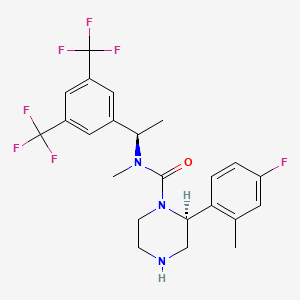
(2S)-N-[(1R)-1-[3,5-bis(trifluoromethyl)phenyl]ethyl]-2-(4-fluoro-2-methylphenyl)-N-methylpiperazine-1-carboxamide

 2-(S)-(4-Fluoro-2-methyl-phenyl)-piperazine-l- carboxylic acid [l-(R)-(3,5-bis-trifluoromethyl-phenyl)-ethyl]-methyl-amide 

2-(S)-(4-fluoro-2-methylphenyl)piperazine-1-carboxylic acid [1-(R)-(3,5-bis-trifluoromethylphenyl)ethyl]methylamide (vestipitant)

Vestipitant [INN], UNII-S052TOI9BI,  DCL001035,

CAS NO 334476-46-9

Molecular Formula: C23H24F7N3O   Molecular Weight: 491.444982

Elemental Analysis: C, 56.21; H, 4.92; F, 27.06; N, 8.55; O, 3.26

Vestipitant, also known as GW597599,  is one of the most potent and selective NK(1) receptor antagonists ever discovered, showing appropriate pharmacokinetic properties and in vivo activity. Its actions support the utility of NK(1) receptor blockade in the alleviation of anxiety and, possibly, depression.

Vestipitant is a drug developed by GlaxoSmithKline which acts as a selective antagonist for the NK1 receptor. It is under development as a potential antiemetic and anxiolytic drug, and as a treatment for tinnitus.

Vestipitant mesylate is a tachykinin NK1 receptor antagonist in phase II clinical trials at GlaxoSmithKline for the treatment of postoperative nausea and vomiting. The drug candidate had been in clinical development at the company for several indications, including the treatment of tinnitus as monotherapy or in combination with paroxetine, the treatment of primary insomnia, the treatment of depression and anxiety and the treatment of chemotherapy-induced nausea and vomiting; however, no recent development has been reported for this research.

Vestipitant has anxiolytic properties and a good safety profile. Vestipitant was investigated for potential effect against chronic tinnitus as a stand-alone treatment and in conjunction with a selective serotonin reuptake inhibitor, paroxetine. No statistically significant treatment benefit effect was detected for tinnitus (intensity, pitch, and distress) VAS scores, arousal-anxiety VAS scores, Tinnitus Handicap Inventory, or tinnitus aggravation scores assessed on Days 1 and 14. However, a statistically significant worsening of tinnitus intensity and distress scores was observed after vestipitant compared with placebo for the mean data collected over the treatment period. No relevant differences in vestipitant plasma concentrations were observed between the subjects given the combination with paroxetine and those receiving vestipitant alone. No specific relationships were observed between tinnitus intensity and vestipitant plasma concentrations.
CONCLUSION: Although well-tolerated vestipitant, alone or in combination with paroxetine, was not effective in ameliorating tinnitus in this patient group.

Vestipitant is a drug developed by GlaxoSmithKline which acts as a selective antagonist for the NK1 receptor. It is under development as a potentialantiemetic and anxiolytic drug,[1][2] and as a treatment for tinnitus.[3]

  1.  Reddy, GK; Gralla, RJ; Hesketh, PJ (2006). “Novel neurokinin-1 antagonists as antiemetics for the treatment of chemotherapy-induced emesis”. Supportive cancer therapy 3 (3): 140–2.doi:10.3816/SCT.2006.n.011PMID 18632487.
  2.  Brocco, M; Dekeyne, A; Mannoury La Cour, C; Touzard, M; Girardon, S; Veiga, S; De Nanteuil, G; Dejong, TR et al. (2008). “Cellular and behavioural profile of the novel, selective neurokinin1 receptor antagonist, vestipitant: a comparison to other agents”. European neuropsychopharmacology : the journal of the European College of Neuropsychopharmacology 18 (10): 729–50.doi:10.1016/j.euroneuro.2008.06.002PMID 18657401.
  3.  ClinicalTrials.gov NCT00394056 Vestipitant Or Vestipitant/Paroxetine Combination In Subjects With Tinnitus And Hearing Loss

…………………….


vestipitant


…………………….

VESTIPITANT MESYLATE


CAS:  334476-64-1 of MESYLATE

  • GW597588B
  • UNII-OWR424W90Q

D06293, 334476-64-1

Journal of Thermal Analysis and Calorimetry, 2010 ,  vol. 102,   1  pg. 297 – 303


……….


INTRODUCTION


Figure US20090264388A1-20091022-C00012

International patent application number WO2001/25219 describes piperazine derivatives. One such compound described therein is 2-(S)-(4-Fluoro-2-methyl-phenyl)-piperazine-l- carboxylic acid [l-(R)-(3,5-bis-trifluoromethyl-phenyl)-ethyl]-methyl-amide (otherwise known as vestipitant) and it has the following chemical structure (I).

Figure imgf000002_0001

WO2001/25219 also describes the methanesulphonate salt of the compound (I).

The compound (I) and its pharmaceutically acceptable salts may be prepared by the processes described in International patent applications WO2001/25219 and WO2007/048642, which are incorporated herein by reference. Specifically, Examples 37 and 36 of WO2001/25219 describe the synthesis of the compound (I) as free base and as methanesulphonate salt respectively. Hydrochloride and acetate salts of the compound(I) are described in the Examples

38 and 18 respectively. Example 1 of WO2007/048642 discloses a process for preparing an intermediate in the synthesis of the compound(I).

………………………

Synthetic Process of Vestipitant

The following synthetic route was reported by Giuseppe Guercio et al from GlaxoSmithKline:

Org. Process Res. Dev., 2009, 13 (6), pp 1100–1110

DOI: 10.1021/op9002032

The initial chemical development synthetic route, derived from the one used by medicinal chemistry, involved several hazardous reagents, gave low yields and produced high levels of waste. Through a targeted process of research and development, application of novel techniques and extensive route scouting, a new synthetic route for GW597599 was developed. This paper reports the optimisation work of the third and last stage in the chemical synthesis of GW597599 and the development of a pilot-plant-suitable process for the manufacturing of optically pure arylpiperazine derivative 1. In particular, the process eliminated the use of triphosgene in the synthesis of an intermediate carbamoyl chloride, substantially enhancing safety, overall yield, and throughput.


Figure


1H NMR (600 MHz, DMSO-d6) δ 1.48 (d, J = 6.9 Hz, 3H); 2.31 (s, 3H); 2.39 (s, 3H); 2.74 (s, 3H); 2.95 (t, J = 12.2 Hz, 1H); 3.00−3.06 (m, 1H); 3.27 (dd, J = 12.5, 2.3 Hz, 1H); 3.28−3.35 (m, 1H); 3.38−3.43 (m, 1H); 3.47 (dt, J = 13.3, 3.1 Hz, 1H); 4.49 (dd, J = 11.8, 3.3 Hz, 1H); 5.35 (q, J = 6.5 Hz, 1H); 6.84 (td, J = 8.4, 2.6 Hz, 1H); 7.01 (dd, J = 10.2, 2.7 Hz, 1H); 7.29 (dd, J = 8.5, 6.0 Hz, 1H); 7.71 (bs, 2H); 8.02 (bs, 1H); 8.71 (bs, 1H); 9.02 (bs, 1H).

ES+m/z 492 [MH − CH3SO3H]+, 341, 221; ESm/z 586 [M − H]; 95 [CH3SO3].
13C NMR (150 MHz, DMSO-d6) δ 16.37, 18.81, 30.54, 39.79, 42.41, 45.70, 46.58, 52.41, 53.42, 112.48, 116.55, 121.02, 123.19 (d), 127.19, 127.44 (d), 130.34 (d), 134.00, 138.56, 144.79, 160.89, 163.2.
IR (Nujol mull, cm−1): 1653 (str. C═O), 1600 (str. C═C aromatic) (cm−1).
HPLC column type Betabasic C18; mobile phase A: buffer ammonium hydrogen carbonate 5 mM pH = 10/methanol 40/60% v/v and B buffer ammonium hydrogen carbonate 5 mM pH = 10/methanol 10/90% v/v; gradient: 0 min 100% A to 20 min 100% B. flow 1 mL/min; column temperature 40 °C; detector UV DAD @210 nm. Retention times 1: 13 min, purity >98%.
HPLC column type Chiralpack AD; mobile phase n-hexane/ethanol 86/14% v/v + 0.2% v/v purified water; flow 1 mL/min; column temperature 25 °C; detector UV DAD @210 nm. Retention time1: 4.56 min and opposite enantiomer 4.15 min, other diastereomers 5.20 and 14.2 min, respectively.

……………………….

SYNTHESIS

 2-(S)-(4-Fluoro-2-methyl-phenyl)-piperazine-l- carboxylic acid [l-(R)-(3,5-bis-trifluoromethyl-phenyl)-ethyl]-methyl-amide

http://www.google.com/patents/WO2012175434A1

Preparation 1

(S)-2-(4-fluoro-2-methylphenyl)piperazine dihydrochloride

A suspension of (S)-3-(4-fluoro-2-methylphenyl)piperazin-2-one (S)-2-hydroxy-2- phenylacetate (14.0Kg; contains 16%w/w EtOAc hence 11.8 kg corrected for solvent) and tetrabutylammoniunn bromide (TBAB, 236g) in THF (94L) was warmed to 40°C to obtain a clear solution that was cooled to 30°C and then added to a slurry of sodium borohydride (powder grade, 5.5kg) in THF (41L) at 20°C, followed by THF (5.6L). The mixture was warmed to 35°C and then boron trifluoride-THF complex (36.6kg) was added over 90min, followed by THF (1L). The mixture was stirred for 6h and then IMS (47L) added over 3 hours. The mixture was distilled to ca. 94L, diluted with IMS (47L) and further distilled to 94L. The slurry was cooled to 25°C, filtered and the solids washed with IMS (2x35L). The combined filtrates were heated to 70°C and hydrogen chloride (5-6N in isopropanol, 15kg) added over 72min. The resulting slurry was heated at reflux for 3h, cooled to 20°C over 2h and then held at this temperature for 2h. The suspension was filtered, washed with IMS (3x24L) and the solids dried under vacuum at 45-50°C to give the title compound (6.87kg) as a white powder.

*H NMR NMR (D20) δ (ppm) 7.44 (dd, 1H), 7.03-7.00 (m, 2H), 4.89 (dd, 1H), 3.82-3.51 (m, 6H), 3.35 (s, 3H).

Preparation 2

(S)-tert-butyl3-(4-fluoro-2-methylphenyl)piperazine-l-carboxylate

hydrochloride

Triethylamine (5.5kg) was added to a slurry of (S)-2-(4-fluoro-2-methylphenyl)piperazine dihydrochloride (6.60kg, 94.6% assay) in EtOAc (38L) and was rinsed in with EtOAc (1L). The slurry was stirred at 40°C for 120 minutes and was then cooled to 20°C. 79.2%w/w Di-fe/ -butyl dicarbonate in EtOAc solution (6.29kg) was added over 60 minutes and was rinsed in with EtOAc (1L). The slurry was stirred for 15 minutes. Further 79.2%w/w di-fe/ -butyl dicarbonate in EtOAc solution (0.19kg) and EtOAc (1L) was added and the slurry was stirred for 43 minutes. EtOAc (5L), 79.2%w/w di-fe/ -butyl dicarbonate in EtOAc solution (0.25kg) and EtOAc (1L) were added and the slurry was then stirred for 15 minutes to complete the reaction. Water (18.7L) was added to dissolve all solids present and the lower aqueous layer was separated. The organic layer was washed with water (18.7L). The solution was distilled under reduced pressure to a total volume of 25L. Fresh EtOAc (37L) was added and the solution was distilled under reduced pressure to a total volume of 25L. EtOAc (49L) was added and the temperature was adjusted to 15°C. A slurry of the title compound (31.2g) in EtOAc (310ml) was added followed by 5.5M hydrogen chloride in isopropanol solution (0.412kg) rinsed in with EtOAc (1L). The mixture was stirred for 60 minutes to give a slurry. 5.5M Hydrogen chloride in isopropanol solution (3.6kg) was added portionwise over 55 minutes and was rinsed in with EtOAc (1L). The resultant slurry was stirred for 30 minutes at 15°C. The slurry was filtered and the solid was washed with EtOAc (2 x 16.8kg). The solid was dried under vacuum at 40°C to give the title compound (6.84kg) as a white solid.

*H NMR (500 MHz, DMSO-o^) δ ppm 9.89 (brs, 2 H), 7.88 (dd, 1 H), 7.13 – 7.20 (m, 2 H), 4.43 (d, 1 H), 4.07 (d, 1 H), 3.96 (d, 1 H), 3.30 – 3.38 (m, 2 H), 3.21 (m, 2 H), 2.39 (s, 3 H), 1.42 (s, 9 H). Preparation 3

(R)-l-(3,5-bis(trifluoromethyl)phenyl)-N-methylethanamine

To a suspension of (R)-l-(3,5-bis(trifluoromethyl)phenyl)-N-nnethylethanannine (S)-2- hydroxysuccinate (9Kg) in EtOAc (27L), 13% w/w aqueous sodium carbonate solution (27L) was added. The mixture was stirred for 30 minutes at 25°C to ensure complete dissolution. The layers were separated and the organic phase was washed with water (27L). EtOAc (36L) was added and the solution concentrated in vacuo to 18L. Further EtOAc (49Kg) was added and the solution concentrated in vacuo to 18L to give a colourless 33.4% w/w solution of the title compound in EtOAc (17.9Kg).

*H NMR for title compound (500 MHz, DMSO-i¼) δ ppm 8.01 (s, 2 H), 7.90 (s, 1 H), 3.79 (q, 7=6.56 Hz, 1 H), 2.35 (br s, 1 H), 2.10 (s, 3 H), 1.25 (d, 7=6.56 Hz, 3 H)

H NMR for EtOAc peaks (500 MHz, DMSO-i¼) δ ppm 4.02 (q, 7=7.17 Hz, 2 H), 1.98 (s, 3 H), 1.17 (t, 7=7.10 Hz, 3 H)

NMR shows a ratio of 1:6.1 the title compound: EtOAc.

Preparation 4

(S)-N-((R)-l-(3,5-bis(trifluoromethyl)phenyl)ethyl)-2-(4-fluoro-2- methylphenyl)-N-methylpiperazine-l-carboxamide methanesulfonate (Crystalline Form 1)

To a 33.4% w/w solution of (R)-l-(3,5-bis(trifluoromethyl)phenyl)-N-methylethanamine in EtOAc (14.70Kg) was added EtOAc (22L). The solution was vacuum purged three times with carbon dioxide gas and stirred under a flow of C02 at 20°C for 1 hour. Triethylamine (2.40Kg) was added followed by EtOAc (1.35Kg) and the solution stirred for 50 minutes under a flow of C02. Chlorotrimethylsilane (2.50Kg) was added over 30 minutes keeping the internal temperature below 25°C followed by EtOAc (1.35Kg) and the suspension stirred under a flow of C02 at 20°C for 30 minutes. Pyridine (2.85Kg) was added followed by EtOAc (2.70Kg). Thionyl chloride (3.25Kg) was added over 20 minutes followed by EtOAc (2.70Kg) and the suspension heated to 25°C for 6 hours. The reaction was cooled to 10°C and quenched with 28% w/w aqueous malic acid solution (14.30Kg). The layers were separated at 20°C and the organic phase washed with 14% w/w aqueous malic acid solution (13.50Kg), water (12.70Kg) and 20% w/w aqueous potassium phosphate dibasic solution (22.40Kg). EtOAc (4.50Kg) was added and the solution concentrated in vacuo to 15L. Further EtOAc (15L) was added and the solution concentrated in vacuo to 15L.

To the concentrated solution, EtOAc (5L) was added followed by (S)-tert-butyl 3-(4-fluoro-2- methylphenyl)piperazine-l-carboxylate hydrochloride (5.00Kg) and EtOAc (2.50Kg). Tributylamine (7.00Kg) was added and the suspension heated to reflux for 1 hour. The reaction was cooled to 30°C and EtOAc (27.20Kg) followed by water (15.00Kg) were added. The layers were separated, diethylamine (l.lOKg) was added to the organic phase and the solution heated to 40°C for 1 hour. The reaction was cooled to 30°C and washed with 0.5M sulfuric acid (25.90Kg), 0.5M sulfuric acid (15.45Kg) and water (15.00Kg).

To the organic phase, methanesulfonic acid (5.85Kg) was added and the solution heated to 40°C for 1 hour. The reaction was cooled to 10°C then 13%w/w aqueous ammonia solution (23.75Kg) was added over 30 minutes keeping the internal temperature below 35°C. The layers were separated at 30°C and the organic phase was washed with 1% w/w aqueous ammonia solution (15.15Kg) and water (15.00Kg). EtOAc (4.50Kg) was added to the organic phase and the solution was concentrated in vacuo to 15L. EtOAc (40L) was added and the solution concentrated in vacuo to 15L

Further EtOAc (10L) was added followed by methanesulfonic acid (1.20Kg) and (S)-N-((R)- l-(3,5-bis(trifluoromethyl)phenyl)ethyl)-2-(4-fluoro-2-methylphenyl)-N-methylpiperazine-l- carboxamide methansulfonate (25g) in isooctane (0.25Kg) and the suspension was stirred at 20°C for 70 minutes. Isooctane (50L) was added over 90 minutes and the reaction stirred for 1 hour. The suspension was filtered and washed with 2: 1 isooctane/EtOAc (12.5L) three times. The solid was co- milled to give the title compound (6.31Kg) as a white solid.

*H NMR (400 MHz, DMSO-i¾) δ ppm 8.96 (br. s., 2 H), 8.00 (s, 1 H), 7.71 (s, 2 H), 7.29 (dd,

7=8.56, 6.11 Hz, 1 H), 6.99 (dd, 7=10.27, 2.69 Hz, 1 H), 6.83 (td, 7=8.56, 2.45 Hz, 1 H), 5.35 (q, 7=6.60 Hz, 1 H), 4.52 (dd, 7=11.74, 3.18 Hz, 1 H), 3.52-3.22 (m, 4 H), 3.12-2.92 (m, 2 H), 2.74 (s, 3 H), 2.39 (s, 3 H), 2.37 (s, 3 H), 1.49 (d, 7=7.09 Hz, 3 H)

ES+: m/z 492 [MH – CH3S03H]+

Melt onset is 171°C obtained by Differential Scanning Calorimetry (DSC).


……………………

SYNTHESIS

https://www.google.co.in/patents/WO2001025219A2


Example 36 2-(SM4-Fluoro-2-methyl-phenyl)-piperazine-1 -carboxylic acid M -(R)-

(3.5-bis-trifluoromethyl-phenyl)-ethvn-methyl-amide methansulphonate

To a suspension of intermediate 81 (4.9Kg) in AcOEt (137.2L), triethylamine (5.63L) was added. The mixture was cooled to 0°C then a solution of diterbuthyl dicarbonate (3.134Kg) in AcOEt (24.5L) was added in 35 min, maintaining the temperature between 0 and 5°C. The suspension was stirred at 0°C for 15 min, at 20/25°C for 1 hr, then washed with water (3 x 39.2L), concentrated to 24.5L and then added to a solution of triphosgene (1.97Kg) in AcOEt (24.5L) cooled to 0°C. Triethylamine (3.28L) was then added in 40 min, maintaining the temperature between 0 and 8°C. The suspension was stirred for 1 h and 45 min at 20/25°C and 30 min at 70Cand then the solution of intermediate 82 diluted with AcOEt (49L) and triethylamine (2.6L) was added in 30 min. The mixture was refluxed for 15 hrs.

The reaction mixture, cooled at 20/25°C was treated with aqueous solution of NaOH 10%v/v (36.75L). Organic phase was washed with HCI 4%v/v (46.55L) and NaCI 11 ,5%p/p (4 x 24.5L) then concentrated to 14.7L. and diluted with Ciclohexane (39.2L). The mixture was filtered through a silica pad (4.9Kg) that was washed twice with a mixture of CH/AcOEt 85/15 (2 x 49L). To the Eluted phases (14.7L) cooled at 20/25°C, methyl tertbutyl ether (49L) and methansulphonic acid (4.067L) were added. The mixture was washed with NaOH 10%v/v (31.85L) then with water (4 x 31.85L). Organic phase was concentrated to 9.8L, methyl tertbutyl ether (49L) was added and the solution filtered through a δmicron filter then concentrated to 9.8L. At 20/25°C MTBE (29.4L) and metansulphonic acid (1.098L) were added. The suspension was refluxed for 10 min, stirred at 20/25°C for 10hrs and 2 hrs at O°C.Then the precipitate was filtered, washed with methyl tertbutyl ether (4.9L) dried under vacuum at 20/25°C for 24 hrs to obtain the title compound (5.519Kg.) as white solid.

1H-NMR (DMSO) δ (ppm) 8.99 (bm, 1 H); 8.66 (bm, 1 H); 8.00 (bs, 1 H) 7.69 (bs, 2H); 7.27 (dd, 1 H); 7.00 (dd, 1 H); 6.83 (m, 1 H); 5.32 (q, 1 H) 4.47 (dd, 1 H); 3.50-3.20 (m, 4H); 2.96 (m, 2H); 2.72 (s, 3H); 2.37 (s, 3H) 2.28 (s, 3H); 1.46 (d, 3H). ES+: m/z 492 [MH – CH3SO3H]+ ES: m/z 586 [M – H]; 95 [CH3SO3]

Example 37

2-(S)-(4-Fluoro-2-methyl-phenyl)-piperazine-1 -carboxylic acid Ii -(R)- (3.5-bis-trifluoromethyl-phenyl)-ethvn-methyl-amide

To a solution of intermediate 40a (15.6g) in anhydrous THF (94ml), at 0°C, under N2, BH3THF 1 M/THF (154ml) was added. The solution was heated at reflux for 3 hr. HCI 37% (54ml) was slowly added maintaining the reaction mixture in an ice-bath and the reaction mixture was stirred at rt for 1 hr. Water was then added (125 ml) and solid NaHCO3 (62.4g) was added portionwise until a pH of 6.5.The aqueous phase was extracted with Et O (4×160 ml) and the combined organic extracts were dried over

Na2SO , the solids were filtered and evaporated to leave a colourless oil which was purified by flash chromatography (silica gel, EtOAc/Methanol 7/3). The obtained product was suspended in Et2O (220ml) and washed with NaHCO3 sat. (2x36ml). The combined organic phases were dried (Na2SO ) and evaporated to give the title compound as white foam (8.7g,). 1H-NMR (CDCI3) δ (ppm) 7.78 (s, 1 H); 7.60 (s, 2H); 7.28 (m, 1 H); 6.85 (dd, 1 H); 6.79 (td, 1 H); 5.53 (q, 1 H); 4.43 (dd, 1 H); 2.9-3.5 (m, 5H); 2.78 (m, 1 H), 2.71 (s, 3H); 2.43 (s, 3H); 1.47 (d, 3H).


Intermediate 40

2-(S)-(4-Fluoro-2-methyl-phenyl)-3-oxo-piperazine-1 -carboxylic acid ri-(R)-(3,5-bis-trifluoromethyl-phenyl)-ethvn-methyl-amide ( 40a ) 2-(S)-(4-Fluoro-2-methyl-phenyl)-3-oxo-piperazine-1 -carboxylic acid ri-(S)-(3.5-bis-trifluoromethyl-phenyl)-ethvn-methyl-amide.(-40b) To a solution of intermediate 39 (12.1g) in anhydrous DCM (270 mL), TEA (16.4 mL) was added. The solution was cooled down to 0°C and a solution of triphosgene (7.3 g) in anh. DCM (60 mL) was added drop-wise over 40 min. The reaction mixture was stirred at 0°C for 4 hr and was brought back to r.t. DIPEA (20.2 mL) was then added, followed by a solution of [1-(3,5- bis-trifluoromethyl-phenyl)-ethyl]-methyl-amine (23.6 g) in acetonitrile (300 mL) and an additional amount of acetonitrile (300 mL). The reaction mixture was warmed up to 95°C (oil bath T°C) without a water condenser to evaporate the DCM. When the internal temperature had reached 70°C, the flask was equipped with a water condenser, and the reaction mixture was heated at 70°C for an additional 2 hr (4 hr total). It was then brought back to r.t. and the solvent was evaporated. The residue was partitioned between DCM / 2% HCI and the phases were separated. The aqueous layer was extracted with DCM (1x) and the combined organic extracts were dried. The solids were filtered and the solvent evaporated to give a crude mixture of title compounds which were purified by flash chromatography (AcOEt/CH 8:2) to obtain the title compounds 40a (8.8 g) and 40 b (9.0 g) as white foams.

NMR (1H, DMSO-de): δ 8.16 (s, 1 H), 7.98 (s, 2H), 7.19 (dd, 1 H), 6.97 (dd, 1 H), 6.87 (td, 1 H), 5.34 (s, 1 H), 5.14 (q, 1 H), 3.45-3.2 (m, 4H), 2.53 (s, 3H), 2.27 (s, 3H), 1.56 (d, 3H).

Intermediate 40b: NMR (1H, DMSO-d6): δ 8.16 (s, 1 H), 7.95 (s, 2H), 7.19 (dd, 1 H), 6.98 (dd, 1 H), 6.90 (td, 1 H), 5.29 (q, 1 H), 5.28 (s, 1 H), 3.45-3.15 (m, 4H), 2.66 (s, 3H), 2.27 (s, 3H), 1.52 (d, 3H).


Intermediate 81 (S)-3-(4-Fluoro-2-methyl-phenyl)-piperazine dihydrochloride

To a solution of intermediate 39 (60.35g) in dry THF (180ml), at 0-3°C, under N2, BH3 THF 1 M/THF (1220mL) was added dropwise. The solution was refluxed for 4 hours then cooled to 0-3°C and methanol (240mL) was added. The reaction mixture was heated to room temperature then it was concentrated to dryness. The residue was redissolved in methanol (603.5mL), excess HCI 1 N in Et2O (1207mL) was added and the mixture was refluxed for 2 hours then cooled at 3°C for 4 hours. The suspension was filtered to obtain a white solid that was washed with Et2O (60.35mL) and dried to yield the title compound (72.02q)

1H-NMR (DMSO) δ (ppm) 11.0-9.5 (b, 4H); 7.99-7.19 (dd-m, 3H); 4.96 (dd, 1 H); 3.65-3.15 (m, 6H); 2.42 (s, 3H).

………………

HYDROCHLORIDE SALT

WO2001025219A2

Example 38

2-(S)-(4-Fluoro-2-methyl-phenyl)-piperazine-1 -carboxylic acid |i -(R)-

(3,5-bis-trifluoromethyl-phenyl)-ethvπ-methyl-amide hydrochloride Example 37 (0.1 g) was dissolved in Ethyl Ether (0.8ml) at room temperature, then 1 M HCI solution in Ethyl Ether (0.6ml) was added. The suspension was stirred at 3°C for 3 hour, then filtered and washed with Ethyl Ether (1 ml) to afford the title compound ( 0.015g ) as a white solid. 1H-NMR (DMSO) δ (ppm) 9.31 (bm, 1 H); 9.11 (bm, 1 H); 8.02 (bs, 1 H); 7.72 (bs, 2H); 7.28 (dd, 1 H); 7.00 (dd, 1 H); 6.84 (m, 1 H); 5.34 (q, 1 H); 4.54 (dd, 1 H); 3.50-3.20 (m, 4H); 3.08 (m, 1 H); 2.93 (m, 1 H); 2.73 (s, 3H); 2.38 (s, 3H); 1.48 (d, 3H).


ACETATE SALT

Example 18

2-(S)-(4-Fluoro-2-methyl-phenyl)-piperazine-1 -carboxylic acid M -(R)-

(3.5-bis-trifluoromethyl-phenyl)-ethvn-methyl-amide acetate salt

To a solution of intermediate 40a (8.8 g) in dry THF (33 mL) under N2 BH3.THF (1 M solution in THF – 87 mL) was added and the reaction mixture was stirred at reflux for 3 hr, then cooled to r.t. and HCI (37%, 30 mL) was added drop-wise maintaining the reaction mixture in an ice-bath. The reaction mixture was stirred at r.t. for 1 hr. Water was then added (70 mL) and solid NaHCO3 (35.2 g) was added portion-wise until a pH of 6.5. The THF was evaporated and the aqueous phase was extracted with Et2θ (3 x 88 mL). The combined organic phases were dried, and evaporated to leave a colourless oil (7.37 g).

This crude oil was purified by flash chromatography (AcOEt/MeOH 7:3). The product obtained was suspended in Et2θ (125 mL) and washed with NaHCO3 sat. (2 x 20 mL). The clear combined organic phases were dried and evaporated to obtain the 2-(S)-(4-Fluoro-2-methyl-phenyl)-piperazine- 1 -carboxylic acid [1 -(R)-(3,5-bis-trifluoromethyl-phenyl)-ethyl]-methyl- amide as white foam (5.27 g). This material (5.27 g) was dissolved in Et2θ (79 mL) and acetic acid (613 μL) was added drop-wise. The mixture was stirred at r.t. for 1 h and then at 0°C for 1h. The suspension was filtered to give the title compound (4.366 g) as a white solid. NMR (1H, DMSO-de): δ (ppm) 7.98 (s, 1 H), 7.70 (s, 2H), 7.87 (m, 1 H), 6.91 (m, 1 H), 6.77 (m, 1 H), 5.29 (q, 1 H), 4.23 (dd, 1 H), 3.2-2.6 (m, 6H), 2.68 (s, 3H), 2.3 (s, 3H), 1.89 (s, 3H), 1.48 (d, 3H). MS (m/z): 492 [M-CH3COO]+.

[ ]D = – 120.4°C Solvent (CHCI3); Source: Na; Cell volume [mL]: 1 ; Cell pathlength [dm]: 1 ; Cell temperature [°C]: 20; Wavelength [nm]: 589


””””””””””””””””””””””””””””””””””’

http://www.google.com/patents/US8188290


EXAMPLE 1 N-[1-(R) 3,5-bis-trifluoromethyl phenyl)-ethyl]-N-methyl carbamoyl chloride

[1-(R) 3,5-bis-trifluoromethyl phenyl)-ethyl]methyl amine L(−)maleate (13.5 g; 33.33 mmol) was suspended in ethyl acetate (39.9 ml) and ethanol (0.1 ml); aqueous sodium carbonate 13% (40 ml) was added and the mixture was stirred at a temperature 20-25° C. until a clear solution was formed. The water phase was discarded and the organic phase was washed with water (40 ml). Fresh ethyl acetate (49.87 ml) and ethanol (0.13 ml) were added, the solution was concentrated to 40 ml, a second amount of fresh ethyl acetate (49.87 ml) and ethanol (0.13 ml) was added and the solution was concentrated to 40 ml. Fresh ethyl acetate (109.7 ml) and ethanol (0.3 ml) were added under COflow. A cycle of vacuum and COin the vessel was applied, then COwas maintained for 10 minutes. Then, a neat Et3N (6.1 ml; 46.34 mmol) was added and the reaction mixture was stirred at a temperature 20-25° c. for 30 minutes. Trimethylmethylsilylchloride (6.4 ml; 40.42 mmol) was added in 30 minutes (exothermic step) and the reaction mixture was stirred for further 30 minutes at room temperature. Pyridine (5.4 ml; 66.66 mmol) was added, then SOCl(3.6 ml; 40.42 mmol) was added in 10 minutes. The reaction mixture was stirred at room temperature for 10 hours under COatmosphere. 13% w/w aqueous racemic malic acid (60 ml) was added and the mixture was stirred for 15 minutes; the water phase was discarded then the organic phase was washed with water (60 ml); the water phase was discarded then the organic phase was washed with sodium carbonate 13% w/w (60 ml). Finally, the water phase was discarded and ethyl acetate (49.87 ml) and ethanol (0.13 ml) were added and the solution was concentrated to 50 ml; further ethyl acetate (49.87 ml) and ethanol (0.13 ml) were added and the solution was concentrated to dryness to give the title compound as a pale yellow (10.41 gr; 31.33 mmol 94% yield)

NMR-(d6-DMSO) δ (ppm)

8.04 δ (br s, 1H), 7.97 δ (br s, 2H), 5.52 δ (q, 1H), 2.97 δ (s, 3H), 1.66 δ (d, 3H)

EXAMPLE 2 (2R)-2-(4-fluoro-2-methylphenyl)-4-oxo-1-piperidinyl carbonyl; chloride

(2R)-2-(4-fluoro-2-methylphenyl)-4-oxo-1-piperidine L(−) mandelate (2 g; 5.57 mmol) was suspended in ethyl acetate (8 ml); aqueous sodium carbonate 13% w/w (10 ml) was added and the mixture was stirred at a temperature 20-25° C. until a clear solution was formed.

The water phase was discarded and the organic phase was washed with aqueous sodium chloride 10% w/w (4 ml). Fresh ethyl acetate (8 ml) were added, the solution was concentrated to 6 ml, a second amount of fresh ethyl acetate (8 ml) was added and the solution was concentrated to 6 ml.

Fresh ethyl acetate (2 ml) and neat Et3N (1.94 ml; 13.92 mmol) were added under COflow at 0° C. The mixture was stirred for 10 minutes, then Trimethylmethylsilylchloride (1.42 ml; 11.14 mmol) was added in 5 minutes (exothermic step) and the reaction mixture was stirred for further 30 minutes at 0° C. Pyridine (0.58 ml; 7.24 mmol) was added, then SOCl(0.53 ml; 7.24 mmol) was added in 5 minutes. The reaction mixture was stirred at 0° C. for 1 h, then at a temperature 20-25° C. for 5 hours under COatmosphere. Water (20 ml) was added was added; the water phase was discarded then the organic phase was washed with sodium carbonate 13% w/w (20 ml); the water phase was discarded then the organic phase was dried on sodium sulphate. The organic phase was filtered and concentrated to dryness to give the title compound as a pale yellow (1.5 gr; 5.57 mmol 100% yield)

HPLC Rt: 2.33 min; MS: [H+] 270

………………….

J. Med. Chem., 2009, 52 (10), pp 3238–3247

DOI: 10.1021/jm900023b

Figure


a(a) (i) Mg, I2, THF, T = 70 °C, 2 h; (ii) LiBr, Cu2Br2, THF, room temp 1 h; (iii) CH3OCOCOCl, room temp, 2 h; (b) ethylenediamine, toluene, reflux, 6 h; (c) H2 (1 atm), 10% Pd/C, MeOH, 16 h; (d) (i) S-(+)-mandelic acid orR-(−)-mandelic acid, AcOEt, T = 3−5 °C, 2 h; (ii) filtration of the salt, then crystallization in AcOEt; (iii) 0.73 M NaOH; (e) (i) triphosgene, Et3N, CH2Cl2T = 0 °C, 4 h; (ii) 1-[3,5-bis(trifluoromethyl)phenyl]ethyl]-N-methylamine, N(i-Pr)2Et, CH3CN, T = 70 °C, 2 h; (f) (i) 1 M BH3·THF, THF, reflux, 3 h; (ii) Et2O, AcOH.

……………..

patents

WO 2012175434

WO 2008046882

WO 2004091624

WO 2004067093

WO 2001025219

……………….

WO1993005791A1 Sep 18, 1992 Apr 1, 1993 Univ Pennsylvania Prevention of hemolysis
WO2001025219A2 Oct 5, 2000 Apr 12, 2001 Giuseppe Alvaro Piperazine compounds
WO2004091624A1 * Apr 16, 2004 Oct 28, 2004 Renzo Carletti Combinations comprising paroxetine and 2- (s) – (4-fluoro-2-methyl-phenyl) -piperazine-1-carboxylic acid [1- (r)- (3,5-bis-trifluoro-2-methyl-phenyl) -ethyl]-methyl amide for treatment of depression and/or anxiety
WO2005082419A1 Jan 6, 2005 Sep 9, 2005 Wayne Alan Boettner Pharmaceutical compositions of neurokinin receptor antagonists and cyclodextrin and methods for improved injection site toleration
WO2007048642A1 Oct 26, 2006 May 3, 2007 Ilaria Bientinesi Process for preparing n, n-substituted carbamoyl halides
EP1897542A1 Sep 7, 2006 Mar 12, 2008 Sanofi-Aventis Aqueous formulation comprising an antitumor agent

…………………………………

1. Organic Process Research and Development, 2009 ,  vol. 13,   6  pg. 1100 – 1110

2. Magnetic Resonance in Chemistry, 2010 ,  vol. 48,   7  pg. 523 – 530

3. Org. Process Res. Dev., 2009, 13 (3), pp 489–493.

4. Synthesis of the NK1 receptor antagonist GW597599. Part 1: Development of a scalable route to a key chirally pure arylpiperazine
Org Process Res Dev 2008, 12(6): 1188………….

5.Journal of Thermal Analysis and Calorimetry, 2010 ,  vol. 102,   1  pg. 297 – 303


Di Fabio R, Alvaro G, Griffante C, Pizzi DA, Donati D, Mattioli M, Cimarosti Z, Guercio G, Marchioro C, Provera S, Zonzini L, Montanari D, Melotto S, Gerrard PA, Trist DG, Ratti E, Corsi M.

J Med Chem. 2011 Feb 24;54(4):1071-9. doi: 10.1021/jm1013264. Epub 2011 Jan 13.


Provera S, Guercio G, Turco L, Curcuruto O, Alvaro G, Rossi T, Marchioro C.

Magn Reson Chem. 2010 Jul;48(7):523-30. doi: 10.1002/mrc.2611.


Provera S, Martini L, Guercio G, Turco L, Costa L, Marchioro C.

J Pharm Biomed Anal. 2010 Nov 2;53(3):389-95. doi: 10.1016/j.jpba.2010.04.027. Epub 2010 Apr 29.


Sabbatini FM, Di Fabio R, Griffante C, Pentassuglia G, Zonzini L, Melotto S, Alvaro G, Capelli AM, Pippo L, Perdona’ E, St Denis Y, Costa S, Corsi M.

Bioorg Med Chem Lett. 2010 Jan 15;20(2):623-7. doi: 10.1016/j.bmcl.2009.11.078. Epub 2009 Nov 20.


Di Fabio R, Griffante C, Alvaro G, Pentassuglia G, Pizzi DA, Donati D, Rossi T, Guercio G, Mattioli M, Cimarosti Z, Marchioro C, Provera S, Zonzini L, Montanari D, Melotto S, Gerrard PA, Trist DG, Ratti E, Corsi M.

J Med Chem. 2009 May 28;52(10):3238-47. doi: 10.1021/jm900023b.


 picture    animation

ANTHONY MELVIN CRASTO

THANKS AND REGARD’S
DR ANTHONY MELVIN CRASTO Ph.D

GLENMARK SCIENTIST , NAVIMUMBAI, INDIA

did you feel happy, a head to toe paralysed man’s soul in action for you round the clock

need help, email or call me

MOBILE-+91 9323115463
web link

I was  paralysed in dec2007, Posts dedicated to my family, my organisation Glenmark, Your readership keeps me going and brings smiles to my family

Share
Jan 022014
 

cas no 116684-92-5

(3R)-9-methyl-3-[(5-methyl-1H-imidazol-4-yl)methyl]-2,3-dihydro-1H-carbazol-4-one

Molecular Formula: C18H19N3O   Molecular Weight: 293.36296

GR-81225X
GR-82115C (hydrochloride)

GSK

PRECLINICAL

Nausea and Vomiting, Treatment of

 CA 2081709     EP 0542364     US 4859662


GALDANSETRON HYDROCHLORIDE

CAS NO 156712-35-5 (HCl)

Molecular Formula: C18H20ClN3O   Molecular Weight: 329.8239

  • Galdansetron HCl
  • Galdansetron hydrochloride
  • GR 81225C
  • GR 81225X [as the base]
  • UNII-E3M2R8Q947


Mona Lisa Painting animation

GALDANSETRON RACEMIC

GR 67330
CAS NO 116684-93-6

2D image of a chemical structure

………………………………………………………………

Patents

  • US 20050209293 A
  • US 20060024365
  •  US 4859662 A
  • DE 3740352 A1
  • WO 2001095902 A1
  •  WO 2009146537 A1
  •  US 20100226943 A1

 picture    animation

DE3740352A1

Example 1

(E) -1,2,3,9-tetrahydro-9-methyl-3-[(5-methyl-1H-imidazol-4-yl) methylene]-4H-carbazol-4-one maleate

A solution of 1,2,3,9-tetrahydro-3-[hydroxy [5-methyl-1-(triphenylmethyl)-1H-imidazol-4-yl] methyl]-9-methyl-4H-carbazol-4-one (2.70 g) in glacial acetic acid (100 ml) was treated with p-toluenesulfonic acid monohydrate (10.80 g) and the stirred solution was heated to reflux for 4 hours. The cool dark liquid was evaporated, treated with aqueous saturated sodium bicarbonate solution (250 ml) and extracted into ethyl acetate (4 × 250 ml). The combined, dried organic extracts were evaporated and purified by SPCC. The eluting with System A (978: 20: 2 → 945: 50: 5) afforded the free base of the title compound as a light yellow-brown solid (488 mg). A hot solution of the free base (87 mg) in ethanol, about 16 ml) was treated with a hot solution of maleic acid (38 mg) in ethanol (1 ml). After cooling, the precipitate was collected to give the title compound (81 mg), mp 205-209 ° was obtained.

Analysis found: C: 65.1, H 5.2, N 10.2; C ₁ ₈ H ₁ ₇ N ₃ O · C ₄ H ₄ O ₄
theoretical values: C: 64.9, H 5.2, N 10.3%.


Example 7 1,2,3,9-tetrahydro-9-methyl-3-[(1H-imidazol-4-yl) methylene] – 4H-carbazol-4-one

A solution of diisopropylamine (1.54 ml) in dry THF (20 ml) of -78 ° was treated dropwise with n-butyllithium (1.32 M in hexane, 8.3 ml). The mixture was allowed to warm to 0 ° and cooled to -78 ° again. It was then in the course of 3 minutes to a stirred suspension of 1,2,3,9-tetrahydro-9-methyl-4H-carbazol-4-one (2.0 g) in dry THF (80 ml) of -78 optionally °. The resulting suspension was stirred at -78 ° on this for 2 hours and then treated with 1 – treated (triphenylmethyl)-1H-imida zol-4-carboxaldehyde (3.72 g). The mixture was stirred for a further 2 hours, during which time it was allowed to warm slowly to room temperature. Then it was cooled to -78 ° and quenched with acetic acid (2 ml). The resulting solution was allowed to warm to room temperature and 8% aqueous sodium bicarbonate solution (600 ml) was poured.

The mixture was extracted with dichloromethane (3 x 150 ml) and the combined, dried organic extracts were evaporated to give a foam. A solution of this foam and p-toluenesulfonic acid monohydrate (18 g) in a mixture of glacial acetic acid (25 ml) and dry THF (150 ml) was heated for 5 hours under reflux. The cooled mixture was carefully added to an 8% aqueous sodium bicarbonate solution (650 ml) and extracted with dichloromethane (3 x 150 ml). The combined, dried organic extracts were evaporated to give a solid which was obtained by FCC eluting with System A (100: 1: 10) was purified. In this way the title compound (1.42 g), mp 225-232 ° was obtained.

Analysis found: C: 73.3, H 5.6, N 14.7; C ₁ ₇ H ₁ ₅ N ₃ O
theoretical values: C: 73.6, H 5.5, N 15.1%


Example 8

1,2,3,9-tetrahydro-9-methyl-3-[(5-methyl-1H-imidazol-4-yl) methyl]-4H-carbazol-4-one maleate

A solution of 1,2,3,9-tetrahydro-9-methyl-3-[(5-methyl-1H-imidazol-4-yl) methylene]-4H-carbazol-4-one (3.50 g) in DMF (85 ml) and ethanol (50 ml) was added to a prereduced suspension of 10% palladium on carbon added (3.4 g) in ethanol (50 ml) and hydrogenated at room temperature and atmospheric pressure until hydrogen uptake ceased (270 ml). The catalyst was filtered off and the filtrate was evaporated. The residue was adsorbed from methanol (170 ml) of SPCC-FCC silica and applied to a column. A gradient elution system A (967: 30: 3 → 912: 80: 8) afforded the free base of the title compound as a solid (2.32 g). A portion of this solid (500 mg) in hot ethanol (15 ml) was treated with a hot solution of maleic acid (224 mg) in ethanol (2 ml). Upon cooling, a precipitate was collected, the title compound (415 mg), mp 130.5-137 ° revealed. tlc (system A 200: 10: 1) 0.30.

Analysis found: C: 63.2, H 5.5, N 9.7; C ₁ ₈ H ₁ ₉ N ₃ O · C ₄ H ₄ O ₄ · 0.33 H ₂ O
theoretical values: C: 63.6, H 5.7, N 10.1%. Water sample found: 1.55% wt. / Wt. 0.33 mol H ₂ O ≡

¹ H-NMR (d ⁶-DMSO) δ 1.8-1.98 (1H, m), 2.1-2.25 (1H, m), 2.25 (3H, s), 2.68 to 2, 84 (2H, m), 2.85 to 3.3 (3H, m), 3.75 (3H, s), 6.0 (2H, s-maleate), 7.18-7.32 (2H, m), 7.57 (1H, brd), 8.03 (1H, brd), 8.88 (1H, s).


+FORM

Example 31

(+) -1,2,3,9-Tetrahydro-9-methyl-3-[(5-methyl-1H-imidazol-4-yl) methyl]-4H-carbazol-4-one

A solution of (±) -1,2,3,9-tetrahydro-9-methyl-3-[(5-me thyl-1H-imidazol-4-yl) methyl]-4H-carbazol-4-one (500 mg) in warm methanol (30 ml) was treated with a solution of (+) -2,3-bis [[(4-methylphenyl) carbonyl] oxy] butanedioic acid (690 mg) in methanol (10 ml), and The solution was allowed to stand for 3 days at 0 °. It was then filtered to give a solid remained which was recrystallized from methanol to give the desired salt (195 mg), mp 146-148 ° was obtained. A part of this salt (186 mg) was suspended (10 ml) in water and treated with potassium carbonate (79.2 mg) and the mixture was extracted with dichloromethane (2 x 40 ml). The combined, dried organic extracts were evaporated in vacuo to give the title compound (79.2 mg) as a solid, mp 230-232 ° stayed behind. [Α] = 49.7 ° (c = 0.41%, CHCl ₃).


– FORM

Example 32

(-) -1,2,3,9-Tetrahydro-9-methyl-3-[(5-methyl-1H-imidazol-4-yl) methyl]-4H-carbazol-4-one

A solution of (±) -1,2,3,9-tetrahydro-9-methyl-3-[(5-me thyl-1H-imidazol-4-yl) methyl]-4H-carbazol-4-one (500 mg) in warm methanol (30 ml) was added a solution of (- treated) -2,3-bis [[(4-methylphenyl) carbonyl] oxy] butanedioic acid (690 mg) in methanol (10 ml), and The solution was allowed to stand at 0 ° for 3 days. It was filtered, producing a solid remained which was recrystallized from methanol to give the desired salt (162 mg), mp 147-148 ° was obtained. This was suspended in water (15 ml) and treated with a solution of potassium carbonate (1 g in 10 ml water). The mixture was extracted with dichloromethane (2 x 30 ml). The combined, dried organic extracts were evaporated in vacuo to give the title compound (72.5 mg) as a solid, mp 230-232 ° stayed behind. [Α] = 48.4 ° (c = 0.44%, CHCl ₃).

Example 33

1,2,3,9-tetrahydro-9-methyl-3-[(5-methyl-1H-imidazol-4-yl) – methyl]-4H-carbazol-4-one

A solution of Intermediate 7 (190 mg) in dry DMF (1 ml) was added dropwise to a stirred suspension of sodium hydride, under nitrogen (52% dispersion in oil, 20 mg) in dry DMF (0.4 ml). After 15 minutes, iodomethane (0.027 ml) was added and the mixture was stirred for 1.5 hours. Water (20 ml) was added and the suspension was extracted with dichloromethane (3 x 10 ml). The combined, dried organic extracts were evaporated to give an oil (ca. 300 mg) in a mixture of THF (4 ml), acetic acid (4 ml) and water (4 ml) was dissolved. The mixture was heated at reflux for 1.5 hours. It was poured (20 ml) in saturated potassium carbonate solution and extracted with dichloromethane (3 x 10 ml). The combined, dried organic extracts were evaporated to give a semi-solid (ca 255 mg) was obtained by SPCC eluting with System A (200: 1: 10) was purified. In this way the title compound (7 mg) was obtained. The ¹ H NMR and tlc of this material were values ​​with the corresponding values ​​of the product of Example 8 in line.

Example 34

1,2,3,9-tetrahydro-9-methyl-3-[(5-methyl-1H-imidazol-4-yl) – methyl]-4H-carbazol-4-one

n-Butyllithium (1.45M in hexane; 2.07 ml) was added dropwise to a cold (-70 (20 ml) under nitrogen. The solution was allowed to reach 0 30 min, cooled to -70 solution of) 1,2,3,9-tetrahydro-9-methyl-4H-carbazol-4-one (500 mg) in dry THF (10 ml under nitrogen. Hexamethylphosphoramide (0.44 ml) was added and the mixture was allowed to reach 0 cooled to -70 4-(chloromethyl)-5-methyl-1-(triphenylmethyl) -1H-imidazole (936 mg) in dry THF (15 ml) was added and the mixture was allowed to reach ca. 20 sodium bicarbonate solution (100 ml) and extracted with dichloromethane (3 give a semi-solid which was treated with a mixture of acetic acid (10 ml), water (10 ml) and THF (10 ml) and heated at reflux for 1.5 h. The solution was poured into saturated potassium carbonate solution (100 mml) and extracted with dichloromethane (3 organic extracts were evaporated to give a solid (ca. 1.8 g) which was purified by SPCC eluting with System A (200:10:1) to give the title compound (17 mg). The .sup.1 H-n.m.r. and t.l.c. of this material were consistent with those obtained from the product of Example 8.


BREAKING OF MALEATE SALT

Example 35

1,2,3,9-tetrahydro-9-methyl-3-[(5-methyl-1H-imidazol-4-yl) methyl]-4H-carbazol-4-one

1,2,3,9-tetrahydro-9-methyl-3-[(5-methyl-1H-imidazol-4-yl) – methyl]-4H-carbazol-maleate (37 mg) was partitioned between 2 N sodium bicarbonate solution (10 ml) and chloroform (3 x 15 ml) separated. The combined, dried organic layers were evaporated to give the free base (26 mg) was obtained, which was dissolved at -10 ° under nitrogen in 10% aqueous THF (4 ml). To this stirred solution, a solution of 2,3-dichloro-5 ,6-dicyano-1 ,4-benzoquinone (49 mg) was added in dry THF (1.6 ml) was added dropwise, and the reaction mixture was added over 3 hours allowed to warm to 0 °. The solution was evaporated in vacuo and purified by FCC eluting with System A (94.5: 5: 0.5) to give the title compound (10 mg) was obtained as a solid.The ¹ H NMR and tlc values ​​of this material were consistent with the corresponding values ​​of the product of Example 8

INTERMEDIATE 7

Intermediate 7

1,2,3,9-Tetrahydro-3-[(5-methyl-1-(triphenylmethyl)-1H-imidazol-4-yl) methyl]-4H-carbazol-4-one

A solution of triphenylchloromethane (4.2 g) in dry DMF (40 ml) was added dropwise to a solution of 1,2,3,9 – tetrahydro-3-[(5-methyl-1H-imidazol-4-yl) methyl ]-4H-carbazol-4-one (3.5 g) and triethylamine (1.75 ml) in dry DMF (35 ml) under nitrogen.After stirring for 4 hours the mixture was poured (300 ml) in water and extracted with dichloromethane (3 x 100 ml). The combined extracts were washed with water (200 ml), dried and evaporated to give an oil (about 9 g) was obtained. This was purified by FCC eluting with System A (200: 1: 10) to give the title compound (4.57 g) as a foam, tlc (system A 200: 10: 1), Rf 0.32 was obtained.


Intermediate 8

4 – (chloromethyl)-5-methyl-1-(triphenylmethyl)-1H-imidazole

A solution of thionyl chloride (1.3 ml) in dry dichloromethane (10 ml) was added over 5 minutes to a stirred suspension of 5-methyl-1-(triphenylmethyl) – 1H-imidazol-4-methanol (5.0 g ) in a mixture of dichloromethane (100 ml) and dry DMF (2 ml) at 0 °. The mixture was stirred at 0 ° for 30 minutes and washed successively with 8% sodium bicarbonate (2 x 50 ml), water (50 ml), dried and evaporated in vacuo below 40 ° to give an oil (5 g) was obtained. This was dissolved in ether (100 ml), and the resulting solution was filtered through a silica pad which was eluted with ether (2 x 100 ml) further. The combined filtrates were evaporated below 40 °, whereby a foam was obtained which was triturated with cold hexane and filtered. There was thus obtained the title compound (4.2 g) as a solid, mp 133-135 °, was obtained


Intermediate 14

1,2,3,9-tetrahydro-9-methyl-3 [[5-methyl-1-(triphenylmethyl) – 1H-imidazol-4-yl] methyl]-4H-carbazol-4-one

A solution of triphenylchloromethane (286 mg) in dry DMF (10 ml) was added dropwise to a stirred solution of 1,2,3,9-tetrahydro-9-methyl-3-[(5-methyl-1H-imidazol-4 – optionally yl) methyl]-4H-carbazol-4-one (292 mg) and triethylamine (101 mg) in dry DMF (20 ml). The resulting solution was stirred for 3.5 hours at room temperature under nitrogen. The reaction mixture was then poured into water (100 ml) and the resulting suspension was extracted with dichloromethane (3 x 50 ml). The combined, dried organic extracts were adsorbed onto FCC silica, which was then applied to a column. FCC eluting with System A (150: 8: 1) afforded a solid which, by crystallization from dichloromethane: hexane (2: 1) was further purified to give the title compound (304 mg), mp 193 to 195 °, was obtained.


INTERMEDIATES

CAS 27387-31-1

C13 H13 N O
4H-​Carbazol-​4-​one, 1,​2,​3,​9-​tetrahydro-​9-​methyl-
Carbazol-​4(1H)​-​one, 2,​3-​dihydro-​9-​methyl-
INTERMEDIATE 2 
CAS  113140-81-1
C24 H20 N2 O
1H-​Imidazole-​4-​carboxaldehyde, 5-​methyl-​1-​(triphenylmethyl)​
INTERMEDIATE 3
CAS : 116684-96-9

C37 H33 N3 O2
4H-​Carbazol-​4-​one, 1,​2,​3,​9-​tetrahydro-​3-​[hydroxy[5-​methyl-​1-​(triphenymethyl)​-​1H-​imidazol-​4-​yl]​methyl]​-​9-​methyl-
4H-Carbazol-4-one, 1,2,3,9-tetrahydro-3-[hydroxy[5-methyl-1-(triphenylmethyl)-1H-imidazol- 4-yl]methyl]-9-methyl-
INTEMEDIATE 4
triphenylchloromethane
ChemSpider 2D Image | Triphenylchloromethane | C19H15Cl
CAS 76-83-5
INTERMEDIATE 5
4-(chloromethyl)-5-methyl-1-(triphenylmethyl) -1H-imidazole
……………………………………………………………………………………….
 art    animation
ANTHONY MELVIN CRASTO

THANKS AND REGARD’S
DR ANTHONY MELVIN CRASTO Ph.D

GLENMARK SCIENTIST , NAVIMUMBAI, INDIA

did you feel happy, a head to toe paralysed man’s soul in action for you round the clock

need help, email or call me

MOBILE-+91 9323115463
web link

I was  paralysed in dec2007

Share
Jan 012014
 

ALOSETRON

5-methyl-2-[(4-methyl-1H-imidazol-5-yl)methyl]-2,3,4,5-tetrahydro-1H-pyrido[4,3-b]indol-1-one

132414-02-9, Hydrochloride
122852-42-0 (free base)

122852-69-1 CHECK…..

GR-68755C

  • Alosetron HCl
  • Alosetron hydrochloride
  • GR 68755c
  • HSDB 7055
  • Lotronex
  • UNII-2F5R1A46YW

GSK

LAUNCHED 2002

United States  PATENT  US5360800 APPROVED1993-01-13  EXPIRY 2013-01-13

Alosetron is a 5-HT3 antagonist used only for the management of severe diarrhoea-predominant irritable bowel syndrome (IBS) in women. Alosetron has an antagonist action on the 5-HT3 receptors and thus may modulate serotonin-sensitive gastrointestinal (GI) processes. Alosetron was voluntarily withdrawn from the US market in November 2000 by the manufacturer due to numerous reports of severe adverse effects including ischemic colitis, severely obstructed or ruptured bowel, and death. In June 2002, the FDA approved a supplemental new drug application allowing the remarketing of the drug under restricted conditions of use.

Alosetron hydrochloride (initial brand name: Lotronex; originator: GSK) is a 5-HT3 antagonist used for the management of severe diarrhea-predominant irritable bowel syndrome (IBS) in women only. It is currently marketed by Prometheus Laboratories Inc. (San Diego), also under the trade name Lotronex. Alosetron was withdrawn from the market in 2000 owing to the occurrence of serious life-threatening gastrointestinal adverse effects, but was reintroduced in 2002 with availability and use restricted.

Alosetron hydrochloride is a potent and selective 5-HT3 antagonist marketed by GlaxoSmithKline for the oral treatment of irritable bowel syndrome (IBS) in female patients whose predominant bowel symptom is diarrhea. It is currently marketed in a tablet formulation. In 2000, the drug was withdrawn from several markets based on adverse reactions, however, was reintroduced on the U.S. market in 2002 following a recommendation of a joint FDA advisory panel comprising members of the Gastrointestinal Drugs Advisory Committee and the Drug Safety and Risk Management Subcommittee of the Pharmaceutical Science Committee which stipulated reintroduction of the drug in conjunction with a risk management plan.

Alosetron was originally approved by the U.S. Food and Drug Administration (FDA) on February 9, 2000,[1] after a seven month review.[2] At the time of the initial approval U.S. Food and Drug Administration (FDA) reviewers found that alosetron improved symptoms in 10% to 20% of patients.[3]

Shipment to pharmacies started in March, 2000. On July 17, a health professional filed a report with the FDA on the death of a 50-year-old woman who suffered mesenteric ischemia. The report identified alosetron as the “primary suspect” in the death.[4]

Alosetron was withdrawn from the market voluntarily by GlaxoWellcome on November 28, 2000 owing to the occurrence of serious life-threateninggastrointestinal adverse effects, including 5 deaths and additional bowel surgeries.[2] The FDA said it had reports of 49 cases of ischemic colitis and 21 cases of “severe constipation” and that ten of the 70 patients underwent surgeries and 34 others were examined at hospitals and released without surgery. Through November 17, 2000, pharmacists had filled 474,115 prescriptions for Alosetron.[2] Severe adverse events continued to be reported, with a final total of 84 instances of ischaemic colitis, 113 of severe constipation, 143 admissions to hospital, and 7 deaths.[5]

Patient advocacy groups, most notably the Lotronex Action Group and the International Foundation for Functional Gastrointestinal Disorders (IFFGD) lobbied for the drug’s return. Public Citizen Health Research Group, another patient advocacy group, opposed the reintroduction.[6][7]

On June 7, 2002, the FDA announced the approval of a supplemental New Drug Application (sNDA) that allows restricted marketing of Lotronex (alosetron hydrochloride), to treat only women with severe diarrhea-predominant irritable bowel syndrome (IBS).[8] It was the first drug ever returned to the U.S. market after withdrawal for safety concerns.[9][10]

It is not known whether alosetron has been filed for registration in the EU.

GSK sold Lotronex to the Californian corporation Prometheus in late 2007.[11]

Alosetron hydrochloride works through antagonism of the serotonin 5-HT3 receptor, distributed extensively on visceral neurons in the human gastrointestinal tract, as well as other peripheral and central locations. Activation of 5-HT3 channels results in neuronal depolarization and affects the regulation of visceral pain, colonic transit and gastrointestinal secretions. Alosetron inhibits activation of non-selective cation channels and modulates the enteric nervous system. In previous clinical trials, the drug increased colonic transit time without affecting orocecal transit time, increased basal jejunal water and sodium absorption and significantly increased colonic compliance. In 2007, the compound was licensed to Prometheus Laboratories by GlaxoSmithKline in the U.S. for the treatment of IBS in patients whose predominant bowel symptom is diarrhea.


Criticism of the FDA

In 2001, the editor of the renowned medical journal The LancetRichard Horton, criticized the FDA’s handling of alosetron in an unusually sharp language.[12] Horton argued that the treatment of a non-fatal condition did not justify the use of a drug with potentially lethal side effects, and that the FDA should have revoked the approval for alosetron sooner when postmarketing surveillance revealed that many patients had suffered constipation necessitating surgical intervention and ischaemic colitis. He asserted that FDA officials were improperly motivated to maintain and reinstate the approval for alosetron because of the extent to which the FDA’s Center for Drug Evaluation and Research is funded by user fees paid by pharmaceutical manufacturers, and that the reinstatement of alosetron was negotiated in confidential meetings with representatives ofGlaxoSmithKline.

An article published in the British Medical Journal (BMJ) noted: “By allowing the marketing of alosetron, a drug that poses a serious and significant public health concern according to its own terms, the FDA failed in its mission.”[13] Others have argued that the approval process of Lotronex was an example of regulatory capture.[7]

Alosetron has an antagonist action on the 5-HT3 receptors of the enteric nervous system of the gastrointestinal tract. While being a 5-HT3 antagonist like ondansetron, it is not classified or approved as an antiemetic. Since stimulation of 5-HT3 receptors is positively correlated with gastrointestinal motility, alosetron’s 5-HT3 antagonism slows the movement of fecal matter through the large intestine, increasing the extent to which water is absorbed, and decreasing the moisture and volume of the remaining waste products.[14]

  1. U.S. Food and Drug Administration. “Drug Details”. Retrieved 11 December 2012.
  2.  Willman, David (29 November 2000). “Drug Lotronex Pulled Over Safety Fears”The Los Angeles Times. Retrieved 11 December 2012.
  3.  Willman, David (20 December 2000). “Officer Foresaw Deadly Effects”The Los Angeles Times. Retrieved 11 December 2012.
  4.  Willman, David (2 November 2000). “FDA Minimized Issue of Lotronex’s Safety”The Los Angeles Times. Retrieved 11 December 2012.
  5. CENTER FOR DRUG EVALUATION AND RESEARCH (23 April 2002). “GASTROINTESTINAL DRUGS ADVISORY COMMITTEE AND DRUG SAFETY AND RISK MANAGEMENT SUBCOMMITTEE OF THE ADVISORY COMMITTEE FOR PHARMACEUTICAL SCIENCE”. U.S. Food and Drug Administration. Retrieved 11 December 2012.
  6.  Grady, Denise (23 April 2002). “Appeals Prompt U.S. Agency to Consider Allowing Sales of Diarrhea Drug Linked to Deaths”The New York Times. Retrieved 11 December 2012.
  7.  Moynihan, Ray (14 September 2002). “Alosetron: a case study in regulatory capture, or a victory for patients’ rights?”The British Medical Journal 325 (7364): 592–595.PMC 1124108PMID 12228140. Retrieved 11 December 2012.
  8.  U.S. Food and Drug Administration. “Lotronex (alosetron hydrochloride) Information”. U.S. Food and Drug Administration. Retrieved 11 December 2012.
  9.  Pollack, A (2006-03-09). “F.D.A. Panel Recommends M.S. Drug Despite Lethal Risk”The New York Times. Retrieved 2008-03-13.
  10.  Grady, Denise (8 June 2002). “U.S. Lets Drug Tied to Deaths Back on Market”The New York Times. Retrieved 11 December 2012.
  11.  Prometheus Laboratories Inc. Press Release of 7 November 2007. Retrieved on 27 August 2008.
  12.  Horton, R. (2001). “Lotronex and the FDA: a fatal erosion of integrity”. The Lancet 357 (9268): 1544–1545. doi:10.1016/S0140-6736(00)04776-0edit
  13.  Lièvre, Michel (14 September 2002). “Alosetron for irritable bowel syndrome”The British Medical Journal 325 (7364): 555–556. PMC 1124090PMID 12228116. Retrieved 11 December 2012.
  14.  “HIGHLIGHTS OF PRESCRIBING INFORMATION”. Prometheus Laboratories Inc. April 2008. Retrieved 11 December 2012.
  15.  Camilleri, M.; Northcutt A.R., Kong S., Dukes G.E., McSorley D., Mangel A.W. (25 March 2000). “Efficacy and safety of alosetron in women with irritable bowel syndrome: a randomised, placebo-controlled trial.”. The Lancet 355 (1035): 1035–40. doi:10.1016/S0140-6736(00)02033-XPMID 10744088.
  16.  Barbehenn, Elizabeth; Peter Lurie, Sidney M. Wolfe (9 December 2000). “Alosetron for irritable bowel syndrome”The Lancet 356 (9246): 2009. doi:10.1016/S0140-6736(05)72978-0. Retrieved 11 December 2012.

IMPORTANT REF

Drugs Fut 1992, 17(8): 660

US 2012178937

JP 2012140415

WO 2010121038

US 200815392

WO 2006119329

JP 2005225844

WO 1999017755

WO 2001087305

WO 2001045685

US 5229407

US 5008272

9-22-2010
Pyrimidine derivatives
5-7-2010
INDOLONE MODULATORS OF 5-HT3 RECEPTOR
10-3-2003
Method for treating functional dyspepsia
7-16-2003
Methods for treating irritable bowel syndrome
8-7-2002
Methods for treating irritable bowel syndrome
9-5-2001
Medicaments for the treatment of non-constipated female irritable bowel syndrome
12-22-2000
RECEPTOR AGONISTS AND ANTAGONISTS COMPOUND FOR USE AS A MEDICAMENT FOR TREATMENT OF DISORDERS INVOLVING BRONCHOCONTRACTION COMPOUND FOR USE AS A MEDICAMENT FOR TREATMENT OF DISORDERS INVOLVING BRONCHOCONTRACTION
8-25-2000
USE OF 5-HT3 RECEPTOR ANTAGONISTS USE OF 5-HT3 RECEPTOR ANTAGONISTS FOR TREATING MUSCULOESKELETAL DISEASES
8-25-2000
SYSTEMIC USE OF 5-HT3 RECEPTOR ANTAGONISTS AGAINST RHEUMATIC INFLAMMATORY PROCESSES
7-20-2000
$g(b)2-ADRENERGIC RECEPTOR AGONISTS $g(b)2-ADRENERGIC RECEPTOR AGONISTS
5-32-2000
$g(b)2-ADRENERGIC RECEPTOR AGONISTS
12-30-1999
METHODS FOR IDENTIFYING NOVEL MULTIMERIC AGENTS THAT MODULATE RECEPTORS METHODS FOR IDENTIFYING NOVEL MULTIMERIC AGENTS THAT MODULATE RECEPTORS
12-17-1999
MULTIVALENT AGONISTS, PARTIAL AGONISTS, INVERSE AGONISTS AND ANTAGONISTS OF THE 5-HT3 RECEPTORS MULTIVALENT AGONISTS, PARTIAL AGONISTS, INVERSE AGONISTS AND ANTAGONISTS OF THE 5-HT>3< RECEPTORS MULTIVALENT AGONISTS, PARTIAL AGONISTS, INVERSE AGONISTS AND ANTAGONISTS OF THE 5-HT3 RECEPTORS
6-25-1999
ORAL DELIVERY FORMULATION
4-16-1999
MEDICAMENTS MEDICAMENTS
8-19-1998
DHA-pharmaceutical agent conjugates of taxanes
11-28-1997
DHA-PHARMACEUTICAL AGENT CONJUGATES DHA-PHARMACEUTICAL AGENT CONJUGATES
3-28-1997
5-HT3 RECEPTOR ANTAGONISTS FOR DYSKINESIA
11-2-1994
Tetrahydro-1H-pyrido[4,3-b]indol-1-one derivatives
8-31-1994
Controlled release device
9-22-2010
Pyrimidine derivatives
5-7-2010
INDOLONE MODULATORS OF 5-HT3 RECEPTOR
10-3-2003
Method for treating functional dyspepsia
7-16-2003
Methods for treating irritable bowel syndrome
8-7-2002
Methods for treating irritable bowel syndrome
9-5-2001
Medicaments for the treatment of non-constipated female irritable bowel syndrome
12-22-2000
RECEPTOR AGONISTS AND ANTAGONISTS COMPOUND FOR USE AS A MEDICAMENT FOR TREATMENT OF DISORDERS INVOLVING BRONCHOCONTRACTION COMPOUND FOR USE AS A MEDICAMENT FOR TREATMENT OF DISORDERS INVOLVING BRONCHOCONTRACTION
8-25-2000
USE OF 5-HT3 RECEPTOR ANTAGONISTS USE OF 5-HT3 RECEPTOR ANTAGONISTS FOR TREATING MUSCULOESKELETAL DISEASES
8-25-2000
SYSTEMIC USE OF 5-HT3 RECEPTOR ANTAGONISTS AGAINST RHEUMATIC INFLAMMATORY PROCESSES
7-20-2000
$g(b)2-ADRENERGIC RECEPTOR AGONISTS $g(b)2-ADRENERGIC RECEPTOR AGONISTS

The Alosetron hydrochloride is a potent and selective antagonist of the serotonin 5-HT3 receptor type. Chemically, Alosetron is designated as 2,3,4,5-tetrahydro-5-methyl-2-[(5-methyl-1H-imidazol-4-yl)methyl]-1H-pyrido[4,3-b]indol-1-one, monohydrochloride. This is marketed in United States under trade name of LOTRONEX®

U.S. Pat. No. 5,360,800 discloses a preparation of Alosetron by condensing 2,3,4,5-tetrahydro-5-methyl-1H-pyrido[4,3-b]indol-1-one with 4-chloromethyl-5-methylimidazole in presence of strong base such as sodium hydride. The sodium hydride was corrosive and highly flammable. This type of reaction required extra care, special type of equipments and it is commercially not feasible. This process also provides low yield.

U.S. Pat. No. 6,175,014 patent describes a process for the process Alosetron by reacting of 2,3,4,5-tetrahydro-5-methyl-1H-pyrido[4,3-b]indol-1-one of formula (II) with 4-hydroxymethyl-5-methylimidazole of formula (IIIa) or its salt in presence of mineral acid like hydrochloric acid or sulfonic acids such as p-toluene sulfonic acid or methane sulfonic acid. The process requires purification to get pure Alosetron.


Figure US20120178937A1-20120712-C00003


Hence there is a need for a simple and commercially viable process for the preparation of Alosetron which avoids hazardous base such as sodium hydride.

The present inventors identified a new process for the preparation of Alosetron by reaction of 2,3,4,5-tetrahydro-5-methyl-1H-pyrido[4,3-b]indol-1-one of formula (II) with 4-hydroxymethyl-5-methylimidazole of formula (III) or its protected derivative. This process is simple to carryout for large scale preparation and industrially viable

medical use for compounds which act as antagonists of 5-hydroxytryptamine (5-HT) at 5-HT3 receptors.

5-HT3 receptor antagonists may be identified by methods well known in the art, for example by their ability to inhibit 3-(5-methyl-1H-imidazole-4-yl)-1-[1-[3H]- methyl-1 H-indol-3-yl]-1-propanone binding in rat entorhinal cortex homogenates (following the general procedure described by G Kilpatrick et al, Nature, 1987, 330, 746-748), and/or by their effect on the 5-HT-induced Bezold-Jarisch (B-J) reflex in the cat (following the general method described by A Butler et al, Br. J. Pharmacol., 94, 397-412 (1988)).

A number of different 5-HT3 receptor antagonists have been disclosed, for example those of group A: indisetron, Ro-93777, YM-114, granisetron, talipexole, azasetron, tropisetron, mirtazapine, ramosetron, ondansetron, lerisetron, alosetron, N-3389, zacopride, cilansetron, E-3620, lintopride, KAE- 393, itasetron, mosapride and dolasetron.

In UK Patent No. 2209335, incorporated herein by reference, there is disclosed, inter alia, the compound 2,3,4,5-tetrahydro-5-methyl-2-[(5-methyl-1H-imidazol-4- yl)methyl]-1H-pyrido[4,3-b]indol-1-one, now known as alosetron, which may be represented by the formula (I):


Figure imgf000003_0001

and pharmaceutically acceptable salts, solvates and pharmaceutically acceptable equivalents thereof, in particular its hydrochloride salt.

…………………………………………………………………………………………………………

US20120178937

Figure US20120178937A1-20120712-C00004

EXAMPLE 1 Process for the Preparation of Alosetron

To a mixture of acetic acid and dimethylformamide, 3N-BOC-(-hydroxymethyl-5-methyl imidazole (95.4 g), 2,3,4,5-tetrahydro-5-methyl-1H-pyrido[4,3-b]indol-1-one (50 g), trifluoroacetic acid were added and heated to 100-115° C. After completion of the reaction, the reaction mass was cooled to room temperature. To the reaction mass, carbon was added, stirred and filtered though hyflo bed. The bed was washed with dimethylformamide. The filtrate was distilled under vacuum. To the residue, water was added and washed the reaction mass with toluene followed by isopropyl ether. The pH of the reaction mass was adjusted to 6.8-7 using potassium carbonate solution, stirred, cooled and the obtained solid was dried.

EXAMPLE 2 Process for the Preparation of Alosetron

To trifluoroacetic acid, 3N-BOC-4-hydroxymethyl-5-methylimidazole (95.4 g), dimethylformamide (480 mL) and 2,3,4,5-tetrahydro-5-methyl-1H-pyrido[4,3-b]indol-1-one (58 g) were added and heated to 100-115° C. After completion of the reaction, the reaction mass was cooled to room temperature. To the reaction mass, carbon was added and filtered though hyflo bed. The bed was washed with dimethylformamide and the filtrate was distilled under vacuum. To the residue, water was added and washed the aqueous layer with toluene followed by isopropyl ether. The pH of the reaction mass was adjusted to 6.8-7 using potassium carbonate solution, cooled and the obtained solid was dried.


TABLE 1
Solvent System Reaction time Yield
TFA & DMF 6-7 hours 65%
acetic acid alone  20 hours 17%
acetic acid & DMF No reaction

The above table clearly indicates that the use trifluoroacetic acid (TFA) enhances the reaction progress and also increases the yield of the product.


EXAMPLE 3 Purification of Alosetron

To acetic acid, crude Alosetron containing >0.2% of compound of formula (IV) was added and heated to 60-65° C., the reaction mass maintained at same temperature and cooled to 40-45° C. To the reaction mass acetone was added and refluxed. The reaction mass was cooled to 0-5° C., the solid obtained was filtered, washed with acetone (slurry) and dried to yield pure Alosetron having less than 0.02% of Impurity of formula (IV) by HPLC. Yield: 53-50 g

Reference Example 1 Preparation of Alosetron Hydrochloride

To a methanol (50 mL), Alosetron (10 g) and of IPA.HCl (8.5 mL) were added and heated to 40-45° C. The reaction mass was cooled, stirred and filtered and washed with methanol. The reaction mass was dissolved in methanol, treated with carbon, filtered and washed with methanol. The reaction mass was distilled and isopropyl ether was added to the residue and stirred at room temperature. The reaction mass was cooled, stirred. The solid obtained was filtered and washed with chilled methanol and dried.

Yield: 7.8 g Reference Example-2 Process for the preparation of 3N-BOC-(4-hydroxymethyl)-5-methylimidazole

4-Hydroxymethyl-5-methylimidazole (100 g) was dissolved in water, to the solution was added sodium carbonate (107 g) and stirred. To the reaction mass acetonitrile (400 mL) was added and cooled to 10-15° C. followed by addition of solution of DIBOC (di-tert-butyl dicarbonate) in acetonitrile. After completion of the reaction, water was added to the reaction mass and filtered. The filtrate was washed with 1:1 acetonitrile and water and than washed with hexane. The mass was extracted with toluene and the organic layer was washed with water followed by brine. The organic layer was distilled under vacuum to get oily mass of the title compound.

……………………………………..


Share
Dec 312013


MAROPITANT

(7R,8S)-N-[(5-tert-Butyl-2-methoxyphenyl)methyl]-7-[di(phenyl)methyl]-1-azabicyclo[2.2.2]octan-8-amine

(2S,3S)-N-[(5-tert-butyl-2-methoxy-phenyl)methyl]-2-(diphenylmethyl)-1-azabicyclo[2.2.2]octan-3-amine

147116-67-4

PRECLINICAL, PFIZER

Maropitant, is described in WO1992021677, US 6,222,038 and US

6,255,230,US 5340826, US 5393762, EP 0769300, WO 2000073304, WO 2005082419, WO 2005082366

…………………………………………………………………………………….
MAROPITANT CITRATE MONOHYDRATE
359875-09-5,
  • Cerenia
  • CJ-11,972
  • Maropitant citrate
  • UNII-LXN6S3999X

Maropitant (trade name Cerenia in the US and other countries), used as maropitantcitrate (USAN), is a neurokinin (NK1) receptor antagonist, which was developed by Zoetisspecifically for the treatment of motion sickness and vomiting in dogs. It was approved by the FDA in 2007 for use in dogs,[1][2] and more recently has also been approved for use in cats.[3]

MORE…………
Use of the cryopreserved human hepatocyte sandwich-culture model to measure hepatic metabolism and biliary efflux
1st Int Conf Drug Des Disc (February 4-7, Dubai) 2008, Abst P-140
Proposed international nonproprietary names (Prop. INN): List 90
WHO Drug Inf 2004, 18(1): 56
Maropitant, a NK-1 antagonist decreases the sevoflurane MAC during visceral stimulation in dogs
13th World Congr Pain (August 29-September 2, Montreal) 2010, Abst PW 320
Identification of metabolites from maropitant using a dual-pressure linear ion trap and mass frontier software
9th Int ISSX Meet (September 4-8, Istanbul) 2010, Abst P343
Effect of maropitant, a new NK-1 receptor antagonist, on the sevoflurane minimum alveolar concentration during ovarian stimulation in cats
Annu Meet Am Soc Anesthesiol (ASA) (October 15-19, Chicago) 2011, Abst A1585
5-23-2012
Antimicrobial preservatives to achieve multi-dose formulation using beta-cyclodextrins for liquid dosage forms
4-17-2009
Process for preparation of 1-(2s,3s)-2-benzhydryl-n-(5- tert-butyl-2-methoxybenzyl)quinuclidin-3-amine
7-6-2007
Nk-1 receptor antagonists anesthesia recovery
6-8-2007
Pharmaceutical compositions of neurokinin receptor antagonists and cyclodextrin and methods for improved injection site toleration
7-25-2003
Use of tachykinin antagonists, including NK-1 receptor antagonists, to modify unwanted behavior in dogs, cats and horses
7-4-2001
Polymorphs of a crystalline azo-bicyclo (2,2,2) octan-3-amine citrate and their pharmaceutical compositions
11-24-1999
NK-1 receptor antagonists for the treatment of cancer
8-28-1997
NK-1 RECEPTOR ANTAGONISTS FOR THE TREATMENT OF EYE DISORDERS
4-18-1997
NK-1 RECEPTOR ANTAGONISTS FOR PREVENTION OF NEUROGENIC INFLAMMATION IN GENE THERAPY
11-20-1996
NK-1 receptor antagonists and 5HT3 receptor antagonists for the treatment of
5-24-1996
NK-1 RECEPTOR ANTAGONISTS FOR THE TREATMENT OF EYE DISORDERS
5-22-1996
Azabicyclo derivatives for treatment of urinary incontinence
2-29-1995
Pharmaceutical agents for treatment of emesis
8-24-1994
Pharmaceutical agents for treatment of urinary incontinence
12-11-1992
bibNUCLIDINE DERIVATIVES

anhydrous (2S,3S)-N-(methoxy-5-t-butylphenylmethyl-2-diphenylmethyl-1-azobicyclo[2,2,2] octan-3-amine citrate monohydrate salt, its single crystalline polymorphic Form A, and pharmaceutical composition containing them. The invention is also directed to a CNS active NK-1 receptor antagonist for treating emesis in a mammal including humans. Treating is defined here as preventing and treating.

Figure US06255320-20010703-C00001


U.S. Pat. No. 5,393,762 and U.S. Ser. No. 08/816,016, both incorporated by reference, describe pharmaceutical compositions and treatment of emesis using NK-1 receptor antagonists. The citrate monohydrate has significantly enhanced stability over other salt forms such as the benzoate which was unstable even at 5° C. The mesylate form is deliquescent.

synthesis
U.S. 5,807,867, U.S. 6,222,038 and U.S. 6,255,320.
Figure US20090099364A1-20090416-C00001

The compound of Formula I, an NK1 receptor antagonist, is effective as an anti-emetic agent for mammals. The compound of Formula I is the subject of U.S. Pat. No. 6,222,038 and U.S. Pat. No. 6,255,320, and the preparation of the compound of Formula I is described therein. U.S. Pat. No. 5,393,762 also describes pharmaceutical compositions and treatment of emesis using NK-1 receptor antagonists. The multiple-use formulation of the compound of Formula I may be parenterally administrated for about five days at the same site for treatment of emesis or other indications. Intravenous or, preferably, subcutaneous administration is desirable for acute use, since retention and absorption of an oral dosage form may be problematic during bouts of emesis. The multiple-use formulation is described in a co-pending U.S. provisional application No. 60/540,897 assigned to and owned by Pfizer. Inc.

The compound of Formula I also improves anesthesia recovery in mammals. A co-pending U.S. provisional application No. 60/540,697 assigned to and owned by Pfizer Inc., describes a method of improving anesthesia recovery by administering a NK-1 antagonist prior to, during or after the administration of general anesthesia.


…………………………………….

US20090099364

Figure US20090099364A1-20090416-C00026

Figure US20090099364A1-20090416-C00027


Figure US20090099364A1-20090416-C00028


Preparation of (2S,3S)-2-benzhydryl-N-(5-tert-butyl-2-methoxybenzyl) quinuclidin-3-amine citrate monohydrate, Compound of Formula Ia Step C, Scheme II

A solution of (2S,3S)-2-benzhydryl-N-(tert-butyl-2-methoxybenzyl) quinuclidin-3-amine (33.95 kg, 72.4 moles) and anhydrous citric acid (15.3 kg, 79.7 moles) in a mixture of acetone (215 kg) and water (13.6 kg) was heated to 38-42° C. The resultant mixture was then transferred to another reactor via an in-line filter. The transfer line and filter were washed through with acetone (54 kg) and these filtered washings were added to the solution. The resultant mixture was then cooled to 20-25° C. and filtered fart-butyl methyl ether (252 kg) was added portion-wise over a period of approximately 35 minutes. The resultant suspension was then granulated at 20-25° C. for approximately 20 hours. The solid was then collected by filtration on an agitated filter-dryer and the filter cake was washed twice with filtered tert-butyl methyl ether (50 kg each). The resultant solid was then dried at 35° C. under vacuum with agitation to give the title compound (44.4 kg) as a colourless solid. The product was then milted.

1H-NMR (500 MHz, d6-methanol, 30° C.) δ: 7.46 (2H, d), 7.45 (2H, d), 7.37 (4H, m), 7.31 (1H, m), 7.29 (1H, m), 7.24 (1H, dd), 6.95 (1H, d), 6.76 (1H, d), 4.75 (1H, dd), 4.71 (1H, d), 3.76 (1H, m), 3.57 (1H, d), 3.55 (3H, s), 3.37 (1H, m), 3.31 (1H, m), 3.26 (1H, m), 3.24 (1H, d), 3.10 (1H, t), 2.83 (2H, d), 2.75 (2H, d), 2.51 (1H, m), 2.35 (1H, m), 2.11 (1H, m), 2.06 (1H, m), 1.85 (1H, m), 1.29 (9H, s).


13C NMR (125.7 MHz, d6-methanol, 30° C.) δ: 179.4, 175.0, 156.8, 144.0, 141.5, 141.4, 131.1, 130.6, 129.4, 128.9, 128.7, 128.3, 128.2, 127.2, 126.4, 111.0, 74.0, 64.7, 56.1, 54.2, 50.4, 48.5, 48.3, 44.9, 43.8, 34.8, 32.9, 25.3, 22.2, 18.1.

LRMS (ES+): m/z [MH+] 469.

Share
Dec 302013
 

FEDRATINIB

SAR-302503; TG-101348

FLT3, JAK2

http://www.ama-assn.org//resources/doc/usan/fedratinib.pdf

USAN (AB-104) FEDRATINIB
THERAPEUTIC CLAIM Antineoplastic
CHEMICAL NAMES
1. Benzenesulfonamide, N-(1,1-dimethylethyl)-3-[[5-methyl-2-[[4-[2-(1-
pyrrolidinyl)ethoxy]phenyl]amino]-4-pyrimidinyl]amino]-
2. N-tert-butyl-3-[(5-methyl-2-{4-[2-(pyrrolidin-1-yl)ethoxy]anilino}pyrimidin-4-
yl)amino]benzenesulfonamide

MOLECULAR FORMULA C27H36N6O3S
MOLECULAR WEIGHT 524.7
SPONSOR Sanofi
CODE DESIGNATIONS SAR302503; TG101348
CAS REGISTRY NUMBER……….936091-26-8

WHO 9707

TG-101348 , a dual-acting JAK2/FLT3 small molecule kinase inhibitor, has been evaluated in phase III clinical development at Sanofi (formerly known as sanofi-aventis) for the oral treatment of intermediate-2 or high risk primary myelofibrosis, post-polycythemia vera myelofibrosis or post-essential thrombocythemia myelofibrosis with splenomegaly. However, development of the compound has been discontinued due to safety issues.

In preclinical models of myeloproliferative diseases, TG-101348, administered orally, was shown to reduce V617F-expressing cell populations in a dose-dependent manner without adversely impacting normal hematopoiesis. The reduction of V617F- expressing cell populations correlated with improved survival and reduced morbidity. Orphan drug designation was assigned in the U.S. and in Japan for the treatment of secondary and primary myelofibrosis. In July 2010, TargeGen was acquired by Sanofi. In 2013, orphan drug designation was assigned by the FDA for the treatment of polycythemia vera.

………………………………………..

PATENTS

WO 2013059548

WO 2012061833

WO 2010017122

US 2007259904

WO 2007053452

……………….


JAK inhibitors: pharmacology and clinical activity in chronic myeloprolipherative neoplasms.

Treliński J, Robak T.

Curr Med Chem. 2013;20(9):1147-61.


JAK2 inhibitors for myelofibrosis: why are they effective in patients with and without JAK2V617F mutation?

Santos FP, Verstovsek S.

Anticancer Agents Med Chem. 2012 Nov;12(9):1098-109. Review.

Octa-arginine mediated delivery of wild-type Lnk protein inhibits TPO-induced M-MOK megakaryoblastic leukemic cell growth by promoting apoptosis.

Looi CY, Imanishi M, Takaki S, Sato M, Chiba N, Sasahara Y, Futaki S, Tsuchiya S, Kumaki S.

PLoS One. 2011;6(8):e23640. doi: 10.1371/journal.pone.0023640. Epub 2011 Aug 10

………………………………………………..

us2007191405

Example 90 N-tert-Butyl-3-{5-methyl-2-[4-(2-pyrrolidin-1-yl-ethoxy)-phenylamino]-pyrimidin-4-ylamino}-benzenesulfonamide (Compound LVII)


Figure US20070191405A1-20070816-C00156


A mixture of intermediate 33 (0.10 g, 0.28 mmol) and 4-(2-pyrrolidin-1-yl-ethoxy)-phenylamine (0.10 g, 0.49 mmol) in acetic acid (3 mL) was sealed in a microwave reaction tube and irradiated with microwave at 150° C. for 20 min. After cooling to room temperature, the cap was removed and the mixture concentrated. The residue was purified by HPLC and the corrected fractions combined and poured into saturated NaHCOsolution (30 mL). The combined aqueous layers were extracted with EtOAc (2×30 mL) and the combined organic layers washed with brine, dried over anhydrous Na2SOand filtered. The filtrate was concentrated and the resulting solid dissolved in minimum amount of EtOAc and hexanes added until solid precipitated. After filtration, the title compound was obtained as a white solid (40 mg, 27%).

1H NMR (500 MHz, DMSO-d6): δ 1.12 (s, 9H), 1.65-1.70 (m, 4H), 2.12 (s, 3H), 2.45-2.55 (m, 4H), 2.76 (t, J=5.8 Hz, 2H), 3.99 (t, J=6.0 Hz, 2H), 6.79 (d, J=9.0 Hz, 2H), 7.46-7.53 (m, 4H), 7.56 (s, 1H), 7.90 (s, 1H), 8.10-8.15 (m, 2H), 8.53 (s, 1H), 8.77 (s, 1H). MS (ES+): m/z 525 (M+H)+.


Example 76 N-tert-Butyl-3-(2-chloro-5-methyl-pyrimidin-4-ylamino)-benzenesulfonamide (Intermediate 33)


Figure US20070191405A1-20070816-C00142


A mixture of 2-chloro-5-methyl-pyrimidin-4-ylamine (0.4 g, 2.8 mmol), 3-bromo-N-tert-butyl-benzenesulfonamide (1.0 g, 3.4 mmol), Pd2(dba)(0.17 g, 0.19 mmol), Xantphos (0.2 g, 3.5 mmol) and cesium carbonate (2.0 g, 6.1 mmol) was suspended in dioxane (25 mL) and heated at reflux under the argon atmosphere for 3 h. The reaction mixture was cooled to room temperature and diluted with DCM (30 mL). The mixture was filtered and the filtrate concentrated in vacuo. The residue was dissolved in EtOAc and hexanes added until solid precipitated. After filtration, the title compound (1.2 g, 98%) was obtained as a light brown solid. It was used in the next step without purification. MS (ES+): m/z 355 (M+H)+.


Share

Linsitinib

 cancer, Uncategorized  Comments Off on Linsitinib
Dec 302013


linsitinib

OSI 906

ASP7487

3-[8-Amino-1-(2-phenyl-7-quinolyl)imidazo[1,5-a]pyrazin-3-yl]-1-methyl-cyclobutanol

CAS:  867160-71-2

Chemical Formula: C26H23N5O

Molecular Weight: 421.5

Elemental Analysis: C, 74.09; H, 5.50; N, 16.62; O, 3.80

PHASE 2

Linsitinib (OSI-906) is  an orally bioavailable small molecule inhibitor of the insulin-like growth factor 1 receptor (IGF-1R) with potential antineoplastic activity.  OSI-906 selectively inhibits IGF-1R, which may result in the inhibition of tumor cell proliferation and the induction of tumor cell apoptosis. Overexpressed in a variety of human cancers, IGFR-1 stimulates cell proliferation, enables oncogenic transformation, and suppresses apoptosis

Linsitinib (OSI-906) was developed through drug-discovery efforts focused on identifying a potent and selective, small-molecule inhibitor of the IGF-1R signaling axis. The lead optimization phase utilized IR and IGF-1R co-crystal structures, with lead compounds from the imidazopyrazine series, to afford a structure-based design-driven component, which complemented ongoing empirical medicinal chemistry efforts. These combined approaches improved metabolic and pharmacokinetic liabilities of earlier lead compounds and ultimately led to the discovery of OSI-906. OSI-906 was synthesized from an advanced imidazopyrazine intermediate in two linear steps. OSI-906 potently inhibits ligand-dependent auto-phosphorylation of both human IGF-1R and IR in cells, while displaying a high degree of selectivity versus a wide panel of protein kinases.

Moreover, OSI-906, through its inhibition of both IGF-1R and IR, prevents ligand-induced activation of downstream pathways including pAKT, pERK1/2 and p-p70S6K and, therefore, inhibits proliferation in a variety of tumor cell lines. Robust anti-tumor activity was achieved in an IGF-1R-driven LISN xenograft model following once-daily oral administration of OSI-906. The anti-tumor activity obtained in this study correlated well with the degree and duration of inhibition of tumor IGF-1R phosphorylation achieved in vivo by OSI-906. OSI-906 is a novel, potent, selective and orally bioavailable dual IGF-1R/IR kinase inhibitor with demonstrated in vivo efficacy in tumor models. It is currently being evaluated in clinical trials.

Furthermore, the exceptional selectivity profile of OSI-906 in conjunction with its ability to inhibit both IGF-1R and IR provides the unique opportunity to fully target the IGF-1R/IR axis. (source: Future Medicinal Chemistry September 2009, Vol. 1, No. 6, Pages 1153-1171. )

Linsitinib is an experimental drug candidate for the treatment of various types of cancer. It is an inhibitor of the insulin receptor and of the insulin-like growth factor 1 receptor (IGF-1R).[1] This prevents tumor cell proliferation and induces tumor cell apoptosis.[2]

The development of target-based anti-cancer therapies has become the focus of a large number of pharmaceutical research and development programs. Various strategies of intervention include targeting protein tyrosine kinases, including receptor tyrosine kinases believed to drive or mediate tumor growth.

Insulin-like growth factor-1 receptor (IGF-1R) is a receptor tyrosine kinase that plays a key role in tumor cell proliferation and apoptosis inhibition, and has become an attractive cancer therapy target. IGF-1R is involved in the establishment and maintenance of cellular transformation, is frequently overexpressed by human tumors, and activation or overexpression thereof mediates aspects of the malignant phenotype. IGF-1R activation increases invasion and metastasis propensity.

Inhibition of receptor activation has been an attractive method having the potential to block IGF-mediated signal transduction. Anti-IGF-1R antibodies to block the extracellular ligand-binding portion of the receptor and small molecules to target the enzyme activity of the tyrosine kinase domain have been developed. See Expert Opin. Ther. Patents, 17(1):25-35 (2007); Expert Opin. Ther. Targets, 12(5):589-603 (2008); and Am J. Transl. Res., 1:101-114 (2009).

US 2006/0235031 (published Oct. 19, 2006) describes a class of bicyclic ring substituted protein kinase inhibitors, including Example 31 thereof, which corresponds to the dual IR/IGF-1R inhibitor known as OSI-906. As of 2011, OSI-906 is in clinical development in various cancers and tumor types. The preparation and characterization of OSI-906, which can be named as cis-3-[8-amino-1-(2-phenyl-quinolin-7-yl)-imidazo[1,5-a]pyrazin-3-yl]-1-methylcyclobutanol, is described in the aforementioned US 2006/0235031.

OSI-906 is a potent, selective, and orally bioavailable dual IGF-1R/IR kinase inhibitor with favorable drug-like properties. The selectivity profile of OSI-906 in conjunction with its ability to inhibit both IGF-1R and IR affords the special opportunity to fully target the IGF-1R/IR axis. See Future Med. Chem., 1(6), 1153-1171, (2009).

It is desirable to develop novel processes to prepare imidazopyrazine compounds, namely OSI-906, which may be practical, economical, efficient, reproducible, large scale, and meet regulatory requirements.

Linsitinib was discovered by OSI Pharmaceuticals and is currently in Phase III clinical trials for adrenocortical carcinoma and Phase II clinical trials for lung and ovarian cancers.[3][4]

  1.  Mulvihill, MJ; Cooke, A; Rosenfeld-Franklin, M; Buck, E; Foreman, K; Landfair, D; O’Connor, M; Pirritt, C et al. (2009). “Discovery of OSI-906: A selective and orally efficacious dual inhibitor of the IGF-1 receptor and insulin receptor”. Future medicinal chemistry 1 (6): 1153–71. doi:10.4155/fmc.09.89.PMID 21425998.
  2.  “Linsitinib”NCI Drug DictionaryNational Cancer Institute. Retrieved October 16, 2012.
  3.  “OSI Pharmaceuticals, LLC”Astellas Pharma. Retrieved October 16, 2012.
  4.  “Linsitinib”. National Institutes of Health’s clinicaltrials.gov. Retrieved October 16, 2012.

OSI-906: A novel, potent, and selective first-in-class small molecule insulin-like growth factor 1 receptor (IGF-1R) inhibitor in phase I clinical trials
238th ACS Natl Meet (August 16-20, Washington) 2009, Abst MEDI 152

………………………………………………………

US20130123501

EXAMPLES1

cis-3-[8-amino-1-(2-phenyl-quinolin-7-yl)-imidazo[1,5-a]pyrazin-3-yl]-1-methylcyclobutanol (OSI-906) (Compound 1)


A vessel was charged with DMF (79 kg), cis-3-(8-amino-1-bromo-imidazo[1,5-a]pyrazin-3-yl)-1-methylcyclobutanol (16.725 kg), 2-phenyl-7-(4,4,5,5-tetramethyl-[1,3,2]dioxaborolan-2-yl)-quinoline (22.4 kg), triphenylphosphine (0.586 kg), cesium carbonate (36.7 kg) and water (20.1 kg). The reaction mixture was degassed and heated to 95-105° C. and a solution of palladium acetate (0.125 kg) in DMF (9.8 kg) was added and rinsed in with DMF (5.9 kg). After the reaction was complete, water (154 kg) was added keeping the temperature above 70° C. The resultant slurry was cooled and the solid was collected by filtration. After washing with a mixture of DMF (9.4 kg) and water (23.4 kg) and then water (67 kg) the solid was suspended in water (167 kg) at 50° C. and the pH of the mixture was adjusted to 2.9 with 6N hydrochloric acid (10.9 kg). The resultant yellow slurry was filtered to remove the major impurities and the cake was washed with water (67 kg). The acid solution was stirred at 50-55° C. and polymer bound trimercaptotriazine resin (MP-TMT) (4.9 kg) was added. The mixture was stirred for 23 hours, the resin was removed by filtration and the cake was washed with water (58 kg).

The resultant acid solution was diluted with 2-propanol (82 kg), the temperature was adjusted to 35-45° C. and the pH was adjusted to 5.0 by the addition of 1N sodium hydroxide solution. The mixture was cooled, the yellow product was collected by filtration and was washed with water (33 kg). The solid was re-suspended in water (157 kg) stirred, filtered and washed with water (125 kg). The solid was dried under vacuum at 45-55° C. (the resulting material was a hemihydrate of OSI-906 designated Form C) and was then stirred in refluxing 2-propanol (157 kg) for 3 hours. The mixture was cooled and the solid was isolated by filtration. After washing with 2-propanol (26.7 kg), the product was dried at 45-55° C. under vacuum to yield 15.6 kg (65% yield) of OSI-906. The resulting material was an anhydrous crystalline form of OSI-906 designated Form A.

Example 2cis-3-(1-bromo-8-chloro-imidazo[1,5-a]pyrazin-3-yl)-1-methylcyclobutanol


THF (87 kg) and 3M methyl magnesium chloride (83.6 kg) were charged to a vessel. The contents were cooled to −65 to −55° C. and 3-(1-bromo-8-chloro-imidazo[1,5-a]pyrazin-3-yl)-cyclobutanone (33.0 kg) in THF (253 kg) was added, maintaining the temperature at −65° C. to −45° C.

The charged vessel was rinsed with THF (41 kg) and the reaction mixture was stirred at −65 to −45° C. until reaction completion. Preferably, the level of iron present in the reaction is about 100 ppm or less, or about 20 ppm or less. These conditions are suitable to achieve the desired stereoselectivity. A 5% ammonium chloride solution (462 kg) was added slowly while maintaining the temperature below 10° C. The aqueous layer was then separated, the pH was adjusted to pH 7-8 by the addition of 6N hydrochloric acid and the mixture was extracted with methyl t-butyl ether (2×145 kg). The combined organic extracts were washed sequentially with 1N sodium hydroxide solution (330 kg) and 20% sodium chloride solution (2×330 kg). THF (767 kg) was then added and the solution was distilled to a residual volume of 165 L. Toluene (567 kg) was added and again the mixture was distilled to a volume of 165 L. The mixture was heated to 85-90° C. until complete dissolution was achieved and then cooled to 20-30° C. to crystallize the product. The solids were collected by filtration, washed with toluene (2×41 kg) and dried at 50-60° C. under vacuum. Yield was 78%. 1H NMR (300 MHz, DMSO-d6) δ 8.3 (d, 1H), 7.4 (d, 1H), 5.2 (s, 1H), 3.5 (m, 1H), 2.4 (m, 4H), 1.4 (s, 3H).

Example 3cis-3-(8-amino-1-bromo-imidazo[1,5-a]pyrazin-3-yl)-1-methylcyclobutanol


Cis-3-(1-bromo-8-chloro-imidazo[1,5-a]pyrazin-3-yl)-1-methylcyclobutanol (27.1 kg), isopropanol (65 kg) and 30% ammonia solution (165 kg) were charged to a suitable vessel. The vessel was sealed and the mixture was heated and stirred for 18 hours at 75 to 85° C. and then cooled. The vessel was vented to a scrubber and water (22 kg) was added. The mixture was concentrated under vacuum to a residual volume of 73-89 L and was then cooled to <5° C. The product was collected by filtration and washed with water (2×10⁸ kg). The product was dried at 40-50° C. under vacuum. Yield was 88%. 1H NMR (300 MHz, DMSO-d6) δ 7.5 (d, 1H), 7.0 (d, 1H), 6.6 (br s, 2H), 5.2 (s, 1H), 3.4 (m, 1H), 2.4 (m, 4H), 1.4 (s, 3H).

Example 4cis-8-amino-3-(3-hydroxy-3-methyl-cyclobutyl)-1-(2-phenyl-quinolin-7-yl)-imidazo[1,5-a]pyrazin-7-ium chloride


This material was prepared by heating OSI-906 with an equivalent of hydrochloric acid in water and then allowing the solution to cool. The solid was filtered from the cooled mixture and dried. The XRPD and DSC suggest a semi-crystalline material. The DSC, XRPD, and 1H NMR (300 MHz, DMSO-d6) of the sample were recorded and are reproduced in FIGS. 1, 2, and 3, respectively.

…………………………………………………………

PATENTS

WO 2010107968

WO 2010129740

WO 2011109572

WO 2011112666

WO 2011163430

WO 2012016095

WO 2012129145

WO 2012149014

WO 2013152252

…………………………………………………………….

WO2011163430A1

The present invention provides for methods of preparing OSI-906 Forms A-G illustrated in Scheme 1 .


…………………………………………………….


Share

FILIBUVIR

 Uncategorized  Comments Off on FILIBUVIR
Dec 292013


FILIBUVIR


PFIZER

PF-868554 is an anti-hepatitis C drug candidate which had been in phase II clinical trials at Pfizer; however this research has been discontinued.

Li, H.; Tatlock, J.; Linton, A.; et al
Discovery of (R)-6-cyclopentyl-6-(2-(2,6-diethylpyridin-4-yl)ethyl)-3-((5,7-dimethyl-(1,2,4)triazolo(1,5-a)pyrimidin-2-yl)methyl)-4-hydroxy-5,6-dihydropyran-2-one (PF-00868554) as a potent and orally available hepatitis C virus polymerase inhibitor
J Med Chem 2009, 52(5): 1255

Johnson, S.; Drowns, M.; Tatlock, J.; et al.
Synthetic route optimization of PF-00868554, an HCV polymerase inhibitor in clinical evaluation
Synlett (Stuttgart) 2010, 2010(5): 796

WO 2012016995

WO 2013101550

WO 2011072370

WO 2007023381

WO 2006018725


WO2003095441A1 * 7 mei 2003 20 nov 2003 Melwyn A Abreo Inhibitors of hepatitis c virus rna-dependent rna polymerase, and compositions and treatments using the same
WO2006018725A1 * 5 aug 2005 23 feb 2006 Pfizer Inhibitors of hepatitis c virus rna-dependent rna polymerase, and compositions and treatments using the same
US20050176701 * 19 nov 2003 11 aug 2005 Agouron Pharmaceuticals, Inc. Inhibitors of hepatitis C virus RNA-dependent RNA polymerase, and compositions and treatments using the same…

WO2007023381A1


Example 1 : Preparation of the glycolate salt of (5-amino-1H-1,2,4-triazol-3-yl)methanol


Figure imgf000055_0001

glycolate salt

Glycolic acid (1 L, 70% in water, 11.51 mol) was added to a 5 L flask. To the solution was slowly added aminoguanidine bicarbonate (783.33 g, 5.755 mol) in portions to control significant bubbling. As solids are added, the solution cools due to endothermic dissolution. The solution was gently heated to maintain an internal temp of 25 °C during addition. Ten minutes after complete addition of aminoguanidine bicarbonate, cone. Nitric acid (6.8 ml_) was carefully added. The solution was heated to an internal temperature of 104-108 0C (mild reflux) for 22 h. The heating was discontinued and the solution allowed to cool, with stirring. At an internal temp of aboutδi °C, solids began to crystallize. After the internal temperature was just below 80 0C, ethanol (absolute, 375 mL) was slowly added to the mixture. After the internal temp had cooled to aboutδδ 0C1the cooling was sped up by the use of an ice/water bath. After cooling below rt, the solution became very thick but remained stirrable at all times. The slurry was stirred for 2h at T<10 0C, then filtered and the solids rinsed with ethanol (900 mL cold, then 250 mL rt). The solids were dried overnight in a vacuum oven (about25 mmHg, 45-50 0C) to provide 815.80 g (75%) of (5-amino-1H-1 ,2,4-triazol-3-yl)methanol as the glycolate salt. 1H (300 MHz, de-DMSO): 3.90 (s, 2), 4.24 (s, 2).

Example 2: Preparation of (5,7-dimethyl[1,2,4]triazolo[1,5-a]pyrimidin-2-yl)methanol


Figure imgf000056_0001

To a 2L, 3-neck flask was charged glycolate salt of (5-amino-1tf-1 ,2,4-triazol-3-yl)methanol (99.93 g, 0.526 mol), 2,4 pentanedione (0.578 mols, 60 mL), acetic acid (6.70 mL), and EtOH (550 mL). The mixture was heated to a slight reflux. One hour after adding the reagents, the resulting solution was cooled to ambient temperature, and CH2CI2 (500 mL) and Celite (25.03 g) were added. After stirring for 1 h, the mixture was filtered through a 4″ Buchner funnel packed with celite (20 g) and rinsed with EtOH (100 mL). The solution was distilled to 5 vols then cooled to 0 °C for 1-2 hours. The slurry was filtered and the cake was rinsed with cold EtOH (2×100 mL). The solids were dried to provide 76.67 g (81.7%) of the title compound.

1H NMR (300 MHz, d6-DMSO): 2.57 (s, 3), 2.71 (d, 3, J=0.8), 4.63 (uneven d, 2, J=5.7), 5.49

(t, 1 , J=6.2), 7.13 (d, 1 , J=0.8).

Example 3: Preparation of 5,7-dimethyl[1 ,2,4]triazolo[1 ,5-a]pyrimidine-2-carbaldehyde


Figure imgf000056_0002

To a 10 L reactor was sequentially charged CH2CI2 (5.1 L)1 (5,7- dimethyl[1 ,2,4]triazolo[1 ,5-a]pyrimidin-2-yl)methanol (680 g, 3.816 mol), and iodobenzene diacetate (1352 g, 4.197 mol). As the iodobenzene diacetate dissolves, there is a significant endotherm (typically down to 15-16 0C). The jacket was set to 23 0C. The mixture was warmed to ambient temperature and Tempo (2,2,6,6-tetramethyl-1-piperidinyloxy, free radical, 43.75 g, 0.28 mol) added in a single charge. The reaction was stirred until 5% of the starting alcohol remained by HPLC. Once the starting material is adjudged to be less than about about5%, the over-oxidized product begins to be observed. Allowing the reaction to run to further completion leads to an overall diminished yield of the desired product. For this reaction, the desired reaction completion was reached in 2.75 h. MTBE (5.1 L) was then slowly charged to the reactor, causing the product to precipitate, and the slurry stirred for an additional 30 mins. The mixture was filtered, washed twice with 1 :1 DCM/MTBE (2 x 1 L), and dried in a vacuum oven overnight at 50 0C to provide 500.3 g (74%) of 5,7- dimethyl[1,2,4]triazolo[1 ,5-a]pyrimidine-2-carbaldehyde as an off-white solid. 1H NMR (300 MHz, ds-DMSO): 2.64 (s, 3), 2.78 (d, 3, J=0.8), 7.36 (d, 1 , J=0.9), 10.13 (s, 1). Example 4: Preparation of the dibenzoyl-L-tartaric acid salt of 1-cyclopentyl-3-(2,6- diethylpyridin-4-yl)propan-1-one


Figure imgf000057_0001

DMAC

L-DBTA NEt3-HOTs + LiBr + NEt3-HBr THF/MTBE


Figure imgf000057_0002

A nitrogen-purged, 5-L, 3-neck flask containing 4-bromo-2,6-diethylpyridine (250.0 g, 0.6472 mol) was sequentially charged with LiBr (112.42 g, 1.2944 mol), 1-cyclopentyl-prop-2- en-1-ol ( 89.84 g, 0.7119 mol), DMAc (625 mL), and H2O (55.0 mL). The mixture was cooled to 5-10 0C and was then purged (subsurface) with N2 for 30 minutes. The flask was charged with Et3N (198.5 mL, 1.4242 mol) and Pd(OaC)2 (3.63 g, 0.0162 mol), followed by a careful purge of the headspace. The reaction was heated until the internal temperature reached 95 0C. After stirring at 95 °C for three hours, an aliquot was removed and analyzed by HPLC, showing >99% conversion to 1-cyclopentyl-3-(2,6-diethylpyridin-4-yl)propan-1-one. The reaction was then cooled to 30 0C over 20 min. The flask was charged with H2O (1500 mL), and MTBE (1500 mL). The solution was stirred well for 5 minutes before the mixture was allowed to settle and the aqueous layer was removed. To the organic layer was charged Celite (62.5Og), and Darco G-60 (6.25g). The slurry was stirred for 20 minutes at 20-25 0C. The slurry was then filtered using a Buchner funnel dressed with Celite. The filter cake was rinsed with MTBE (250 mL). The organic layer was extracted with 5% sodium bicarbonate solution (500 mL) and the phases separated. The organic layer was transferred to a 5 L, three-neck flask, and MTBE added to achieve a total reaction volume of 1750 mL. Additional MTBE (1500 mL) was added and atmospherically distilled until an internal volume of 1750 mL was reached. After cooling below 40 0C, a sample was removed for analysis of water content. After cooling to 20-25 0C, MTBE (250 mL) was added to bring the total volume to 2000 mL and the solution was seeded with crystals of the dibenzoyl-L-tartaric acid salt of 1-cyclopentyl-3-(2,6- diethylpyridin-4-yl)propan-1-one (130 mg), which were prepared according to this procedure. A solution of dibenzoyl-L-tartaric acid (231.89 g, 0.6472 mol) in THF (900 mL) was added over 25 minutes. The slurry was granulated for 1 hour, the mixture was filtered, and the cake rinsed with MTBE (450 mL). The solids were dried in a vacuum oven at 50 0C for 12 h to provide 366.70 g (92% yield) of the title compound. 1H NMR (300 MHz, d6-DMSO): 1.19 (t, 6, J=7.6), 1.47-1.81 (m, 8), 2.73 (q, 4, J=7.6), 2.73-2.98 (m, 5), 5.86 (s, 2), 7.00 (S1 2), 7.55-7.63 (m, 4), 7.68-7.75 (m, 2), 7.98-8.04 (m, 4).

Example 5: Preparation of 3-cyclopentyl-5-(2,6-diethylpyridin-4-yl)-3-hydroxypentanoic acid


Figure imgf000058_0001

A 3-L, 3-neck flask was charged with the dibenzoyl-L-tartaric acid salt of 1- cyclopentyl-3-(2,6-diethylpyridin-4-yl)propan-1-one (174.95 g, 0.2832 mol), MTBE (875 mL), water (875 mL), and triethanolamine (113.0 mL, 0.8513 mol). After stirring for 2 h at rt, an aliquot of the aqueous phase was removed and analyzed by HPLC, showing no detectable starting material. The solution was transferred to a separatory funnel and the layers separated. The lower aqueous phase was discarded and the upper org. phase was washed with water (150 mL). The organic layer was added to a flask set up for distillation. The solution was distilled down to approx. 183 mL and an aliquot was removed and analyzed for water content. The dry solution of 1-cyclopentyl-3-(2,6-diethylpyridin-4-yl)propan-1-one (th. Wt = 73.47 g) in MTBE was used directly in the next step.

A clean 2-L, 3-neck flask was charged with LiHMDS (1.0 M in THF, 355 mL, 0.355 mol) and purged with nitrogen. The flask was cooled to -34 0C. An addition funnel was then charged with EtOAc (35 mL, 0.3583 mol) and this reagent was slowly added to the reaction vessel at such a rate that the low temperature of the vessel could be maintained. After complete EtOAc addition another addition funnel was charged with the 1-cyclopentyl-3-(2,6- diethylpyridin-4-yl)propan-1-one solution (crude MTBE soln from prior reaction, theor. 73.47 g, 0.2832 mol) and rinsed over with THF (anhydrous, 5 ml_). The 1-cyclopentyl-3-(2,6- diethylpyridin-4-yl)propan-1-one solution was slowly added to the reaction flask at such a rate that the low internal temperature could be maintained. Five minutes after complete addition, a reaction aliquot was removed and analyzed by HPLC, showing less than 1% 1-cyclopentyl-3- (2,6-diethylpyridin-4-yl)propan-1-one. Ten minutes after complete ketone addition, the bath was switched to O 0C. Once the internal temperature had warmed to -10 0C, 1 M NaOH (510 mL) was added. After complete NaOH soln addition, the reaction was heated to 50 0C. After 21 hours the reaction solution was cooled below 30 0C and an aliquot of both layers was removed and analyzed for completion. The mixture was added to a separatory funnel with MTBE (350 mL) and the phases were mixed well and separated. An aliquot of the organic phase was analyzed by HPLC, verifying no significant product, and this layer was discarded. The aqueous phase was added to a flask with CH2CI2(350 mL). Concentrated aqueous HCI (about 100 mL) was slowly added to the aqueous phase until the pH = 5. The mixture was added back to a separatory funnel and mixed well. The phases were separated and the aqueous layer was extracted a second time with CH2CI2 (150 mL). The organic layers were combined and charged to a clean flask set up for distillation. The solution was distilled down to 370 mL then displaced with THF by addition of solvent portions followed by continued distillation down to 370 mL after each addition. When the distillation head temp, held steady at 65 °C for 30 min an aliquot was removed and analyzed by 1H NMR, showing a 12.5:1 ratio of THF:CH2CI2. The solution of 3-cyclopentyl-5-(2,6-diethylpyridin-4-yl)-3-hydroxypentanoic acid in THF was used directly in the next step.

Example 6a: Preparation of the (1R,2R)-(-)-2-amino-1-(4-nitrophenyl)-1,3-propanedioI salt of ®-3-cyclopentyl-5-(2,6-diethylpyridin-4-yl)-3-hydroxypentanoic acid


Figure imgf000059_0001

A 2-L, 3-neck flask was sequentially charged with a solution of 3-cyclopentyl-5-(2,6- diethylpyridin-4-yl)-3-hydroxypentanoic acid (crude from last step, theoretical 95.28 g, 0.1792 mol, in about300 mL), (1 R,2R)-(-)-2-amino-1-(4-nitrophenyl)-1 ,3-propanediol (38.03 g, 0.1792 moles) and THF (415 mL). A seed crystal of the (1R,2R)-(-)-2-amino-1-(4-nitrophenyl)-1 ,3- propanediol salt of ®-3-cyclopentyl-5-(2,6-diethylpyridin-4-yl)-3-hydroxypentanoic acid, prepared according to this procedure, was added and the mixture was stirred and heated to 65 0C, then held at this temperature for 16 h. The slurry was cooled slowly to rt and stirred for at least 1 h. The slurry was filtered and the cake rinsed with THF (100 mL). The filtrate (solution of (S)-3-cyclopentyl-5-(2,6-diethylpyridin-4-yl)-3-hydroxypentanoic acid in THF) was used directly in the next procedure. The solids were dried to provide 67.09 g (42 %) of the (1R,2R)-(-)-2-amino-1-(4-nitrophenyl)-1 ,3-propanediol salt of ®-3-cyclopentyl-5-(2,6- diethylpyridin-4-yl)-3-hydroxypentanoic acid as an off-white crystalline solid. Chiral HPLC analysis of the product showed a 92.1:7.9 ratio of the (1R,2R)-(-)-2-amino-1-(4-nitrophenyl)- 1 ,3-propanediol salt of ®-3-cyclopentyl-5-(2,6-diethylpyridin-4-yl)-3-hydroxypentanoic acid to (S)-3-cyclopentyl-5-(2,6-diethylpyridin-4-yl)-3-hydroxypentanoic acid. HPLC conditions: The solid was dissolved in methanol. HPLC conditions: Chirobiotic TAG column, 4.6 x 250 mm, 40 0C column chamber, flow rate = 0.5 mL/min, mobile phase = 100% MeOH (0.05% TEA, 0.05% HOAc). Gradient: Initial flow rate = 0.5 mL/min; 10 min flow rate = 0.5 mL/min; 10.10 min flow rate = 2.00 mL/min; 35 min flow rate = 2.00 mL/min; 36 min flow rate = 0.5 mLΛnin. Percentages reported are at 265 nm. Retention times: (1 R,2R)-(-)-2- amino-1-(4-nitrophenyl)-1 ,3-propanediol = >30 min; (S)-3-cyclopentyl-5-(2,6-diethylpyridin-4- yl)-3-hydroxypentanoic acid = 5.8 min; ®-3-cyclopentyl-5-(2,6-diethylpyridin-4-yl)-3- hydroxypentanoic acid = 7.2 min. 1H NMR (300 MHz, d6-DMSO): 1.19 (t, 6, J=7.6), 1.38-1.62 (m, 8), 1.65-1.75 (m, 2), 1.93-2.07 (m, 1), 2.23 (d, 1 , J=14.4), 2.31 (d, 1 , J=14.4), 2.56 (m, 2), 2.64 (q, 4, J=7.6), 2.91-2.99 (m, 1), 3.22 (dd, 1 , J=5.8, 11.1), 3.42 (dd, 1 , J=4.8, 11.1), 4.77 (d, 1 , J=6.2), 6.0 (br s, 6), 6.84 (s, 2), 7.62 (d, 2, J=8.7), 8.20 (d, 2, J=8.8). Example 6b: Recrystallization of the (1R,2R)-(-)-2-amino-1-(4-nitrophenyl)-1 ,3- propanediol salt of ®-3-cyclopentyl-5-(2,6-diethylpyridin-4-yl)-3-hydroxypentanoic acid

A 2-L, 3-neck flask was charged with the (1R,2R)-(-)-2-amino-1-(4-nitrophenyl)-1 ,3- propanediol salt of ®-3-cyclopentyl-5-(2,6-diethylpyridin-4-yl)-3-hydroxypentanoic acid (66.20 g, 0.1245 moles) and 2B EtOH (970 mL absolute EtOH + 5 mL toluene). The slurry was stirred and heated to reflux. After holding at reflux for 40 min, all the solids had dissolved and the solution was cooled to an internal temp of about 65 0C over 30 min, and the solution was then seeded with crystals of the title compound. The solution was allowed to cool to 50 0C and held for an additional 2h. The solution was then cooled slowly to room temperature over about 2 hours. The cooled solution was stirred at rt for an additional 10 h. The mixture was then filtered and the solids rinsed with 2B EtOH (75 mL). The solids were dried to provide 52.72 g (80%) of product as an off-white crystalline solid that was then dried under vacuum (30 mm Hg) with a nitrogen bleed at 50 0C for 12 h. Chiral HPLC analysis showed product with 96% ee. For determination of e.e., the solid was dissolved in MeOH. HPLC conditions: Chirobiotic TAG column, 4.6 x 250 mm, 40 0C column chamber, flow rate = 0.5 ml_/min, 100% MeOH (0.05% TEA, 0.05% HOAc). Gradient: Initial flow rate = 0.5 mL/min; 10 min flow rate = 0.5 mL/min; 10.10 min flow rate = 2.00 mL/min; 35 min flow rate = 2.00 mL/min; 36 min flow rate = 0.5 mL/min. Percentages reported are at 265 nm. Retention times: (1 R,2R)-(-)-2- amino-1-(4-nitrophenyl)-1 ,3-propanediol = >30 min, (S)-3-cyclopentyl-5-(2,6-diethylpyridin-4- yl)-3-hydroxypentanoic acid = 5.8 min, ®-3-cyclopentyl-5-(2,6-diethylpyridin-4-yl)-3- hydroxypentanoic acid = 7.2 min.

Example 7: Preparation of 1-cyclopentyl-3-(2,6-diethylpyridin-4-yl)propan-1-one from (S)-3-cyclopentyl-5-(2,6-diethylpyridin-4-yl)-3-hydroxypentanoic acid


Figure imgf000061_0001

A flask was charged with a solution of (S)-3-cyclopentyl-5-(2,6-diethylpyridin-4-yl)-3- hydroxypentanoic acid (crude from last step, theoretical 15 g, 0.0470 mol, in about 200 mL THF) and ethanol (100 ml_, 1.7126 mol). To the solution, H2SO4 (5.0 ml_, 0.0938 mol) was added slowly. The solution was heated at reflux for 18 h. When the reaction was judged to be complete by HPLC, the solution was cooled and added to a separatory funnel with 0.5M NaOH (400 mL) and then extracted with MTBE (200 mL). The phases were separated and the organic layer was washed with aqueous acetic acid H2O (100 mL H2O + 3.0 mL HOAc). The phases were separated and the organic layer was washed with 0.5 M NaOH (100 mL). The phases were separated and the organic layer was washed with saturated aqueous NaCI solution (25 mL). The organic layer was distilled at atmospheric pressure down to an internal volume of 150 mL. The solvent was displaced by toluene via atmospheric distillation by adding toluene (100 mL), distilling down to 200 mL internal volume, and repeating this procedure two more times. The final solution was distilled down to an internal volume of 130 mL. An aliquot was removed and analyzed by KF titration. The solution was cooled to rt and a solution of KotBu (1.0M in THF, 4.7 mL, 0.0047 mol) was added in one portion. After 5 min, an aliquot was removed and analyzed by HPLC. The solution was added to a separatory funnel with 1M HCI (60 mL). The phases were mixed well and separated, transferring the product to the aqueous phase. The organic phase was extracted once with water (10 mL) and the aqueous phases combined. The organic phase was discarded. To the aqueous phase was added MTBE (60 mL) and 1 M NaOH (70 mL) and the phases mixed well. The phases were separated and the organic phase extracted with saturated aqueous NaCI solution (25 mL). MTBE was added to bring the volume up to 125 mL. The solution was cooled to rt and seeded with crystals of the dibenzoyl-L-tartaric acid salt of 1-cyclopentyl-3-(2,6-diethylpyridin- 4-yl)propan-1-one (prepared according to Example 4). In a separate vessel, L-DBTA (16.89 g, 0.0471 mol) was dissolved in THF (65 ml_). The solution of L-DBTA was added to the 1- cyclopentyl-3-(2,6-diethylpyridin-4-yl)propan-1-one solution over 45 min, and the slurry granulated for 1 h. The slurry was filtered and the cake washed with MTBE (50 mL). The solids were dried to provide 19.54 g of the dibenzoyl-L-tartaric acid salt of 1-cyclopentyl-3- (2,6-diethylpyridin-4-yl)propan-1-one (67 %) as an off-white solid. Example 8a: Preparation of the dibenzoyl-L-tartaric acid salt of ®-6-cyclopentyl-6-(2- (2,6-diethylpyridin-4-yl)ethyl)-4-hydroxy-5,6-dihydropyran-2-one


Figure imgf000062_0001

i. CDI, DWIAP O O

Ii. KO-^^OEt MgCI2


Figure imgf000062_0002

A nitrogen-purged flask containing the (1R,2R)-(-)-2-amino-1-(4-nitrophenyl)-1 ,3- propanediol salt of ®-3-cyclopentyl-5-(2,6-diethylpyridin-4-yl)-3-hydroxypentanoic acid (20.00 g, 0.0376 mol) was charged with CH2CI2 (200 mL) and H2O (100 mL). The pH of the mixture was adjusted to pH 4.75 with 40% aqueous citric acid (10 mL) and was stirred for 60 minutes. The layers were allowed to settle for 30 minutes and separated. The upper (aqueous) layer was charged CH2CI2 (50 mL), stirred 15 minutes, and was then allowed to settle. The organic layer was combined with the first organic layer and dried with sodium sulfate. The dried organic was concentrated under reduced pressure. The ®-3-cyclopentyl-5-(2,6-diethylpyridin- 4-yl)-3-hydroxypentanoic acid residue was dissolved in THF (47 mL) and this solution added to a slurry of carbonyl diimidazole (9.00 g, 0.0555 mol) and 4-N,N-dimethylaminopyridine (DMAP, 0.45 g, 0.0037 mol) in THF (106 mL) over 5 minutes. Upon complete acyl-imidazole formation, the solution was added to a slurry of potassium ethyl malonate (12.57 g, 0.0738 mol) and magnesium chloride (7.38 g, 0.0775 mol) in 106 mL THF over 5 minutes. The slurry was allowed to stir at 20-25 0C for 30 hours. An aliquot was removed and analyzed by HPLC, showing 96% conversion to ©-ethyl 5-cyclopentyl-7-(2,6-diethylpyridin-4-yl)-5-hydroxy-3- oxoheptanoate. The flask was charged with H2O (64 mL), and MTBE (118 mL). The mixture was stirred well for 5 minutes before it was allowed to settle and the aqueous (lower) layer was removed. To the organic layer was charged brine (52 mL). The mixture was stirred well for 5 minutes before it was allowed to settle and the aqueous (lower) layer was removed. The organic layer was then displaced via atmospheric distillation with methanol (2 x 210 mL) until a total volume of 140 mL was achieved. MTBE (105 mL) was added followed by powdered potassium carbonate (7.65 g, 0.0554 mol), and the slurry heated to reflux for 12 hours. After cooling to 40 °C, MTBE (140 mL) and water (140 mL) were added. The mixture was stirred well for 5 minutes before it was allowed to settle and the aqueous (lower) layer was isolated. The organic layer was extracted with water (30 mL) and the aqueous layers were combined. CH2CI2 (140 mL) was added to the aqueous layer and the pH adjusted to 6.4 with 40% aqueous citric acid (29 mL). The aqueous layer was extracted a second time with CH2CI2 (25 mL). The combined organic layers were then displaced fully into MTBE (140 mL final volume) via atmospheric distillation, cooled, and added slowly to a solution of dibenzoyl-D-tartaric acid (9.92 g, 0.0277 mol) in MTBE (100 mL). The slurry was heated to reflux for 1 hour, then allowed to cool to 20-25 0C. The mixture was filtered, and the cake rinsed with MTBE (50 mL). The solids were dried in a vacuum oven at 50 0C for 12 h to provide 16.40 g (62%) of the title compound.

Example 8b: Preparation of the dibenzoyl-L-tartaric acid salt of ®-6-cyclopentyl-6-(2- (2,6-diethylpyridin-4-yl)ethyl)-4-hydroxy-5,6-dihydropyran-2-one

A nitrogen-purged flask containing the (1 R,2R)-(-)-2-amino-1-(4-nitrophenyl)-1 ,3-propanediol salt of ®-3-cyclopentyl-5-(2,6-diethylpyridin-4-yl)-3-hydroxypentanoic acid (50.00 g, 0.0940 mol) was charged with CH2CI2 (500 mL) and H2O (250 mL). The pH of the resulting suspension was adjusted to pH 4.6 to 4.8 (a measured pH of 4.75 is preferred) with 40% aqueous citric acid (21 mL) and was stirred for 30 minutes. The layers were allowed to settle for 30 minutes and separated. The upper (aqueous) layer was charged with CH2CI2 (100 mL), stirred 15 minutes, and allowed to settle. The organic layer was combined with the first organic layer. The upper (aqueous) layer was again charged with CH2CI2 (100 mL), stirred 15 minutes, and allowed to settle. This organic layer was also combined with the first organic layer. A sample of each of the combined organic layers and the aqueous layer was taken for HPLC analysis. The combined organic layers were atmospherically distilled until a total volume of 120 mL was reached. THF (100 mL) was charged and atmospheric distillation continued until a total volume of 120 mL was reached. The THF charge and displacement was repeated 3 times. A sample was removed and analyzed by NMR and KF. The resulting solution was added to a slurry of CDI (22.86 g, 0.1410 mol) and DMAP (1.15 g, 0.0094 mol) in THF (250 mL) over 15 minutes. The addition funnel was then rinsed with 10 mL THF which was then added to the CDI slurry. After stirring 15 minutes, a sample was removed and analyzed by HPLC. Upon complete acyl-imidazole formation, the solution was added to a slurry of potassium ethyl malonate (32.00 g, 0.1880 mol) and magnesium chloride (18.80 g, 0.1974 mol) in 250 mL THF at 20-25 0C over 25 minutes. The slurry was allowed to stir at 20-25 0C for 21 hours. An aliquot was removed and analyzed by HPLC, showing 96% conversion to ®- ethyl 5-cyclopentyl-7-(2,6-diethylpyridin-4-yl)-5-hydroxy-3-oxoheptanoate. The flask was charged with H2O (162 mL), and MTBE (300 mL). The mixture was stirred well for 5 minutes before it was allowed to settle and the yellow aqueous (lower) layer was removed. To the organic layer was charged brine (100 mL). The mixture was stirred well for 5 minutes before it was allowed to settle and the aqueous (lower) layer was removed. The organic layer was then atmospherically distilled down to 350 mL total volume. MTBE (250 mL) was charged and the solution distilled to 350 mL total volume. Additional MTBE (250 mL) was charged and the solution distilled at a temperature of at least 55 0C to 350 mL total volume. A sample was removed for KF titration. Methanol (250 mL) was charged and the solution was then atmospherically distilled until a total volume of 350 mL was achieved. Methanol (250 mL) was charged and then the solution was atmospherically distilled until a total volume of 350 mL was achieved and a temperature of ~66 0C was achieved. Powdered potassium carbonate (19.49 g, 0.1410 mol) was added and the slurry heated to reflux for 4 hours. A sample was removed for HPLC analysis showing >99% completion. After cooling to 22 0C, MTBE (350 mL) and water (350 mL) were added. The mixture was stirred well for 5 minutes before it was allowed to settle and the product rich aqueous (lower) layer was isolated. The organic layer was extracted with water (100 mL) and the aqueous layers were combined. To the combined aqueous layers was charged MTBE (100 mL). The mixture was stirred well for 5 minutes before it was allowed to settle and the product rich aqueous (lower) layer was isolated. CH2CI2 (350 mL) was added to the aqueous layer and the pH adjusted to 6.0-6.4 with 40% aqueous citric acid (75 mL). The aqueous layer was extracted a second time with CH2CI2 (100 mL). The combined organic layers were then atmospherically distilled to 250 mL total volume. MTBE (400 mL) was charged and the solution was atmospherically distilled at a temperature of at least 55 0C until 250 mL final volume was reached. After cooling the solution to 20-25 0C, a prepared solution of dibenzoyl-D-tartaric acid (23.58 g, 0.0658 mol) in MTBE (125 mL) was added over 10 minutes. The resulting slurry was heated to reflux for 4 hours, then allowed to cool to 20-25 0C and stirred an additional 4 hours. The slurry was filtered, and the cake rinsed with MTBE (125 mL). The solids were dried in a vacuum oven at 50 0C for 12 h to provide 38.19 g (58%) of the title compound. HPLC conditions: aliquots were withdrawn and dissolved in CH3CN/H2O (40:60). HPLC conditions: Kromasil C4 column, 5 μm, 4.6x150mm, 40 0C column chamber, flow rate= 1.0 mL/min, 40% CHsCN/60% aqueous (1.OmL 70% HcIO4 in 1 L H2O) isocratic. Percentages reported are at 254 nm. Approximate retention times: ®-3- cyclopentyl-5-(2,6-diethylpyridin-4-yl)-3-hydroxypentanoic acid = 3.4 min; ©-ethyl 5- cyclopentyl-7-(2,6-diethylpyridin-4-yl)-5-hydroxy-3-oxoheptanoate = 7.3 min; ®-6-cyclopentyl- 3-(2-(2,6-diethylpyridin-4-yl)ethyl)-4-hydroxy-5,6-dihydropyran-2-one = 3.9 min; D-DBTA = 5.5 min. Example 9a: Preparation of ®-6-cyclopentyl-6-(2-(2,6-diethylpyridin-4-yl)ethyl)-3-((5,7- dimethyl-ri^.^triazoloII.S-alpyrimidini-Z-yOmethylH-hydroxy-S.e-clihyclropyran^-one


Figure imgf000065_0001

BHe-pyridine


Figure imgf000065_0002

A flask was charged with the dibenzoyl-L-tartaric acid salt of ®-6-cyclopentyl-6-(2- (2,6-diethylpyridin-4-yl)ethyl)-4-hydroxy-5,6-dihydropyran-2-one (this material contained 1.5 eq DBTA counterion, 4.00 g, theor. 0.00454 mol), 2-MeTHF (40 ttiL), MTBE (40 mL), and water (20 mL). A solution of 5% aq NaHCO3 (about 20 mL) was added until the pH was 7.4. The solution pH was back-adjusted to pH = 7.2 with a small amount of 40% citric acid solution. The phases were separated and the aqueous layer was extracted with 2-MeTHF (25 mL). The combined organic layers were dried with Na2SO4 and concentrated to an oil. The oil was used directly in the subsequent condensation. To the crude ®-6-cyclopentyl-6-(2-(2,6- diethylpyridin-4-yl)ethyl)-4-hydroxy-5,6-dihydropyran-2-one was added methanol (32 mL) and the solution cooled to -40 0C. To the cold solution was added pyridine-borane complex (1.30 mL, 0.01287 mol) and 5,7-dimethyl-[1 ,2,4]triazolo[1 ,5-a]pyrimidine-2-carbaldehyde (1.41 g, 0.00800 mol). The solution was warmed to 0 0C over 45 min then stirred for an additional 2 h. The reaction was quenched by the addition of water (10 mL) and the mixture stirred at rt overnight. To the mixture was added 1M HCI (10 mL), and the solution was stirred for 3 h. lsopropyl acetate (57 mL) was added and the pH adjusted to 7 by the addition of 1 M NaOH. The phases were separated and the organic layer extracted with water (25 mL x 2). The aqueous phases were extracted further with CH2CI2 (100 ml, 2 x 25 mL). The combined IPAc and CH2CI2 layers were dried (Na2SO4), filtered, and concentrated to yield 3.41 g of crude ®-6- cyclopentyl-6-(2-(2,6-diethylpyridin-4-yl)ethyl)-3-((5,7-dimethyl-[1 ,2,4]triazolo[1 ,5-a]pyrimidin-2- yl)methyl)-4-hydroxy-5,6-dihydropyran-2-one. To the residue was added isopropyl acetate (46 mL) and EtOH (2.5 mL) and the mixture heated to reflux until homogeneous. The solution was allowed to cool slowly to rt and stirred overnight. The slurry was filtered, the solids rinsed with IPAc (13 mL), and dried to provide 1.74 g (76 %) of ®-6-cyclopentyl-6-(2-(2,6- diethylpyridin-4-yl)ethyl)-3-((5J-dirnethyl-[1 ,2,4]triazolo[1 ,5-a]pyrimidin-2-yl)methyl)-4-hydroxy-

5,6-dihydropyran-2-one as an off-white solid.


Example 9b: Preparation of ®-6-cyclopentyl-6-(2-(2,6-diethylpyridin-4-yl)ethyl)-3-((5,7- dimethyl-[1,2,4]triazolot1,5-a]pyrimidin-2-yl)methyl)-4-hydroxy-5,6-dihydropyran-2-one

A 500 mL flask was charged with the dibenzoyl-L-tartaric acid salt of ®-6-cyclopentyl-

6-(2-(2,6-diethylpyridin-4-yl)ethyl)-4-hydroxy-5,6-dihydropyran-2-one (15.00 g, 0.02137 moles), THF (75 mL), MeOH (75 mL), pyridine-borane (4.25 mL, 0.034 moles), and 5,7- dimethyl-[1 ,2,4]triazolo[1 ,5-a]pyrimidine-2-carbaldehyde (5.65 g, 0.03207 moles) was added last. The resulting mixture was stirred at rt and an aliquot was removed after 1.25 h and analyzed by HPLC showing 13.5% ®-6-cyclopentyl-6-(2-(2,6-diethylpyridin-4-yl)ethyl)-4- hydroxy-5,6-dihydropyran-2-one. Stirring was continued for an additional 2 h, and HPLC analysis of an aliquot then showed 4.8% of ®-6-cyclopentyl-6-(2-(2,6-diethylpyridin-4-yl)ethyl)-

4-hydroxy-5,6-dihydropyran-2-one remaining. The reaction solution was charged with CH2CI2

(150 mL) and water (150 mL), and the phases were stirred overnight. The lower organic layer was removed and to the upper aqueous layer was charged CH2CI2 (25 mL), the phases were mixed well and separated and the aqueous layer was discarded. The organic layers were combined and charged to a flask containing water (150 mL) and triethanolamine (7.1 mL,

0.0535 mol), mixed well then separated. The lower organic layer was removed and to the upper aqueous layer was charged CH2CI2 (25 mL), the phases were mixed well, separated, and the aqueous layer was discarded. To the combined organic layers was charged water

(100 mL) and 1M NaOH (25 mL), the phases were mixed well, separated, and the lower organic layer was discarded. To the upper aqueous layer was charged CH2CI2 (75 mL) and

1N HCI was added until the pH=6.91 (~25 mL added), the phases were mixed well, separated, and the aqueous layer was discarded. The combined organic layers were extracted with water (3.2 volumes). The layers were separated and the organic layer was transferred to a

;lean flask marked with a 75 mL volume line. The organic layer was distilled atmospherically

0 75 mL. To the flask was charged isopropyl acetate (75 mL x 2) followed by distillation down

0 75 mL total volume after each addition. The flask was seeded and cooled to rt and stirred

)vemight. The reaction was filtered and the cake was washed with isopropyl acetate (25 ml).

he solids were dried to provide 7.20 g (67%) of ®-6-cyclopentyl-6-(2-(2,6-diethylpyridin-4-

‘l)ethyl)-3-((5,7-dimethyl-[1 ,2,4]triazolo[1 ,5-a]pyrimidin-2-yl)methyl)-4-hydroxy-5,6- lihydropyran-2-one as an off-white powder, which was dried in a vacuum oven (~25 inHg at

0C) for 12 h. For HPLC monitoring, aliquots were withdrawn and dissolved in CH3CN/H2O

1-0:60). HPLC conditions: Kromasil C4 column, 5 μm, 4.6×150 mm, 40 0C column chamber, ow rate= 1.0 mL/min, 40% CH3CN/60% aqueous (1.0 mL 70% HcIO4 in 1L H2O) isocratic.

‘ercentages reported are at 254 nm. Retention times: ®-6-cyclopentyl-6-(2-(2,6- iethylpyridin-4-yl)ethyl)-4-hydroxy-5,6-dihydropyran-2-one = 3.85 min; ®-6-cyclopentyl-6-(2- (2,6-diethylpyridin-4-yl)ethyl)-3-((5,7-dimethyl-[1 ,2,4]triazolo[1 ,5-a]pyrimidin-2-yl)methyl)-4- hydroxy-5,6-dihydropyran-2-one = 3.56 min; DBTA= 5.14 min; BH3 «pyr=3.36 min.

Example 10: Recrystallization of ®-6-cyclopentyl-6-(2-(2,6-diethylpyridin-4-yl)ethyl)-3-

((5,7-dimethyl-[1,2,4]triazolo[1,5-a]pyrimidin-2-yl)methyl)-4-hydroxy-5,6-dihydropyran-2- one

A 200 mL flask was charged with ®-6-cyclopentyl-6-(2-(2,6-diethylpyridin-4-yl)ethyl)-3- ((5,7-dimethyl-[1 ,2,4]triazolo[1 ,5-a]pyrimidin-2-yl)methyl)-4-hydroxy-5,6-dihydropyran-2-one (10.05 g, 0.01995 mol) and THF (70 mL). The mixture was stirred and heated to 30 to 35 0C to provide a homogeneous solution. The solution was filtered through a 0.45 μm Teflon filter, and rinsed with THF (10 mL). The filtrate was added to a flask set up for atmospheric distillation and isopropyl acetate (IPAC, 50 mL) was added. The solution was concentrated by distillation to an internal volume of 100 mL. Isopropyl acetate (50 mL) was added and distillation continued at atmospheric pressure until the internal volume reached 100 mL. The solution was seeded with ®-6-cyclopentyl-6-(2-(2,6-diethylpyridin-4-yl)ethyl)-3-((5,7-dimethyl- [1 ,2,4]triazolo[1 ,5-a]pyrimidin-2-yl)methyl)-4-hydroxy-5,6-dihydropyran-2-one and additional IPAC (30 mL) was added. The solution was again distilled to an internal volume of 100 mL and was cooled over about 1 h to 50 0C. The solution was held at 50 0C for an additional 1.5 h, cooled over about 2 h to rt, and stirred overnight. The resulting slurry was filtered and rinsed with IPAC (30 mL). The resulting solids were dried to provide 9.41 g (94%) of the title compound as an off-white powder that was vacuum dried (~25 in Hg, 50 0C) for 12 h.

CAS 877130-28-4
 FILIBUVIR
(R)-6-Cyclopentyl-6-[2-(2,6-diethylpyridin-4-yl)ethyl]-3-[(5,7-dimethyl-[1,2,4]triazolo[1,5-a]pyrimidin-2-yl)methyl]-4-hydroxy-5,6-dihydro-2H-pyran-2-one
Filibuvir;Pf-00868554;Unii-198J479Y2l;(6R)-6-Cyclopentyl-6-(2-(2,6-diethylpyridin-4-yl)ethyl)-3-((5,7-dimethyl(1,2,4)triazolo(1,5-A)pyrimidin-2-yl)methyl)-4-hydroxy-5,6-dihydro-2H-pyran-2-one;(R)-6-Cyclopentyl-6-[2-(2,6-diethylpyridin-4-yl)ethyl]-3-[(5,7-dimethyl-[1,2,4]triazolo[1,5-a]pyrimidin-2-yl)methyl]-4-hydroxy-5,6-dihydro-2H-pyran-2-one;2H-Pyran-2-one, 6-cyclopentyl-6-(2-(2,6-diethyl-4-pyridinyl)ethyl)-3-((5,7-dimethyl(1,2,4)triazolo(1,5-A)pyrimidin-2-yl)methyl)-5,6-dihydro-4-hydroxy-, (6R)-
MF C29H37N5O3
MW 503.64
Share

NARLAPREVIR

 phase 2, Uncategorized  Comments Off on NARLAPREVIR
Dec 282013
 

NARLAPREVIR

An antiviral agent that inhibits hepatitis C virus NS3 protease.

M.Wt: 707.96
Formula: C36H61N5O7S

CAS No.: 865466-24-6

SCH 900518;SCH900518;SCH-900518

3-Azabicyclo[3.1.0]hexane-2-carboxamide, N-[(1S)-1-[2-(cyclopropylamino)-2-
oxoacetyl]pentyl]-3-[(2S)-2-[[[[1-[[(1,1-dimethylethyl)sulfonyl]methyl]cyclohexyl]
amino]carbonyl]amino]-3,3-dimethyl-1-oxobutyl]-6,6-dimethyl-, (1R,2S,5S)-

2. (1R,2S,5S)-N-{(1S)-1-[2-(cyclopropylamino)-2-oxoacetyl]pentyl}-3-[(2S)-2-{[(1-{[(1,1-
dimethylethyl)sulfonyl]methyl}cyclohexyl)carbamoyl]amino}-3,3-dimethylbutanoyl]-6,6-
dimethyl-3-azabicyclo[3.1.0]hexane-2-carboxamide

3. (1R,2S,5S)-3-{N-[({1-[(tert-butylsulfonyl)methyl]cyclohexyl}amino)carbonyl]-3-methyl-L-
valyl}-N-{(1S)-1-[(cyclopropylamino)(oxo)acetyl]pentyl}-6,6-dimethyl-3-
azabicyco[3.1.0]hexane-2-carboxamide

Narlaprevir is a potent, Second Generation HCV NS3 Serine Protease Inhibitor.Narlaprevir is useful for Antiviral

Merck & Co. (Originator)

SCH-900518 had been in phase II clinical trials by Merck & Co. for the treatment of genotype 1 chronic hepatitis C; however, no recent development has been reported for this indication.

A potent oral inhibitor of HCV NS3 protease, SCH-900518 disrupts hepatitis C virus (HCV) polyprotein processing. When added to the current standard of care (SOC), peginterferon-alfa plus ribavirin, SCH-900518 is likely to increase the proportion of patients achieving undetectable HCV-RNA levels and sustained virologic response (SVR).

In 2012, the product was licensed by Merck & Co. to R-Pharm in Russia and the Commonwealth of Independent States (CIS) for the development and commercialization as treatment of hepatitis C (HCV)

PATENTS

WO 2011014494

WO 2010068714


(1 R,5S)-N-[1 (S)-[2-(cyclopropylamino)-1 ,2-dioxoethyl]pentyl]-3-[2(S)- [[[[1-[[1.1-dimethylethyl)sulfonyl]methyl]cyclohexyl]amino]carbonyl]amino]-3,3- dimethyl-1-oxobutyl]-6,6-dimethyl-3-azabicyclo[3.1.0]hexane-2(S)-carboxamide.


Figure imgf000003_0001


Identification of any publication in this section or any section of this application is not an admission that such publication is prior art to the present invention.

The compound of Formula I is generically and specifically disclosed in

Published U.S. Patent No.2007/0042968, published February 22, 2007 (the ‘968 publication), incorporated herein by reference.

Processes suitable for making the compound of Formula I are generally described in the ‘968 publication. In particular, the ‘968 publication discusses preparing a sulfone carbamate compound, for example, the compound of Formula 837 comprising a cyclic sulfone substituent (paragraphs [0395] through [0403]). The following reaction scheme describes the procedure:


Figure imgf000004_0001

The process disclosed in the ‘968 publication produces the intermediate alcohol in step S7 as a mixture of diastereomers at the hydroxyl group; while this chiral center is lost in the final step of the disclosed process, the alcohol intermediate as a mixture of isomers cannot be crystallized and required a volumetrically inefficient precipitative isolation that did not remove any impurities


,………………………………………………………………………………………………………………………

WO2011014494A1

Figure imgf000048_0001


……………………………………………………………………………………………………………………

US20120178942

Preparation of Compound VIJ


Figure US20120178942A1-20120712-C00062


LDA was made by slowly charging n-butyl lithium (2.5 M, 159 kg) to diisopropyl amine (60 kg) dissolved in THF (252 kg), keeping the temperature at about −20° C., followed by agitation at this temperature for about 30 min. To this solution was charged cyclohexane carboxylic acid, methyl ester (70 kg), keeping the temperature below −10° C. The mixture was agitated at this temperature for about 2 h. To the resulting enolate was charged TMSCI (64.4 kg). The mixture was agitated at −10 to −20° C. for about 30 min, and then heated to about 25° C. and held at this temperature to allow for conversion to the silylenol ether Compound VIH. The reaction mixture was solvent exchanged to n-heptane under vacuum, keeping the temperature below 50° C., resulting in the precipitation of solids. The solids were filtered and washed with n-heptane, and the wash was combined with the n-heptane reaction mixture. The n-heptane mixture of Compound VIH was concentrated under vacuum and diluted with CH2Cl2.

In a separate reactor was charged CH2Cl(461 kg) and anhydrous ZnBr(14.5 kg). The temperature of the zinc slurry was adjusted to about 20° C. To the zinc slurry was simultaneously charged the solution of Compound VIH and 2-chloromethylsulfanyl-2-methyl-propane (63.1 kg, ref: Bioorg. Med. Chem. Lett, 1996, 6, 2053-2058), keeping the temperature below 45° C. After complete addition, the mixture was agitated for about 1.5 h at 35 to 45° C., after which the reaction mixture was cooled to 10 to 15° C. A solution of dilute aqueous HCl was then charged, keeping the temperature between 0 and 15° C., followed by a separation of the aqueous and organic layers (desired compound in organic layer). The organic layer was washed with aqueous NaHCOand water. The organic layer was solvent exchanged to methanol by vacuum distillation, keeping the temperature below 35° C., and kept as a solution in methanol for further processing to Compound VIK. Active Yield of Compound VIJ=69.7 kg (molar yield=57.9%).

Preparation of Compound VIK


Figure US20120178942A1-20120712-C00063


To a fresh reactor was charged Compound VIJ (99.8 kg active in a methanol solution), water (270 kg), NaOH (70 kg), and methanol (603 kg). The mixture was heated to −70° C. and agitated at this temperature for about 16 h. Upon conversion to the sodium salt of Compound VIK, the reaction mixture was concentrated under vacuum, keeping the temperature below 55° C., and then cooled to about 25° C. Water and MTBE were then charged, agitiated, and the layers were separated (product in the aqueous layer). The product-containing aqueous layer was further washed with MTBE.

CH2Clwas charged to the aqueous layer and the temperature was adjusted to ˜10° C. The resultant mixture was acidified to a pH of about 1.5 with HCl, agitated, settled, and separated (the compound was in the organic layer). The aqueous layer was extracted with CH2Cl2, and the combined organic layers were stored as a CH2Clsolution for further processing to Compound VID. Active yield of Compound VIK=92.7 kg (molar yield=98.5 kg). MS Calculated: 230.13; MS Found (ES−, M−H): 229.11.

Preparation of Compound VID


Figure US20120178942A1-20120712-C00064


To a reactor was charged water (952 kg), Oxone® (92.7 kg), and Compound VIK (92.7 kg active as a solution in CH2Cl2). The reaction mixture was agitated for about 24 h at a temperature of about 15° C., during which time Compound VIK oxidized to sulfone Compound VID. The excess Oxone® was quenched with aqueous Na2S2O5, the reaction mixture was settled and the layers separated; the aqueous layer was back-extracted with CH2Cl2, and the combined product-containing organic layers were washed with water.

The resultant solution was then concentrated under vacuum. To precipitate Compound VID, n-heptane was charged, and the resulting slurry was agitated for about 60 min at a temperature of about 30° C. The reaction mixture was filtered, and the wet cake was washed with n-heptane. The wet cake was redissolved in CH2Cl2, followed by the addition of n-heptane. The resultant solution was then concentrated under vacuum, keeping the temperature below 35° C., to allow for product precipitation. The resultant solution was cooled to about 0° C. and agitated at this temperature for about 1 h. The solution was filtered, the wet cake was washed with n-heptane, and dried under vacuum at about 45° C. to yield 68.7 kg Compound VID (molar yield=65.7%). MS Calculated: 262.37; MS Found (ES−, M−H): 261.09

Preparation of Compound VI


Figure US20120178942A1-20120712-C00065


To a reactor was charged Compound VID (68.4 kg), toluene (531 kg), and Et3N (31 kg). The reaction mixture was atmospherically refluxed under Dean-Stark conditions to remove water (target KF <0.05%). The reaction temperature was adjusted to 80° C., DPPA (73.4 kg) was charged over 7 h, and the mixture was agitated for an additional 2 h. After conversion to isocyanate Compound VIE via the azide, the reaction mixture was cooled to about 0 to 5° C. and quenched with aqueous NaHCO3. The resultant mixture was agitated, settled and the layers were separated. The aqueous layer was extracted with toluene, and the combined isocyante Compound VIE organic layers were washed with water.

In a separate vessel was charged L-tert- Leucine (L-Tle, 30.8 kg), water (270 kg), and Et3N (60 kg). While keeping the temperature at about 5° C., the toluene solution of Compound VIE was transferred to the solution of L-Tle. The reaction mixture was stirred at 0 to 5° C. for about 5 h, at which time the mixture was heated to 15 to 20° C. and agitated at this temperature for 2 h to allow for conversion to urea Compound VI.

The reaction was quenched by the addition of aqueous NaOH, keeping the temperature between 0 and 25° C. The reaction mixture was separated, and the organic layer was extracted with water. The combined Compound VI-containing aqueous layers were washed with toluene, and acidified to pH 2 by the addition of HCl, at which time the product precipitated from solution. The reaction mixture was filtered, washed with water and dried under vacuum at 65 to 70° C. to yield 79.7 kg crude Compound VI (molar yield 52.7%). MS Calculated: 390.54; MS Found (ES−, M−H): 389.20.

Compound VI is further purified by slurrying in CH3CN at reflux (about 80° C.), followed by cooling to RT. Typical recovery is 94%, with an increase in purity from about 80% to 99%.

Preparation of Compound Va


Figure US20120178942A1-20120712-C00066


To a reactor was charged Compound VI (87.6 kg), Compound VII-1 (48.2 kg), HOBt (6 kg) and CH3CN (615 kg). The reaction mixture was cooled to about 5° C., and NMM (35 kg) and EDCi (53.4 kg) were charged. The reaction was heated to 20 to 25° C. for about 1 h, and then to 35 to 40° C., at which time water was charged to crystallize Compound Va. The reaction mixture was cooled to 5° C. and held at this temperature for about 4 h. Compound Va was filtered and washed with water. XRD data for the hydrated polymorph of Va is as follows:


The Compound Va wet cake was charged to a fresh vessel and was dissolved in ethyl acetate at 25 to 30° C. The solution was washed with an aqueous HCl solution, aqueous K2COsolution, and brine. The solution was then concentrated under vacuum, keeping the temperature between 35 to 50° C. Additional ethyl acetate was charged, and the solution was heated to 65 to 70° C. While keeping the temperature at 65 to 70° C., n-heptane was charged, followed by cooling the resultant solution to 0 to 5° C. Compound Va was filtered and washed with an ethyl acetate/n-heptane mix.

The wet cake was dried under vacuum between 55 to 60° C. to yield 96.6 kg crystalline Compound Va (molar yield 79.2%). MS Calculated: 541.32; MS Found (ES+, M+H): 542.35.


Preparation of Compound IUB


Figure US20120178942A1-20120712-C00067


Pyridine (92 L) was charged to the reactor and was cooled to 5° C. To the cooled pyridine was slowly charged malonic acid (48.5 kg) and valeraldehyde (59 L), keeping the temperature below 25° C. The reaction was stirred between 25 to 35° C. for at least 60 h. After this time, H2SOwas charged to acidify, keeping the temperature below 30° C. The reaction mixture was then extracted into MTBE. The organic layer was washed with water. In a separate reactor was charged water and NaOH. The MTBE solution was charged to the NaOH solution, keeping the temperature below 25° C., and the desired material was extracted into the basic layer. The basic layer was separated and the organic layer was discarded. MTBE was charged, the mixture was agitated, settled, and separated, and the organic layer was discarded. To the resultant solution (aqueous layer) was charged water and H2SOto acidify, keeping the temperature between 10 to 15° C. To the acidified mixture was charged MTBE, keeping the temperature below 25° C. The resultant solution was agitated, settled, and separated, and the aqueous layer was discarded. The product-containing organic layer was washed with water and was concentrated under vacuum, keeping the temperature below 70° C., to yield 45.4 kg Compound IIIB (molar yield=76.2%) as an oil. Compound Reference: Concellon, J. M.; Concellon, C J. Org. Chem., 2006, 71, 1728-1731

Preparation of Compound IIIC


Figure US20120178942A1-20120712-C00068


To a pressure vessel was charged Compound IIIB (9.1 kg), heptane (9 L), and H2SO(0.5 kg). The pressure vessel was sealed and isobutylene (13.7 kg) was charged, keeping the temperature between 19 to 25° C. The reaction mixture was agitated at this temperature for about 18 h. The pressure was released, and a solution of K2COwas charged to the reaction mixture, which was agitated and settled, and the bottom aqueous layer was then separated. The resultant organic solution was washed with water and distilled under vacuum (temp below 45° C.) to yield 13.5 kg Compound IIIC (molar yield=88.3%) as a yellow oil.

Preparation of Compound IIID


Figure US20120178942A1-20120712-C00069


To a reactor capable of maintaining a temperature of −60° C. was charged (S)-benzyl-1-phenyl ethylamine (18 kg) and THF (75 L). The reaction mixture was cooled to −60° C. To the mixture was charged n-hexyl lithium (42 L of 2.3 M in heptane) while maintaining a temperature of −65 to −55° C., followed by a 30 min agitation within this temperature range. To the in situ-formed lithium amide was charged Compound IIIC over 1 h, keeping the temperature between −65 to −55° C. . The reaction mixture was agitated at this temperature for 30 min to allow for conversion to the enolate intermediate. To the resultant reaction mixture was charged (+)-camphorsulfonyl oxaziridine (24 kg) as a solid, over a period of 2 h, keeping the temperature between −65 to −55° C. . The mixture was agitated at this temperature for 4 h.

The resultant reaction mixture was quenched by the addition of acetic acid (8 kg), keeping the temperature between −60 to −40° C. The mixture was warmed to 20 to 25° C., then charged into a separate reactor containing heptane. The resultant mixture was concentrated under vacuum, keeping the temperature below 35° C. Heptane and water were charged to the reaction mixture, and the precipitated solids were removed by filtration (the desired compound is in the supernatant). The cake was washed with heptane and this wash was combined with the supernatant. The heptane/water solution was agitated, settled, and separated to remove the aqueous layer. An aqueous solution of H2SOwas charged, and the mixture was agitated, settled, and separated. The heptane layer was washed with a solution of K2CO3.

The heptane layer was concentrated under reduced pressure, keeping the temperature below 45° C., and the resulting oil was diluted in toluene, yielding 27.1 kg (active) of Compound IIID (molar yield=81.0%). MS Calculated: 411.28; MS Found (ES+, M+H): 412.22.

A similar procedure for this step was reported in: Beevers, R, et al, Bioorg. Med. Chem. Lett. 2002, 12, 641-643.

Preparation of Compound IDE


Figure US20120178942A1-20120712-C00070


Toluene (324 L) and a toluene solution of Compound IIID (54.2 kg active) was charged to the reactor. TFA (86.8 kg) was charged over about 1.5 h, keeping the temperature below 50° C. The reaction mixture was agitated for 24 h at 50° C. The reaction mixture was cooled to 15° C. and water was charged. NaOH was slowly charged, keeping the temperature below 20° C., to adjust the batch to a pH between 5.0 and 6.0. The reaction mixture was agitated, settled, and separated; the aqueous layer was discarded. The organic layer was concentrated under vacuum, keeping the temperature below 40° C., and the resulting acid intermediate (an oil), was dissolved in 2-MeTHF.

In a separate reactor, 2-MeTHF (250 L), HOBt (35.2 kg), and EDCi-HCl (38.0 kg) were charged and the mixture was adjusted to a temperature between 0 to 10° C. DIPEA (27.2 kg) was charged, keeping the mixture within this temperature range. The mixture was agitated for 5 min, followed by the addition of cyclopropyl amine (11.4 kg), keeping the temperature between 0 to 10° C.

To this solution was charged the 2-MeTHF/ acid intermediate solution, keeping the resultant solution between 0 to 10° C. The resultant mixture was heated to 25 to 35° C., and was agitated at this temperature for about 4 h. The reaction mixture was cooled to about 20° C., and was washed with aqueous citric acid, aqueous K2CO3, and water. The solvent was exchanged to n-heptane, and the desired compound was crystallized from a mix of n-heptane and toluene by cooling to 0° C. The crystalline product was filtered, washed with n-heptane, and dried to yield 37.1 kg Compound IIIE (molar yield=70.7%). MS Calculated: 394.26; MS Found (ES+, M+H): 395.22.

Preparation of Compound III


Figure US20120178942A1-20120712-C00071


To a pressure reactor was charged acetic acid (1.1 kg), methanol (55 kg), and Compound IIIE (10.9 kg). In a separate vessel, Pd/C (50% water wet, 0.5 kg) was suspended in methanol (5 kg). The Pd/C suspension was transferred to the solution containing Compound IIIE. The resultant mixture was pressurized to 80 psi with hydrogen, and agitated at 60° C. for 7 h. The reaction mixture was then purged with nitrogen, and the Pd/C catalyst was filtered off. The resultant solution was concentrated under vacuum and adjusted to about 20° C. MTBE was charged, and the resultant solution was brought to reflux. Concentrated HCl (3 L) was charged and the product was crystallized by cooling the reaction mixture to about 3° C. The desired compound was filtered, washed with MTBE, and dried under vacuum, keeping the temperature below 40° C. to yield 5.5 kg Compound III (molar yield=83.0%). MS Calculated (free base): 200.15; MS Found (ES+, M+H): 201.12.

Preparation of Compound II


Figure US20120178942A1-20120712-C00072


Compound Va (119.3 kg) was dissolved in 2-MeTHF (720 kg) and water (180 kg). To this solution was charged 50% NaOH (21.4 kg) while maintaining a temperature between 20 and 30° C. The reaction mixture was then agitated for about 7 h at a temperature between 50 and 60° C. The reaction mixture was cooled to a temperature between 20 and 30° C.

The pH of the reaction mixture was adjusted to 1.5-3.0 with dilute phosphoric acid, maintaining a temperature between 20 and 30° C. The resultant mixture was agitated for 10 min, settled for 30 min, and the bottom aqueous layer was separated and removed. The top organic layer was washed with water, followed by concentration by atmospheric distillation.

The concentrated solution was solvent exchanged to CH3CN by continuous atmospheric distillation, and crystallized by cooling to 0° C. The crystalline product was filtered, washed with CH3CN, and dried under vacuum at a temperature between 45 and 55° C. to yield 97.9 kg Compound II (molar yield=83.7%). MS Calculated: 527.30; MS Found (ES+, M+H): 528.29.

Preparation of Compound IV


Figure US20120178942A1-20120712-C00073


Compound II (21.1 kg), Compound III (9.9 kg), HOBt (3.2 kg) and EDCi (11.2 kg) were charged to the vessel, followed by CH3CN (63 kg), ethyl acetate (20 kg) and water (1.5 kg). The reaction mixture was agitated and the heterogeneous mixture was cooled to −5 to +5° C. DIPEA (11.2 kg) was charged to the reaction mixture, maintaining a temperature between −5 to +5° C. and the mixture was agitated at a temperature of −5 to +5° C. for 1 h. The resultant reaction mixture was warmed to 20 to 30° C. and agitated for 2 to 3 h.

The resultant product was extracted with aqueous HCl, aqueous K2CO3, and water.

The desired product was crystallized from ethyl acetate by cooling from reflux (78° C.) to about 0° C. The crystalline product was filtered and dried at 30° C. under vacuum to yield 23.1 kg Compound IV (molar yield=81.3%). MS Calculated: 709.44; MS Found (ES+, M+H): 710.47.

Preparation of Compound I


Figure US20120178942A1-20120712-C00074


Compound IV (22.5 kg), TEMPO (5 kg), NaOAc (45 kg), methyl acetate (68 L), MTBE (158 L), water (23 L) and acetic acid (22.5 L) were charged to the reactor. The reaction mixture was stirred at 20-30° C. to allow for dissolution of the solids, and was then cooled to 5-15° C. NaOCl solution (1.4 molar equivalents) was charged to the reaction mixture, keeping the temperature at about 10° C. After complete addition of NaOCl, the reaction mixture was agitated at 10° C. for 2 h.

The reaction was quenched by washing with a buffered sodium ascorbate/HCl aqueous solution, followed by a water wash.

The reaction mixture was solvent exchanged to acetone under vacuum, keeping the temperature below 20° C.; the desired product was crystallized by the addition of water, and dried under vacuum, keeping the temperature below 40° C. to yield 18.6 kg Compound I (molar yield=82.7%). MS Calculated: 707.43: MS Found (ES+, M+H): 708.44.


Share
Follow

Get every new post on this blog delivered to your Inbox.

Join other followers: