AUTHOR OF THIS BLOG

DR ANTHONY MELVIN CRASTO, WORLDDRUGTRACKER

DR ANTHONY MELVIN CRASTO Ph.D

DR ANTHONY MELVIN CRASTO, Worlddrugtracker, Born in Mumbai in 1964 and graduated from Mumbai University, Completed his PhD from ICT ,1991, Mumbai, India, in Organic chemistry, The thesis topic was Synthesis of Novel Pyrethroid Analogues, Currently he is working with AFRICURE PHARMA as ADVISOR earlier GLENMARK LS Research centre as consultant,Principal Scientist, Process Research (bulk actives) at Mahape, Navi Mumbai, India. Prior to joining Glenmark, he worked with major multinationals like Hoechst Marion Roussel, now sSanofi, Searle India ltd, now Rpg lifesciences, etc. he is now helping millions, has million hits on google on all organic chemistry websites. His New Drug Approvals, Green Chemistry International, Eurekamoments in organic chemistry are some most read blogs He has hands on experience in initiation and developing novel routes for drug molecules and implementation them on commercial scale over a 32 year tenure, good knowledge of IPM, GMP, Regulatory aspects, he has several international drug patents published worldwide . He gas good proficiency in Technology transfer, Spectroscopy, Stereochemistry, Synthesis, polymorphism etc He suffered a paralytic stroke in dec 2007 and is bound to a wheelchair, this seems to have injected feul in him to help chemists around the world, he is more active than before and is pushing boundaries, he has one lakh connections on all networking sites, He makes himself available to all, contact him on +91 9323115463, [email protected]

Jan 222014
 

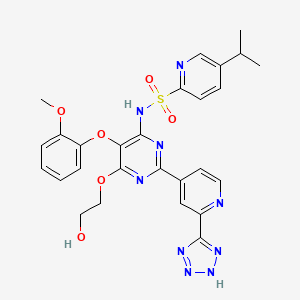
Clazosentan

IUPAC Name: N-[6-(2-hydroxyethoxy)-5-(2-methoxyphenoxy)-2-[2-(2H-tetrazol-5-yl)
pyridin-4-yl]pyrimidin-4-yl]-5-methylpyridine-2-sulfonamide

5-methyl-pyridine-2-sulphonic acid 6-(2-hydroxy-ethoxy)-5-(2- methoxy-phenoxy)-2-(2-1 H-tetrazol-5-yl-pyridin-4-yl)- pyrimidin-4-ylamide

5-methyl-pyridine-2-sulfonic acid [6-(2-hydroxy-ethoxy)-5-(2-methoxy-phenoxy)-2-[2-(1H-tetrazole-5-yl)-pyridine-4-yl]-pyrimidine-4-yl]-amide

VASODILATOR, Endothelin -1 – receptor antagonist

Clazosentan (Ro61-1790, AXV-034343)

  • AXV 034
  • AXV 034343
  • AXV-034343
  • AXV-343434
  • Clazosentan
  • Ro 61-1790
  • Ro-61-1790
  • UNII-3DRR0X4728
  • VML 588
  • VML-588

180384-56-9  cas no

CLINICAL TRIALS…http://clinicaltrials.gov/search/intervention=CLAZOSENTAN  in phase 3

Formula: C25H23N9O6S
Molecular Weight: 577.5718

Endothelin type-A receptor antagonist for the treatment of vasospasm in subarachnoid hemorrhage

Selective endothelin receptor antagonist (Pivlaz)

Acteliion…… innovator

Clazosentan is a drug with orphan drug status , which since 2007, currently in Phase III clinical trials CONSCIOUS-2 ( Clazosentan to O vercome N euro logical i SC Hemia and I nfarct O cc U rring after S ubarachnoid hemorrage) is located. It is for  treatment of vasospasm after subarachnoid hemorrhage are used (SAH).

Clazosentan is used by the Swiss pharmaceutical company Actelion developed. Medicinally, the disodium salt is used.Clazosentan to come under the name Pivlaz on the market.

The endothelin -1 – receptor is one of the strongest known vasoconstrictors . Clazosentan is an E -1 – receptor antagonist , for the treatment of vasospasm after subarachnoid hemorrhage is under development. After subarachnoid hemorrhage , an irritation of theblood vessels to a vasospasm and the associated to a reduced supply of brain tissue with oxygen lead. A possible consequence may be a Ischemic stroke be. Clazosentan acts this vasoconstriction contrary.

The plasma half-life of 6-10  min .

Actelion has initiated a comprehensive global phase IIb/III development program for clazosentan sodium (formerly Ro-61-1790, VML-588, …

CLAZOSENTAN

CLAZOSENTAN

CLAZOSENTAN DI-NA SALT is discontinued

Clazosentan, shown below, is a well known endothelin receptor antagonist.


Figure US20090069352A1-20090312-C00001


Since clazosentan is a known and useful pharmaceutical, it is desirable to discover novel derivatives thereof. Clazosentan is described in European Patent No. 0,799,209

IT IS DESCRIBED IN US6103902

US6004965 * Dec 8, 1995 Dec 21, 1999 Hoffmann-La Roche Inc. Sulfonamides
WO1996019459A1 * Dec 8, 1995 Jun 27, 1996 Volker Breu Novel sulfonamides


8-13-1998
Pyrrolidine-3-carboxylic acids as endothelin antagonists. 3. Discovery of a potent, 2-nonaryl, highly selective ETA antagonist (A-216546).
Journal of medicinal chemistry


7-23-2009
In silico prediction of volume of distribution in human using linear and nonlinear models on a 669 compound data set.
Journal of medicinal chemistry

………………………………………………………..

SYNTHESIS

EP0799209B1

EXAMPLE 15

a) In analogy to Example 1a), from 5-methyl-pyridine-2-sulphonic acid 6-chloro-5-(2-methoxy-phenoxy)-2-(1-oxy-pyridin-4-yl)-pyrimidin-4-ylamide there is obtained 5-methyl-pyridine-2-sulphonic acid 6-(2-hydroxy-ethoxy)-5-(2-methoxy-phenoxy)-2-(1-oxy-pyridin-4-yl)-pyrimidin-4-ylamide, melting point 188-190

b) In analogy to Example 2, from 5-methyl-pyridine-2-sulphonic acid 6-(2-hydroxy-ethoxy)-5-(2-methoxy-phenoxy)-2-(1-oxy-pyridin-4-yl)-pyrimidin-4-ylamide there is obtained 5-methyl-pyridine-2-sulphonic acid 2-(2-cyano-pyridin-4-yl)-6-(2-hydroxy-ethoxy)-5-(2-methoxy-phenoxy)-pyrimidin-4-ylamide.

……………………………………………..

SYNTHESIS


<br />
Clazosentan<br />
pk_prod_list.xml_prod_list_card_pr?p_tsearch=A&p_id=239030<br />


4-Cyanopyridine (I) is reacted with ammonium chloride in methanolic NaOMe to afford the amidine (II), which is cyclized with diethyl (2-methoxyphenoxy)malonate (III) producing the dihydroxypyrimidine (IV). Chlorination of (IV) in hot POCl3, followed by oxidation of the obtained dichloropyrimidine (V) with peracetic acid leads to the pyridine N-oxide (VI). Subsequent condensation of the dichloropyrimidine derivative (VI) with the potassium salt of 5-methylpyridine-2-sulfonamide (VII) yields the sulfonamido pyrimidine (VIII). The remaining chloride group of (VIII) is then displaced with the sodium alkoxide of ethylene glycol in hot DME to furnish the hydroxyethyl ether (IX). Treatment of the pyridine N-oxide (IX) with cyanotrimethylsilane and Et3N in refluxing acetonitrile gives rise to the 2-cyanopyridine (X), which is finally converted to the title tetrazole derivative by treatment with sodium azide in the presence of NH4Cl in DMF (1).

………………………………………………………….

SYNTHESIS OF DISODIUM SALT OF CLAZOSENTAN

US6103902

Figure 00050001

DESCRIBED IN WO 9619459.

Figure 00050002

Figure 00060001

  • III is reacted with a compound of formula V
    Figure 00060002
  • The reaction type is known in the art and may be performed under basic conditions for example in the presence of a coupling agent, e.g. 1,4-diazobicyclo[2.2.2]octane, together with potassium carbonate in acetone.

EXAMPLE 1

1360 ml of formamide were added to 136 g (437 mmol) of 5-(2-methoxy-phenoxy)-2-pyridine-4-yl-pyrimidine-4,6-diole. Then, at a temperature of 0 acid and thereafter 36.5 g (130 mmol) of iron(II)sulfate heptahydrate were added to the suspension. After that, 89 ml (874 mmol) of 30% hydrogen peroxide were added dropwise within 1 hr at a temperature of 0 to 5 0 sodium pyrosulfite in 680 ml of de-ionized water was added dropwise to the reaction mixture within 30 min. at 0 reaction mixture was stirred at 0 The suspension was then filtered under reduced pressure. The filtrate was first washed with 1750 ml of de-ionized water and thereafter with 700 ml of ethanol. Then the solid was dried at 80 There were obtained 132.4 g (91% of theory) of 4-[4,6-dihydroxy -5-(2-methoxy-phenoxy)-pyrimidine-2-yl]-pyridine-2-carboxylic acid amide with a HPLC purity of 91.4% (w/w).

Preparation of Starting Material

a) 53.1 g of 4-cyano-pyridine (98%) are added all at once to a solution of 1.15 g of sodium in 200 ml of abs. MeOH. After 6 hr 29.5 g of NH.sub.4 Cl are added while stirring vigorously. The mixture is stirred at room temperature overnight. 600 ml of ether are added thereto, whereupon the precipitate is filtered off under suction and thereafter dried at 50 4-amidino-pyridine hydrochloride (decomposition point 245-247

b) 112.9 g of diethyl (2-methoxyphenoxy)malonate are added dropwise within 30 min. to a solution of 27.60 g of sodium in 400 ml of MeOH. Thereafter, 74.86 g of the amidine hydrochloride obtained in a) are added all at once. The mixture is stirred at room temperature overnight and evaporated at 50 of ether and filtered off under suction. The filter cake is dissolved in 1000 ml of H.sub.2 O and treated little by little with 50 ml of CH.sub.3 COOH. The precipitate is filtered off under suction, washed with 400 ml of H.sub.2 O and dried at 80 obtained 5-(2-methoxy-phenoxy)-2-(pyridine-4-yl)-pyrimidine-4,6-diole (or tautomer), melting point above 250

EXAMPLE 2

Within 20 min. 61 ml (633 mmol) of POCl.sub.3 were added dropwise to 34 ml (200 mmol) of diisopropyl ethylamine at 5 followed by stirring at 5 23.5 g (66 mmol) of 4-[4,6-dihydroxy-5-(2-methoxy-phenoxy)-pyrimidine-2-yl]-pyridine-2-carboxylic acid amide were added in four portions under cooling followed by stirring at 90 to 20 dichloromethane. Volatile components (i.e. excess of POCl.sub.3) was removed by evaporation from 20 re-distillation with 100 ml of toluene. After adding 250 ml of dichloromethane to the residue (88 g of a black oil) the solution was heated to 35 were added dropwise within 30 min. whereby the pH was kept constant by the subsequent addition of 28% NaOH solution (60 ml) within 5 to 6 hr. The mixture was stirred at 35 by removal of dichloromethane by distillation. The resulting suspension was allowed to cool down to 20 hr. The solid was filtered off under suction, washed with 500 ml of water and dried at 70 (86% of theory) of 4-[4,6-dichloro-5-(2-methoxy-phenoxy)-pyrimidine-2-yl]-pyridine-2-carbonitrile with a HPLC purity of 94.3% (w/w).

EXAMPLE 3

12.5 g (33.5 mmol) of 4-[4,6-dichloro-5-(2-methoxy-phenoxy)-pyrimidine-2-yl]-pyridine-2-carbonitrile and 6.06 g (35 mmol) of 5-methyl-pyridine-2-sulfonamide were added to 130 ml of acetone. 15 g of potassium carbonate and 190 mg (1.6 mmol) of 1,4-diazobicyclo[2.2.2]octane were added and the suspension was stirred at 40 de-ionized water were added followed by dropwise addition of 50 ml of 3 N hydrochloric acid (pH of the solution=1). Acetone was removed by evaporation and the suspension was stirred for 1 hr. The solid was filtered and washed with 100 ml of water. The residue was heated (reflux) in 100 ml of methanol for 1 hr followed by cooling to 20 solid was filtered and dried at 80 were obtained 16.0 g (93% of theory) of 5-methyl-pyridine-2-sulfonic acid [6-chloro-2-(2-cyano-pyridine-4-yl)-5-(2-methoxy-phenoxy)-pyrimidine-4-yl]-amide with a HPLC purity of 90.3% (w/w).


EXAMPLE 5

20 g (39 mmol) of 5-methyl-pyridine-2-sulfonic acid [6-chloro-2-(2-cyano-pyridine-4-yl)-5-(2-methoxy-phenoxy)-pyrimidine-4-yl]-amide were suspended in 100 ml of N,N-dimethyl formamide and 7.6 ml (156 mmol) of hydrazine hydrate were added within 15 min. The reaction mixture was allowed to warm up slowly to 20 temperature of 15 followed by slow addition of 10.5 ml acetic acid (until pH=5.4). The resulting suspension was stirred for 2 hr at 20 additional 2 hr 0 firstly washed with 200 ml of de-ionized water and thereafter with 100 ml of t-butylmethylether. The residue was dried at 40 18 hr. There were obtained 21.7 g (102% of theory) of 5-methyl-pyridine-2-sulfonic acid [6-chloro-2-[2-(hydrazino-imino-methyl)-pyridine-4-yl]-5-(2-methoxy-phenoxy)-pyrimidine-4-yl]-amide with a HPLC purity of 81.4% (w/w).


EXAMPLE 7

20 g (37 mmol) of 5-methyl-pyridine-2-sulfonic acid [6-chloro-2-[2-(hydrazino-imino-methyl)-pyridine-4-yl]-5-(2-methoxy-phenoxy)-pyrimidine-4-yl]-amide were added to 160 ml of N,N-dimethyl formamide. To this solution was added dropwise 23 ml of 6 N aqueous hydrochloric acid at a temperature of 15 mmol) of sodium nitrite in 20 ml de-ionized water was added slowly. The reaction mixture was allowed to warm up to 20 for 1.5 hr. Then 160 ml of de-ionized water were added and the suspension was stirred for 1 hr. The solid was filtered off under suction, washed with 100 ml of de-ionized water and dried at 50 hr. There were obtained 18.9 g (92% of theory) of 5-methyl-pyridine-2-sulfonic acid [6-chloro-5-(2-methoxy-phenoxy)-2-[2-(1H-tetrazole-5-yl)-pyridine-4-yl]-pyrimidine-4-yl]-amide with a HPLC purity of 89.6% (w/w).


EXAMPLE 9

15 g (27 mmol) of 5-methyl-pyridine-2-sulfonic acid [6-chloro-5-(2-methoxy-phenoxy)-2-[2-(1H-tetrazole-5-yl)-pyridine-4-yl]-pyrimidine-4-yl]-amide were suspended in 75 ml of ethylene glycol and 6.5 g (163 mmol) of sodium hydroxide were added. The reaction mixture was heated to 85 thereafter 55 ml of 3 N aqueous hydrochloric acid were added dropwise. The suspension was stirred at 20 off under suction, washed with 150 ml of de-ionized water and dried at 70 in 50 ml of N,N-dimethyl formamide and 40 ml of dioxane at 70 Gaseous ammonia was introduced into this solution until pH=9. The resulting suspension was allowed to cool down slowly. The suspension was stirred at 0 washed with 25 ml of dioxane and thereafter with 25 ml of ethanol. Then the solid was dried at 50 ammonium salt (10.4 g, 17.5 mmol) was suspended in 50 ml of methanol and thereafter 6.5 ml (35 mmol) of a 5.4 N sodium methylate solution were added. The solution was heated (reflux) for 3 hr, cooled down slowly to 20 filtering, washed with 10 ml of ice-cold methanol and dried at 70 C., 2000 Pa for 17 hr. There were obtained 6.9 g (41% of theory) of 5-methyl-pyridine-2-sulfonic acid [6-(2-hydroxy-ethoxy)-5-(2-methoxy-phenoxy)-2-[2-(1H-tetrazole-5-yl)-pyridine-4-yl]-pyrimidine-4-yl]-amidesodium salt (1:2) with a HPLC purity of 98.2% (w/w).


This application claims benefit to EP 98114978.4 filed Aug. 10, 1998.

 SIMILAR SYNTHESIS OF TEZOSENTAN  AND INTERMEDIATES… AN EXPERT WILL PICK UP NAMES AND INTERMEDIATES… just change the isopropyl gp in vii to methyl

Reaction of 4-cyano-pyridine (I) with Na in methanol followed by treatment with ammonium chloride provides 4-amidino-pyridine hydrochloride (II), which is then converted into 5-(2-methoxyphenoxy)-2-(pyridin-4-yl)-pyrimidine-4,6-diol (IV) by condensation with diethyl malonate derivative (III) by means of Na in MeOH. By heating compound (IV) with phosphorus oxychloride (POCl3), 4,6-dichloro-5-(2-methoxyphenoxy)-2-pyridin-4-yl)pyrimidine (V) is obtained, which in turn is oxidized with peracetic acid in refluxing acetonitrile to afford N-oxide derivative (VI). Condensation of (VI) with 5-isopropylpyridine-2-sulfonamide potassium (VII) furnishes 5-isopropylpyridine-2-sulfonic acid 6-chloro-5-(2-methoxyphenoxy)-2-(1-oxy-pyridin-4-yl)-pyrimidin-4-yl amide (VIII), which is then dissolved in dimethoxyethane and subjected to reaction with Na in hot ethylene glycol (IX) to provide N-[6-(2-hydroxyethoxy)-5-(2-methoxyphenoxy)-2-(1-oxy-pyridin-4-yl)-pyrimidin-4-yl]-5-isopropylpyridine-2-sulfonamide (X). Refluxing of (X) with trimethylsilylcyanide and Et3N in acetonitrile yields cyano derivative (XI), which is then converted into the tetrazole derivative (XII) by reaction with sodium azide and NH4Cl in DMF at 70 C. Finally, the disodium salt of tezosentan is obtained by treatment of (XII) with Na/MeOH in THF.

………………………………..

SYNTHESIS

WO1996019459A1

Example 29

In analogy to Example 3, from 5-methyl-pyridine-2- sulphonic acid 2-(2-cyano-pyridin-4-yl)-6-(2-hydroxy-ethoxy)- 5-(2-methoxy-phenoxy)-pyrimidin-4-ylamide there is obtained 5-methyl-pyridine-2-sulphonic acid 6-(2-hydroxy-ethoxy)-5-(2- methoxy-phenoxy)-2-(2-1 H-tetrazol-5-yl-pyridin-4-yl)- pyrimidin-4-ylamide as a white substance of melting point 239- 241 °C from CH3CN

Exgmple, 1 5

a) In analogy to Example l a), from 5-methyl-pyridine-2- sulphonic acid 6-chloro-5-(2-methoxy-phenoxy)-2-(1 -oxy- pyridin-4-yl)-pyrimidin-4-ylamide there is obtained 5-methyl- pyridine-2-sulphonic acid 6-(2-hydroxy-ethoxy)-5-(2-methoxy- phenoxy)-2-(l -oxy-pyridin-4-yl)-pyrimidin-4-ylamide, melting point 188-190°C (from acetonitrile).

b) In analogy to Example 2, from 5-methyl-pyridine-2- sulphonic acid 6-(2-hydroxy-ethoxy)-5-(2-methoxy-phenoxy)-2- (1 -oxy-pyridin-4-yl)-pyrimidin-4-ylamide there is obtained 5- methyl-pyridine-2-sulphonic acid 2-(2-cyano-pyridin-4-yl)-6- (2-hydroxy-ethoxy)-5-(2-methoxy-phenoxy)-pyrimidin-4- ylamide

Example 1

a) 200 ml of dimethoxyethane and 1 10.9 g of 4-[4-(4-tert- butyl-phenyl-sulphonylamino)-6-chloro-5-(2-methoxy-phenoxy)- pyrimidin-2-yl]-pyridine 1 -oxide are added all at once to a solution of 23.80 g of sodium in 660 ml of ethylene glycol. The solution is heated at 90°C for 20 hours while stirring, thereafter cooled, poured into 2500 ml of H2O and thereafter treated with CH3COOH to pH 5. The mixture is extracted three times with EtOAc, the organic phase is washed with H2O, dried with Na2Sθ4 and evaporated under reduced pressure. The residue is recrystall- ized from CH3CN and thereafter twice from a mixture of acetone and CH3CN. There is thus obtained 4-[4-(4-tert-butyl-phenyl- sulphonylamino)-6-(2-hydroxy-ethoxy)-5-(2-methoxy-phenoxy)- pyrimidin-2-yl]-pyridine 1 -oxide.

Preparation of the starting material:

b) 53.1 g of 4-cyano-pyridine (98%) are added all at once to a solution of 1.15 g of sodium in 200 ml of abs. MeOH. After

6 hours 29.5 g of NH4CI are added while stirring vigorously. The mixture is stirred at room temperature overnight. 600 ml of ether are added thereto, whereupon the precipitate is filtered off under suction and thereafter dried at 50°C under reduced pressure. There is thus obtained 4-amidino-pyridine hydro- chloride (decomposition point 245-247°C).

c) 1 12.9 g of diethyl (2-methoxyphenoxy)malonate are added dropwise within 30 minutes to a solution of 27.60 g of sodium in 400 ml of MeOH. Thereafter, 74.86 g of the amidine hydro- chloride obtained in b) are added all at once. The mixture is stirred at room temperature overnight and evaporated at 50°C under reduced pressure. The residue is treated with 500 ml of ether and filtered off under suction. The filter cake is dissolved in 1000 ml of H2O and treated little by little with 50 ml of CH3COOH. The precipitate is filtered off under suction, washed with 400 ml of H2O and dried at 80°C under reduced pressure. There is thus obtained 5-(2-methoxy-phenoxy)-2-(pyridin-4-yl)- pyrimidine-4,6-diol (or tautomer), melting point above 250°C.

d) A suspension of 1 54.6 g of 5-(2-methoxy-phenoxy)-2- (pyridin-4-yl)-pyrimidine-4,6-diol (or tautomer) in 280 ml of POCI3 is heated at 120°C in an oil bath for 24 hours while stirring vigorously. The reaction mixture changes gradually into a dark brown liquid which is evaporated under reduced pressure and thereafter taken up three times with 500 ml of toluene and evaporated. The residue is dissolved in 1000 ml of CH2CI2, treated with ice and H2O and thereafter adjusted with 3N NaOH until the aqueous phase has pH 8. The organic phase is separated and the aqueous phase is extracted twice with CH2CI2. The combined CH2CI2 extracts are dried with MgSθ4, evaporated to half of the volume, treated with 1000 ml of acetone and the CH2CI2 remaining is distilled off at normal pressure. After standing in a refrigerator for 2 hours the crystals are filtered off under suction and dried at 50°C overnight. There is thus obtained 4,6-dichloro-5-(2-methoxy-phenoxy)-2-pyridin-4-yl)- pyrimidine, melting point 1 78-1 80°C.

e) A solution of 1 7.4 g of 4,6-dichloro-5-(2-methoxy- phenoxy)-2-pyridin-4-yl)-pyrimidine in 100 ml of CH3CN is boiled at reflux for 3 hours with 1 5 ml of a 32% peracetic acid solution, thereafter cooled and stored in a refrigerator overnight. The crystals are filtered off under suction and dried at 50°C under reduced pressure. There is thus obtained 4-[4,6-dichloro- 5-(2-methoxy-phenoxy)-pyrimidin-2-yl]-pyridine 1 -oxide, melting point 189-1 90°C.


for analogy

f) A solution of 36.4 g of 4-[4,6-dichloro-5-(2-methoxy- phenoxy)-pyrimidin-2-yl]-pyridine 1 -oxide and 52.8 g of p-tert- butylphenyl-sulphonamide potassium in 1 50 ml of abs. DMF is stirred at room temperature for 24 hours. Thereafter, it is poured into a mixture of 1 500 ml of H2O and 1000 ml of ether while stirring mechanically, whereby a precipitate forms. The suspension is adjusted to pH 5 with CH3COOH, suction filtered, the crystals are washed with cold water and thereafter with ether and dried at 50°C. There is thus obtained 4-[4-(4-tert- butyl-phenylsulphonylamino)-6-chloro-5-(2-methoxy-phenoxy)- pyrimidin-2-yl]-pyridine 1 -oxide as a colourless material of melting point 247-249°C.
Example 2

A solution of 78.45 g of 4-[4-(4-tert-butyl-phenyl- sulphonylamino)-6-(2-hydroxy-ethoxy)-5-(2-methoxy-phenoxy)- pyrimidin-2-yl]-pyridine 1 -oxide, 122.5 g of trimethylsilyl cyanide, 127.8 g of triethylamine and 1200 ml of CH3CN is boiled at reflux for 20 hours and thereafter evaporated under reduced pressure. The oily residue is taken up in 1000 ml of EtOAc and the solution is washed with CH3COOH:H2θ 9:1 and then with H2O. The EtOAc extracts are dried with Na2SO4. After evaporation of the solvent the residue is taken up in a mixture of CH3CN and CF3COOH (20:1 ), whereby a crystalline precipitate separates. There is thus obtained 4-tert-butyl-N-[2-(2-cyano-pyridin-4- yl)-6-(2-hydroxy-ethoxy)-5-(2-methoxy-phenoxy)-pyrimidin-4- yl]-benzenesulphonamide of melting point 176-1 79°C.

Example 3

A suspension of 50.0 g of 4-tert-butyl-N-[2-(2-cyano- pyridin-4-yl)-6-(2-hydroxy-ethoxy)-5-(2-methoxy-phenoxy)- pyrimidin-4-yl]-benzenesulphonamide, 46.33 g of NH4CI and 56.47 g of NaN3 in 1600 ml of DMF is heated to 70°C for 24 hours while stirring vigorously. The majority of the solvent is distilled off under reduced pressure, the residue is dissolved in H2O, the solution is extracted four times at pH 6.5 with ether, thereafter treated with CH3COOH to pH = 4.5 and extracted with EtOAc. After working up there is obtained a residue which is treated with ether and filtered off under suction therefrom. There is thus obtained 4-tert-butyl-N-[6-(2-hydroxy-ethoxy)-5-(2- methoxy-phenoxy)-2-(2-1 H-tetrazol-5-yl-pyridin-4-yl)- pyrimidin-4-yl]-benzenesulphonamide, melting point 225-227°C.

////////////////////////////////

EXTRA INFO

Bosentan (Ro-470203), Atransentan (ABT627), Tezosentan (Ro-610612), Sitaxsentan (TBC-11251), Darusentan (LU-135252), Clazosentan (Ro61-1790, AXV-034343), ZD-4054, Ambrisentan (LU-208075), TAK-044, Avosentan (SPP301), and BQ-123 (Ihara et al Life Sci 1992, 50(4):247-55).

Antagonists of Endothelin type A receptor ETA
Name Structure
BQ-123
Figure US20120202744A1-20120809-C00001
Bosentan
Figure US20120202744A1-20120809-C00002
Atrasentan
Figure US20120202744A1-20120809-C00003
Tezosentan
Figure US20120202744A1-20120809-C00004
Sitaxsentan
Figure US20120202744A1-20120809-C00005
Darusentan
Figure US20120202744A1-20120809-C00006
Clazosentan
Figure US20120202744A1-20120809-C00007
ZD-4054 (Zibotentan)
Figure US20120202744A1-20120809-C00008
Ambrisentan
Figure US20120202744A1-20120809-C00009
Tak-044
Figure US20120202744A1-20120809-C00010
Avosentan
Figure US20120202744A1-20120809-C00011


Share

ARAB MEDICINE- REVIEW

 Arab medicine review  Comments Off on ARAB MEDICINE- REVIEW
Jan 212014
 

ARAB MEDICINE- REVIEW

In the history of medicine, Islamic medicineArabic medicineGreco-Arabic and Greco-Islamic refer to medicine developed in the Islamic Golden Age, and written in Arabic, the lingua franca of Islamic civilization. The emergence of Islamic medicine came about through the interactions of the indigenous Arab tradition with foreign influences.Translation of earlier texts was a fundamental building block in the formation of Islamic medicine and the tradition that has been passed down.

Latin translations of Arabic medical works had a significant influence on the development of medicine in the high Middle Ages and early Renaissance, as did Arabic texts which translated the medical works of earlier cultures.

In the early Islamic and Mack’s period (661–750 AD), Muslims believed that Allah provided a treatment for every illness.Around the ninth century, the Islamic medical community began to develop and utilize a system of medicine based on scientific analysis. The importance of the health sciences to society was emphasized, and the early Muslim medical community strived to find ways to care for the health of the human body. Medieval Islam developed hospitals, expanded the practice of surgery.

Important medical thinkers and physicians of Islam were Al-Razi and Ibn Sina. Their knowledge on medicine was recorded in books that were influential in medical schools throughout Muslim history, and Ibn Sina in particular (under his Latinized name Avicenna) was also influential on the physicians of later medieval Europe. Throughout the medieval Islamic world, medicine was included under the umbrella of natural philosophy, due to the continued influence of the Hippocratic Corpus and the ideas of Aristotle and Galen. The Hippocratic Corpus was a collection of medical treatises attributed to the famous Greek physician Hippocrates of Cos (although it was actually composed by different generations of authors). The Corpus included a number of treatises which greatly influenced medieval Islamic medical literature

The first encyclopedia of medicine in Arabic language] was Persian scientist Ali ibn Sahl Rabban al-Tabari‘s Firdous al-Hikmah(“Paradise of Wisdom”), written in seven parts, c. 860. Al-Tabari, a pioneer in the field of child development, emphasized strong ties between psychology and medicine, and the need for psychotherapy and counseling in the therapeutic treatment of patients. His encyclopedia also discussed the influence of Sushruta and Chanakya on medicine, including psychotherapy

Medical contributions made by Medieval Islam not only involved the development and expansion of the human anatomy, but also included the use of plants as a type of remedy or medicine. Medieval Islamic physicians used natural substances as a source of medicinal drugs—including Papaver somniferum Linnaeus, poppy, and Cannabis sativa Linnaeus, hemp. In pre-Islamic Arabia, neither poppy nor hemp was known. Hemp was introduced into the Islamic countries in the ninth century from India through Persia and Greek culture and medical literature. Dioscorides, who according to the Arabs is the greatest botanist of antiquity, recommended hemp’s seeds to “quench geniture” and its juice for earaches.[27] Beginning in 800 and lasting for over two centuries, poppy use was restricted to the therapeutic realm. However, the dosages often exceeded medical need and was used repeatedly despite what was originally recommended. Poppy was prescribed by Yuhanna b. Masawayh to relieve pain from attacks of gallbladder stones, for fevers,indigestion, eye, head and tooth aches, pleurisy, and to induce sleep. Although poppy had medicinal benefits, Ali al-Tabari explained that the extract of poppy leaves was lethal, and that the extracts and opium should be considered poisons

The way early Arab medicine developed should be contrasted to how medicine evolved in Christianity up until the Renaissance. While Christian Rome and Byzantium inherited the rich Graeco-Roman medical legacy of thinkers like Hippocrates and Galen, after the fall of Rome in 476, Dark Age Europe increasingly tended towards a fatalistic view of suffering and disease, further tempered by superstition about curses and God’s punishment for man’s sins sent down in the form of disease and affliction.

Many historians point to the explicit tradition of fact-based, scientific medicine as articulated by the Prophet himself (pbuh). First, the concept of ‘sinful’ mankind seems not as strong in Islam as in early Christianity. Disease was seen by Arabs and other Muslims as one more problem to be solved, not a curse from God or a trial to be endured so one would be assured of entering Paradise.

Consider these statements on health and medicine attributed to the Prophet (pbuh):

“There is no disease that Allah has created, except that He also has created its treatment.”

“Make use of medical treatment, for Allah has not made a disease without appointing a remedy for it, with the exception of one disease, namely old age.”

The Prophet (pbuh) was also credited with articulating several specific medical treatments, including the use of honey, cupping, and cauterisation. He spoke about the contagious nature of leprosy, sexually transmitted disease, and the animal disease known as the mange. But most importantly, whereas other societies usually stigmatised and feared the sick and afflicted, at best isolating them and at worst leaving them somewhere to die, the Prophet (pbuh) and early Islam had a very compassionate and forgiving view of the sick.

As in other fields, the earliest Arab-Muslim medical efforts were devoted to translating the medical wisdom of older civilisations, beginning in the late 700s in Baghdad with the works of the Roman physician Galen as well as advanced medical writings from Persia, including the great pre-Islamic medical centre at Gundishapur.

Gundishapur is credited with having developed the first truly modern hospital, where patients actually went to be healed and cured, rather than prayed over as they suffered a slow and inevitable death as in Dark Age Europe.

The first major Arab-Muslim healer was the chemist Al Razi, who turned to medicine at about age 30, perhaps to find cures for his injuries suffered during alchemical experiments, especially eye ailments. His first inspiration was the Roman physician Galen.

Galen had pushed Roman medical knowledge as far as it could go in that time, undertaking innumerable vivisections of live animals to see how their organs functioned, as well as dissections of human cadavers.

Al Razi was especially troubled by Galen’s theory of the humours, which just didn’t hold up to examination. There seemed a lot more going on inside the human body than those four humours. And so he would write around 865:

“I prayed to God to direct and lead me to the truth in writing this book. It grieves me to oppose and criticise the man Galen from whose sea of knowledge I have drawn much. Indeed, he is the Master and I am the disciple. Although this reverence and appreciation will and should not prevent me from doubting, as I did, what is erroneous in his theories. I imagine and feel deeply in my heart that Galen has chosen me to undertake this task, and if he were alive, he would have congratulated me on what I am doing. I say this because Galen’s aim was to seek and find the truth and bring light out of darkness. I wish indeed he were alive to read what I have published.”

Al Razi would write as many as 184 papers and articles on subjects ranging from his doubts about Galen to the first known distinction between smallpox and measles, the discovery of allergic asthma, the discovery of fever as the body’s defence mechanism, medical ethics, using opium as a treatment for depression, the first medical handbook for common people, and paediatrics.

Al Razi would also theorise about the connection of the soul and state of mind to the physical health of the body, suggesting that someone with mental and emotional disturbances would be more vulnerable to infection and chronic ailments.

Al Razi’s medical insights would be translated into Latin several centuries after his death. By the late 1200s, mediaeval Europeans were beginning to stir out of their long Dark Age sleep and for a century were captivated by the writings of Al Razi – who by then had been given the Latin name Rhazes.

About eight decades after Al Razi, a brilliant healer named Al Zahrawi laid the foundation of modern surgery while working in the Umayyad imperial compound outside Cordoba.

Because all records were destroyed in the civil wars that marked the end of the Umayyad reign in Spain, hardly any facts about Al Zahrawi’s personal life remain. What does survive is his 30-chapter Kitab al Tasrif, a compendium of this man’s medical knowledge and genius. A century and a half after his death, it would be translated into Latin and have even more impact than the work of Rhazes. Al Zahrawi’s Latin name was Albucasis.

His discoveries would continue to resonate into the 21st century, first for his invention of about 200 medical instruments, many of which are still in use – such as the obstetrical forceps, scalpel, surgical needle, surgical retractor, specula, and the use of catgut for internal suturing. But he was also exceptional for innovating surgical procedures like mastectomies, orthodontia, repairing fractures, and using ligature for suturing arteries instead of cauterising them.

Another Muslim healer would follow in the Arabic tradition and even eclipse the great Al Zahrawi, this one a Persian working exclusively in Persia. This man was Ibn Sina. Europe and the Arab world would come to know him as Avicenna, the Prince of Medicine, and the single most important influence on Islamic and Western medicine for about 500 years.

Ibn Sina was consummately gifted. He is reputed to have memorised the Qur’an by age 10, Aristotle’s Metaphysics several years later (he claimed to have read it 40 times), and had become a practising physician by age 16.

Ibn Sina’s greatest motivation was his burning intellectual curiosity for the world, and the world beyond, not social status or financial security. By the age of 20, he had turned down his ruler’s offer to become court physician, preferring only the right to study as much as he wanted in the ruler’s royal library.

A political upheaval overthrew the ruler and Ibn Sina began a long life of wandering Persia in search of a secure patron who would allow him to indulge in his medical and scientific research. Unfortunately, political instability and Ibn Sina’s harshly arrogant manner meant he was constantly changing jobs.

But despite his unending struggle, he was able to gradually systemise Islamic understanding of the medical sciences in such a way that not only was the Arab and Islamic world forever indebted, so also was Europe and the West.

Although Ibn Sina is credited with writing as many as 450 papers and books in a dozen fields, the work that continued to resonate most powerfully was his Canon of Medicine written around 1025, a 14-volume work that was for 500 years Europe’s most influential medical source book. The Canon was a combination both of the collected medical wisdom of other writers as well as his own observations and research. Although it provided a window into forgotten Greek medicine, its greatest value was in the modernistic approach it took to a field riddled with false theory and ignorance.

It could be argued that Ibn Sina was the first to formally explain the experimental method in medicine, the spread of contagious diseases, the use of quarantine, clinical trials, psychiatry, and psychotherapy. He also seems to be the first to show that tuberculosis was a contagious disease, as well as to identify diabetes.

According to some sources, the Canon was the first documented explanation of modern medical methods like the randomised clinical trial, and the first modern set of comprehensive rules for testing new drugs.

His deeper research into the mind-body connection, and the mental or spiritual source of physical ailments, was built on the first intuitive work of men like Al Razi. But Ibn Sina went further, beginning the first documented forays into what we today would call psychotherapy, 900 years before Sigmund Freud.

One account says that a young man had come to him with a condition that looked very much like consumption. He was literally wasting away. But Ibn Sina could find no signs of a cancer or other disease that would indicate some physical explanation.

He conducted a series of interviews or conversations with the young man. As Ibn Sina spoke certain key words and phrases, he was also checking the man’s pulse and found it became elevated around certain terms. Thus it gradually emerged that the patient was in love with a woman back in his home village. For whatever reason he had never expressed this to her, and the unfulfilled desire was sapping him of his energy.

Ibn Sina gradually concluded that the source of the young man’s physical condition was his unexpressed love. He suggested that the patient go to the object of his affections and profess his love to her. The young man did this, the girl agreed to marry him, and the patient swiftly recovered his vitality.

As far as we know this was the earliest documented account of the use of word association in psychoanalysis, which modern medicine credits to Carl Jung 900 years later.

While medical thinkers like Al Razi, Al Zahrawi and Ibn Sina are closely tied to their innovations through their writings, many of the great breakthroughs of Arab medicine were collective undertakings and are difficult to identify with any single author or inventor.

This is particularly true with key Arab-Muslim institutions like the modern insane asylum, the public hospital, free medical care, and the pharmacy. The modern hospital itself was not an Arab invention, but Arabs and their partners made it a public institution and spread it around the world.

Isolated healing temples and places for the sick had existed in many older cultures including around the Mediterranean and across Asia. But with few exceptions they were unable to offer real cures in the modern sense. Often their method was a mixture of magic or religion with means of making one feel better, if only briefly.

But in 6th century pre-Islamic Persia, a true hospital called a bimaristan or ‘sick place’ was built in the city of Gundishapur, complete with surgery, pharmacy, and outpatient treatments. This came to the attention of the Arabs, in particular Caliphs Harun Al Rashid and his half-Persian son Al Mamun, and they set about replicating these institutions across their realm.

Harun invited a doctor from the bimaristan in Gundishapur to open the first bimaristan in Baghdad. Al Razi was later commissioned with overseeing the Audidi Hospital in Baghdad, in the mid 800s. He applied his evolving understanding of sanitation and infection to find the best location possible. He hung raw meat in various parts of the city to see comparative rates of decay, and where the meat lasted longest, there he put the hospital.

Audidi had more than two dozen doctors including surgeons, eye specialists, and physiologists.

By the year 1000, Baghdad alone would number five public hospitals when there were none in all of Europe. Hospitals would also be found in Cairo, Damascus, Aleppo, North Africa, and Al Andalus. These centres would offer surgery, outpatient clinics, mental wards, convalescent centres, and even nursing homes.

One of the greatest hospitals would be Al Mansuri in Cairo, which was reported to have as many as 8,000 beds and annual revenues of one million dirhams. Al Mansuri was a true public hospital because it was charged with offering treatment to anyone, rich or poor, including the indigent who could not pay at all.

The Arab establishment of humane mental wards and insane asylums was especially futuristic and important. The Arab world, in line with the teachings of the Prophet (pbuh) and others, never stigmatised the mentally afflicted, seeing mental illness as one more disease that might be cured. Europe and the West did not develop a modern non-judgmental view of mental illness until the 19th and 20th centuries.

Arab pharmacies were another important invention. Although other cultures offered various potions and herbs for sale, it was rare to find cures that really worked. People were just as inclined to faith healing and magic as to ‘healing’ substances, because they were all equally ineffective. But the evolution of modern evidence-based pharmacology under thinkers like Al Razi, Al Kindi and Ibn Sina created a new class of substances that really worked.

Arab pharmacies were known as saydala, and the first one seems to have been at Harun al Rashid’s hospital in Baghdad built in the late 700s. Within half a century saydala were spreading throughout the caliphate. These remedies were often fabricated right on the spot at in-house laboratories. More importantly, they were overseen by government inspectors to make sure they were pure, not out of date, measured in verified scales, and correctly identified.

Al Razi would even introduce the concept of generic drugs for the poor, while Al Kindi would also seek to identify cheaper alternative treatments for those who could not afford expensive drugs.

The same kind of modern pharmacies selling remedies that really worked would only begin to appear in Italy in about the 12th century, fuelled largely by the growing trade between Arabs and Europeans.

READ A GREAT ARTICLE AT

http://www.ncbi.nlm.nih.gov/pmc/articles/PMC1297506/

http://www.ncbi.nlm.nih.gov/pmc/articles/PMC1475945/

Aqrabadhin of Al-Kindi. Translated by Martin Levey. Madison: The University of Wisconsin Press, 1966.

Kamal, Hassan. Encyclopedia of Islamic Medicine. Cairo: General Egyptian Book Organization, 1975.

Levey, Martin. Early Arabic Pharmacology. Leiden, Netherlands: E. J. Brill, 1973.

Savage-Smith, Emilie. Islamic Culture and the Medical Arts. Bethesda, Md.: National Library of Medicine, 1994.

Siddiqi, Muhammad Zubayr. Studies in Arabic and Persian Medical Literature. Calcutta: Calcutta University Press, 1959.

Usama, Ibn Shuraik. Sunna Abu-Dawud, Book 28, No. 3846 (part of the hadith, a narrative record of the sayings of Mohammed and his companions).

Share

Oncolytic Drugs …Preparation of (4-{4-[({3-tert-butyl-1-[3-(hydroxymethyl)phenyl]-1H-pyrazol-5-yl}carbamoyl)amino]-3-fluorophenoxy}-N-methylpyridine-2-carboxamide)

 cancer  Comments Off on Oncolytic Drugs …Preparation of (4-{4-[({3-tert-butyl-1-[3-(hydroxymethyl)phenyl]-1H-pyrazol-5-yl}carbamoyl)amino]-3-fluorophenoxy}-N-methylpyridine-2-carboxamide)
Jan 212014


Patents–  EP2111401B1

1036712-77-2 cas NO

see also WO 2008079968 BAYER

VEGFR-2 (FLK-1/KDR) Inhibitors
Bcr-Abl Kinase Inhibitors
HGFR (MET; c-Met) Inhibitors 

Inhibitors of protein kinases, such as wild-type and mutations of Bcr-Abl, Flk1, c-Met, expected to be useful for the treatment of hyperproliferative and/or angiogenesis disorders such as cancer. A representative compound suppressed Flk-1, c-Met and wild type and T135I mutant Bcr-Abl enzymes with IC50 values below 1 mcM. Compound also inhibited the proliferation of K562 (IC50 = 1.58 nM) and BAF3 cells expressing wild-type and T315I, E255K, M351T and Y253F mutant Brc-Abl enzymes (IC50 = 3.84, 34.1, 503, 811 and 564 nM, respectively).


Example 1HYDROXY METHYL PHENYL PYRAZOLYL UREA (4-{4-[({3-tert-Butyl-1-[3-(hydroxymethyl)phenyl]-1H-pyrazol-5-yl}carbamoyl)amino]-3-fluorophenoxy}-N-methylpyridine-2-carboxamide)

    • Figure imgb0001

HYDROXY METHYL PHENYL PYRAZOLYL UREAStep 1. Preparation of ethyl 3-(5-amino-3-tert-butyl-1H-pyrazol-1-yl)benzoate

    • Figure imgb0002
    • Sulfuric acid (concentrated, 15.7 mL, 295.7 mmol) was carefully added drop-wise to cold EtOH (600 mL) with stirring. To this, 3-hydrazinobenzoic acid (45 g, 295.7 mmol) and 4,4-dimethyl-3-oxopentanenitrile (40.7 g, 325.3 mmol) were added and then the mixture was heated at 90°C for 48 h. Most of the solvent was evaporated at reduced pressure, and the residual mixture was diluted with ethyl acetate. The resulting mixture was washed with ice cold 2M NaOH followed by brine, and dried (Na2SO4). The solution was filtered through a bed of silica gel, washing with more ethyl acetate. Evaporation of ethyl acetate and treatment of the residue with dichloromethane/hexanes gave the product as an off-white crystalline solid (61 g, 71%). MS mlz 288.2 (M+H)+; calcd. mass 287. Retention time (LC-MS): 2.99 min. 1H-NMR (DMSO-d6): δ 8.16 (m 1H); 7.88 (m, 2H); 7.60 (t, 1H); 5.40 (s, 1H); 5.32 (s, 2H); 4.36 (q, 2H); 1.34 (t, 3H); 1.21 (s, 9H).

Step 2. Preparation of ethyl 3-{3-tert-butyl-5-[(phenoxycarbonyl)amino]-1H-pyrazol-1-yl}-benzoate

    • Figure imgb0003
    • To a mixture of ethyl 3-(5-amino-3-tert-butyl-1H-pyrazol-1-yl)benzoate (60 g, 208.8 mmol) and K2CO3 (86.6 g, 626.4 mmol) in THF (1400 mL) was added phenyl chloroformate (98.1 g, 626.4 mmol). The reaction was stirred at room temperature overnight. The solid was removed by filtration and most of the solvent was evaporated under reduced pressure. The residual mixture was dissolved in EtOAc and washed with brine, then water. The organic layer was then dried and concentrated. The crude product was purified by recrystallization from CH2Cl2/hexanes to give the desired product as a white powder (78.5 g, 92%). MS m/z 408.1 (M+H)+; calcd. mass 407. Retention time (LC-MS): 3.92 min. 1H-NMR (DMSO-d6): δ 10.19 (s, broad, 1H); 8.11 (m 1H); 7.97 (d, J = 7.6 Hz, 1H); 7.86 (m, 1H); 7.71 (t, 1H); 7.38 (m, 2H); 7.24 (m, 1H); 7.08 (m, 1H); 6.40 (s, 1H); 4.38 (q, 2H); 1.32 (t, 3H); 1.29 (s, 9H).

Step 3. Preparation of ethyl 3-(3-tert-butyl-5-{[(2-fluoro-4-{[2-(methylcarbamoyl)pyridin-4-yl]-oxy}phenyl)carbamoyl]amino}-1H-pyrazol-1-yl)benzoate

    • Figure imgb0004
    • A solution of ethyl 3-{3-tert-butyl-5-[(phenoxycarbonyl)amino]-1H-pyrazol-1-yl}benzoate (9.36 g, 22.0 mmol), 4-(4-amino-3-fluorophenoxy)-N-methylpyridine-2-carboxamide (5.0 g, 19.1 mmol; prepared as described in Dumas et al., PCT Int. Appl. WO 2004078748 (2004 )) and triethyl amine (3.87 g, 38.3 mmol) in anhydrous THF (100 mL) was stirred at room temperature overnight. The crude product was purified by column chromatography (CH2Cl2 plus 1% to 3% of 2M NH3 in MeOH), followed by recrystallization from EtOAc/hexanes to give the desired product as an off-white crystalline solid (6.32 g, 57%). MS m/z 575.1 (M+H)+; calcd. mass 574. Retention time (LC-MS): 3.75 min.1H-NMR (DMSO-d6): δ 8.97 (m, 1H); 8.89 (m, 1H); 8.80 (m, 1H); 8.52 (d, J = 5.6 Hz, 1H); 8.16 (t, 1H); 8.06 (m, 1H); 7.99 (m, 1H); 7.85 (m, 1H); 7.71 (t, 1H); 7.39 (m, 1H); 7.33 (m, 1H); 7.17 (m, 1H); 7.06 (m, 1H); 6.42 (s, 1H); 4.36 (q, 2H); 2.78 (d, J = 5.2 Hz, 3H); 1.31 (m, 12H).

Step 4. Preparation of (4-{4-[({3-tert-butyl-1-[3-(hydroxymethyl)phenyl]-1H-pyrazol-5-yl}carbamoyl)amino]-3-fluorophenoxy}-N-methylpyridine-2-carboxamide)

  • Figure imgb0005
  • To a well-stirred cooled solution of 4-(4-{3-[5-tert-butyl-2-(3-ethoxycarbonyl-phenyl)-2H-pyrazol-3-yl]-ureido}-3-fluoro-phenoxy)-pyridine-2-carboxylic acid methylamide (56 mg, 0.1 mmol) in ethanol (10 mL), NaBH4 (50 mg) was added in portions. After 14 h, ice water (10 mL) was carefully added to the reaction mixture. Then, most of the ethanol was evaporated under reduced pressure. The residual mixture was treated with saturated aqueous ammonium chloride solution (10 mL) and extracted three times with dichloromethane (50, 25, and 25 mL). The combined dichloromethane extract was dried (sodium sulfate) and the solvent was evaporated. The crude product was purified by preparative thin layer chromatography on silica gel using 3-5% 2M ammonia in methanol in dichloromethane as the eluent to yield the desired product as a white powder (31 mg, 58%).
    For a larger scale synthesis, the following similar procedure was followed: To a solution of ethyl 3-(3-tert-butyl-5-{[(2-fluoro-4-{[2-(methylcarbamoyl)pyridin-4-yl]oxy}phenyl)carbamoyl]-amino}-1H-pyrazol-1-yl)benzoate (11.2 g, 19.5 mmol) in EtOH was added NaBH4 stepwise as a solid. The reaction was then stirred at room temperature overnight, and then quenched by gradual addition of aqueous NH4Cl. The mixture was diluted with EtOAc, washed with aq. NH4Cl, followed by brine. The organic layer was then dried and concentrated. The crude product was then purified by column chromatography on silica gel (CH2Cl2 plus 1 to 5% of 2M NH3 in MeOH), followed by recrystallization from dichloromethane/hexanes to give the desired product as a white crystalline solid (8.0 g, 77%). Mp 160 ºC; after further recrystallization, desired product was obtained with mp 196 ºC.
  •  MS m/z 533.3 (M+H)+; calcd. mass 532. Retention time (LC-MS): 3.13 min.
  •  1H-NMR (DMSO-d6): δ 9.02 (s, broad, 1H); 8.87 (s, 1H); 8.81 (m, 1H); 8.52 (d, J= 5.2 Hz, 1H); 8.21 (t, 1H); 7.51 (m, 2H); 7.39 (m, 3H); 7.32 (m, 1H); 7.17 (m, 1H); 7.06 (m, 1H); 6.40 (s, 1H); 5.36 (t, 1H); 4.59 (d, J = 5.6 Hz, 2H); 2.78 (d, J = 4.8 Hz, 3H); 1.27 (s, 9H).
  • Elemental Analysis: C 62.92%; H 5.43%; N 15.70%; calcd. C 63.15%; H 5.49%; N 15.78%.
Share

JAPAN…..Takeda wins Japanese OK for Adcetris

 japan  Comments Off on JAPAN…..Takeda wins Japanese OK for Adcetris
Jan 202014
 

Takeda wins Japanese OK for Adcetris

Takeda’s Adcetris (brentuximab vedotin) has been given the regulatory go-head in Japan to treat malignant lymphoma.

More specifically, the Japanese Ministry of Health, Labour and Welfare (MHLW) has issued a greenlight for its use in patients with CD30 Positive Relapsed or Refractory Hodgkin Lymphoma (HL) or Relapsed or Refractory Anaplastic Large Cell Lymphoma (ALCL).

Read more at: http://www.pharmatimes.com/Article/14-01-18/Takeda_wins_Japanese_OK_for_Adcetris.aspx#ixzz2qwGAi5Qo

Share

Valspodar, PSC-833

 Phase 3 drug, Uncategorized  Comments Off on Valspodar, PSC-833
Jan 202014
 

PSC833(Valspodar)

Valspodar, SDZ-PSC-833, PSC-833, Amdray

P-Glycoprotein (MDR-1; ABCB1) Inhibitors , Multidrug Resistance Modulators

Valspodar is a cyclosporine derivative and a P-glycoprotein inhibitor currently in phase III clinical trials at the National Cancer Institute (NCI) in combination with chemotherapy for the treatment of leukemia. The drug was also being developed in combination with chemotherapy for the treatment of various other types of cancers, however, no recent developments on these trials have been reported.

P-glycoprotein is an ABC-transporter protein that has been implicated in conferring multidrug resistance to tumor cells. In previous trials, valspodar was associated with greater disease-free and overall survival in younger patients (45 years or below), and was shown to significantly increase the cellular uptake of daunorubicin in leukemic blast cells in vivo. However, in a phase III trial examining the drug candidate’s effects on AML in patients at least 60 years of age, valspodar was associated with excessive mortality and complete remission rates were higher in groups not treated with the compound.

Nonimmunosuppressive cyclosporin analog which is a potent multidrug resistance modifier; 7-10 fold more potent than cyclosporin A; a potent P glycoprotein inhibitor; MW 1215.

M.Wt: 1214.62
Formula: C63H111N11O12

CAS : 121584-18-7

IUPAC/Chemical name: 

(3S,6S,9S,12R,15S,18S,21S,24S,30S,33S)-6,9,18,24-tetraisobutyl-3,21,30-triisopropyl-1,4,7,10,12,15,19,25,28-nonamethyl-33-((R,E)-2-methylhex-4-enoyl)-1,4,7,10,13,16,19,22,25,28,31-undecaazacyclotritriacontan-2,5,8,11,14,17,20,23,26,29,32-undecaone

6 – [(2S, 4R, 6E)-4-Methyl-2-(methylamino)-3-oxo-6-octenoic acid]-7-L-valine-cyclosporin A; Cyclo [[(2S, 4R, 6E) -4-methyl-2-(methylamino)-3-oxo-6-octenoyl]-L-valyl-N-methylglycyl-N-methyl-L-leucyl-L-valyl-N-methyl-L-leucyl-L- alanyl-D-alanyl-N-methyl-L-leucyl-Nm

[3′-oxo-4-butenyl-4-methyl-Thr1]-[Val2]-cyclosporine

Novartis (Originator), National Cancer Institute (Codevelopment)
Modulators of the Therapeutic Activity of Antineoplastic Agents, Multidrug Resistance Modulators, ONCOLYTIC DRUGS, P-Glycoprotein (MDR-1) Inhibitors
Phase III

Clinical trials

http://clinicaltrials.gov/search/intervention=psc+833

Synonyms

  • 3′-Keto-bmt(1)-val(2)-cyclosporin A
  • Amdray
  • Psc 833
  • PSC-833
  • PSC833
  • SDZ PSC 833
  • Sdz-psc-833
  • UNII-Q7ZP55KF3X
  • Valspodar

Valspodar or PSC833 is an experimental cancer treatment and chemosensitizer drug.[1] It is a derivative of ciclosporin D.

Its primary use is that of a p-glycoprotein inhibitor. Previous studies in animal models have found it to be effective at preventing cancer cell resistance to chemotherapeutics, but these findings did not translate to clinical success.[2]
Valspodar, also known as PSC-833 is an analogue of cyclosporin-A. Valspodar inhibits p-glycoprotein, the multidrug resistance efflux pump, thereby restoring the retention and activity of some drugs in some drug-resistant tumor cells. This agent also induces caspase-mediated apoptosis.
PSC-833 is a non-immunosuppressive cyclosporin derivative that potently and specifically inhibits P-gp.  In vitro experiments indicate that PSC-833interacts directly with P-gp with high affinity and probably interferes with the ATPase activity of P-gp. Studies in multidrug resistant tumor models confirm P-gp as the in vivo target of PSC-833 and demonstrate the ability of PSC-833 to reverse MDR leukemias and solid tumors in mice. Presently,PSC-833 is being evaluated in the clinic.

Valspodar can cause nerve damage.[1]

Valspodar

Synthesis By oxidation of cyclosporin D (I) with N-chlorosuccinimide and dimethylsulfide in toluene (1) Scheme 1 Description alpha (20, D) -..?. 255.1 (c 0.5, CHCl3) Manufacturer Sandoz Pharmaceuticals Corp (US).. . References 1 Bollinger, P., B flounder sterli, JJ, Borel, J.-F., Krieger, M., Payne, TG, Traber, RP, Wenger, R. (Sandoz AG; Sandoz Patent GmbH; Sandoz Erfindungen VmbH ). Cyclosporins and their use as pharmaceuticals.

AU 8817679, EP 296122, JP 89045396. AU 8817679; EP 0296122; JP 1989045396; JP 1996048696; US 5525590

……………………………..


  • The cyclosporins comprise a class of structurally distinctive, cyclic, poly-N-methylated undecapeptides, generally possessing pharmacological, in particular immunosuppressive, anti-­inflammatory and/or anti-parasitic activity, each to a greater or lesser degree. The first of the cyclosproins to be isolated was the naturally occurring fungal metabolite Ciclosporin or Cyclo­sporine, also known as cyclosporin A and now commercially available under the Registered Trade Mark SANDIMMUN®. Ciclosporin is the cyclosporin of formula A

    Figure imgb0001

    wherein -MeBmt- represents the N-methyl-(4R)-4-but-2E-­en-1-yl-4-methyl-(L)threonyl residue of formula B

    Figure imgb0002

    in which -x-y- is trans -CH=CH- and the positive 2′, 3′ and 4′ have the configuration S, R and R respectively.

  • Since the original discovery of Ciclosporin, a wide variety of naturally occurring cyclosporins have been isolated and identified and many further non-natural cyclosporins have been prepared by total- or semi-synthetic means or by the application of modified culture techniques. The class comprised by the cyclosporins is thus now substantial and includes, for example, the naturally occurring cyclosporins A through Z [c.f. Traber et al. 1, Helv. Chim. Acta, 60, 1247-1255 (1977); Traber et al. 2, Helv. Chim. Acta, 65, 1655-1667 (1982); Kobel et al., Europ. J. Applied Microbiology and Biotechnology 14, 273-240 (1982); and von Wartburg et al. Progress in Allergy, 38, 28-45 (1986)], as well as various non-natural cyclosporin derivatives and artificial or synthetic cyclosporins including the dihydro- and iso-cyclosporins [in which the moiety -x-y- of the -MeBmt- residue (Formula B above) is saturated to give -x-y- = -CH₂-CH₂- / the linkage of the residue -MeBmt- to the residue at the 11-position of the cyclosporin molecule (Formula A above) is via the 3′-O-atom rather than the α-N-atom]; derivatised cyclosporins (e.g. in which the 3′-O-atom of the -MeBmt- residue is acylated or a further substituent is introduced at the α-carbon atom of the sarcosyl residue at the 3-position); cyclosporins in which the -MeBmt- residue is present in isomeric form (e.g. in which the configuration across positions 6′ and 7′ of the -MeBmt- residue is cis rather than trans); and cyclosporins wherein variant amino acids are incorporated at specific positions within the peptide sequence employing e.g. the total synthetic method for the production of cyclosporins developed by R. Wenger – see e.g. Traber et al. 1, Traber et al. 2 and Kobel et al. loc. cit.; U.S. Patents Nos 4 108 985, 4 210 581, 4 220 641, 4 288 431, 4 554 351 and 4 396 542; European Patent Publications Nos. 0 034 567 and 0 056 782; International Patent Publication No. WO 86/02080; Wenger 1, Transpl. Proc. 15, Suppl. 1:2230 (1983); Wenger 2, Angew. Chem. Int. Ed., 24, 77 (1985); and Wenger 3, Progress in the Chemistry of Organic Natural Products 50, 123 (1986).
  • The class comprised by the cyclosporins is thus now very large indeed and includes, for example [Thr]²-, [Val]²-, [Nva]²- and [Nva]²-[Nva]⁵-Ciclosporin (also known as cyclosporins C, D, G and M respectively), [3-O-acetyl-MeBmt]¹-Ciclosporin (also known as cyclosporin A acetate), [Dihydro-MeBmt]¹-[Val]²-Ciclosporin (also known as dihydro-cyclosporin D), [Iso-MeBmt]¹-[Nva]²-Ciclosporin (also known as isocyclosporin G), [(D)Ser]⁸-Ciclosporin, [MeIle]¹¹-Ciclosporin, [(D)MeVal]¹¹-Ciclosporin (also known as cyclosporin H), [MeAla]⁶-Ciclosporin, [(D)Pro]³-Ciclosporin and so on.
  • [In accordance with conventional nomenclature for cyclosporins, these are defined throughout the present specification and claims by reference to the structure of Ciclosporin (i.e. Cyclosporin A). This is done by first indicating the amino acid residues present which differ from those present in Ciclosporin (e.g. “[(D)Pro]³” to indicate that the cyclosporin in question has a -(D)Pro- rather than -Sar- residue at the 3-position) and then applying the term “Ciclosporin” to characterise remaining residues which are identical to those present in Ciclosporin.
  • The residue -MeBmt- at position 1 in Ciclosporin was unknown before the discovery of the cyclosporins. This residue and variants or modifications of it, e.g. as described below, are thus generally characteristic of the cyclosporins. In general, variants or alternatives to [MeBmt]¹ are defined by reference to the -MeBmt- structure. Thus for dihydrocyclosporins in which the moiety -x-y- (see formula B above) is reduced to -CH₂-CH₂-, the residue at the 1-position is defined as “-dihydro-MeBmt-“. Where the configuration across the moiety -x-y- is cis rather than trans, the resulting residue is defined as “-cis-MeBmt-“.
  • Where portions of the -MeBmt- residue are deleted, this is indicated by defining the position of the deletion, employing the qualifier “des” to indicate deletion, and then defining the group or atom omitted, prior to the determinant “-MeBmt-“, “-dihydro-MeBmt-“, “-cis-MeBmt-” etc.. Thus “-N-desmethyl-MeBmt-“, “-3′-desoxy-MeBmt-“, and “-3′-desoxy-4′-desmethyl-MeBmt-” are the residues of Formula B¹, B² and B³ respectively:

    Figure imgb0003

    B¹ – X = CH₃, Y = OH, Z = H.
    B² – X = CH₃, Y = H, Z = CH₃.
    B³ – X = H, Y = H, Z = CH₃.

  • Where positions or groups, e.g. in -MeBmt-, are substituted this is represented in conventional manner by defining the position and nature of the substitution. Thus -3′-O-acetyl-MeBmt- is the resi­due of formula B in which the 3′-OH group is acetylated (3′-O­-COCH₃). Where substituents of groups, in e.g. -MeBmt-, are replaced, this is done by i) indicating the position of the re­placed group by “des-terminology” as described above and ii) de­fining the replacing group. Thus -7′-desmethyl-7′-phenyl-MeBmt- is the residue of formula B above in which the terminal (8′) methyl group is replaced by phenyl. 3′-Desoxy-3′-oxo-MeBmt- is the resi­due of formula B above in which the 3′-OH group is replaced by =O.
  • In addition, amino acid residues referred to by abbreviation, e.g. -Ala-, -MeVal-, -αAbu- etc… are, in accordance with conventional practice, to be understood as having the (L)-configuration unless otherwise indicated, e.g. as in the case of “-(D)Ala-“. Residue abbreviations preceded by “Me” as in the case of “-MeLeu-“, represent α-N-methylated residues. Individual residues of the cyclosporin molecule are numbered, as in the art, clockwise and starting with the residue -MeBmt-, -dihydro-MeBmt- etc. … in position 1. The same numerical sequence is employed throughout the present specification and claims.]
  • [0010]
    Because of their unique pharmaceutical potential, the cyclosporins have attracted very considerable attention, not only in medical and academic circles, but also in the lay press. Cyclo­sporin itself is now commonly employed in the prevention of rejection following allogenic organ, e.g. heart, heart-lung, kidney and bone-marrow transplant, as well as, more recently, in the treatment of various auto-immune and related diseases and conditions. Extensive work has also been performed to investigate potential utility in the treatment of various parasitic diseases and infections, for example coccidiomycosis, malaria and schistosomiasis. Reports of investigative work into the potential utility of the very many other known cyclosporins in these or related indications now abound in the literature.


………………………………

References

  1.  Wilkes, Gail; Ades, Terri B. (2004). Consumers Guide to Cancer Drugs. Jones & Bartlett Learning. p. 226. ISBN 9780763722548. Retrieved 29 May 2013.
  2.  Tao, Jian’guo; Sotomayor, Eduardo. (2012). Hematologic Cancers: From Molecular Pathobiology to Targeted Therapeutics. Springer. p. 335. ISBN 9789400750289.
  3. PSC-833Drugs Fut 1995, 20(10): 1010
  4. US 5525590
  5. Synthesis of [S-[1-14C]Val(7)]VALSPODAR application of (+)/(-)-[13,14Cn]BABS and (+)/(-)-[13,14Cn]DPMGBS, part 4J Label Compd Radiopharm 2000, 43(3): 205
  6. WO 2006013094
  7. WO 2005013947
  8. WO 2002098418
  9. WO 1999017757
  10. Pharmaceutical Research, 2001 ,  vol. 18,  2  pg. 183 – 190
  11. US2003/158097 A1
  12. Valspodar; EP-B1 0 296 122:
  13. WO 94/07858
Share

Glenmark conferred with Best Biotech New Molecular Entity Patent award

 companies, drugs  Comments Off on Glenmark conferred with Best Biotech New Molecular Entity Patent award
Jan 162014
 

GLENMARK PHARMA

IDMA best biotech NEW MOLECULAR ENTITY patent award to Glenmark

YEAR 2012-2013 YEAR in Mumbai India

PATENT  US 8236315

GLENMARK PHARMACEUTICALS, S.A., SWITZERLAND

INVENTORS

Elias LazaridesCatherine WoodsXiaomin FanSamuel HouHarald MottlStanislas BleinMartin BertschingerALSO PUBLISHED ASCA2712221A1CN101932606A,EP2245069A1US20090232804,WO2009093138A1

Publication number US8236315 B2
Publication type Grant
Application number US 12/358,682
Publication date 7 Aug 2012
Filing date 23 Jan 2009
Priority date 23 Jan 2008

USPTOUSPTO AssignmentEspacenetUS 8236315

The present disclosure relates generally to humanized antibodies or binding fragments thereof specific for human von Willebrand factor (vWF), methods for their preparation and use, including methods for treating vWF mediated diseases or disorders. The humanized antibodies or binding fragments thereof specific for human vWF may comprise complementarity determining regions (CDRs) from a non-human antibody (e.g., mouse CDRs) and human framework regions.

The present disclosure provides a humanized antibody or binding fragment thereof specific for vWF that comprises a heavy chain variable region sequence as set forth in SEQ ID NO: 19 and a light chain variable region sequence as set forth in SEQ ID NO: 28 ……….. CONT

MR GLEN SALDANHA

MD , CEO GLENMARK

INDIAN DRUG MANUFACTURERS’ ASSOCIATION   (IDMA)

102-B Poonam Chambers, Dr A B Road, Worli, Mumbai 400 018, INDIA
Tel : +91 – 22 – 24944625 / 24974308. Fax : ++91 – 22 – 24957023
email: [email protected] website : www.idma-assn.org

Share
Jan 152014
 

File:Sirolimus.svg

Rapamycin (Sirolimus)

(3S,6R,7E,9R,10R,12R,14S,15E,17E,19​E,21S,23S,26R,27R,34aS)-9,10,12,13,14,21,22,23,24,​25, 26,27,32,33,34,34a-Hexadecahydro-9,27-dihydroxy-3-​[(1R)-2-[(1S,3R,4R)-4-hydroxy-3-methoxycyclohexyl]​-1-methylethyl]-10,21-dimethoxy-6,8,12,14,20,26-he​xamethyl-23,27-epoxy-3H-pyrido[2,1-c][1,4]oxaazacy​clohentriacontine-1,5,11,28,29(4H,6H,31H)-pentone

Wyeth Pharmaceuticals (Originator)

M.Wt:914.18

Formula:C51H79NO13

53123-88-9 cas no

Antifungal and immunosuppressant. Specific inhibitor of mTOR (mammalian target of Rapamycin). Complexes with FKBP-12 and binds mTOR inhibiting its activity. Inhibits interleukin-2-induced phosphorylation and activation of p70 S6 kinase. Induces autophagy in yeast and mammalian cell lines.

Rapamycin is a triene macrolide antibiotic, which demonstrates anti-fungal, anti-inflammatory, anti-tumor and immunosuppressive properties. Rapamycin has been shown to block T-cell activation and proliferation, as well as, the activation of p70 S6 kinase and exhibits strong binding to FK-506 binding proteins. Rapamycin also inhibits the activity of the protein, mTOR, (mammalian target of rapamycin) which functions in a signaling pathway to promote tumor growth. Rapamycin binds to a receptor protein (FKBP12) and the rapamycin/FKB12 complex then binds to mTOR and prevents interaction of mTOR with target proteins in this signaling pathway. Rapamycin name is derived from the native word for Easter Island, Rapi Nui.

  • (-)-Rapamycin
  • Antibiotic AY 22989
  • AY 22989
  • AY-22989
  • CCRIS 9024
  • HSDB 7284
  • NSC 226080
  • Rapammune
  • Rapamune
  • Rapamycin
  • SILA 9268A
  • Sirolimus
  • UNII-W36ZG6FT64
  • WY-090217
  • A 8167

A macrolide compound obtained from Streptomyces hygroscopicus that acts by selectively blocking the transcriptional activation of cytokines thereby inhibiting cytokine production. It is bioactive only when bound to IMMUNOPHILINS. Sirolimus is a potent immunosuppressant and possesses both antifungal and antineoplastic properties.


Sirolimus (INN/USAN), also known as rapamycin, is an immunosuppressant drug used to prevent rejection in organ transplantation; it is especially useful in kidney transplants. It prevents activation of T cells and B cells by inhibiting their response to interleukin-2 (IL-2). Sirolimus is also used as a coronary stent coating. Sirolimus works, in part, by eliminating old and abnormal white blood cells.[citation needed] Sirolimus is effective in mice with autoimmunity and in children with a rare condition called autoimmune lymphoproliferative syndrome (ALPS).

sirolimus

macrolide, sirolimus was discovered by Brazilian researchers as a product of the bacterium Streptomyces hygroscopicus in a soil sample fromEaster Island[1] — an island also known as Rapa Nui.[2] It was approved by the FDA in September 1999 and is marketed under the trade nameRapamune by Pfizer (formerly by Wyeth).

Sirolimus was originally developed as an antifungal agent. However, this use was abandoned when it was discovered to have potent immunosuppressive and antiproliferative properties. It has since been shown to prolong the life of mice and might also be useful in the treatment of certain cancers.

Unlike the similarly named tacrolimus, sirolimus is not a calcineurin inhibitor, but it has a similar suppressive effect on the immune system. Sirolimus inhibits the response tointerleukin-2 (IL-2), and thereby blocks activation of T and B cells. In contrast, tacrolimus inhibits the secretion of IL-2.

The mode of action of sirolimus is to bind the cytosolic protein FK-binding protein 12(FKBP12) in a manner similar to tacrolimus. Unlike the tacrolimus-FKBP12 complex which inhibits calcineurin (PP2B), the sirolimus-FKBP12 complex inhibits themammalian target of rapamycin (mTOR, rapamycin being an older name for sirolimus) pathway by directly binding the mTOR Complex1 (mTORC1).

mTOR has also been called FRAP (FKBP-rapamycin associated protein), RAFT (rapamycin and FKBP target), RAPT1, or SEP. The earlier names FRAP and RAFT were coined to reflect the fact that sirolimus must bind FKBP12 first, and only the FKBP12-sirolimus complex can bind mTOR. However, mTOR is now the widely accepted name, since Tor was first discovered via genetic and molecular studies of sirolimus-resistant mutants of Saccharomyces cerevisiae that identified FKBP12, Tor1, and Tor2 as the targets of sirolimus and provided robust support that the FKBP12-sirolimus complex binds to and inhibits Tor1 and Tor2.

rapamycin

Unlike the similarly named tacrolimus, sirolimus is not a calcineurin inhibitor, but it has a similar suppressive effect on the immune system. Sirolimus inhibits the response to interleukin-2 (IL-2), and thereby blocks activation of T and B cells. In contrast, tacrolimus inhibits the secretion of IL-2.

The mode of action of sirolimus is to bind the cytosolic protein FK-binding protein 12 (FKBP12) in a manner similar to tacrolimus. Unlike the tacrolimus-FKBP12 complex which inhibits calcineurin (PP2B), the sirolimus-FKBP12 complex inhibits the mammalian target of rapamycin(mTOR, rapamycin being an older name for sirolimus) pathway by directly binding the mTOR Complex1 (mTORC1).

mTOR has also been called FRAP (FKBP-rapamycin associated protein), RAFT (rapamycin and FKBP target), RAPT1, or SEP. The earlier names FRAP and RAFT were coined to reflect the fact that sirolimus must bind FKBP12 first, and only the FKBP12-sirolimus complex can bind mTOR. However, mTOR is now the widely accepted name, since Tor was first discovered via genetic and molecular studies of sirolimus-resistant mutants of Saccharomyces cerevisiae that identified FKBP12, Tor1, and Tor2 as the targets of sirolimus and provided robust support that the FKBP12-sirolimus complex binds to and inhibits Tor1 and Tor2.

SIROLIMUS


Rapamycin and its preparation are described in US Patent No. 3,929,992, issued December 30, 1975. Alternatively, rapamycin may be purchased commercially [Rapamune®, Wyeth].


Rapamycin (Sirolimus) is a 31-member natural macrocyclic lactone [C51H79N1O13; MWt=914.2] produced by Streptomyces hygroscopicus and found in the 1970s (U.S. Pat. No. 3,929,992; 3,993,749). Rapamycin (structure shown below) was approved by the Food and Drug Administration (FDA) for the prophylaxis of renal transplant rejection in 1999.


Figure US08088789-20120103-C00001


Rapamycin resembles tacrolimus (binds to the same intracellular binding protein or immunophilin known as FKBP-12) but differs in its mechanism of action. Whereas tacrolimus and cyclosporine inhibit T-cell activation by blocking lymphokine (e.g., IL2) gene transcription, sirolimus inhibits T-cell activation and T lymphocyte proliferation by binding to mammalian target of rapamycin (mTOR). Rapamycin can act in synergy with cyclosporine or tacrolimus in suppressing the immune system.

Rapamycin is also useful in preventing or treating systemic lupus erythematosus [U.S. Pat. No. 5,078,999], pulmonary inflammation [U.S. Pat. No. 5,080,899], insulin dependent diabetes mellitus [U.S. Pat. No. 5,321,009], skin disorders, such as psoriasis [U.S. Pat. No. 5,286,730], bowel disorders [U.S. Pat. No. 5,286,731], smooth muscle cell proliferation and intimal thickening following vascular injury [U.S. Pat. Nos. 5,288,711 and 5,516,781], adult T-cell leukemia/lymphoma [European Patent Application 525,960 A1], ocular inflammation [U.S. Pat. No. 5,387,589], malignant carcinomas [U.S. Pat. No. 5,206,018], cardiac inflammatory disease [U.S. Pat. No. 5,496,832], anemia [U.S. Pat. No. 5,561,138] and increase neurite outgrowth [Parker, E. M. et al, Neuropharmacology 39, 1913-1919, 2000].

Although rapamycin can be used to treat various disease conditions, the utility of the compound as a pharmaceutical drug has been limited by its very low and variable bioavailability and its high immunosuppressive potency and potential high toxicity. Also, rapamycin is only very slightly soluble in water. To overcome these problems, prodrugs and analogues of the compound have been synthesized. Water soluble prodrugs prepared by derivatizing rapamycin positions 31 and 42 (formerly positions 28 and 40) of the rapamycin structure to form glycinate, propionate, and pyrrolidino butyrate prodrugs have been described (U.S. Pat. No. 4,650,803). Some of the analogues of rapamycin described in the art include monoacyl and diacyl analogues (U.S. Pat. No. 4,316,885), acetal analogues (U.S. Pat. No. 5,151,413), silyl ethers (U.S. Pat. No. 5,120,842), hydroxyesters (U.S. Pat. No. 5,362,718), as well as alkyl, aryl, alkenyl, and alkynyl analogues (U.S. Pat. Nos. 5,665,772; 5,258,389; 6,384,046; WO 97/35575).


………………………………………….

Synthesis

http://www.google.co.in/patents/US3929992

PREPARATION

CUT PASTE FROM TEXT

In one embodiment of this invention rapamycin is prepared in the followingmanner: 4

A suitable fermenter is charged with production meis reached in the fermentation mixture after 2-8 days,

usually after about 5 days, as determined by the cup plate method and Candida albicans as the test organism. The mycelium is harvested by filtration with diatomaceous earth. Rapamycin is then extracted from the mycelium with a water-miscible solvent, for example a lower alkanol, preferably methanol or ethanol. The latter extract is then concentrated, preferably under reduced pressure, and the resulting aqueous phase is extracted with a water-immiscible solvent. A preferred water-immiscible solvent for this purpose is methylene dichloride although chloroform, carbon tetrachloride, benzene, n-butanol and the like may also be used. The latter extract is concentrated, preferably under reduced pressure, to afford the crude product as an oil.

The product may be purified further by a variety of methods. Among the preferred methods of purification is to dissolve the crude product in a substantially nonpolar, first solvent, for example petroleum ether or hexane, and to treat the resulting solution with a suit able absorbent, for example charcoal or silica gel, so that the antibiotic becomes absorbed on the absorbant. The absorbant is then separated and washed or eluted with a second solvent more polar than the first solvent, for example ethyl acetate, methylene dichloride, or a mixture of methylene dichloride and ether (preferred). Thereafter, concentration of the wash solution or eluate affords substantially pure rapamycin. Further purification is obtained by partial precipitation with a nonpolar solvent, for example, petroleum ether, hexane, pentane and the like, from a solution of the rapamycin in a more polar solvent, for example, ether, ethyl acetate, benzene and the like. Still-further purification is obtained by column chromatography, preferably employing silica gel, and by crystallization of the rapamycin from ether.

In another preferred embodiment of this invention a first stage inoculum of S treptomyces hygroscopicus NRRL 5491 is prepared in small batches in a medium containing soybean flour, glucose, ammonium sulfate, and calcium carbonate incubated at about 25C at pH 7.l-7.3 for 24 hrs. with agitation, preferably on a gyrotary shaker. The growth thus obtained is used to inoculate a number of somewhat larger batches of the same medium as described above which are incubated at about 25C and pH 7.1-7.3 for 18 hrs. with agitation, preferably on a reciprocating’shaker, to obtain a sec- “ond stagc inoculum which is used to inoculate the production stage fermenters.

6 5.86′.2.-The fermenters are inoculated with the second stage inoculum described above and incubated at about 25C with’ agitationand aeration while controlling and ‘mai’ntaining the mixture at approximately pH 6.0 by

addition offa base, for example, sodium hydroxide, potassium hydroxide or preferably ammonium hydroxide, as required from time to time. Addition of a source -of assimilable carbon, preferably glucose, is started when theconcentrationof the latter in the broth has dropped to about 0.5% wt/vol, normally about 48 hrs after. the start of fermentation, and is maintained until the end ofthe particular run. In this manner a fermentation broth containing about 60 ug/ml of rapamycin as determined by the assay method described above is obtained in 45 days, when fermentation is stopped.

‘ Filtration of the’mycelium, mixing the latter with a watef-miscible ‘lower’ alkanol, preferably methanol, followed by extraction with a halogenated aliphatic hydrocarbon, preferably trichloroethane, and evaporation of the solvents yields a first oily residue. This first oily residue is dissolved in a lower aliphatic ketone, preferably acetone, filtered from insoluble impurities, the filtrate evaporated to yield a second oily residue which is extractedjwith a water-miscible lower alkanol,

preferably methanol, and the latter extract is evaporated to yield crude rapamycin as a third oily residue. This third oily residue is dissolved in a mixture of a lower aliphatic ketone and a lower aliphatic hydrocarbon, preferably acetone-hexane, an absorbent such as charcoal or preferably silica gel is added to adsorb the rapamycin, the latter is eluted from the adsorbate with a similar but more polar solvent mixture, for example a mixture as above but containing a higher proportion of the aliphatic ketone, the eluates are evaporated and the residue is crystallized from diethyl ether, to yield pure crystalline rapamycin. In this manner a total of 45-5 8% of the rapamycin initially present in the fermentation mixture is recovered as pure crystalline rapamycin.

CHARACTERIZATION solvent systems; for example, ether-hexane 40:60 (Rf 0.42), ‘isopropyl alcoholvbenzene 15:85 (Rf= 0.5) and ethanol-benzene 20:80 (Rf f 0.43);

d. rapamycin obtained from four successive fermentation batchesgave the following values on repeated The production stage fermenters are equipped with 7 devices for controlling and maintaining pH at a predetermined level and for continuous metered addition of elemental analyses:

AVER- e. rapamycin exhibits the following characteristic absorption maxima in its ultraviolet absorption spectrum ethanol):

f. the infrared absorption spectrum of rapamycin in chloroform is reproduced in FIG. 1 and shows characteristic absorption bands at 3560, 3430, 1730, 1705 and 1630-1610 cm;

Further infrared absorption bands are characterized by the following data given in reciprocal centimeters with (s) denoting a strong, (m) denoting a medium, and (w) denoting a weak intensity band. This classification is arbitrarily selected in such a manner that a band is denoted as strong (s) if its peak absorption is more than two-thirds of the background in the same region; medium (m) if its peak is between one-third and twothirds of the background in the same region; and weak (w) if its peak is less than one-third of the background in the same region.

2990 cm (m) 1158 cm” (m) 2955 cm (s) 1129 cm (s) 2919 cm (s) 1080 cm (s) 2858 cm (s) 1060 cm (s) 2815 cm (m) 1040 cm (m) 1440 cm (s) 1020 crn’ (m) 1365 cm (m) 978 cm” (s) 1316 cm (in) 905 cm (m) 1272 cm (m) 888 cm” (w) 1178 cm (s) 866 cm- (w) g. the nuclear magnetic resonance spectrum of rapamycinin deuterochloroform is reproduced in FIG. 2; SEE PATENT

CLAIMS

l. Rapamycin, an antibiotic which a. is a colourless, crystalline compound with a melting point of 183 to l8SC, after recrystallization from ether;

b. is soluble in ether, chloroform, acetone, methanol and dimethylformamide, very sparingly soluble in hexane and petroleum ether and substantially insoluble in water;

c. shows a uniform spot on thin layer plates of silica gel”,

d. has a characteristic elemental analysis of about C,

e. exhibits the following characteristic absorption maxima in its ultraviolet absorption spectrum (95% ff has ‘a characteristic infrared absorption spectrum shown in accompanying FIG. 1; SEE PATENT

……………………………………………..


Rapamycin synthetic studies. 1. Construction of the C(27)-C(42) subunit. Tetrahedron Lett 1994, 35, 28, 4907


A partial synthesis of rapamycin has been reported: The condensation of sulfone (I) with epoxide (II) by means of butyllithium followed by desulfonation with Na/Hg gives the partially protected diol (III), which is treated with methanesulfonyl chloride and NaH to afford the epoxide (IV). Ring opening of epoxide (IV) with LiI and BF3.Et2O followed by protection of the resulting alcohol with PMBOC(NH)CCl3 yields the primary iodo compound (V). The condensation of (V) with the fully protected dihydroxyaldehyde (VI) (see later) by means of butyllithium in THF/HMPT gives the fully protected trihydroxyketone (VII), which is hydrolyzed with camphorsulfonic acid (CSA) to the corresponding gemdiol and reprotected with pivaloyl chloride (the primary alcohol) and tert-butyldimethylsilyl trifluoromethanesulfonate (the secondary alcohol), yielding a new fully protected trihydroxyketone (VIII). Elimination of the pivaloyl group with DIBAL and the dithiane group with MeI/CaCO3 affords the hydroxyketone (IX), which is finally oxidized with oxalyl chloride to the ketoaldehyde (X), the C(27)-C(42) fragment [the C(12)-C(15) fragment with the C(12)-substituent based on the IUPAC nomenclature recommendations]. The fully protected dihydroxyaldehyde (VI) is obtained as follows: The reaction of methyl 3-hydroxy-2(R)-methylpropionate (XI) with BPSCl followed by reduction with LiBH4 to the corresponding alcohol and oxidation with oxalyl chloride gives the aldehyde (XII), which is protected with propane-1,3-dithiol and BF3.Et2O to afford the dithiane compound (XIII). Elimination of the silyl group with TBAF followed by esterification with tosyl chloride, reaction with NaI and, finally, with sodium phenylsulfinate gives the sulfone (XIV), which is condensed with the partially protected dihydroxyaldehyde (XV), oxidized with oxalyl chloride and desulfonated with Al/Hg to afford the dithianyl ketone (XVI). The reaction of (XVI) with lithium hexamethyldisilylazane gives the corresponding enolate, which is treated with dimethyllithium cuprate to yield the fully protected unsaturated dihydroxyaldehyde (VI).


……………………………………………

http://www.google.com/patents/US8088789

JUT HAVE A LOOK

……………………………

The Ley Synthesis of Rapamycin

Rapamycin (3) is used clinically as an immunosuppressive agent. The synthesis of 3 (Angew. Chem. Int. Ed. 200746, 591. DOI: 10.1002/anie.200604053) by Steven V. Ley of the University of Cambridge was based on the assembly and subsequent coupling of the iododiene 1 and the stannyl alkene 2.

The lactone of 1 was prepared by Fe-mediated cyclocarbonylation of the alkenyl epoxide 5, following the protocol developed in the Ley group.

The cyclohexane of 2 was constructed by SnCl4-mediated cyclization of the allyl stannane 9, again employing a procedure developed in the Ley group. Hydroboration delivered the aldehyde 11, which was crotylated with 12, following the H. C. Brown method. The alcohol so produced (not illustrated) was used to direct the diastereoselectivity of epoxidation, then removed, to give 13. Coupling with 14 then led to 2.

Combination of 1 with 2 led to 15, which was condensed with catechol to give the macrocycle 16. Exposure of 16 to base effected Dieckmann cyclization, to deliver the ring-contracted macrolactone 17, which was carried on to (-)-rapamycin (3).


……………………………….

Total Synthesis of Rapamycin

Angewandte Chemie International Edition

Volume 46, Issue 4, pages 591–597, January 15, 2007

Thumbnail image of graphical abstract

PREVIEW THIS ARTICLE WITH READCUBE

Readcube-logo

http://www.readcube.com/articles/10.1002%2Fanie.200604053?r3_referer=wol


……………………..

rapamycin_1.jpg

Ley, Maddess, Tackett, Watanabe, Brennan, Spilling, Scott and Osborn. ACIEE2006EarlyView. DOI:10.1002/anie.200604053.

It’s been in the works for quite a while, but Steve Ley’s synthesis of Rapamycin has just been published. This complex beast has a multitude of biological activities, including an interesting immunosuppressive profile, resulting in clinical usage following organ transplantation. So, unsurprisingly, it’s been the target of many projects, with complete total syntheses published by SmithDanishefskySchreiber and KCN.

So what makes this one different? Well, it does have one of the most interesting macrocyclisations I’ve seen since Jamison’s paper, and a very nice demonstration of the BDA-aldol methodology. The overall strategy is also impressive, so on with the retro:

rapamycin_2.jpg
First stop is the BDA-aldol; this type of chemistry is interesting, because the protecting group for the diol is also the stereo-directing group. The stereochemistry for this comes from a glycolic acid, and has been usedin this manner by the group before. The result is as impressive as ever, with a high yield, and presumably a very high d.r. (no mention of actual numbers).

rapamycin_3.jpg

The rest of the fragment synthesis was completed in a succinct and competent manner, but using relatively well known chemistry. However, I was especially impressed with the macrocyclisation I mentioned:

rapamycin_4.jpg

Tethering the free ends of the linear precursor with a simple etherification/esterification onto catechol gave then a macrocycle holding the desired reaction centres together. Treatment of this with base then induces a Dieckmann-condensation type cyclisation to deliver the desired macrocycle. Of course, at this stage, only a few more steps were required to complete the molecule, and end an era of the Wiffen Lab.

………………………………

Drugs Fut 1999, 24(1): 22

DOI: 10.1358/dof.1999.024.01.474036


REFERENCES

  1.  Vézina C, Kudelski A, Sehgal SN (October 1975). “Rapamycin (AY-22,989), a new antifungal antibiotic”J. Antibiot. 28 (10): 721–6. doi:10.7164/antibiotics.28.721PMID 1102508.
  2. Pritchard DI (2005). “Sourcing a chemical succession for cyclosporin from parasites and human pathogens”. Drug Discovery Today 10 (10): 688–691. doi:10.1016/S1359-6446(05)03395-7PMID 15896681.


3. Creating diverse target-binding surfaces on FKBP12: synthesis and evaluation of a rapamycin analogue library.

Wu X, Wang L, Han Y, Regan N, Li PK, Villalona MA, Hu X, Briesewitz R, Pei D.

ACS Comb Sci. 2011 Sep 12;13(5):486-95. doi: 10.1021/co200057n. Epub 2011 Jul 28.

4. Mammalian target of rapamycin: discovery of rapamycin reveals a signaling pathway important for normal and cancer cell growth.

Gibbons JJ, Abraham RT, Yu K.

Semin Oncol. 2009 Dec;36 Suppl 3:S3-S17. doi: 10.1053/j.seminoncol.2009.10.011. Review.

5. Hybrid inhibitors of phosphatidylinositol 3-kinase (PI3K) and the mammalian target of rapamycin (mTOR): design, synthesis, and superior antitumor activity of novel wortmannin-rapamycin conjugates.

Ayral-Kaloustian S, Gu J, Lucas J, Cinque M, Gaydos C, Zask A, Chaudhary I, Wang J, Di L, Young M, Ruppen M, Mansour TS, Gibbons JJ, Yu K.

J Med Chem. 2010 Jan 14;53(1):452-9. doi: 10.1021/jm901427g.

6. Fluorescent probes to characterise FK506-binding proteins.

Kozany C, März A, Kress C, Hausch F.

Chembiochem. 2009 May 25;10(8):1402-10. doi: 10.1002/cbic.200800806.


7. Recent advances in the chemistry, biosynthesis and pharmacology of rapamycin analogs.

Graziani EI.

Nat Prod Rep. 2009 May;26(5):602-9. doi: 10.1039/b804602f. Epub 2009 Mar 5. Review.

Total synthesis of rapamycin.

Ley SV, Tackett MN, Maddess ML, Anderson JC, Brennan PE, Cappi MW, Heer JP, Helgen C, Kori M, Kouklovsky C, Marsden SP, Norman J, Osborn DP, Palomero MA, Pavey JB, Pinel C, Robinson LA, Schnaubelt J, Scott JS, Spilling CD, Watanabe H, Wesson KE, Willis MC.

Chemistry. 2009;15(12):2874-914. doi: 10.1002/chem.200801656.

9  Highly diastereoselective desymmetrisation of cyclic meso-anhydrides and derivatisation for use in natural product synthesis.

Evans AC, Longbottom DA, Matsuoka M, Davies JE, Turner R, Franckevicius V, Ley SV.

Org Biomol Chem. 2009 Feb 21;7(4):747-60. doi: 10.1039/b813494d. Epub 2009 Jan 6.

10  Total synthesis studies on macrocyclic pipecolic acid natural products: FK506, the antascomicins and rapamycin.

Maddess ML, Tackett MN, Ley SV.

Prog Drug Res. 2008;66:13, 15-186. Review.

11 Determination of sirolimus in rabbit arteries using liquid chromatography separation and tandem mass spectrometric detection.

Zhang J, Rodila R, Watson P, Ji Q, El-Shourbagy TA.

Biomed Chromatogr. 2007 Oct;21(10):1036-44.

12  Saccharomyces cerevisiae FKBP12 binds Arabidopsis thaliana TOR and its expression in plants leads to rapamycin susceptibility.

Sormani R, Yao L, Menand B, Ennar N, Lecampion C, Meyer C, Robaglia C.

BMC Plant Biol. 2007 Jun 1;7:26.

13 Total synthesis of rapamycin.

Maddess ML, Tackett MN, Watanabe H, Brennan PE, Spilling CD, Scott JS, Osborn DP, Ley SV.

Angew Chem Int Ed Engl. 2007;46(4):591-7. No abstract available.

15 lipase-catalyzed regioselective esterification of rapamycin: synthesis of temsirolimus (CCI-779).

Gu J, Ruppen ME, Cai P.

Org Lett. 2005 Sep 1;7(18):3945-8.

16 CCI-779 Wyeth.

Elit L.

Curr Opin Investig Drugs. 2002 Aug;3(8):1249-53. Review.


17 Everolimus. Novartis.

Dumont FJ.

Curr Opin Investig Drugs. 2001 Sep;2(9):1220-34. Review.


18 Kuo et al (1992) Rapamycin selectively inhibits interleukin-2 activation of p70 S6 kinase. Nature 358 70. PMID:1614535.


19 Huang et al (2003) Rapamycins: mechanism of action and cellular resistance. Cancer Biol.Ther. 2 221. PMID:12878853.


20 Kobayashi et al (2007) Rapamycin, a specific inhibitor of the mammalian target of rapamycin, suppresses lymphangiogenesis and lymphatic metastasis. Cancer Sci. 98 726. PMID: 17425689.


21 Fleming et al (2011) Chemical modulators of autophagy as biological probes and potential therapeutics. 7 9. PMID:21164513.


22 J Am Chem Soc1993,115,(10):4419


23 Tetrahedron Lett1994,35,(28):4911

24 Chemistry (Weinheim)1995,1,(5):318


24

Figure imgf000004_0001SIROLIMUS


FEMALE FERTILITY

http://amcrasto.theeurekamoments.com/2013/02/11/immunosuppressant-drug-rapamycin-helps-preserving-female-fertility/


PATENTS

Canada 2293793 APPROVED2006-07-11 EXP    2018-06-11
Canada 2103571                 2003-04-29           2012-02-21
United States 5989591                 1998-09-11           2018-09-11
United States 5212155                 1993-05-18           2010-05-18


WO1998054308A2 * May 28, 1998 Dec 3, 1998 Biotica Tech Ltd Polyketides and their synthesis and use
EP0589703A1 * Sep 23, 1993 Mar 30, 1994 American Home Products Corporation Proline derivative of rapamycin, production and application thereof
US20010039338 * Jun 7, 2001 Nov 8, 2001 American Home Products Corporation Regioselective synthesis of rapamycin derivatives


WO2007067560A2 * Dec 6, 2006 Jun 14, 2007 Clifford William Coughlin Scalable process for the preparation of a rapamycin 42-ester from a rapamycin 42-ester boronate
WO2012131019A1 Mar 30, 2012 Oct 4, 2012 Sandoz Ag Regioselective acylation of rapamycin at the c-42 position
US7622578 Dec 6, 2006 Nov 24, 2009 Wyeth Scalable process for the preparation of a rapamycin 42-ester from a rapamycin 42-ester boronate


US3929992 Apr 12, 1974 Dec 30, 1975 Ayerst Mckenna & Harrison Rapamycin and process of preparation
US5646160 May 26, 1995 Jul 8, 1997 American Home Products Corporation Method of treating hyperproliferative vascular disease with rapamycin and mycophenolic acid
US5665772 Sep 24, 1993 Sep 9, 1997 Sandoz Ltd. O-alkylated rapamycin derivatives and their use, particularly as immunosuppressants
US5728710 Jul 16, 1993 Mar 17, 1998 Smithkline Beecham Corporation Rapamycin derivatives
US5957975 Dec 15, 1997 Sep 28, 1999 The Centre National De La Recherche Scientifique Stent having a programmed pattern of in vivo degradation
US5985890 Jun 5, 1996 Nov 16, 1999 Novartis Ag Rapamycin derivatives
US6001998 Oct 13, 1995 Dec 14, 1999 Pfizer Inc Macrocyclic lactone compounds and their production process
US6015815 Sep 24, 1998 Jan 18, 2000 Abbott Laboratories Tetrazole-containing rapamycin analogs with shortened half-lives
US6187568 Aug 20, 1999 Feb 13, 2001 Pfizer Inc Macrocyclic lactone compounds and their production process
US6273913 Apr 16, 1998 Aug 14, 2001 Cordis Corporation Modified stent useful for delivery of drugs along stent strut
US6585764 Jun 4, 2001 Jul 1, 2003 Cordis Corporation Stent with therapeutically active dosage of rapamycin coated thereon
US6641611 Nov 26, 2001 Nov 4, 2003 Swaminathan Jayaraman Therapeutic coating for an intravascular implant
US6805703 Sep 18, 2001 Oct 19, 2004 Scimed Life Systems, Inc. Protective membrane for reconfiguring a workpiece
US7025734 Sep 28, 2001 Apr 11, 2006 Advanced Cardiovascular Systmes, Inc. Guidewire with chemical sensing capabilities
US7056942 Jan 16, 2004 Jun 6, 2006 Teva Pharmaceutical Industries Ltd. Carvedilol
US7820812 * Jul 23, 2007 Oct 26, 2010 Abbott Laboratories Methods of manufacturing crystalline forms of rapamycin analogs
US20010027340 Jun 4, 2001 Oct 4, 2001 Carol Wright Stent with therapeutically active dosage of rapamycin coated thereon
US20010029351 May 7, 2001 Oct 11, 2001 Robert Falotico Drug combinations and delivery devices for the prevention and treatment of vascular disease
US20020005206 May 7, 2001 Jan 17, 2002 Robert Falotico Antiproliferative drug and delivery device
US20020007213 May 7, 2001 Jan 17, 2002 Robert Falotico Drug/drug delivery systems for the prevention and treatment of vascular disease
US20020082680 Sep 7, 2001 Jun 27, 2002 Shanley John F. Expandable medical device for delivery of beneficial agent
US20020123505 Sep 10, 2001 Sep 5, 2002 Mollison Karl W. Medical devices containing rapamycin analogs
US20030129215 Sep 6, 2002 Jul 10, 2003 T-Ram, Inc. Medical devices containing rapamycin analogs
US20040072857 Jul 2, 2003 Apr 15, 2004 Jacob Waugh Polymerized and modified rapamycins and their use in coating medical prostheses
US20050033417 Jul 1, 2004 Feb 10, 2005 John Borges Coating for controlled release of a therapeutic agent
US20050101624 Nov 12, 2003 May 12, 2005 Betts Ronald E. 42-O-alkoxyalkyl rapamycin derivatives and compositions comprising same
US20050152842 Dec 22, 2004 Jul 14, 2005 Chun Li Poly (L-glutamic acid) paramagnetic material complex and use as a biodegradable MRI contrast agent
US20050175660 Oct 29, 2004 Aug 11, 2005 Mollison Karl W. Medical devices containing rapamycin analogs
US20050208095 Nov 22, 2004 Sep 22, 2005 Angiotech International Ag Polymer compositions and methods for their use
US20050209244 Feb 27, 2003 Sep 22, 2005 Prescott Margaret F N{5-[4-(4-methyl-piperazino-methyl)-benzoylamido]-2-methylphenyl}-4-(3-pyridyl)-2-pyrimidine-amine coated stents
US20050239178 Apr 25, 2005 Oct 27, 2005 Wyeth Labeling of rapamycin using rapamycin-specific methylases
US20060094744 Sep 28, 2005 May 4, 2006 Maryanoff Cynthia A Pharmaceutical dosage forms of stable amorphous rapamycin like compounds
US20060229711 Apr 4, 2006 Oct 12, 2006 Elixir Medical Corporation Degradable implantable medical devices
US20070015697 Nov 1, 2005 Jan 18, 2007 Peyman Gholam A Enhanced ocular neuroprotection and neurostimulation
US20070059336 Feb 27, 2006 Mar 15, 2007 Allergan, Inc. Anti-angiogenic sustained release intraocular implants and related methods
US20070207186 Mar 3, 2007 Sep 6, 2007 Scanlon John J Tear and abrasion resistant expanded material and reinforcement
US20080086198 May 24, 2007 Apr 10, 2008 Gary Owens Nanoporous stents with enhanced cellular adhesion and reduced neointimal formation
EP1236478A1 Feb 27, 2002 Sep 4, 2002 Medtronic Ave, Inc. Peroxisome proliferator-activated receptor gamma ligand eluting medical device
EP1588727A1 Apr 20, 2005 Oct 26, 2005 Cordis Corporation Drug/drug delivery systems for the prevention and treatment of vascular disease
WO1993016189A1 Feb 11, 1993 Aug 19, 1993 Pfizer Novel macrocyclic lactones and a productive strain thereof
WO1994009010A1 Sep 24, 1993 Apr 28, 1994 Sandoz Ag O-alkylated rapamycin derivatives and their use, particularly as immunosuppressants
WO1996041807A1 Jun 5, 1996 Dec 27, 1996 Sylvain Cottens Rapamycin derivatives
WO1998007415A2 Aug 18, 1997 Feb 26, 1998 Ciba Geigy Ag Methods for prevention of cellular proliferation and restenosis
WO2001087263A2 May 14, 2001 Nov 22, 2001 Cordis Corp Delivery systems for treatment of vascular disease
WO2001087342A2 May 14, 2001 Nov 22, 2001 Cordis Corp Delivery devices for treatment of vascular disease
WO2001087372A1 Apr 25, 2001 Nov 22, 2001 Cordis Corp Drug combinations useful for prevention of restenosis
WO2001087373A1 May 14, 2001 Nov 22, 2001 Cordis Corp Delivery devices for treatment of vascular disease
WO2001087374A1 May 14, 2001 Nov 22, 2001 Cordis Corp Delivery systems for treatment of vascular disease
WO2001087375A1 May 14, 2001 Nov 22, 2001 Cordis Corp Delivery devices for treatment of vascular disease
WO2001087376A1 May 14, 2001 Nov 22, 2001 Cordis Corp Drug/drug delivery systems for the prevention and treatment of vascular disease
WO2002056790A2 Dec 18, 2001 Jul 25, 2002 Avantec Vascular Corp Delivery of therapeutic capable agents
WO2002065947A2 Feb 18, 2002 Aug 29, 2002 Jomed Gmbh Implants with fk506 for prophylaxis and treatment of restonoses
WO2003064383A2 Feb 3, 2003 Aug 7, 2003 Ariad Gene Therapeutics Inc Phosphorus-containing compounds & uses thereof
WO2006116716A2 Apr 27, 2006 Nov 2, 2006 William A Dunn Materials and methods for enhanced degradation of mutant proteins associated with human disease

A plaque, written in Brazilian Portuguese, commemorating the discovery of sirolimus on Easter Island, near Rano Kau


mTOR inhibitor

temsirolimus (CCI-779), everolimus (RAD001), deforolimus (AP23573), AP21967, biolimus, AP23102, zotarolimus (ABT 578), sirolimus (Rapamune), and tacrolimus (Prograf).

Share
Jan 142014
 

MIDOSTAURIN

(9S,10R,11R,13R)-2,3,10,11,12,13-Hexahydro-10-methoxy-9-methyl-11-(methylamino)-9,13-epoxy-1H,9H-diindolo[1,2,3-gh:3′,2′,1′-lm]pyrrolo[3,4-j][1,7]benzodiamzonine-1-one

N-[(9S,10R,11R,13R)-2,3,10,11,12,13-Hexahydro-10-methoxy-9-methyl-1-oxo-9,13-epoxy-1H,9H-diindolo[1,2,3-gh:3′,2′,1′-lm]pyrrolo[3,4-j][1,7]benzodiazonin-11-yl]-N-methylbenzamide

N-((9S,10R,11R,13R)-2,3,9,10,11,12-hexahydro-10-methoxy-9-methyl-1-oxo-9,13-epoxy-1H,9H-diindolo(1,2,3-gh:3′,2′,1′-lm)pyrrolo(3,4-j)(1,7)benzodiazonin-11-yl)-N-methyl-,

N-[(2R,4R,5R,6S)-5-methoxy-6-methyl-18-oxo-29-oxa-1,7,17-triazaoctacyclo[12.12.2.12,6.07,28.08,13.015,19.020,27.021,26]nonacosa-8,10,12,14(28),15(19),20(27),21(26),22,24-nonaen-4-yl]-N-methylbenzamide hydrate

N-benzoyl staurosporine

NOVARTIS ONCOLOGY ORIGINATOR

Chemical Formula: C35H30N4O4

Exact Mass: 570.22671

Molecular Weight: 570.63710

Elemental Analysis: C, 73.67; H, 5.30; N, 9.82; O, 11.22

Tyrosine kinase inhibitors

PKC 412。PKC412A。CGP 41251。Benzoylstaurosporine;4′-N-Benzoylstaurosporine;Cgp 41251;Cgp 41 251.

120685-11-2 CAS

PHASE 3

  • 4′-N-Benzoylstaurosporine
  • Benzoylstaurosporine
  • Cgp 41 251
  • CGP 41251
  • CGP-41251
  • Midostaurin
  • PKC 412
  • PKC412
  • UNII-ID912S5VON

Midostaurin is an inhibitor of tyrosine kinase, protein kinase C, and VEGF. Midostaurin inhibits cell growth and phosphorylation of FLT3, STAT5, and ERK. It is a potent inhibitor of a spectrum of FLT3 activation loop mutations.

it  is prepared by acylation of the alkaloid staurosporine (I) with benzoyl chloride (II) in the presence of diisopropylethylamine in chloroform.Production Route of Midostaurin

Midostaurin is a synthetic indolocarbazole multikinase inhibitor with potential antiangiogenic and antineoplastic activities. Midostaurin inhibits protein kinase C alpha (PKCalpha), vascular endothelial growth factor receptor 2 (VEGFR2), c-kit, platelet-derived growth factor receptor (PDGFR) and FMS-like tyrosine kinase 3 (FLT3) tyrosine kinases, which may result in disruption of the cell cycle, inhibition of proliferation, apoptosis, and inhibition of angiogenesis in susceptible tumors.

MIDOSTAURIN

Derivative of staurosporin, orally active, potent inhibitor of FLT3 tyrosine kinase (fetal liver tyrosine kinase 3). In addition Midostaurin inhibits further molecular targets such as VEGFR-1 (Vascular Endothelial Growth Factor Receptor 1), c-kit (stem cell factor receptor), H-and K-RAS (Rat Sarcoma Viral homologue) and MDR (multidrug resistance protein).

Midostaurin inhibits both wild-type FLT3 and FLT3 mutant, wherein the internal tandem duplication mutations (FLT3-ITD), and the point mutation to be inhibited in the tyrosine kinase domain of the molecule at positions 835 and 836.Midostaurin is tested in patients with AML.

Midostaurin, a protein kinase C (PKC) and Flt3 (FLK2/STK1) inhibitor, is in phase III clinical development at originator Novartis for the oral treatment of acute myeloid leukemia (AML).

Novartis is conducting phase III clinical trials for the treatment of aggressive systemic mastocytosis or mast cell leukemia. The National Cancer Institute (NCI) is conducting phase I/II trials with the drug for the treatment of chronic myelomonocytic leukemia (CMML) and myelodysplastic syndrome (MDS).

Massachusetts General Hospital is conducting phase I clinical trials for the treatment of adenocarcinoma of the rectum in combination with radiation and standard chemotherapy.

MIDOSTAURIN

Midostaurin (PKC412) is a multi-target protein kinase inhibitor being investigated for the treatment of acute myeloid leukemia (AML) and myelodysplastic syndrome (MDS). It is a semi-synthetic derivative of staurosporine, an alkaloid from the bacterium Streptomyces staurosporeus, and is active in patients with mutations of CD135 (FMS-like tyrosine kinase 3 receptor).[1]

After successful Phase II clinical trials, a Phase III trial for AML has started in 2008. It is testing midostaurin in combination with daunorubicin and cytarabine.[2] In another trial, the substance has proven ineffective in metastatic melanoma.[3]

Midostaurin has also been studied at Johns Hopkins University for the treatment of age-related macular degeneration (AMD), but no recent progress reports for this indication have been made available. Trials in macular edema of diabetic origin were discontinued at Novartis.

In 2004, orphan drug designation was received in the E.U. for the treatment of AML. In 2009 and 2010, orphan drug designation was assigned for the treatment of acute myeloid leukemia and for the treatment of mastocytosis, respectively, in the U.S. In 2010, orphan drug designation was assigned in the E.U. for the latter indication.

MIDOSTAURIN

References

  1.  Fischer, T.; Stone, R. M.; Deangelo, D. J.; Galinsky, I.; Estey, E.; Lanza, C.; Fox, E.; Ehninger, G.; Feldman, E. J.; Schiller, G. J.; Klimek, V. M.; Nimer, S. D.; Gilliland, D. G.; Dutreix, C.; Huntsman-Labed, A.; Virkus, J.; Giles, F. J. (2010). “Phase IIB Trial of Oral Midostaurin (PKC412), the FMS-Like Tyrosine Kinase 3 Receptor (FLT3) and Multi-Targeted Kinase Inhibitor, in Patients with Acute Myeloid Leukemia and High-Risk Myelodysplastic Syndrome with Either Wild-Type or Mutated FLT3”. Journal of Clinical Oncology 28 (28): 4339–4345. doi:10.1200/JCO.2010.28.9678PMID 20733134edit
  2.  ClinicalTrials.gov NCT00651261 Daunorubicin, Cytarabine, and Midostaurin in Treating Patients With Newly Diagnosed Acute Myeloid Leukemia
  3.  Millward, M. J.; House, C.; Bowtell, D.; Webster, L.; Olver, I. N.; Gore, M.; Copeman, M.; Lynch, K.; Yap, A.; Wang, Y.; Cohen, P. S.; Zalcberg, J. (2006). “The multikinase inhibitor midostaurin (PKC412A) lacks activity in metastatic melanoma: a phase IIA clinical and biologic study”British Journal of Cancer 95 (7): 829–834. doi:10.1038/sj.bjc.6603331PMC 2360547PMID 16969355.
    1. Midostaurin product page, Fermentek
    2.  Wang, Y; Yin, OQ; Graf, P; Kisicki, JC; Schran, H (2008). “Dose- and Time-Dependent Pharmacokinetics of Midostaurin in Patients With Diabetes Mellitus”. J Clin Pharmacol 48 (6): 763–775. doi:10.1177/0091270008318006PMID 18508951.
    3.  Ryan KS (2008). “Structural studies of rebeccamycin, staurosporine, and violacein biosynthetic enzymes”Ph.D. Thesis. Massachusetts Institute of Technology.

Bioorg Med Chem Lett 1994, 4(3): 399

US 5093330

EP 0657164

EP 0711556

EP 0733358

WO 1998007415

WO 2002076432

WO 2003024420

WO 2003037347

WO 2004112794

WO 2005027910

WO 2005040415

WO 2006024494

WO 2006048296

WO 2006061199

WO 2007017497

WO 2013086133

WO 2012016050

WO 2011000811


8-1-2013
Identification of potent Yes1 kinase inhibitors using a library screening approach.
Bioorganic & medicinal chemistry letters
 
3-1-2013
Evaluation of potential Myt1 kinase inhibitors by TR-FRET based binding assay.
European journal of medicinal chemistry
2-23-2012
Testing the promiscuity of commercial kinase inhibitors against the AGC kinase group using a split-luciferase screen.
Journal of medicinal chemistry
 
1-26-2012
VX-322: a novel dual receptor tyrosine kinase inhibitor for the treatment of acute myelogenous leukemia.
Journal of medicinal chemistry
1-1-2012
H2O2 production downstream of FLT3 is mediated by p22phox in the endoplasmic reticulum and is required for STAT5 signalling.
PloS one
10-27-2011
Discovery of 3-(2,6-dichloro-3,5-dimethoxy-phenyl)-1-{6-[4-(4-ethyl-piperazin-1-yl)-phenylamino]-pyrimidin-4-yl}-1-methyl-urea (NVP-BGJ398), a potent and selective inhibitor of the fibroblast growth factor receptor family of receptor tyrosine kinase.
Journal of medicinal chemistry
 
6-1-2011
Discovery, synthesis, and investigation of the antitumor activity of novel piperazinylpyrimidine derivatives.
European journal of medicinal chemistry
3-1-2010
Colony stimulating factor-1 receptor as a target for small molecule inhibitors.
Bioorganic & medicinal chemistry


7-18-2012
Staurosporine Derivatives as Inhibitors of FLT3 Receptor Tyrosine Kinase Activity
6-13-2012
Crystal form of N-benzoyl-staurosporine
12-14-2011
COMPOSITIONS FOR TREATMENT OF SYSTEMIC MASTOCYTOSIS
7-6-2011
Staurosporine derivatives as inhibitors of flt3 receptor tyrosine kinase activity
7-6-2011
Staurosporine Derivatives for Use in Alveolar Rhabdomyosarcoma
12-10-2010
Pharmaceutical Compositions for treating wouds and related methods
11-5-2010
COMBINATIONS OF JAK INHIBITORS
7-23-2010
COMBINATIONS COMPRISING STAUROSPORINES
3-5-2010
COMBINATION OF IAP INHIBITORS AND FLT3 INHIBITORS
1-29-2010
ANTI-CANCER PHOSPHONATE ANALOGS
1-13-2010
Therapeutic phosphonate compounds
11-20-2009
Use of Staurosporine Derivatives for the Treatment of Multiple Myeloma
7-17-2009
KINASE INHIBITORY PHOSPHONATE ANALOGS
6-19-2009
Organic Compounds
3-20-2009
Use of Midostaurin for Treating Gastrointestinal Stromal Tumors
11-21-2008
PHARMACEUTICAL COMPOSITIONS COMPRISING A POORLY WATER-SOLUBLE ACTIVE INGREDIENT, A SURFACTANT AND A WATER-SOLUBLE POLYMER
11-19-2008
Anti-cancer phosphonate analogs
9-12-2008
Multi-Functional Small Molecules as Anti-Proliferative Agents
9-5-2008
Sensitization of Drug-Resistant Lung Caners to Protein Kinase Inhibitors
8-29-2008
Organic Compounds


8-27-2008
Kinase inhibitory phosphonate analogs
4-25-2008
Treatment Of Gastrointestinal Stromal Tumors With Imatinib And Midostaurin
12-28-2007
Pharmaceutical Uses of Staurosporine Derivatives
12-7-2007
Kinase Inhibitor Phosphonate Conjugates
8-17-2007
Combinations comprising staurosporines
10-13-2006
Staurosporine derivatives for hypereosinophilic syndrome
7-15-2005
Phosphonate substituted kinase inhibitors
10-20-2004
Staurosporin derivatives

MIDOSTAURIN HYDRATE


Midostaurin according to the invention is N-[(9S,10R,11R,13R)-2,3,10,11,12,13-hexahydro-10-methoxy-9-methyl-1-oxo-9,13-epoxy-1H,9H-diindolo[1,2,3-gh:3′,2′,1′-lm]pyrrolo[3,4-j][1,7]benzodiazonin-11-yl]-N-methylbenzamide of the formula (II):


or a salt thereof, hereinafter: “Compound of formula II or midostaurin”.

Compound of formula II or midostaurin [International Nonproprietary Name] is also known as PKC412.

Midostaurin is a derivative of the naturally occurring alkaloid staurosporine, and has been specifically described in the European patent No. 0 296 110 published on Dec. 21, 1988, as well as in U.S. Pat. No.  5093330 published on Mar. 3, 1992, and Japanese Patent No. 2 708 047.


………………….

https://www.google.co.in/patents/EP0296110B1

The nomenclature of the products is, on the complete structure of staurosporine ([storage]-NH-CH ₃derived, and which is designated by N-substituent on the nitrogen of the methylamino group

Figure imgb0028


Example 18:

     N-Benzoyl-staurospor

  • A solution of 116.5 mg (0.25 mmol) of staurosporine and 0.065 ml (0.38 mmol) of N, N-diisopropylethylamine in 2 ml of chloroform is added at room temperature with 0.035 ml (0.3 mmol) of benzoyl chloride and 10 stirred minutes.The reaction mixture is diluted with chloroform, washed with sodium bicarbonate, dried over magnesium sulfate and evaporated. The crude product is chromatographed on silica gel (eluent methylene chloride / ethanol 30:1), mp 235-247 ° with brown coloration.
  • cut paste may not be ok below

Staurosporine the formula [storage]-NH-CH ₃ (II) (for the meaning of the rest of [storage] see above) as the basic material of the novel compounds was already in 1977, from the cultures of Streptomyces staurosporeus AWAYA, and TAKAHASHI

O ¯

Figure imgb0003

MURA, sp. nov. AM 2282, see Omura, S., Iwai, Y., Hirano, A., Nakagawa, A.; awayâ, J., Tsuchiya, H., Takahashi, Y., and Masuma, R. J. Antibiot. 30, 275-281 (1977) isolated and tested for antimicrobial activity. It was also found here that the compound against yeast-like fungi and microorganisms is effective (MIC of about 3-25 mcg / ml), taking as the hydrochloride = having a LD ₅ ₀ 6.6 mg / kg (mouse, intraperitoneal). Stagnated recently it has been shown in extensive screening, see Tamaoki, T., Nomoto, H., Takahashi, I., Kato, Y, Morimoto, M. and Tomita, F.: Biochem. and Biophys. Research Commun. 135 (No. 2), 397-402 (1986) that the compound exerts a potent inhibitory effect on protein kinase C (rat brain)


…………………


https://www.google.co.in/patents/US5093330

EXAMPLE 18 N-benzoyl-staurosporine

0.035 ml (0.3 mmol) of benzoyl chloride is added at room temperature to a solution of 116.5 mg (0.25 mmol) of staurosporine and 0.065 ml (0.38 mmol) of N,N-diisopropylethylamine in 2 ml of chloroform and the whole is stirred for 10 minutes. The reaction mixture is diluted with chloroform, washed with sodium bicarbonate solution, dried over magnesium sulphate and concentrated by evaporation. The crude product is chromatographed on silica gel (eluant:methylene chloride/ethanol 30:1); m.p. 235

…………………….

Bioorg Med Chem Lett 1994, 4(3): 399

http://www.sciencedirect.com/science/article/pii/0960894X94800049

Full-size image (2 K)

……………………

http://www.google.com/patents/WO1998007415A2

A variety of PKC inhibitors are available in the art for use in the invention. These include bryostatin (U.S. Patent 4,560,774), safinogel (WO 9617603), fasudil (EP 187371), 7- hydoxystaurosporin (EP 137632B), various diones described in EP 657458, EP 657411 and WO9535294, phenylmethyl hexanamides as described in WO9517888, various indane containing benzamides as described in WO9530640, various pyrrolo [3,4-c]carbazoles as described in EP 695755, LY 333531 (IMSworld R & D Focus 960722, July 22, 1996 and Pharmaprojects Accession No. 24174), SPC-104065 (Pharmaprojects Accession No. 22568), P-10050 (Pharmaprojects Accession No. 22643), No. 4432 (Pharmaprojects Accession No. 23031), No. 4503 (Pharmaprojects Accession No. 23252), No. 4721 (Pharmaprojects Accession No. 23890), No. 4755 (Pharmaprojects Accession No. 24035), balanol (Pharmaprojects Accession No. 20376), K-7259 (Pharmaprojects Accession No. 16649), Protein kinase C inhib, Lilly (Pharmaprojects Accession No. 18006), and UCN-01 (Pharmaprojects Accession No. 11915). Also see, for example, Tamaoki and Nakano (1990) Biotechnology 8:732-735; Posada et al. (1989) Cancer Commun. 1:285-292; Sato et al. (1990) Biochem Biophys. Res. Commun. 173:1252-1257; Utz et al. (1994) Int. J. Cancer 57:104-110; Schwartz et al. (1993) J. Na . Cancer lnst. 85:402-407; Meyer et al. (1989) Int. J. Cancer 43:851-856; Akinaga et al. (1991) Cancer Res. 51:4888-4892, which disclosures are herein incorporated by reference. Additionally, antisense molecules can be used as PKC inhibitors. Although such antisense molecules inhibit mRNA translation into the PKC protein, such antisense molecules are considered PKC inhibitors for purposes of this invention. Such antisense molecules against PKC inhibitors include those described in published PCT patent applications WO 93/19203, WO 95/03833 and WO 95/02069, herein incorporated by reference. Such inhibitors can be used in formulations for local delivery to prevent cellular proliferation. Such inhibitors find particular use in local delivery for preventing rumor growth and restenosis.

N-benzoyl staurosporine is a benzoyl derivative of the naturally occurring alkaloid staurosporine. It is chiral compound ([a]D=+148.0+-2.0°) with the formula C35H30R1O4 (molecular weight 570.65). It is a pale yellow amorphous powder which remains unchanged up to 220°C. The compound is very lipophilic (log P>5.48) and almost insoluble in water (0.068 mg/1) but dissolves readily in DMSO.

……………………….

staurosporine

Staurosporine (antibiotic AM-2282 or STS) is a natural product originally isolated in 1977 from the bacterium Streptomyces staurosporeus. It was the first of over 50 alkaloids to be isolated with this type of bis-indole chemical structure. The chemical structure of staurosporine was elucidated by X-ray analysis of a single crystal and the absolute stereochemical configuration by the same method in 1994.

Staurosporine was discovered to have biological activities ranging from anti-fungal to anti-hypertensive. The interest in these activities resulted in a large investigative effort in chemistry and biology and the discovery of the potential for anti-cancer treatment

Synthesis of Staurosporine

Staurosporine is the precursor of the novel protein kinase inhibitor midostaurin(PKC412). Besides midostaurin, staurosporine is also used as a starting material in the commercial synthesis of K252c (also called staurosporine aglycone). In the natural biosynthetic pathway, K252c is a precursor of staurosporine.

Indolocarbazoles belong to the alkaloid sub-class of bisindoles. Of these carbazoles the Indolo(2,3-a)carbazoles are the most frequently isolated; the most common subgroup of the Indolo(2,3-a)carbazoles are the Indolo(2,3-a)pyrrole(3,4-c)carbazoles which can be divided into two major classes – halogenated (chlorinated) with a fully oxidized C-7 carbon with only one indole nitrogen containing a β-glycosidic bond and the second class consists of both indole nitrogen glycosilated, non-halogenated, and a fully reduced C-7 carbon. Staurosporine is part of the second non-halogenated class.

The biosynthesis of staurosporine starts with the amino acid L-tryptophan in its zwitterionic form. Tryptophan is converted to an imineby enzyme StaO which is an L-amino acid oxidase (that may be FAD dependent). The imine is acted upon by StaD to form an uncharacterized intermediate proposed to be the dimerization product between 2 imine molecules. Chromopyrrolic acid is the molecule formed from this intermediate after the loss of VioE (used in the biosynthesis of violacein – a natural product formed from a branch point in this pathway that also diverges to form rebeccamycin. An aryl aryl coupling thought to be catalyzed by a cytochrome P450enzyme to form an aromatic ring system occurs

Staurosporine 2

This is followed by a nucleophilic attack between the indole nitrogens resulting in cyclization and then decarboxylation assisted by StaC exclusively forming staurosporine aglycone or K252c. Glucose is transformed to NTP-L-ristoamine by StaA/B/E/J/I/K which is then added on to the staurosporine aglycone at 1 indole N by StaG. The StaN enzyme reorients the sugar by attaching it to the 2nd indole nitrogen into an unfavored conformation to form intermediated O-demethyl-N-demethyl-staurosporine. Lastly, O-methylation of the 4’amine by StaMA and N-methylation of the 3′-hydroxy by StaMB leads to the formation of staurosporine


US4107297 * 28 Nov 1977 15 Aug 1978 The Kitasato Institute Antibiotic compound
US4735939 * 27 Feb 1987 5 Apr 1988 The Dow Chemical Company Insecticidal activity of staurosporine
ZA884238A * Title not available


Share

Cicaprost ZK-96480

 phase 2, Uncategorized  Comments Off on Cicaprost ZK-96480
Jan 132014
 

http://chem.sis.nlm.nih.gov/chemidplus/RenderImage?maxscale=30&width=300&height=300&superlistid=0094079808

Cicaprost

94079-80-8 , as in entry 4 ,  J. Org. Chem. 1988,53,1227-1231

ZK-96480

phase 2

Bayer Schering Pharma (Originator)

2-​[2-​[(2E,​3aS,​4S,​5R,​6aS)-​hexahydro-​5-​hydroxy-​4-​[(3S,​4S)-​3-​hydroxy-​4-​methyl-​1,​6-​nonadiyn-​1-​yl]-​2(1H)-​pentalenylidene]ethoxy]-​acetic acid

13,14-Didehydro-16,20-dimethyl-3-oxa-18,18,19,19-tetradehydro-6-carbaprostaglandin I2;

5-(7-Hydroxy-6-(3-hydroxy-4-methylnona-1,6-diynyl)-bicyclo(3.3.0)octan-3-yliden)-3-oxapentanoic acid;

2-[(2E,3aβ,6aβ)-4β-[(3S,4S)-3-Hydroxy-4-methyl-1,6-nonadiynyl]-5α-hydroxyoctahydropentalene-2-ylidene]ethoxyacetic acid;

[2-[(2E,3aβ,4S,6aβ)-4β-[(3S,4S)-3-Hydroxy-4-methyl-1,6-nonadiynyl]-5α-hydroxyoctahydropentalene-2-ylidene]ethoxy]acetic acid;

[2-[[(2E,3aS,3aβ,6aβ)-5α-Hydroxy-4β-[(3S,4S)-3-hydroxy-4-methyl-1,6-nonanediynyl]octahydropentalen]-2-ylidene]ethoxy]acetic acid;

Acetic acid, ((2E)-2-((3as,4S,5R,6as)-hexahydro-5-hydroxy-4-((3S,4S)-3-hydroxy-4-methyl-1,6-nonadiynyl)-2(1H)-pentalenylidene)ethoxy)-;

2-[2-[(2E,3aS,4S,5R,6aS)-Hexahydro-5-hydroxy-4-[(3S,4S)-3-hydroxy-4-Methyl-1,6-nonadiyn-1-yl]-2(1H)-pentalenylidene]ethoxy]acetic Acid;

Acetic acid, (2-(hexahydro-5-hydroxy-4-(3-hydroxy-4-methyl-1,6-nonadiynyl)-2(1H)-pentalenylidene)ethoxy)-, (3as-(2E,3aalpha,4alpha(3R*,4R*),5beta,6aalpha))-

Molecular Formula C22H30O5
Formula Weight 374.5

Prostaglandin I2 (PGI2, prostacyclin) is the most potent endogenous vasodilator that affects both the systemic and pulmonary circulation.Cicaprost is a PGI2 analog that is orally active with prolonged availabilityin vivo, having a terminal half life in plasma of one hour. In addition to their effects on smooth muscle, PGI2 analogs, including cicaprost, have been shown to inhibit the pro-inflammatory actions of certain leukocytes, suppress cardiac fibrosis, and block mitogenesis of certain cell types.Importantly, cicaprost has been shown to strongly reduce lung and lymph node metastasis in rats, suggesting that it might be useful in cancer therapy.

cicaprost

references

1. Drugs Fut 1986, 11(11): 913

2. Synthesis of a new chemically and metabolically stable prostacyclin analogue with high and long-lasting oral activity
J Med Chem 1986, 29(3): 313


3. Journal of Organic Chemistry, 1988 ,  vol. 53,  6  p. 1227 – 1231 entry4

http://pubs.acs.org/doi/pdf/10.1021/jo00241a020


4. Journal of the American Chemical Society, 2003 ,  vol. 125,  32  p. 9653 – 9667, nmr

5. WO 2009068190

6. US 5013758

7. WO 2005009446

8. WO 1992014438

9. US2007/196510 A1

10. US2007/293552 A1

11. US2009/221549 A1

12. US2009/54473 A1


EP0041661A2 * May 29, 1981 Dec 16, 1981 Schering Aktiengesellschaft Preparation of intermediates of carbaprostacyclines
EP0057660A2 * Feb 1, 1982 Aug 11, 1982 Schering Aktiengesellschaft Prostacycline derivatives, their preparation and applications as medicines
EP0086404A1 * Feb 3, 1983 Aug 24, 1983 Schering Aktiengesellschaft Carbacyclines, process for their preparation and their use as medicines
EP0086612A1 * Feb 7, 1983 Aug 24, 1983 The Upjohn Company 9-Substituted carbacyclin analogues
EP0087237A1 * Feb 7, 1983 Aug 31, 1983 The Upjohn Company Carbacyclin analogues
EP0098793A1 * Jul 1, 1983 Jan 18, 1984 Schering Aktiengesellschaft Carbacycline amides, process for their preparation and their use as medicines
EP0155901A1 * Mar 6, 1985 Sep 25, 1985 Schering Aktiengesellschaft Carbacyclines, process for their preparation and their use as medicines
EP0195379A2 * Mar 14, 1986 Sep 24, 1986 G.D. Searle &amp; Co. Allenic prostacyclins
EP0195668A2 * Mar 19, 1986 Sep 24, 1986 Sankyo Company Limited Carbacyclin derivatives
EP0721783A1 * Jun 6, 1995 Jul 17, 1996 Toray Industries, Inc. Preventive and remedy for diseases caused by fibrinoid or thrombus formation in the lung and model animal for said diseases
EP2065054A1 Nov 29, 2007 Jun 3, 2009 Bayer Schering Pharma Aktiengesellschaft Combinations comprising a prostaglandin and uses thereof
DE3427797A1 * Jul 25, 1984 Feb 6, 1986 Schering Ag Zytoprotektive wirkung von prostacyclin-derivaten an leber, bauchspeicheldruese und niere
DE3448256C2 * Jul 25, 1984 Aug 18, 1988 Schering Ag, 1000 Berlin Und 4709 Bergkamen, De Cytoprotective action of prostacyclin derivatives on the pancreas
DE3448257C2 * Jul 25, 1984 Aug 18, 1988 Schering Ag, 1000 Berlin Und 4709 Bergkamen, De Cytoprotective action of prostacyclin derivatives on the kidney
DE4135193C1 * Oct 22, 1991 Mar 11, 1993 Schering Ag Berlin Und Bergkamen, 1000 Berlin, De Title not available
US5405870 * Nov 4, 1993 Apr 11, 1995 Sankyo Company, Limited Carbacyclin compounds; pharmaceutical compositions and method of use
US5489613 * Jan 21, 1992 Feb 6, 1996 Sankyo Company, Limited Carbacyclin derivatives, process for their preparation and compositions containing them
US5716989 * Nov 27, 1991 Feb 10, 1998 Schering Aktiengesellschaft Bicyclo 3.3.0!octane derivatives, process for their production and their pharmaceutical use
US5891910 * Jun 6, 1995 Apr 6, 1999 Schering Aktiengesellschaft 9-halogen-(Z) prostaglandin derivatives, process for their production and their use as pharmaceutical agents
US6040336 * Aug 6, 1996 Mar 21, 2000 Schering Aktiengesellschaft Prostane derivatives and the combination thereof with antibiotics in the treatment of bacterial infections
US6225347 Sep 27, 1994 May 1, 2001 Schering Aktiengesellschaft 9-halogen-(Z)-prostaglandin derivatives, process for their production and their use as pharmaceutical agents
WO1986000808A1 * Jul 18, 1985 Feb 13, 1986 Schering Ag Prostacycline derivatives with a cytoprotective action on the liver, the pancreas and the kidney
WO1987005294A1 * Mar 9, 1987 Sep 11, 1987 Schering Ag Cyclodextrinclathrates of carbacycline derivatives and their use as medicinal drugs
WO1988001867A1 * Sep 1, 1987 Mar 24, 1988 Schering Ag Topical agent containing prostacycline derivatives
WO1991014675A1 * Mar 27, 1991 Sep 29, 1991 Schering Ag Bicyclo[3.3.)]octane derivatives, process for producing them and their pharmaceutical use
WO1992014438A2 * Feb 11, 1992 Aug 13, 1992 Schering Ag Prostacycline and carbacycline derivatives as agents for treating feverish complaints
WO1994003175A1 * Aug 9, 1993 Feb 17, 1994 Schering Ag Use of prostane derivatives of formulae i and ii for the production of a medicament for the treatment of chronic polyarthritis
WO1997006806A1 * Aug 6, 1996 Feb 27, 1997 Schering Ag Use of prostane derivatives and the combination thereof with antibiotics in the treatment of bacterial infections


cicaprost


…………………………

Journal of Organic Chemistry, 1988 ,  vol. 53,  6  p. 1227 – 1231 entry4

http://pubs.acs.org/doi/pdf/10.1021/jo00241a020

ZK 96 480 (4). A solution of 19 (68 mg, 0.13 mmol) in eth-
er-toluene (3 mL, 2:l) was added to tetrabutylammonium hydrogen sulfate containing HzO (2 drops). After adding 50% aqueous NaOH (0.8 mL), the whole reaction mixture was stirred at 55 “C for 48 h. The reaction was quenched with HzO, acidified with 5% aqueous HC1, extracted with ethyl acetate, washed withH20 and brine, and concentrated to give ZK 96 480 (4) (42 mg, 86%) as a colorless viscous oil:

[alZzD +138.25O (c 1.025, CHCI,). see pdf file for correct cut paste

Other spectral data were identical with those of an authentic
sample.’

(1) Skuballa, W.; Schillinger, E.; Stiinebecher, C.-St.; Vorbriiggen, H.
J. Med. Chem. 1986,29, 313.

……………………………….

Skuballa, W.; Schillinger, E.; Stiinebecher, C.-St.; Vorbriiggen, H.
J. Med. Chem. 1986,29, 313.

http://pubs.acs.org/doi/pdf/10.1021/jm00153a001

see original pdf file for structures

we replaced the methylene group in the
3-position of 1, iloprost by an oxygen atom to prevent the 6-oxi-
dation of the upper side chain. The resulting decrease in
intrinsic activity was compensated for by modification of
the lower side chain. We converted the 13,14-double bond
into a triple bond, introduced a further methyl group at
(2-20, and synthesized selectively the pure 16(S)-methyl
diastereomer. These modifications resulted in the struc-
ture of 2 cicaprost (ZK 96 480), a carbacyclin analogue with a bio-
logical activity at least as high as that of prostacyclin and
iloprost.
The synthesis of 2 started with the preparation of the
lower side chain by resolving racemic 2-methyl-4-heptynoic
acid (3).7 By application of the method of Helmchen et
al.,” 3 was converted with phosphorus trichloride into the
acid chloride 4, which gave with D-(-)-a-phenylglycinol a
pair of diastereomeric amides. After chromatographic
separation on SOz, the more polar amide 5 (mp 124 ‘C)
was hydrolyzed with 3 N H2S04 in dioxane to furnish the
optically pure 2s-configurated acid 6 ([a]D -1.2’ (c 1,
EtOH), bp 128 ‘C (12 mm)). The 2s configuration of 6
was determined by hydrogenation of 6 to 2(S)-methyl-
heptanoic acid ([“ID +17.7′ (c 1, EtOH)), which was com-
pared with 2-methyl-alkanoic acids of known absolute
config~ration.~ Esterification of 6 with diazomethane
followed by reaction of the methyl ester 7 ([a]D +12.2’ (c
1, EtOH), bp 70 ‘C (12 mm)) with the lithium salt of ethyl
methylphosphonate afforded the optically pure phospho-
nate 8 ([‘Y]D +35.3’ (c 1, EtOH), bp 123 “C (0.3 mm)).

Condensation of the phosphonate 8 with the readily
available optically pure bicyclic aldehyde 93,4 (NaH, DME,

-20 “C) in the presence of N-bromosuccinimide furnished
the a,P-unsaturated bromo ketone 10 in 60% yield: oil;
(3 H, d, J = 7 Hz, CHCH,), 3.91 (4 H, m, OCH2CH20), 5.21
(1 H, m, H-llp), 7.09 (1 H, d, J = 10 Hz, H-13), 7.42-7.92
(5 H, m, COPh); IR (neat) 1720 (COPh), 1690 (COC=C)
cm-‘. Reduction of 10 (NaBH,, CH,OH, -40 “C) gave a
ca. 1:l mixture of the allylic alcohols lla and llb, which
was separated chromatographically.’O Dehydrobromina-
tion (50% aqueous NaOH, toluene, catalytic NBu4/HS04,
25 “C) of the less polar alcohol lla with concomitant sa-
ponification of the benzoate group followed by acidic
(HOAc, H20) cleavage of the ketal moiety afforded the
ketone 12 (73% from lla): oil; ‘H NMR (CD2C12) 6 1.06
(3 H, d, J = 6.8 Hz, CHCH,), 1.10 (3 H, t, J = 7.5 Hz,
CH,CH,), 4.22 (1 H, m, H-llb), 4.38 (1 H, m, H-158); IR
(neat) 1730 (C=O) cm-‘. After silylation of the hydroxyl
groups in 12 (C1SiMe2-t-Bu, DMF, imidazole), the ketone
13 was subjected to a Horner-Wittig reaction with triethyl
phosphonoacetate (KO-t-Bu, THF, 0 “C). Reduction of
the 1:l mixture of the isomeric a,p-unsaturated esters 14
with diisobutylaluminum hydride (toluene, 0 “C) gave after
chromatographic separation the E isomer 15a (32% from
12) and the less polar 2 isomer 15b.11

Etherification of 15a under phase-transfer conditions
with tert-butyl bromoacetate (50% aqueous NaOH, tolu-
ene, catalytic Bu4NHS04, 25 “C) was accompanied by
simultaneous cleavage of the tert-butyl ester to give 16
(87%). Finally, removal of the silyl ether groups (tetra-
n-butylammonium fluoride, THF, 25 “C) afforded 2 cicaprost,  in
86% yield: oil;

‘H NMR (CD,Cl,) 6= delta    1.07 (3 H, d, J = 6.8
Hz), 16@-CH3), 1.11 (3 H, t, J = 7.5 Hz, CH2CH3), 3.97 (1
H, m, H-llP), 4.06 (2 H, m, OCH,CO), 4.12 (2 H, m, =
H, m, H-5); IR (neat) 1730 (COOH) cm-‘.


………………

J. Am. Chem. Soc., 2003, 125 (32), pp 9653–9667
DOI: 10.1021/ja030200l

Abstract Image


An asymmetric synthesis of the anti-metastatic prostacyclin analogue cicaprost and a formal one of its isomer isocicaprost by a new route are described. A key step of these syntheses is the coupling of a chiral bicyclic C6−C14 ethynyl building block with a chiral C15−C21 ω-side chain amide building block with formation of the C14−C15 bond of the target molecules.

A highly stereoselective reduction of the thereby obtained C6−C21 intermediate carrying a carbonyl group at C15 of the side chain was accomplished by the chiral oxazaborolidine method. The chiral phosphono acetate method was used for the highly stereoselective attachment of the α-side chain to the bicyclic C6−C21 intermediate carrying a carbonyl group at C6.

Asymmetric syntheses of the bicyclic C6−C14 ethynyl building blocks were carried out starting from achiral bicyclic C6−C12 ketones by using the chiral lithium amide method. In the course of these syntheses, a new method for the introduction of an ethynyl group at the α-position of the carbonyl group of a ketone with formation of the corresponding homopropargylic alcohol was devised.

Its key steps are an aldol reaction of the corresponding silyl enol ether with chloral and the elimination of a trichlorocarbinol derivative with formation of the ethynyl group. In addition, a new aldehyde to terminal alkyne transformation has been realized. Its key steps are the conversion of an aldehyde to the corresponding 1-alkenyl dimethylaminosulfoxonium salt and the elimination of the latter with a strong base.

Two basically different routes have been followed for the synthesis of the enantiomerically pure C15−C21 ω-side chain amide building block. The first is based on the chiral oxazolidinone method and features a highly stereoselective alkylation of (4R)-N-acetyl-4-benzyloxazolidin-2-one, and the second encompasses a malonate synthesis of the racemic amide and its efficient preparative scale resolution by HPLC on a chiral stationary phase containing column


…….

https://www.google.co.in/patents/EP0119949A1

(5E) -13,14,18,13,19,19-Hecadehydro-3-oxa-6a-carba-prostaglandin I 2derivatives of the general formula I

Figure imgb0016

(5E) – (16S) -13,14-didehydro-16 ,20-dimezhyl-3-oxa-18 ,18,19,19-tetradehydro-6a-carbaprostaglandin 1 2

      Example 1(5E) – (16S) -13,14-didehydro-16 ,20-dimezhyl-3-oxa-18 ,18,19,19-tetradehydro-6a-carbaprostaglandin 1

2

    • [0028]
      To a solution of 0.4 g in 12 ml of tetrahydrofuran was added to 80 mg of 55% sodium hydride (in mineral oil) and cook for 1 hour reflux. Is added to a solution of 127 mg of bromoacetic in 4 ml of tetrahydrofuran, boiled under reflux for 18 hours, diluted with ether and extracted four times with 30 ml of 5% sodium hydroxide. This extract is adjusted with 10% sulfuric acid at 0 ° C to pH 3 and extracted with methylene chloride. The organic extract is shaken with brine, dried over magnesium sulfate and evaporated under vacuum. Obtained 220 mg hydropyranyläther), which are for the elimination of the protective groups is stirred for 18 hours with 15 ml of acetic acid / water / tetrahydrofuran (65/35/10) at 25 ° C. It is evaporated to the addition of toluene, and the residue is chromatographed on silica gel with ethyl acetate / 0.1 – 1% acetic acid. This gives 145 mg of the title compound as a colorless Ö1.
    • [0029]
      IR (CHC1 3): 3600, 3400 (broad), 2 93 0 222 3, 1730, 1600, 1425, 1380/cm.
    • [0030]
      The starting material for the above title compound is prepared as follows:

1 a)

    • [0031]
      To a suspension of 3.57 g of sodium hydride (55% in mineral oil) in 360 ml of dimethoxyethane was added dropwise at O ​​° C, a solution of 21.9 g of 3-methyl-2-oxo-oct-5-in-phosphonsäuredimethyl esters in 140 ml of dimethoxyethane was stirred for 1 hour at 0 ° C and then add 14.56 g of finely powdered N-bromosuccinimide. It is stirred for 1 hour at O ° C, treated with a solution of 22.5 g of (lR, 5S, 6R, 7R) -3,3  ethylenedioxy-7-benzoyloxy-6-formyl-bicyclo [3.3.0] octane in 180 ml of dimethoxyethane and 4 hours the mixture is stirred at 0 ° C. The reaction mixture is diluted with 3 1 ether, washed neutral with brine, dried with sodium sulfate and evaporated in vacuo. The residue is chromatographed with hexane / ether as eluent on silica gel. Following three chromatography of the respective diastereomeric mixed fractions obtained as polar compound 8.1 g and a polar compound 7.4 g of the title compound as colorless oils.
    • [0032]
      IR: 2935, 2878, 17 15, 1690, 1601, 1595, 1450, 1270, 948/cm.

1 b)

    • [0033]
      To a solution of 7.4. G of produced according to Example 1 a) ketone in 140 ml of methanol is added at -20 ° C. 3 g of sodium borohydride in portions and stirred for 30 minutes at -20 ° C. Then diluted with ether, washed neutral with water, dried over magnesium sulfate and evaporated under vacuum.
    • [0034]
      The crude product (15-epimer) is dissolved in 300 ml of methanol, added to 2.95 g of potassium carbonate and stirred for 21 hours at 23 ° C under argon. Then concentrated in vacuo, diluted with ether and washed neutral with brine. It is dried over magnesium sulfate and evaporated under vacuum. By column chromatography on silica gel with ether / methylene chloride (7 +3) first obtained 2.6 g of the 15SS-configured alcohol as well as 2.1 g of the more polar component 15a-configured alcohol (PG nomenclature) as colorless oils.
    • [0035]
      A solution of 2.1 g of the above prepared alcohol 15a, 20 mg of p-toluenesulfonic acid and 1.4 g of dihydropyran in 50 ml of methylene chloride is stirred for 30 minutes at 0 ° C. Then it is poured into dilute sodium bicarbonate solution, extracted with ether, washed neutral with water, dried over magnesium sulfate and evaporated under vacuum. Chromatography of the residue on silica gel, using hexane / ether (6 +4), 2.6 g of the title compound as a colorless oil.
    • [0036]
      IR: 2939, 2877, 1450, 969, 948 / cm.

1 c) bicyclo [3.3.0] octane-3-one

    • [0037]
      A solution of 290 mg of the of Example 1 b) the compound prepared in 2.5 ml of dimethyl sulfoxide and 1 ml of tetrahydrofuran is mixed with 112 mg of potassium tert-butoxide and stirred for 2 hours at 23 ° C. It is diluted with 10 ml of water and extracted three times with 10 ml of ether / hexane (7 +3), wash the extract with water until neutral, dried over brine and evaporated under vacuum.
    • [0038]
      It is stirred for 22 hours with the residue 15 ml of acetic acid / water / tetrahydrofuran (65/35/10) evaporated in a vacuum with the addition of toluene, and the residue is purified by chromatography on silica gel. With ether eluted 150 mg oily substance, which is reacted in 5 ml of dichloromethane with 140 mg of dihydropyran and 1 mg of p-toluenesulfonic acid at 0 ° C.. After 30 minutes, diluted with ether, extracted with 5% sodium bicarbonate solution and brine, dried over magnesium sulfate and evaporated under vacuum. Chromatography of the residue on silica gel with hexane / ether (1 +1), 185 mg of the title compound as a colorless oil.
    • [0039]
      IR: 2940, 2876, 2216, 1738, 1020, 970 / cm.

1 d)

  • [0040]
    To a solution of 529 mg Phosphonoessigsäuretri acid ethyl ester in 10 ml of tetrahydrofuran is added at 0 C 225 mg of potassium tert-butoxide, stirred for 10 minutes, treated with a solution of 0.6 g of the product of Example 1 c) ketone in 6 ml of toluene and stirred for 22 hours at 23 ° C. It is diluted with 150 mL of ether, shake once with water, once with 20% sodium hydroxide, washed neutral with water, dried over magnesium sulfate and evaporated under vacuum. The residue is filtered using hexane / ether (6 +4) over silica gel. Thereby obtain 0.58 g of the unsaturated ester as a colorless oil.
  • [0041]
    IR: 2940, 2870, 2212, 1704, 1655, 970 / cm.
  • [0042]
    It adds 150 mg of lithium aluminum hydride in portions at 0 ° C to a stirred solution of 570 mg of the ester prepared in 25 ml of ether and stirred for 30 minutes at 0 ° C. Destroying the excess reagent by dropwise addition of ethyl acetate, added to 1 ml of water, stirred for 3 hours at 20 ° C, filtered and evaporated under vacuum. The residue is chromatographed with ether / hexane (3 +2) on silica gel. Thereby obtained as a non-polar compound 140 mg of 2 – {(Z) – (1S, 5S, 6S, 7R) -7 – (tetrahydropyran-2-yloxy) -6 – / R3S, 4S)-4-methyl-3-( tetrahydropyran-2-yloxy)-nona-1 ,6-diinyl]-bicyclo [3.3.0] octane-3-ylidene} – ethane-1-ol and 180 mg of the title compound as a colorless oil.
  • [0043]
    IR: 3620, 3450 (broad), 2940, 2860, 2212, 970/cm.


…………….

ANTHONY MELVIN CRASTO

THANKS AND REGARD’S
DR ANTHONY MELVIN CRASTO Ph.D

GLENMARK SCIENTIST , NAVIMUMBAI, INDIA

did you feel happy, a head to toe paralysed man’s soul in action for you round the clock

need help, email or call me

MOBILE-+91 9323115463
web link

I was  paralysed in dec2007, Posts dedicated to my family, my organisation Glenmark, Your readership keeps me going and brings smiles to my family

Share

Iloprost (ciloprost) used to treat a serious heart and lung disorder called pulmonary arterial hypertension

 orphan status  Comments Off on Iloprost (ciloprost) used to treat a serious heart and lung disorder called pulmonary arterial hypertension
Jan 132014
 

http://chem.sis.nlm.nih.gov/chemidplus/RenderImage?maxscale=30&width=300&height=300&superlistid=0078919138

Iloprost (ciloprost)

MF C22H32O4
Formula Wgt 360.5

6,9ALPHA-METHYLENE-11ALPHA,15S-DIHYDROXY-16-METHYL-PROSTA-5E,13E-DIEN-18-YN-1-OIC ACID

6,​9α-​methylene-​11α,​15S-​dihydroxy-​16-​methyl-​prosta-​5E,​13E-​dien-​18-​yn-​1-​oic acid


Iloprost Molecule

ILOPROST (Ventavis®) is used to treat a serious heart and lung disorder called pulmonary arterial hypertension. While iloprost inhalation solution will not cure this disorder, it is designed to improve symptoms and the quality of life. Generic iloprost inhalation solution is not yet available.

Iloprost is a second generation structural analog of prostacyclin (PGI) with about ten-fold greater potency than the first generation stable analogs, typified by carbaprostacyclin.1 Iloprost binds with equal affinity to the human recombinant IP and EP1 receptors with a Ki of 11 nM.2Iloprost constricts the isolated guinea pig ilium and fundus circular smooth muscle (an EP1 receptor preparation) as strongly as prostaglandin E2 (PGE2) itself.3 Iloprost inhibits the ADP, thrombin, and collagen-induced aggregation of human platelets with an ED50 of about 13 nM.1 In whole animals, iloprost acts as a vasodilator, hypotensive, antidiuretic, and prolongs bleeding time.4 It has been evaluated in several human clinical studies as a treatment for idiopathic pulmonary hypertension.5,6 In these studies, an aerosolized dose of 30 µg/day was effective, and doses as high as 150 µg/day for up to a year were well tolerated.

73873-87-7 CAS NO

78919-13-8 PHENACYL ESTER

Launched – 1992 bayer

Ilomedin®, Ventavis™

Iloprost.pngiloprost

An eicosanoid, derived from the cyclooxygenase pathway of arachidonic acid metabolism. It is a stable and synthetic analog of EPOPROSTENOL, but with a longer half-life than the parent compound. Its actions are similar to prostacyclin. Iloprost produces vasodilation and inhibits platelet aggregation.

BAY-q-6256 E-1030 SH-401 ZK-36374

  • BAY Q6256
  • Ciloprost
  • Iloprost
  • Iloprostum
  • Iloprostum [Latin]
  • UNII-AHG2128QW6
  • UNII-JED5K35YGL
  • Ventavis
  • ZK 00036374
  • ZK 36374

Endoprost Ilomedin Ilomédine Ventavis Iloprost is a synthetic prostacyclin analog discovered and developed by Schering AG and Berlex which has been available for more than ten years as therapy for peripheral arterial occlusive disease (PAOD), including Raynaud’s phenomenon and Buerger’s disease.

Iloprost improves blood flow, relieves the pain associated with circulatory disturbances and improves the healing of ulcers, which can develop as a result of poor arterial blood flow. Iloprost also produces vasodilatation of the pulmonary arterial bed, with subsequent significant improvement in pulmonary artery pressure, pulmonary vascular resistance and cardiac output, as well as mixed venous oxygen saturation. In 2003, Schering AG received approval in the E.U. for an inhaled formulation of iloprost (Ventavis[R]) for the treatment of primary pulmonary hypertension and the following year, the product was launched in Germany and the U.K.

Introduction on the U.S. market took place in March 2005 by CoTherix for the same indication in patients with NYHA Class III or IV symptoms. Iloprost is also available for the treatment of pulmonary hypertension and peripheral vascular disease. CoTherix had been developing a dry powder for potential use in the treatment of pulmonary hypertension; however, no recent development has been reported for this research. In Japan, phase III clinical trials are ongoing for the treatment of pulmonary arterial hypertension. In 2003, CoTherix licensed exclusive rights from Schering AG to market iloprost in the U.S. for primary pulmonary hypertension while Schering AG retained rights to the product outside the U.S. In April 2005, CoTherix established a collaborative research and development agreement with Quadrant to develop an extended-release formulation of iloprost inhalation solution. Iloprost was designated as an orphan medicinal product for the treatment of pulmonary hypertension in December 2000 by the EMEA and will fall under orphan drug protection until 2013.

The FDA has assigned to iloprost several orphan drug designations. In 1989, iloprost solution for infusion was granted orphan drug designation for the treatment of Raynaud’s phenomenon secondary to systemic sclerosis followed by another orphan drug designation in 1990 for iloprost solution for injection for the treatment of heparin-associated thrombocytopenia. In 2004, an additional orphan drug designation for iloprost inhalation solution for the treatment of pulmonary arterial hypertension was assigned.

The status has also been assigned in the E.U. for this indication. In 2012, orphan drug designation was assigned in the U.S. for the treatment of purpura fulminans in combination with eptifibatide and for the treatment of pulmonary arterial hypertension. In 2007, Cotherix was acquired by Actelion.

ILOPROST


iloprost phenacyl ester

Ventavis (TN), Iloprost phenacyl ester, Iloprost-PE, Iloprost (INN), CHEMBL138694, CHEMBL236025, AC1O6009, DAP000273, CID5311181

Molecular Formula: C30H38O5   Molecular Weight: 478.61972

2-oxo-2-phenylethyl 5-[(2Z)-5-hydroxy-4-[(1E)-3-hydroxy-4-methyloct-1-en-6-yn-1-yl]-octahydropentalen-2-ylidene]pentanoate

IMPORTANT PUBLICATIONS

Ciloprost Drugs Fut 1981, 6(11): 676

A carbohydrate approach for the formal total synthesis of the prostacyclin analogue (16S)-iloprost Tetrahedron Asymmetry 2012, 23(5): 388

Angewandte Chemie, 1981 ,  vol. 93,   12  pg. 1080 – 1081

Tetrahedron Letters, 1992 ,  vol. 33,   52  pg. 8055 – 8056

Helvetica Chimica Acta, 1986 ,  vol. 69,  7  pg. 1718 – 1727

Journal of Medicinal Chemistry, 1986 ,  vol. 29,  3  pg. 313 – 315

US5286494 A1

US 4474802

 US 2013253049

uS 2013184295

WO 1992014438

WO 1993007876

WO 1993015739

WO 1994008584

WO 2013040068

WO 2012174407

WO 2011047048

EP0011591A1 * Oct 18, 1979 May 28, 1980 Schering Aktiengesellschaft Prostane derivatives, their production and pharmaceutical compositions containing them
EP0084856A1 * Jan 19, 1983 Aug 3, 1983 Toray Industries, Inc. 5,6,7-Trinor-4, 8-inter-m-phenylene prostaglandin I2 derivatives
EP0099538A1 * Jul 11, 1983 Feb 1, 1984 Schering Aktiengesellschaft Carbacyclines, process for their preparation and their use as medicines

……………………………………

  •  5,6,7-trinor-4,8-inter-m-phenylene prostaglandin 12derivatives.
  • Prostaglandin I2, hereinafter referred to as PGI2, of

    Figure imgb0001

    was first found by J.R. Vane et.al. in 1976 and is biosynthe- sized from arachidonic acid via endoperoxide(PGH2 or PGG2) in the vascular wall. PGI2 is well known to show potent activity to inhibit platelet aggregation and to dilate peripheral blood vessels(C & EN, Dec. 20, 1976, page 17 and S. Moncade et al., Nature, 263,633(1976)).

  • [0003]
    Because of the unstable exo-enolether structure thereof, PGI2 is extremely unstable even in a neutral aqueous solution and is readily converted to 6-oxo-PGF which is almost physiologically inactive. Such instability of PGI2 is a big obstacle to its use as a drug. Furthermore, PGI2 is unstable in vivo as well and shows only short duration of action.
  • The compounds of the present invention are novel PGI2 derivatives in which the exo-enolether moiety characteristic of PGI2 is transformed into “inter-m-phenylene” moiety. In this sense the compounds may be regarded as analogs of PGI2.
  • The compounds of the present invention feature much improved stability in vitro as well as in vivo in comparison with PGI2. The compounds are highly stable even in an aqueous solution and show long duration of action in vivo. Further, the compounds have advantages over PGI2 for pharmaceutical application because they exhibit more selective physiological actions than PGI2, which has multifarious, inseperable biological activities.
  • Some prostaglandin I2 derivatives which have 5,6,7-tri- nor-4,8-inter-m-phenylene structure have already been described in publication by some of the present authors. (Kiyotaka Ohno, Hisao Nishiyama and Shintaro Nishio, U.S.P. 4,301,164 (1981)). But, the compounds of the present invention, which feature the presence of alkynyl side chain, have more potent physiological activities as well as decreased side effects than the already disclosed compounds analogous to those of the present invention.
  • It is an object of this invention to provide novel prostaglandin I2derivatives which are stable and possess platelet aggregation-inhibiting, hypotensive, anti-ulcer and other activities.


  • Figure imgb0004

    is named as 16-methyl-18,19-tetradehydro-5,6,7-trinor-4,8-inter-m-phenylene PGI2.

  • Alternatively, the compound of the formula (II) may be named as a derivative of butyric acid by the more formal nomenclature. In such a case, the condensed ring moiety is named after the basical structure of 1H-cyclopenta[b]benzofuran of the following formula:

    Figure imgb0005

    The term “synthetic prostacyclins” as used herein can refer to any prostacyclin that can be prepared via synthetic organic chemistry, including those prostacyclins that are also naturally occurring, such as Prostacyclin (PGI2):


    Figure imgf000025_0001

    which is also known as Epopreostenol.

    Thus, examples of synthetic prostacyclins include, but are not limited to: Prosta


    Figure imgf000025_0002

    lloprost, which has the structure:


    Figure imgf000025_0003

    Trepro inil (also known as Rumodolin), which has the structure:


    Figure imgf000025_0004

    Beraprost, which has the structure:


    Figure imgf000026_0001

    as well as the esters, stereoisomers, and salts thereof, or other analogues or derivatives of the recited synthetic prostacyclins, such as compounds comprising other aliphatic linker groups linking the carboxylic acid group to the cyclic components of the synthetic prostacyclins, compounds containing additional alkene and/or alkyne bonds, and/or compounds containing additional substituents on the cyclic components of the synthetic prostacyclins.

    Figure imgf000031_0001

     iloprost, in contrast to PGI.sub.2 a stable prostacyclin derivative, has been known since 1980 by European patent application EP 11591, no other prostacyclin derivative has previously been tested in this indication. It is therefore reasonable to assume that a spontaneous healing is involved in the published case.

    It has now been found, surprisingly, that iloprost is effective in the case of cerebral malaria.

    For salt formation of iloprost, inorganic and organic bases are suitable, as they are known to one skilled in the art for the formation of physiologically compatible salts. For example, there can be mentioned: alkali hydroxides, such as sodium and potassium hydroxide, alkaline-earth hydroxides, such as calcium hydroxide, ammonia, amines, such as ethanolamine, diethanolamine, triethanolamine, N-methylglucamine, morpholine, tris-(hydroxymethyl)-methylamine, etc.

    The β-cyclodextrin clathrate formation takes place according to EP 259468.

    The production of iloprost is described in detail in EP 11591.

    • Nileprost iloprost, and a process for preparing these compositions.
    • From EP 11 591 already carbacyclin derivatives of the cytoprotective effect on the gastric and intestinal mucosa, and the myocardial cytoprotection using carbacyclin derivatives is known.
    • It has now been found that iloprost (I) and Nileprost (II)

      Figure imgb0001

      and their salts with physiologically acceptable bases and cytoprotective effect in the kidney.

    • Forming salts of iloprost and Nileprost inorganic and organic bases are suitable, as are known to those skilled in the formation of physiologically compatible salts known. Examples which may be mentioned are: alkali metal hydroxides, such as sodium and potassium hydroxide, alkaline earth metal hydroxides such as calcium hydroxide, ammonia, amines, such as ethanolamine, diethanolamine, triethanolamine, N-methylglucamine, morpholine, tris (hydroxymethyl) methylamine, etc.
    • The production of iloprost and is described in detail in EP Nileprost 2234 and EP 11591.
    ………………..
    J. Med. Chem., 1986, 29 (3), pp 313–315
    DOI: 10.1021/jm00153a001

see paper

………………………………..
The formal total synthesis of the synthetic and stable analogue of prostacyclin, (16S) iloprost is described via a convergent synthesis starting from readily available d-glucose. Julia olefination and the aldol reaction are the key steps involved in the synthesis.
Full-size image (18 K)
……………………………………
  • Used as the starting material for the method described above ketone of general formula II can be prepared by reacting an alcohol of the formula IV

    Figure imgb0006

    (EJCorey et al., J. Amer. Chem. 93, 1490 (1971)) transformed with dihydropyran in the presence of catalytic amounts of p-toluenesulfonic acid in the tetrahydropyranyl ether V.

    Figure imgb0007
  • [0026]
    Lactone V with Diisobatylauminiumnydrid reduced at -70 ° C to the lactol VI, which is converted by Wittiereaktion Triphenylphosphoniummethylen with the olefin VII. After conversion to the tosylate with p-toluenesulfonyl chloride in the presence of pyridine is obtained by reaction with potassium nitrite in the dimethylsulfoxide 9SS-configured alcohol IX, which is converted with p-toluenesulfonyl chloride in the presence of pyridine in the tosylate X. Reaction with Malonsäurediäthylester in presence of potassium tert-butoxide gives the diester XI, which is converted by decarbalkoxylation with sodium cyanide in dimethyl sulfoxide in the ester XII.

    Figure imgb0008
  • [0027]
    Oxidative cleavage of the double bond in the compound XII with Hatrium p j o dat it out in the presence of catalytic amounts of osmium tetroxide to give the aldehyde XIII, which is oxidized with Jones reagent to the acid XIV which is then esterified with diazomethane to the compound XV. By Dieckmann condensation of XV with potassium tert-butoxide in tetrahydrofuran is obtained a mixture of isomers of the ketocarboxylic acid ester XVI and XVII, which by means of a decarbalkoxylation with 1,4-diazabicyclo [2,2,2] octane in xylene converted into ketone XVIII as the only reaction product is.

    Figure imgb0009
  • [0028]
    The removal of the Tetrahydropyranylätherschutzgruppe delivers the alcohol XIX, which is esterified with benzoyl chloride in the presence of pyridine to give the ester XX.

    Figure imgb0010
  • [0029]
    Benzyläthers hydrogenolytic cleavage of a catalytic amount of acid gives the alcohol XXI, which is according to ketalization compound XXII oxidized with Collins reagent to aldehyde XXIII.
  • [0030]
    This aldehyde XXIV with a phosphonate of the general formula

    Figure imgb0011

    wherein D, E and R 2 have the meanings given above is reacted in a Olefinicrungsreaktion to a ketone of the formula XXV.

    Figure imgb0012
  • [0031]
    After reduction of the 15-keto group with zinc borohydride or sodium borohydride or reaction with alkylmagnesium bromide or alkyllithium and. Epimerentrennung obtain the 15α-alcohols XXVI (PG numbering).

    Figure imgb0013
  • [0032]
    After hydrolysis of the ester group, for example with potassium carbonate in methanol and ketal cleavage with aqueous acetic acid yields the ketone of the formula XXVII,

    Figure imgb0014
……………………………………
ANTHONY MELVIN CRASTO

THANKS AND REGARD’S

DR ANTHONY MELVIN CRASTO Ph.D GLENMARK SCIENTIST , NAVIMUMBAI, INDIA

did you feel happy, a head to toe paralysed man’s soul in action for you round the clock need help, email or call me

MOBILE-+91 9323115463
web link

I was  paralysed in dec2007, Posts dedicated to my family, my organisation Glenmark, Your readership keeps me going and brings smiles to my family

Share
Follow

Get every new post on this blog delivered to your Inbox.

Join other followers: