AUTHOR OF THIS BLOG

DR ANTHONY MELVIN CRASTO, WORLDDRUGTRACKER

Portola gets FDA breakthrough therapy status for andexanet alfa

 breakthrough designation  Comments Off on Portola gets FDA breakthrough therapy status for andexanet alfa
Nov 282013
 

andexanet alfa

Portola gets FDA breakthrough therapy status for andexanet alfa
US-based biopharmaceutical firm Portola Pharmaceuticals has received breakthrough therapy designation from the US Food and Drug Administration (FDA) for its investigational Factor Xa inhibitor antidote, ‘andexanet alfa’.

read all at

http://www.pharmaceutical-technology.com/news/newsportola-gets-fda-breakthrough-therapy-status-for-andexanet-alfa?WT.mc_id=DN_News

Andexanet alfa (PRT4445*): FXa Inhibitor Antidote

Description

  • Recombinant Factor Xa inhibitor antidote
  • Portola has worldwide rights to develop and commercialize andexanet alfa.

Key Characteristics

  • Acts as a Factor Xa decoy that binds and sequesters direct Factor Xa inhibitors in the blood. Once bound to andexanet alfa, the Factor Xa inhibitors are unable to bind to and inhibit native Factor Xa. The native Factor Xa is then available to participate in the coagulation process and restore hemostasis (normal clotting).
  • Preclinical and Phase 1 studies suggest that andexanet alfa has the potential to be a universal reversal agent for all Factor Xa inhibitors.

Potential Indications

  • Reverse Factor Xa inhibitor anticoagulant activity in patients treated with a Factor Xa inhibitor who suffer an uncontrolled bleeding episode or need to undergo emergency surgery

Clinical Development

Phase 2 proof-of-concept studies are underway or planned. These randomized, double-blind, placebo-controlled studies are designed to assess the safety, tolerability, pharmacokinetics and pharmacodynamics of andexanet alfa after dosing of a direct/indirect Factor Xa inhibitor in healthy volunteers.

  • Positive pharmacodynamic and safety data from a Phase 2 study evaluating andexanet alfa with Eliquis® (apixaban) were presented in an oral session at the XXIV Congress of the International Society on Thrombosis and Haemostasis in Amsterdam in July 2013. This study is ongoing to evaluate the administration of andexanet alfa bolus plus extended-duration infusion.
  • A Phase 2 study evaluating andexanet alfa and XARELTO® (rivaroxaban) is ongoing.
  • Separate studies evaluating andexanet alfa with Lovenox® (enoxaparin), Lixiana® (edoxaban) and betrixaban are planned.


Share

ANDARINE, Male drugs

 Uncategorized  Comments Off on ANDARINE, Male drugs
Nov 252013


Andarine

ostarine structure

(SARM-4, S-4), GTx-007

Acetamidoxolutamide
Androxolutamide

401900-40-1

WO 2002016310

Selective Androgen Receptor Modulators (SARM)

Signal Transduction Modulators

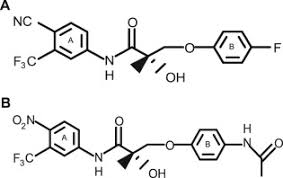
Andarine (GTx-007S-4) is an investigational selective androgen receptor modulator (SARM) developed by GTX, Inc for treatment of conditions such as muscle wasting, osteoporosis and benign prostatic hypertrophy, using the non-steroidal androgen antagonist bicalutamide as a lead compound.

Androxolutamide is a nonsteroidal selective androgen receptor modulator (SARM) which had been in early clinical trials at GTx for the treatment of cancer-related cachexia in several cancer types; however, no recent development has been reported for this indication. Preclinical studies had also been ongoing for the treatment of osteoporosis due to androgen deficiency in the aging male. The drug candidate is believed to bind to the testosterone receptor in such a way as to maximize the beneficial effects of the hormone like muscle growth, bone strengthening and enhanced libido, while minimizing the unwanted side effects, such as stimulation of prostate cancer, virilization and acne. This is accomplished by the selective modulation of the androgen receptor depending on tissue type.

The compound was originally developed at GTx. In March 2004, GTx entered into a joint collaboration and license agreement with Ortho Biotech, a wholly-owned subsidiary of Johnson & Johnson; however, in 2006 the agreement was terminated by mutual agreement of the companies.

Andarine is an orally active partial agonist for androgen receptors. It is less potent in both anabolic and androgenic effects than other SARMs. In an animal model of benign prostatic hypertrophy, andarine was shown to reduce prostate weight with similar efficacy to finasteride, but without producing any reduction in muscle mass or anti-androgenic side effects. This suggests that it is able to competitively block binding of dihydrotestosterone to its receptor targets in the prostate gland, but its partial agonist effects at androgen receptors prevent the side effects associated with the anti-androgenic drugs traditionally used for treatment of BPH

Family: Selective Androgen Receptor Modulator

Half Life: About 4 hours

Formula: C19 H18 F3 N3 O6

Chemical Structure: S-3-(4-acetylamino-phenoxy)-2-hydroxy-2-methyl-N-(4-nitro-3-trifluoromethyl-phenyl)-propionamide

Anabolic Rating: Similar to Testosterone Propionate

Facts: Ostarine (*S-4) is a Selective Androgen Receptor Modulator produced by GTx Inc, which is currently in the investigational stages of development. A SARM is exactly what it sounds like: a compound (not an anabolic steroid) which has the ability to stimulate the androgen receptor (much the same way as anabolic steroids). Unfortunately, due to its status as a drug still in the developmental stage, most of the research on it has been done in rodents and trials only.

S-4 is an orally active (and highly bioavailable) selective agonist for androgen receptors which was shown to have anabolic effects in muscle and bone tissue. It has been shown to have no measurable effect on lutenizing hormone (LH) or follicle-stimulating hormone (FSH), but it has been shown to have some effect on prostate weight, with an androgenic potency around 1/3rd of its anabolic potency (1). Still, this is a good trade-off, because it’s anabolic effect has been measured to be roughly the same as testosterone. It has also been shown to produce dose-dependent increases in bone mineral density and mechanical strength in addition to being able decrease body fat and increase lean body mass (2).

Unfortunately, it has a short half-life in humans of only 4 hours (3), and thus far has only gone through phase II clinical testing in humans (4).

Practical Use: This compound has potential use for all aspects of male hormone replacement therapy, and could eventually replace testosterone for this purpose. Since there is currently no accepted test for SARMs, athletes who are subject to drug testing would find it to be a suitable replacement for anabolic steroid use. Since it doesn’t effect LH or FSH, it may also be a highly useful anabolic agent to be used while attempting post-cycle therapy.

Side Effects: Prostate enlargement (1/3rd of what is seen with testosterone) and potential acne are potential side effects, although most users don’t report either of them; much more common are vision problems (floaters, yellow-tinged vision). Water retention, gynecomastia, and most other steroid-related side effects are probably not possible. In addition, inhibition of natural hormone levels is probably minimal or nonexistent at worst.


Producing/Developing Company:

Ostarine by GTx Inc.


References:

  1. Journal of Pharmacology And Experimental Therapeutics, Vol. 304, Issue 3, 1334-1340, March 2003
  2. Pharmaceutical Research. 2007 Feb;24(2):328-35.
  3. Pharmaceutical Research. 2006 Aug;23(8):1641-58.
  4. GTx Announces That Ostarine Achieved Primary Endpoint Of Lean Body Mass And A Secondary Endpoint Of Improved Functional Performance



The androgen receptor (′AR′″) is a ligand-activated transcriptional regulatory protein that mediates induction of male sexual development and function through its activity with endogenous androgens. Androgens are generally known as the male sex hormones. However, androgens also play a pivotal role in female physiology and reproduction. The androgenic hormones are steroids which are produced in the body by the testis and the cortex of the adrenal gland, or synthesized in the laboratory. Androgenic steroids play an important role in many physiologic processes, including the development and maintenance of male sexual characteristics such as muscle and bone mass, prostate growth, spermatogenesis, and the male hair pattern (Matsumoto, Endocrinol. Met. Clin. N. Am. 23:857-75 (1994). The endogenous steroidal androgens include testosterone and dihydrotestosterone (“DHT”) Testosterone is the principal steroid secreted by the testes and is the primary circulatiag androgen found in the plasma of males. Testosterone is converted to DHT by the enzyme 5 alpha-reductase in many peripheral tissues. DHT is thus thought to serve as the intracellular mediator for most androgen actions (Zhou, et al., Molec. Endocrinol. 9:208-18 (1995)). Other steroidal androgens include esters of testosterone, such as the cypionate, propionate, phenylpropionate, cyclopentylpropionate, isocarporate, enanthate, and decanoate esters, and other synthetic androgens such as 7-Methyl-Nortestosterone (“MENT′”) and its acetate ester (Sundaram et al., “7 Alpha-Methyl-Nortestosterone(MENT): The Optimal Androgen For Male Contraception,” Ann. Med., 25:199-205 (1993) (“Sundaram”)). Because the AR is involved in male sexual development and function, the AR is a likely target for effecting male contraception or other forms of hormone replacement therapy. The AR also regulates female sexual function (i.e., libido), bone formation, and erythropoiesis.

Worldwide population growth and social awareness of family planning have stimulated a great deal of research in contraception. Contraception is a difficult subject under any circumstances. It is fraught with cultural and social stigma, religious implications, and, most certainly, significant health concerns. This situation is only exacerbated when the subject focuses on male contraception. Despite the availability of suitable contraceptive devices, historically, society has looked to women to be responsible for contraceptive decisions and their consequences. Although health concerns over sexually transmitted diseases have made men more aware of the need to develop safe and responsible sexual habits, women still often bear the brunt of contraceptive choice. Women have a number of choices, from temporary mechanical devices such as sponges and diaphragms to temporary chemical devices such as spermicides. Women also have at their disposal more permanent options, such as physical devices like IUDs and cervical caps as well as more permanent chemical treatments, such as birth control pills and subcutaneous implants. However, to date, the only options available for men include the use of condoms or a vasectomy. Condom use, however is not favored by many men because of the reduced sexual sensitivity, the interruption in sexual spontaneity, and the significant possibility of pregnancy caused by breakage or misuse. Vasectomies are also not favored If more convenient methods of birth control were available to men, particularly long term methods that require no preparative activity immediately prior to a sexual act, such methods could significantly increase the likelihood that men would take more responsibility for contraception.

Administration of the male sex steroids (e.g., testosterone and its derivatives) has shown particular promise in this regard due to the combined gonadotropin-suppressing and androgen-substituting properties of these compounds (Steinberger et al, “Effect of Chronic Administration of Testosterone Enanthate on Sperm Production and Plasma Testosterone, Follicle Stimulating Hormones and Luteinizing Hormone Levels: A Preliminary Evaluation of a Possible Male Contraceptive”, Fertility and Sterility 28:1320-28 (1977)). Chronic administration of high doses of testosterone completely abolishes sperm production (azoospermia) or reduces it to a very low level (oligospermia). The degree of spermatogenic suppression necessary to produce infertility is not precisely known, However, a recent report by the World Health Organization showed that weekly intramuscular injections of testosterone enanthate result in azoospermia or severe oligospermia (i.e., less than 3 million sperm per ml) and infertility in 98% of men receiving therapy (World Health Organization Task Force on Methods Ar Regulation of Male Fertility, “Contraceptive Efficacy of Testosterone-Induced Azoospermia and Oligospermia in Normal Men,” Fertilily and Sterility 65:821-29 (1996)).

A variety of testosterone esters have been developed that are more slowly absorbed after intramuscular injection ancd, thus, result in greater androgenic effect. Testosterone enanthate is the most widely used of these esters. While testosterone enanthate has been valuable in terms of establishing the feasibility of hormonal agents for male contraception, it has several drawbacks, including the need for weekly injections and the presence of supraphysiologic peak levels of testosterone immediately following intramuscular injection (Wu, “Effects of Testosterone Enanthate in Normal Men: Experience From a Multicenter Contraceptive Efficacy Study,” Fertility and Sterility 65:626-36 (1996)).


“male drugs”. D. D. Miller, K. A. Veverka, and K. Chung report the large-scale synthesis of androgen-receptor modulators exemplified by 3a and 3b. These compounds have a variety of pharmaceutical applications related to male sex hormones, such as male contraceptives and drugs for treating prostate-related conditions. The inventors describe the kilogram-scale production of 3a and 3b by condensing 1 with 2a or 2b, as shown in Figure 1.

The reaction is carried out in the presence of a substantial excess of Cs2CO3 in THF. For the preparation of 3a, 6.17 mol Cs2CO3 is used with 3.37 mol 1; for 3b, 5.4 mol Cs2CO3and 2.7 mol 1 are used. (Disconcertingly, the patent shows the formula of the base as CsCO3, although the calculation of the molar amount is correct.) The preparation of 3atakes 3 h at 50 °C and is monitored by HPLC. TLC is used to monitor the synthesis of3b, which takes 8 h in refluxing THF.

To purify 3a, deionized water is added to an EtOH solution at room temperature to precipitate it; this process is repeated three times. The final yield of 3a is 83%. Purifying the product by using an alcohol and water is a key aspect of the patent and is covered in the claims. However, no analytical data are given to support the claimed purity. The workup of 3b also involves EtOH and water, but solvents EtOAc and MeO-t-Bu are also used; the product is isolated in 52% yield.

The inventors also describe the synthesis of compound 1 at kilogram scale (Figure 2). Acid chloride 5 is prepared by the reaction of carboxylic acid 4 with SOCl2. The acid chloride is not isolated, but it is treated with a solution of aniline derivative 6 and Et3N in THF over 3 h. After it is warmed to room temperature, the mixture is heated to 50 °C for 15 h. The reaction is monitored by TLC; 3.7 kg 1 is isolated by crystallization from warm toluene in 70.3% yield.

The multikilogram-scale synthesis of 4 is also described. The route, shown in Figure 3, starts with the preparation of compound 9 by simultaneously adding 4 M NaOH and a solution of acid chloride 8 in acetone to a mixture of carboxylic acid 7 and 4 M NaOH in acetone. The pH of the reaction mixture is kept at >10 by adding more 4 M NaOH as needed. Intermediate 9 is isolated by crystallization from MeO-t-Bu in 55.6% yield; it is then treated with N-bromosuccinimide (NBS) in DMF to cyclize it to 10. This is isolated in 87.7% yield by adding water to the reaction mixture. The final step is heating 10 to reflux in 24% aq HBr to produce 4, isolated as a crystalline solid from hot toluene in 81.3% yield.

The patent claims cover compounds related to 3a and 3b in which the nitro group is replaced by nitrile. Unfortunately, no examples are given describing the synthesis of these compounds. This is an efficient process for synthesizing 3a and 3b, and the inventors show that it is suitable for large-scale production. (University of Tennessee Research Foundation [Knoxville]. US Patent 7,968,721, June 28, 2011;


Novel pathway for the synthesis of arylpropionamide-derived selective androgen receptor modulator (SARM) metabolites of andarine and ostarine
TETRAHEDRON LETTERS,

Volume 54, Issue 18, Pages 2203-2282 (1 May 2013)

Pages 2239-2242
Katharina M. Schragl, Guro Forsdahl, Guenter Gmeiner, Valentin S. Enev, Peter Gaertner


Share

DAGLUTRIL

 Uncategorized  Comments Off on DAGLUTRIL
Nov 252013
 

DAGLUTRIL, SLV306

phase 2

Daglutril is a novel dual-action endopeptidase inhibitor which had been in phase II clinical development by Solvay for the treatment of hypertension, congestive heart failure (CHF) and pulmonary hypertension; however, no recent development has been reported for this research.

Daglutril inhibits NEP (neutral endopeptidase) and ECE (endothelin-converting enzyme) and thereby exerts vasodilating, blood pressure-lowering and other potentially beneficial effects on the cardiovascular system.

2-[3(S)-[1-[2(R)-(Ethoxycarbonyl)-4-phenylbutyl]cyclopentan-1-ylcarboxamido]-2-oxo-2,3,4,5-tetrahydro-1H-1-benzazepin-1-yl]acetic acid
 cas 182821-27-8, 182560-84-5 (undefined stereochem.)
C31H38N2O6
 mw 534.6492
Cardiovascular Drugs, Heart Failure Therapy, Hypertension, Treatment of, Endothelin-Converting Enzyme Inhibitors, Neprilysin Inhibitors

SOLWAY

Neprilysin (Enkephalinase, Neutral Endopeptidase, NEP) Inhibitors
Endothelin-Converting Enzyme (ECE) Inhibitors

182821-27-8,  1H-1-Benzazepine-1-acetic acid, 3-(((1-(2-(ethoxycarbonyl)-4-phenylbutyl)cyclopentyl)carbonyl)amino)-2,3,4,5-tetrahydro-2-oxo-, (S-(R*,S*))-,  1H-1-Benzazepine-1-acetic acid, 3-(((1-((2R)-2-(ethoxycarbonyl)-4-phenylbutyl)cyclopentyl)carbonyl)amino)-2,3,4,5-tetrahydro-2-oxo-, (3S)-,  2-[(3S)-3-[[1-[(2R)-2-carbethoxy-4-phenyl-butyl]cyclopentanecarbonyl]amino]-2-keto-4,5-dihydro-3H-1-benzazepin-1-yl]acetic acid,

The acylation of the chiral amine (I) with the chiral cyclopentanecarboxylic aid (II) by means of N-methylmorphline (NMM), hydroxybenzotriazole (HOBT) and N-(dimethylaminopropyl)-N’-ethylcarbodiimide (EDT) in dichloromethane gives the amide (III), which is then treated with trifluoroacetic acid to elimnate the tert-butyl ester groups.

 
Benzazepin-, benzoxazepin- and benzothiazepin-N-acetic acid-derivs., their preparation and their pharmaceutical compsns.
Waldeck, H.; ET AL (Kali-Chemie AG)
CA 2172354; EP 0733642; JP 1996269011; US 5677297
Share

FDA accepts AstraZeneca’s new drug application for constipation drug naloxegol

 NDA  Comments Off on FDA accepts AstraZeneca’s new drug application for constipation drug naloxegol
Nov 212013


naloxegol

Morphinan-3,14-diol, 4,5-epoxy-6-(3,6,9,12,15,18,21-heptaoxadocos-1-yloxy)-17-(2-
propen-1-yl)-, (5α,6α)-

2. 4,5α-epoxy-6α-[(3,6,9,12,15,18,21-heptaoxadocosan-1-yl)oxy]-17-(prop-2-en-1-
yl)morphinan-3,14-diol

http://www.ama-assn.org/resources/doc/usan/naloxegol.pdf

MOLECULAR FORMULA C34H53NO11

MOLECULAR WEIGHT 651.8

SPONSOR AstraZeneca

CODE DESIGNATION NKTR-118

CAS REGISTRY NUMBER 854601-70-0
The US Food and Drug Administration (FDA) has accepted AstraZeneca’s new drug application (NDA) for naloxegol, an investigational peripherally acting mu-opioid receptor antagonist (PAMORA) for the treatment of opioid-induced constipation (OIC).

read at

FDA accepts AstraZeneca’s new drug application for constipation drug


Naloxegol (INNNKTR-118), or PEGylated naloxol,[1] is a peripherallyselective opioid antagonist under development by AstraZeneca, licensed from Nektar, for the treatment of opioid-induced constipation.[2]

  1. Roland Seifert; Thomas Wieland; Raimund Mannhold; Hugo Kubinyi, Gerd Folkers (17 July 2006). G Protein-Coupled Receptors as Drug Targets: Analysis of Activation and Constitutive Activity. John Wiley & Sons. p. 227. ISBN 978-3-527-60695-5. Retrieved 14 May 2012.
  2. “Nektar | R&D Pipeline | Products in Development | CNS/Pain | Oral Naloxegol (NKTR-118) and Oral NKTR-119”. Retrieved 2012-05-14

NALOXEGOL OXALATE

credit kegg

NALOXEGOL OXALATE

http://www.ama-assn.org/resources/doc/usan/naloxegol-oxalate.pdf

Morphinan-3,14-diol, 4,5-epoxy-6-(3,6,9,12,15,18,21-heptaoxadocos-1-yloxy)-
17-(2-propen-1-yl)-, (5α,6α)-, ethanedioate (1:1)

2. 4,5α-epoxy-6α-[(3,6,7,12,15,18,21-heptaoxadocosyl)oxy]-17-(prop-2-
enyl)morphinan-3,14-diol hydrogen ethanedioate

MOLECULAR FORMULA C34H53NO11 . C2H2O4
MOLECULAR WEIGHT 741.8

SPONSOR AstraZeneca
CODE DESIGNATIONS NKTR-118 oxalate, AZ13337019 oxalate
CAS REGISTRY NUMBER 1354744-91-4


About Opioid-Induced Constipation
Opioids are commonly prescribed to patients experiencing chronic pain, which can provide relief from serious medical conditions including osteoarthritis, cancer, and chronic back pain.1 There are about 250 million opioid prescriptions written annually in the US alone to treat these conditions.2 Patients taking opioids to treat chronic pain commonly experience a side effect known as opioid-induced constipation, which may include infrequent bowel movements and difficulty passing stools or emptying bowels.1,3 Clinically, OIC is the most prevalent side effect of opioid therapy.4 For those patients who take opiates for long term pain management, approximately 40-50 percent commonly experience OIC.5 Only about 40-50 percent of those patients experience effective relief from current treatment options.6,7

About Naloxegol (NKTR-118)
Naloxegol (NKTR-118) is an investigational drug candidate in Phase 3 studies being developed as a once-daily oral tablet for the treatment of opioid-induced constipation. Naloxegol (NKTR-118) was designed using Nektar’s proprietary small molecule polymer conjugate technology. Results of the Phase 2 study of naloxegol (NKTR-118) were presented in October 2009 at the American College of Gastroenterology Annual Clinical Meeting and the American Academy of Pain Management. NKTR-119 is an early stage drug development program that is intended to combine oral naloxegol (NKTR-118) with selected opioids, with the goal of treating pain without the side effect of constipation traditionally associated with opioid therapy.

Nektar and AstraZeneca have a global agreement for both naloxegol (NKTR-118) and NKTR-119. Under the agreement, AstraZeneca has responsibility for the development, global manufacturing and marketing of both naloxegol (NKTR-118) and NKTR-119. For naloxegol (NKTR-118), Nektar is eligible to receive up to $235 million in aggregate payments upon the achievement of certain regulatory milestones, as well as additional tiered sales milestone payments of up to $375 million if the product achieves considerable levels of commercial success. Nektar will also be eligible to receive significant double-digit royalty payments on net sales of naloxegol (NKTR-118) worldwide. For NKTR-119, Nektar would receive development milestone payments as well as tiered sales milestone payments. Nektar will also receive significant double-digit royalty payments on NKTR-119 net sales worldwide.

The AstraZeneca Phase 3 KODIAC Program for Naloxegol (NKTR-118)
The KODIAC Program consists of two randomized, placebo controlled Phase III efficacy studies and an open-label, randomized, placebo-controlled long term safety study. The two efficacy studies are identical with 12-week treatment periods. These studies are intended to evaluate the efficacy, safety and tolerability of an AstraZeneca investigational drug in patients with OIC. KODIAC is part of the KODIAC program of studies looking to determine whether naloxegol (NKTR-118) is safe and effective for the treatment of constipation seen as a side effect in people taking prescription opioid pain medications. AstraZeneca plans the first regulatory filings based on the program in 2013.

References

1Reimer, K et al. Meeting the challenges of opioid-induced constipation in chronic pain management – a novel approach. Pharmacology. 2009; 83:10-17.
2IMS MAT. December 2010.
3Johanson, JF and Kraltein, J. Chronic constipation: a survey of the patient perspective. Aliment Pharmacol Ther. 2007; 25:599-608.
4Fakata, K. Peripheral Opioid Antagonists: A Therapeutic Advance for Optimizing Opioid Gastrointestinal Tolerability. The Journal of Family Practice. 2007;56:S1-S12.
5Thomas, J. Opioid-Induced Bowel Dysfunction. Journal of Pain and Symptom Management. 2008;35(1):103-113.
6Bell, T et al. OBD symptoms impair quality of life and daily activities, regardless of frequency and duration of opioid treatment: results of a U.S. patient survey (PROBE survey). Poster presented at The 25th Annual Scientific Meeting of the American Pain Society. San Antonia, TX, USA.
7Pappagallo, M. Incidence, prevalence, and management of opioid bowel dysfunction. Am J Surg. 2001:182;S11-S18.

http://newdrugapprovals.wordpress.com/2013/09/28/ema-accepts-astrazenecas-naloxegol-application/

Share

Top 10 Foods Highest in Vitamin D

 Ayurveda  Comments Off on Top 10 Foods Highest in Vitamin D
Nov 202013
 

Top 10 Foods Highest in Vitamin D

Vitamin D is an essential vitamin required by the body for the proper absorption of calcium, bone development, control of cell growth, neuromuscular functioning, proper immune functioning, and alleviation of inflammation. A deficiency in vitamin D can lead to rickets, a disease in which bones fail to properly develop. Further, inadequate levels of vitamin D can lead to a weakened immune system, increased cancer risk, poor hair growth, and osteomalacia, a condition of weakened muscles and bones. Conversely, excess vitamin D can cause the body to absorb too much calcium, leading to increased risk of heart attack and kidney stones. The current U.S. DV for vitamin D is 600 IU (international units) and the toxicity threshold for vitamin D is thought to be 10,000 to 40,000 IU/day.2 Vitamin D is oil soluble, which means you need to eat fat to absorb it. It is naturally found mainly in fish oils, fatty fish, and to a lesser extent in beef liver, cheese, egg yolks, and certain mushrooms. Vitamin D is also naturally made by your body when you expose your skin to the sun, and thus, is called the sun-shine vitamin. In addition, vitamin D is widely added to many foods such as milk and orange juice, and can also simply be consumed as a supplement. Below is a list of high vitamin D foods.


1: Cod Liver Oil
Cod liver oil has been a popular supplement for many years and naturally contains very high levels of vitamin A and vitamin D. Cod liver oil provides 10001IU (1667% DV) per 100 gram serving, or 1360IU (340% DV) in a single tablespoon.


2: Fish
Various types of fish are high in vitamin D. Typically raw fish contains more vitamin D than cooked, and fatty cuts will contain more than lean cuts. Further, fish canned in oil will have more vitamin D than those canned in water. Raw fish is typically eaten in the form of sushi. Raw Atlantic Herring provides the most vitamin D with 1628IU (271% DV) per 100 gram serving, 2996IU (499% DV) per fillet, and 456IU (76% DV) per ounce. It is followed by Pickled Herring with 680IU (113% DV) per 100g serving, Canned Salmon (127% DV), Raw Mackerel (60% DV), Oil Packed Sardines (45% DV), Canned Mackerel (42% DV), and oil packed Tuna (39% DV).

3: Fortified Cereals
A breakfast staple in the Americas, most commercial cereals are fortified with the essential vitamins and nutrients. Exercise caution and check food labels when purchasing cereals, be sure to pick products that have little or no refined sugars, and no partially hydrogenated oils! Fortified cereals can provide up to 342IU (57% DV) per 100 gram serving (~2 cups), and even more if combined with fortified dairy products or fortified soy milk. Products vary widely so be sure to check the nutrition label before buying.

4: Oysters
In addition to vitamin D, Oysters are a great source of vitamin b12, zinc, iron, manganese, selenium, and copper. Oysters are also high in cholesterol and should be eaten in moderation by people at risk of heart disease or stroke. Raw wild caught Eastern Oysters provide 320IU (80% DV) per 100 gram serving, 269IU (67% DV) in six medium oysters.

5: Caviar (Black and Red)
Caviar is a common ingredient in sushi and more affordable than people think. Caviar provides 232IU (58% DV) of vitamin D per 100 gram serving, or 37.1IU (9% DV) per teaspoon.

6: Fortified Soy Products (Tofu and Soy Milk)
Fortified soy products are often fortified with both vitamin D and calcium. Fortified Tofu can provide up to 157IU (39% DV) of vitamin D per 100 gram serving, or 44IU (11% DV) per ounce. Fortified Soy Milk can provide up to 49IU (12% DV) of vitamin D per 100 gram serving, 119IU (30% DV) per cup. Amounts of vitamin D vary widely between products, so be sure to check nutrition facts for vitamin D content.

7: Salami, Ham, and Sausages
Salami, Ham, and Sausages are a good source of vitamin b12, and copper. Unfortunately, they are also high in cholesterol and sodium, and so should be limited by people at risk of hypertension, heart attack, and stroke. Salami provides 62.0IU (16% DV) of vitamin D per 100 gram serving, or 16.7IU (4% DV) per ounce (3 slices). It is followed by Bologna Pork 56IU (9% DV) per 100 grams, and Bratwurst 44IU (7% DV) per 100 gram serving.

8: Fortified Dairy Products
Dairy products are already high in calcium, so it makes sense to fortify them with vitamin D. Milk can provide up to 52.0IU (13% DV) of vitamin D per 100 gram serving, 127IU (32% DV) per cup. Cheese can provide up to 6.6IU (2% DV) in a cubic inch, and butter provides 7.8IU (2% DV) in a single tablespoon. Check nutrition labels for exact amounts.

9: Eggs
In addition to vitamin D, eggs are a good source of vitamin B12, and protein. Eggs provide 37.0IU (9% DV) of vitamin D per 100 gram serving, or 17.0IU (4% DV) in a large fried egg.

10: Mushrooms
More than just a high vitamin D food, mushrooms also provide Vitamin B5 (Pantothenic Acid) and copper. Lightly cooked white button mushrooms provide the most vitamin D with 27.0IU (7% DV) per 100 gram serving, or 7.6IU (2% DV) per ounce.


Share
Nov 192013


(NaturalNews) Various cultures around the world already understand that herbs such as ginger, cinnamon, garlic and turmeric can effectively treat conditions like diabetes. According to research from the biomedical science department at the King Faisal University in Saudi Arabia, garlic may be the most powerful of them all for treating diabetes.

Learn more: http://www.naturalnews.com/042941_garlic_diabetes_treatment_oxidative_stress.html##ixzz2l5NBhJ00

Share

Boosting Broccoli Power

 Ayurveda, drugs, GENERIC  Comments Off on Boosting Broccoli Power
Nov 172013


The plant hormone methyl jasmonate can be used to increase broccoli’s antitumoral properties

Read more

http://www.chemistryviews.org/details/news/5428251/Boosting_Broccoli_Power.html


home business

back to home for more updates

ANTHONY MELVIN CRASTO

DR ANTHONY MELVIN CRASTO Ph.D

[email protected]

MOBILE-+91 9323115463
GLENMARK SCIENTIST , NAVIMUMBAI, INDIA
Share

AMG 837

 Phase 3 drug, Uncategorized  Comments Off on AMG 837
Nov 172013
 

str1

AMG 837

865231-46-5 (AMG-837 free acid); 865231-45-4 (AMG-837 sodium salt)

(S)-3-(4-((4′-(trifluoromethyl)-[1,1′-biphenyl]-3-yl)methoxy)phenyl)hex-4-ynoic acid

Description of AMG-837:  AMG-837 is a potent, orally bioavailable GPR40 agonist. AMG 837 was a potent partial agonist in the calcium flux assay on the GPR40 receptor and potentiated glucose stimulated insulin secretion in vitro and in vivo. Acute administration of AMG 837 lowered glucose excursions and increased glucose stimulated insulin secretion during glucose tolerance tests in both normal and Zucker fatty rats. The improvement in glucose excursions persisted following daily dosing ofAMG 837 for 21-days in Zucker fatty rats. Preclinical studies demonstrated that AMG 837 was a potent GPR40 partial agonist which lowered post-prandial glucose levels. These studies support the potential utility of AMG 837 for the treatment of type 2 diabetes.  (PLoS One. 2011;6(11):e27270).


Current developer: Amgen Inc

Hamilton JY, Sarlah D, Carreira EM * ETH Zürich, Switzerland
Iridium-Catalyzed Enantioselective Allylic Alkynylation.Angew. Chem. Int. Ed. 2013;
52: 7532-7535

A new versatile method for the iridium-catalyzed asymmetric substitution of racemic allylic alcohols is exemplified by the depicted synthesis of AMG 837, a GPR40 receptor agonist that is of interest for the treatment of type 2 diabetes.
The allylic alkynylation (27 examples) typically provides excellent branched-to-linear regioselectivity (rr > 50:1) and high enantioselectivity (≥99%). The scope of the allylic alkynylation was explored using 12 allylic alcohols and 15 potassium alkynyltrifluoroborates.


“Enantioselective Synthesis of a GPR40 Agonist AMG 837 via Catalytic Asymmetric Conjugate Addition of Terminal Alkyne to α,β-Unsaturated Thioamide”
Yazaki, R.; Kumagai, N.; Shibasaki, M.
Org. Lett. 2011, 13, 952.   highlighted by Synfacts 2011, 6, 586.


PAPER

Scheme 18 Optimized preparation of biphenyl 54


Scheme 17 Original Suzuki reaction employed for the synthesis of biphenyl 54

Image result for AMG 837

http://www.scielo.br/scielo.php?script=sci_arttext&pid=S0103-50532014001202186

/////////

Share

TAK 733

 Phase 3 drug, Uncategorized  Comments Off on TAK 733
Nov 172013
 

(R)-3-(2,3-Dihydroxypropyl)-6-fluoro-5-(2-fluoro-4-iodophenylamino)-8-methylpyrido[2,3-d]pyrimidine-4,7(3H,8H)-dione

Molecular Weight: 504.23
TAK-733 Formula: C17H15F2IN4O4
CAS Number: 1035555-63-5

Biological Activity of TAK-733:

TAK-733 is an orally bioavailable small-molecule inhibitor of MEK1 and MEK2 (MEK1/2) with potential antineoplastic activity. MEK inhibitor TAK-733 selectively binds to and inhibits the activity of MEK1/2, preventing the activation of MEK1/2-dependent effector proteins and transcription factors, which may result in the inhibition of growth factor-mediated cell signaling and tumor cell proliferation. MEK1/2 (MAP2K1/K2) are dual-specificity threonine/tyrosine kinases that play key roles in the activation of the RAS/RAF/MEK/ERK pathway and are often upregulated in a variety of tumor cell types.

References:

BRAF L597 mutations in melanoma are associated with sensitivity to MEK inhibitors.
Dahlman et al. Cancer Discov. 2012 Jul 13. PMID: 22798288.Discovery of TAK-733, a potent and selective MEK allosteric site inhibitor for the treatment of cancer.
Dong et al. Bioorg Med Chem Lett. 2011 Mar 1;21(5):1315-9. PMID: 21310613.


Zhao Y * et al. Takeda California, San Diego, Millenium Pharmaceuticals Inc., Cambridge and IRIX Pharmaceuticals, Greenville, USA
Process Research and Kilogram Synthesis of an Investigational, Potent MEK Inhibitor.Org. Process Res. Dev. 2012;
16: 1652-1659

MEK kinases regulate the pathway that mediates proliferative and anti-apoptotic signaling factors that promote tumor growth and metastasis. TAK-733 is an MEK kinase inhibitor that entered phase I clinical trials for the treatment of cancer. A noteworthy feature of this short synthesis (25% yield overall) is the one-pot, three-step synthesis of the fluoropyridone D, in which the fluorine atom is present at the outset.
The reaction of F with the nosylate G gave a mixture of N- and O-alkylation products (8:1) from which the desired N-alkylation product was isolated by crystallization. The mixture of N-methyl pyrrolidine (NMP) and methanol used in the final deprotection step, helped to ensure formation of the desired polymorph. The nine-step discovery synthesis (3% overall yield) is also presented.

Share
Nov 162013
 
MK 6096
IUPAC Name: [(2R,5R)-5-[(5-fluoropyridin-2-yl)oxymethyl]-2-methylpiperidin-1-yl]-(5-methyl-2-pyrimidin-2-ylphenyl)methanone | CAS Registry Number: 1088991-73-4
Synonyms: FILOREXANT, MK6096, MK-6096, Filorexant [USAN], UNII-E6BTT8VA5Z, SureCN1716633, CHEMBL2107822, MK 6096, ((2R,5R)-5-(((5-Fluoropyridin-2-yl)oxy)methyl)-2-methylpiperidin-1-yl)(5-methyl-2-(pyrimidin-2-yl)phenyl)methanone, 1088991-73-4, Methanone, ((2R,5R)-5-(((5-fluoro-2-pyridinyl)oxy)methyl)-2-methyl-1-piperidinyl)(5-methyl-2-(2-pyrimidinyl)phenyl)-
Girardin M, Ouellet SG, Gauvreau D, Moore JC, Hughes G, Devine PN, O’Shea PD, Campeau L.-C * Merck Frosst Center for Therapeutic Research, Kirkland, Canada and Merck Research Laboratories, Rahway, USA
Convergent Kilogram-Scale Synthesis of Dual Orexin Receptor Antagonist.
Figure
MK-6096 is an orexin receptor antagonist in clinical trials for the treatment of insomnia. Herein we describe its first kilogram-scale synthesis. Chirality on the α-methylpiperidine core was introduced in a biocatalytic transamination using a three-enzyme system with excellent enantioselectivity (>99% ee). Low diastereoselectivity of the lactam reduction was overcome by development of a camphor sulfonic acid salt formation and dr upgrade. A chemoselectiveO-alkylation with 5-fluoro-2-hydroxypyridine was optimized and developed. Overall, 1.2 kg of MK-6069 was prepared in nine steps and 13% overall yield.

Org. Process Res. Dev. 2013; 17: 61-68

DOI: 10.1021/op3002678
Publication Date (Web): November 30, 2012

The orexins are peptides that act as neurotransmitters in the central nervous system. MK-6096 is a dual orexin receptor antagonist that is a candidate for the treatment of insomnia. A noteworthy feature of the synthesis depicted is the biocatalytic transamination reaction on prochiral substrate A using a three-enzyme cocktail that delivers piperidinone B (>99% ee) on a multikilogram scale.

kilogram-scale synthesis of an orexin receptor analyst that is in clinical trials for treating insomnia. In a key step, (6R)-methylpiperidine-3-methanol is prepared from dimethyl 2-(3-oxobutyl)malonate, which was synthesized by a Michael addition of dimethyl malonate to methyl vinyl ketone.

The synthesis of the chiral piperidine is a three-enzyme biocatalytic transamination–cyclization–reduction sequence. The authors used a transaminase enzyme as the catalyst, D-alanine as the amine donor, and pyridoxal-5’-phosphate as a cofactor to transfer the amine to the malonate substrate. The product spontaneously cyclizes to a piperidone ester.

Two additional enzymes help drive the reaction: Lactate dehydrogenase, with NADH as a cofactor, reduces the lactate byproduct; and glucose dehydrogenase recycles the NAD coproduct back to NADH. Reducing the methyl ester to a hydroxymethyl group with NaBH4 and CaCl2, followed by LiAlH4 reduction of the piperidone, completes the synthesis of the piperidine building block.

The diastereoisomeric ratio of the α-hydroxymethyl lactam (dr = 1.7:1) was improved to >40:1 by reduction of the lactam followed by salt formation using d-(+)-camphorsulfonic acid [d-(+)-CSA]. For the development of transaminase ATA-117 in the manufacture of sitagliptin, see: C. K. Savile et al. Science 2010, 329, 305.


http://onlinelibrary.wiley.com/doi/10.1002/cmdc.201200025/full


MK-6096 is an orally bioavailable potent and selective reversible antagonist of Orexin 1 Receptor (OX(1)R) and Orexin 2 Receptor (OX(2)R). In radioligand binding and functional cell based assays MK-6096 demonstrated potent binding and antagonism of both human OX(1)R and OX(2)R (<3 nM in binding, 11 nM in FLIPR), with no significant off-target activities against a panel of >170 receptors and enzymes. MK-6096 occupies 90% of human OX(2)Rs expressed in transgenic rats at a plasma concentration of 142 nM, and dose-dependently reduced locomotor activity and significantly increased sleep in rats (3-30 mg/kg) and dogs (0.25 and 0.5 mg/kg). MK-6096 represents a novel and selective therapeutic for the treatment of insomnia. MK-6096 has exceptional in vivo activity in preclinical sleep models.

References:

Discovery of [(2R,5R)-5-{[(5-fluoropyridin-2-yl)oxy]methyl}-2-methylpiperidin-1-yl][5-methyl-2-(pyrimidin-2-yl)phenyl]methanone (MK-6096): a dual orexin receptor antagonist with potent sleep-promoting properties.
Coleman PJ, et al. ChemMedChem. 2012 Mar 5;7(3):415-24, 337. PMID: 22307992.Pharmacological characterization of MK-6096 – a dual orexin receptor antagonist for insomnia.
Winrow CJ, et al. Neuropharmacology. 2012 Feb;62(2):978-87. PMID: 22019562.

Share
Follow

Get every new post on this blog delivered to your Inbox.

Join other followers: